Help us get this right
Does this portrait look right for Bagobo?
Nobody has judged this one yet. You would be the first.
Bagobo Erotic
Slopes of Mount Apo and the western Davao Gulf hinterland in southeastern Mindanao, Philippines (Davao City, Davao del Sur, Cotabato)
Tagabawa and Obo Manobo (Manobo branch, Philippine, Austronesian); Giangan (Philippine, Austronesian); Cebuano widely spoken as a second language
Christianity (Catholic and evangelical) alongside traditional animist belief centered on Mount Apo
Tagabawa, Giangan (Clata, Guiangan), Obo; part of the Lumad indigenous peoples of Mindanao
About Bagobo People
The Bagobo are the people of Mount Apo. Their villages climb the southern and eastern slopes of the highest peak in the Philippines and run down toward the Davao Gulf, on land now split among Davao City, Davao del Sur and Cotabato. The name covers more than one community. The Tagabawa, the Giangan (also called Clata) and the Obo each keep their own speech and their own ancestral ground. All of them are counted among the Lumad, the indigenous peoples of Mindanao who stayed outside the Muslim sultanates. Tagabawa and Obo are Manobo languages, which links them to highland neighbors across central Mindanao. Giangan is a separate language, not a dialect of either. Cebuano and Filipino now carry trade, schooling and church life, and most younger Bagobo switch between languages easily.
Many Bagobo now go to Catholic or evangelical churches, but the old religion did not simply fade away. Its world was full of spirits and gods: a creator, spirits of the upland rice fields and the forest, and Mandarangan, a war god said to live in the crater of Apo with his consort Darago. Men who had killed in battle earned the title magani and the right to wear blood-red cloth. The Ginum, a long season of feasting and offerings, once ended with the sacrifice of a slave. That practice was stamped out in the early years of American rule. The mountain's sacredness is still a live issue. When a state geothermal project moved onto Apo in the late twentieth century, Bagobo and neighboring Lumad fought it as a desecration. Spanish Jesuits reached Davao in the nineteenth century, but the bigger break came after 1900. American and Japanese planters turned the Davao lowlands into abaca estates, and settlers from the Visayas followed. The crafts show the clearest line back to older ways. Women weave inabal, abaca cloth whose threads are tie-dyed before weaving, and cover jackets and bags with beadwork, shell discs and tiny brass bells. Bagobo smiths cast those bells and their betel boxes by the lost-wax method. Older generations filed and blackened their teeth as a mark of beauty.
Related ethnic groups
Groups that share Bagobo's homeland, region, language, or religious tradition. These are likely candidates for comparative phenotype reference.
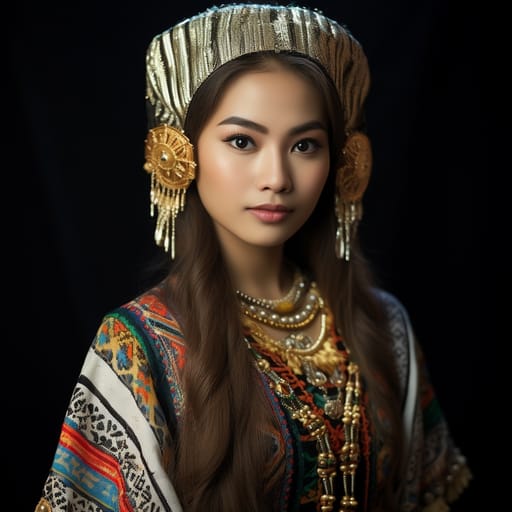
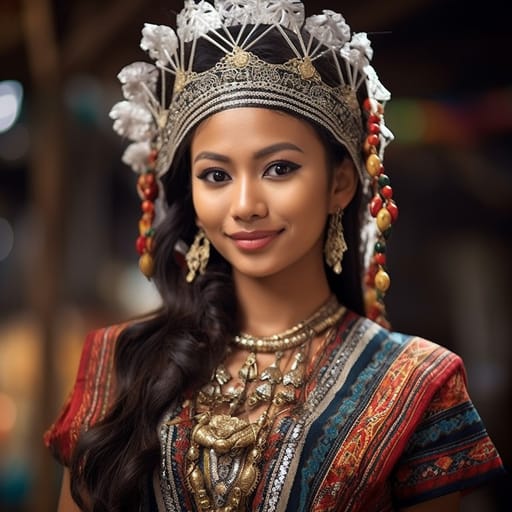
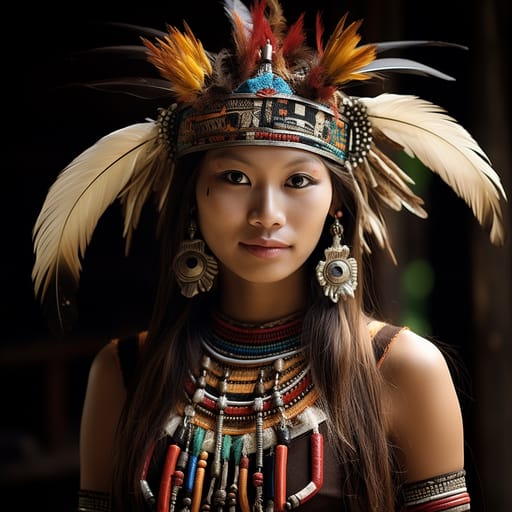
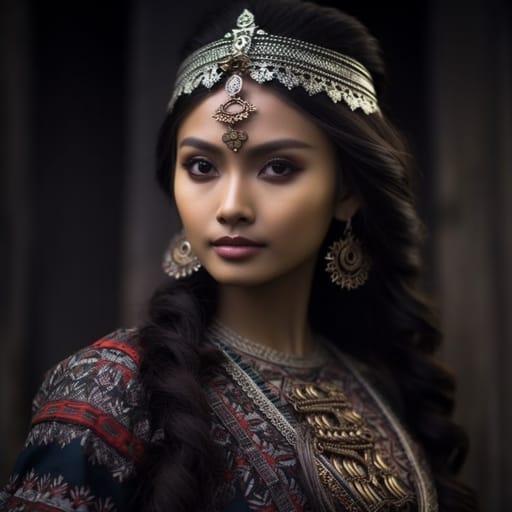
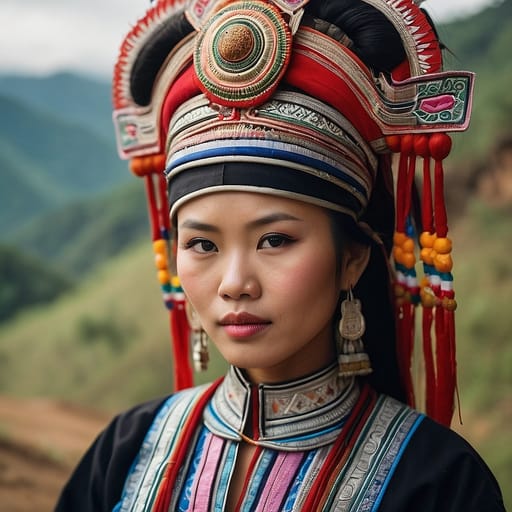
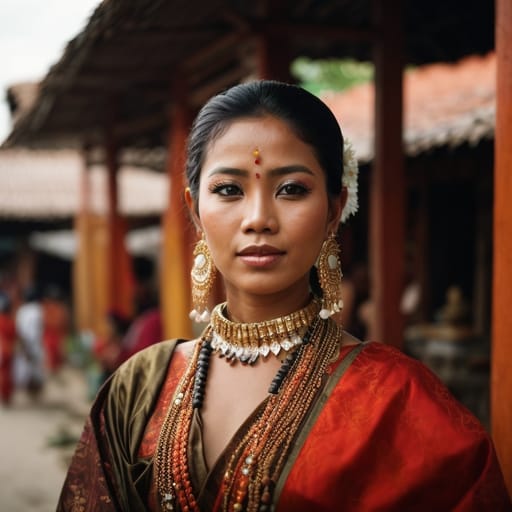
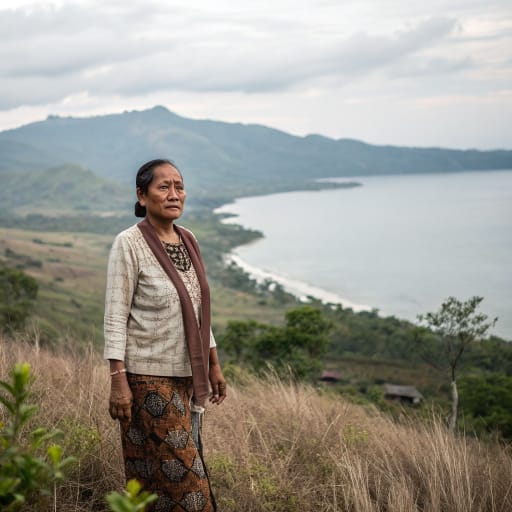
Typical Bagobo Phenotypes
Reference for AI generation: hair, eyes, skin, facial structure, build
Bagobo Body & Anatomy Reference
Southeast Asian Austronesian / Austroasiatic phenotype: anatomy reference for AI nude generation
Bagobo Boobs & Breasts
Bagobo boobs follow the Southeast Asian Austronesian / Austroasiatic profile: small-to-medium cup, modest projection. Areolar diameter is usually 26-38mm, and the coloring is medium-brown to dark-brown areolar pigmentation against the tan-to-medium-brown skin tone. Breast shape tracks body composition (ectomorph, petite frame, mean adult female BMI 20-23), so Bagobo breasts tend to be firm, modest projection. Expect a forward-set shape, not the fuller South Asian or Polynesian bust.
Bagobo Ass & Hips
Bagobo ass and hip morphology presents as small-to-medium, modest projection, narrower hip profile, distinctly different from the fuller glutes of the Pacific Islander phenotype. The Bagobo pelvic profile shows narrow-to-medium iliac crests, anchored in the Southeast Asian Austronesian / Austroasiatic skeletal pattern. Bagobo butt shots in adult AI imagery should render the small-to-medium, modest projection, narrower hip profile silhouette with the overall build (ectomorph, petite frame) and the fat distribution typical of the Southeast Asian Austronesian / Austroasiatic phenotype.
Bagobo Vagina & Pussy
Bagobo pussy anatomy typically shows medium-brown to dark-brown labial pigmentation. Pubic hair is usually straight-to-wavy fine-to-medium texture. In AI-generated Bagobo nudes, labial color should blend into the tan to medium-brown skin with a gradual transition, and the hair should keep its straight-to-wavy fine-to-medium texture.
Bagobo Dicks & Penis
Penis reference for Bagobo men: regional mean ~11cm erect, moderate girth. Coloring: medium-brown shaft pigmentation. An accurate Bagobo cock in AI imagery matches the surrounding tan to medium-brown skin rather than a generic porn default. Circumcision depends on religion and custom, not ancestry.
Bagobo Body, Curves & Build
The Bagobo figure is generally ectomorph, petite frame, with mean adult female BMI 20-23, characteristic of Southeast Asian Austronesian / Austroasiatic ancestry. AI image tools tend to flatten regional body types into a few stock shapes; here the Bagobo build is kept as its own reference.
Bagobo Skin Tone & Hair Texture
Skin: tan to medium-brown (Fitzpatrick III-V). Hair: straight-to-wavy 1A-2A, dark-brown to black. Both are typical of Southeast Asian Austronesian / Austroasiatic ancestry. The most common mistake in AI nudes of Bagobo women is a body rendered lighter than the face.
Explore phenotype categories
Structured taxonomy with peer-reviewed scales · 22 anatomical categories
Erotic Poses & Sex Positions
From the pose catalog: 219 named positions with reference skeletons
Frequently asked questions about Bagobo people
Where is the Bagobo homeland?
The Bagobo homeland is Slopes of Mount Apo and the western Davao Gulf hinterland in southeastern Mindanao, Philippines (Davao City, Davao del Sur, Cotabato) in Southeast Asia.
What language do Bagobo people speak?
Bagobo people primarily speak Tagabawa and Obo Manobo (Manobo branch, Philippine, Austronesian); Giangan (Philippine, Austronesian); Cebuano widely spoken as a second language.
What religion do Bagobo people practice?
The predominant religion among Bagobo people is Christianity (Catholic and evangelical) alongside traditional animist belief centered on Mount Apo.






Make your own Bagobo images
Five a day, free, no credits to buy. The studio starts from this group's phenotype data, so you can set body type, pose and style and keep the traits accurate.
Start with Bagobo