No portrait yet
Donggo Erotic
Highlands of Bima Regency in eastern Sumbawa, West Nusa Tenggara, Indonesia: the Donggo uplands west of Bima Bay and the Wawo and Sambori highlands to the east
Bima (Mbojo), Donggo dialect (Austronesian, Central Malayo-Polynesian, Bima-Sumba group); Indonesian widely used
Mostly Sunni Islam, with Catholic and Protestant minorities; traces of older ancestor and place-spirit veneration
Donggo Ipa (west of Bima Bay) and Donggo Ele (eastern highlands); a highland branch of the wider Bimanese (Mbojo) people
About Donggo People
The Donggo are the highland people of eastern Sumbawa, and their name says so. Dou Donggo is usually translated as "mountain people," which sets them apart from the lowland Mbojo who built the Bima Sultanate around the bay. The Donggo speak a form of their coastal neighbors' language, and most now share their religion too. Even so, the line between hill and shore has lasted for centuries. Local tradition calls the Donggo the region's older population: the people who stayed in the uplands, or moved up into them, as trade, kings and Islam arrived at the harbor. It's hard to say how literally to take that story, but it's still how most people explain who the Donggo are.
There are two main branches. The Donggo Ipa live in the uplands west of Bima Bay, in a district that still carries the Donggo name. The Donggo Ele live in the eastern highlands around Wawo and Sambori. Their speech is a dialect of Bima, a Central Malayo-Polynesian language. Its closest relatives lie to the east, on Sumba and western Flores, not to the west. A real language border runs through the middle of Sumbawa: the Sumbawa language spoken in the island's western half is related to Sasak and Balinese instead.
Religion is where the Donggo story changes course. The Bima court adopted Islam in the seventeenth century, but the highland villages stayed outside it for generations. They kept honoring ancestors and spirits tied to particular places. Most conversion came in the twentieth century, and not all of it went the same way. Most Donggo are now Muslim, but Catholic and Protestant churches took hold in some villages. Mbawa, in Donggo Ipa country, is known in the province as a village where Muslim and Christian families live side by side, often as relatives. Customary law, called adat, still settles many matters that religion doesn't cover.
Village life still follows the farming year, with dry-field rice and maize grown on steep slopes. In the eastern highlands, clusters of uma lengge stand on raised posts under tall, steep thatched roofs. They served as rice stores and, in some places, as homes. The Donggo also have a modest place in anthropology through Peter Just's study of how their villages dealt with conflict and moral disagreement. Roads, schools and moves to Bima town and farther away have ended much of the old isolation, but the difference between the mountain and the bay remains.
Related ethnic groups
Groups that share Donggo's homeland, region, language, or religious tradition. These are likely candidates for comparative phenotype reference.
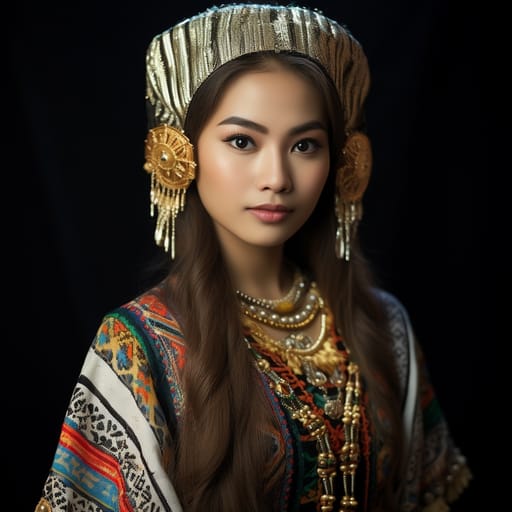
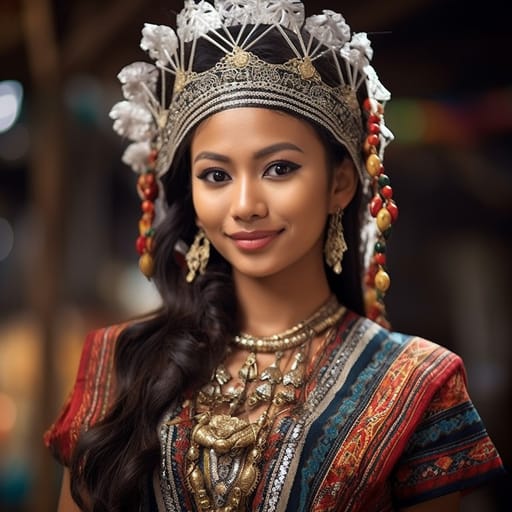
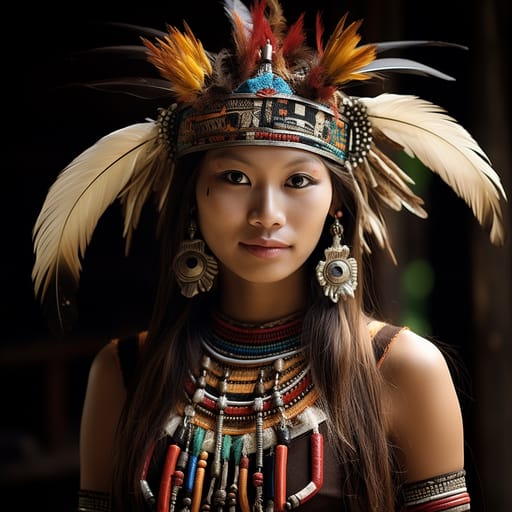
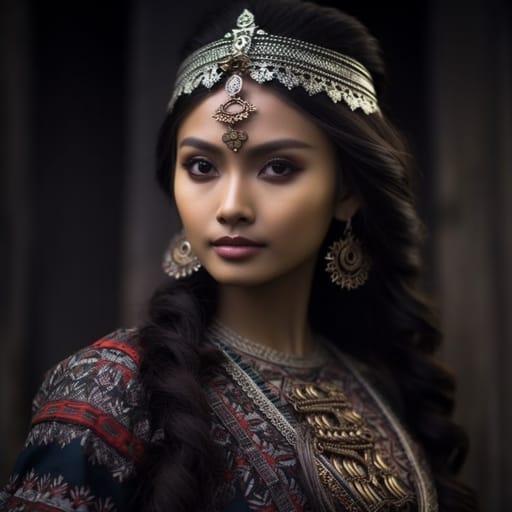
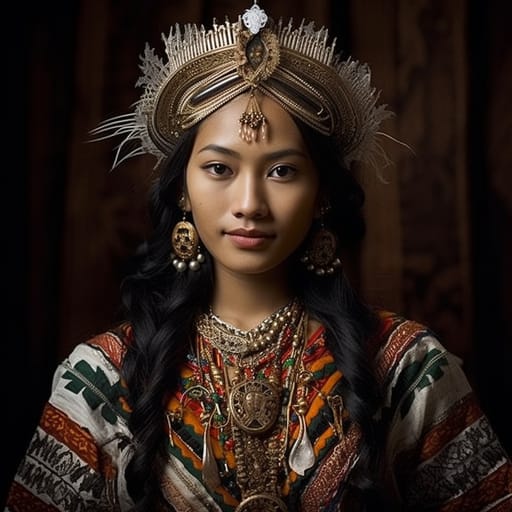
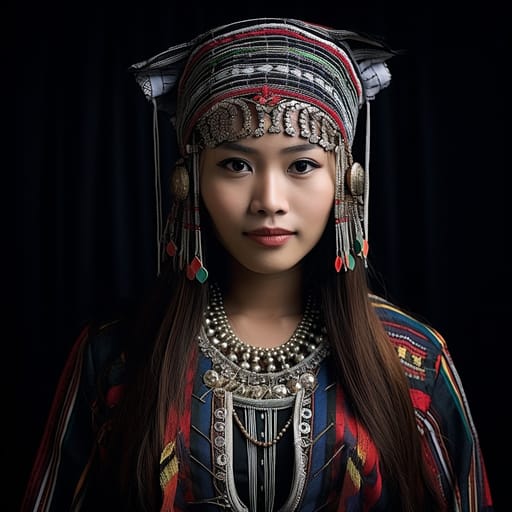
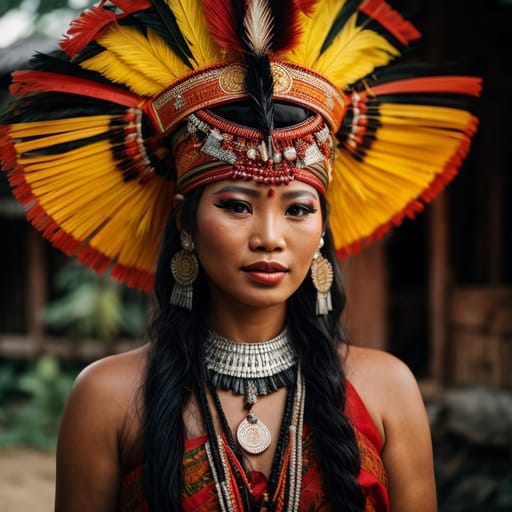
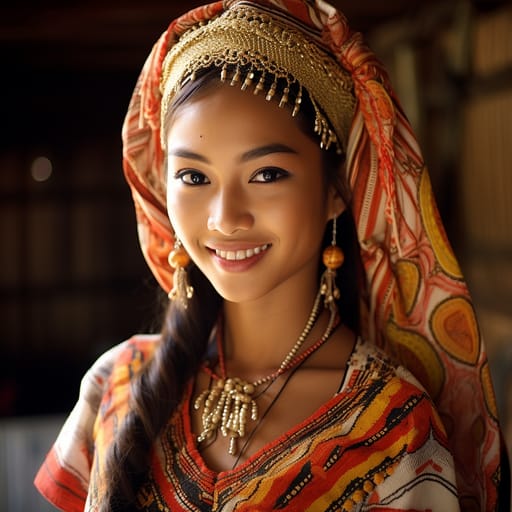
Typical Donggo Phenotypes
Reference for AI generation: hair, eyes, skin, facial structure, build
Donggo Body & Anatomy Reference
Per-feature anatomical profile for AI nude generation: Southeast Asian Austronesian / Austroasiatic phenotype
Donggo Boobs & Breasts
Donggo boobs follow the Southeast Asian Austronesian / Austroasiatic profile: small-to-medium cup, modest projection. Areolar diameter is usually 26-38mm, and the coloring is medium-brown to dark-brown areolar pigmentation against the tan-to-medium-brown skin tone. Breast shape tracks body composition (ectomorph, petite frame, mean adult female BMI 20-23), so Donggo breasts tend to be firm, modest projection. Expect a forward-set shape, not the fuller South Asian or Polynesian bust.
Donggo Ass & Hips
Donggo ass and hip morphology presents as small-to-medium, modest projection, narrower hip profile, distinctly different from the fuller glutes of the Pacific Islander phenotype. The Donggo pelvic profile shows narrow-to-medium iliac crests, anchored in the Southeast Asian Austronesian / Austroasiatic skeletal pattern. Donggo butt shots in adult AI imagery should render the small-to-medium, modest projection, narrower hip profile silhouette with the overall build (ectomorph, petite frame) and the fat distribution typical of the Southeast Asian Austronesian / Austroasiatic phenotype.
Donggo Vagina & Pussy
Donggo pussy anatomy typically shows medium-brown to dark-brown labial pigmentation. Pubic hair is usually straight-to-wavy fine-to-medium texture. In AI-generated Donggo nudes, labial color should blend into the tan to medium-brown skin with a gradual transition, and the hair should keep its straight-to-wavy fine-to-medium texture.
Donggo Dicks & Penis
Penis reference for Donggo men: regional mean ~11cm erect, moderate girth. Coloring: medium-brown shaft pigmentation. An accurate Donggo cock in AI imagery matches the surrounding tan to medium-brown skin rather than a generic porn default. Circumcision depends on religion and custom, not ancestry.
Donggo Body, Curves & Build
The Donggo figure is generally ectomorph, petite frame, with mean adult female BMI 20-23, characteristic of Southeast Asian Austronesian / Austroasiatic ancestry. AI image tools tend to flatten regional body types into a few stock shapes; here the Donggo build is kept as its own reference.
Donggo Skin Tone & Hair Texture
Skin: tan to medium-brown (Fitzpatrick III-V). Hair: straight-to-wavy 1A-2A, dark-brown to black. Both are typical of Southeast Asian Austronesian / Austroasiatic ancestry. The most common mistake in AI nudes of Donggo women is a body rendered lighter than the face.
Explore phenotype categories
Structured taxonomy with peer-reviewed scales · 22 anatomical categories
Erotic Poses & Sex Positions
From the pose catalog: 219 named positions with reference skeletons
Frequently asked questions about Donggo people
Where is the Donggo homeland?
The Donggo homeland is Highlands of Bima Regency in eastern Sumbawa, West Nusa Tenggara, Indonesia: the Donggo uplands west of Bima Bay and the Wawo and Sambori highlands to the east in Southeast Asia.
What language do Donggo people speak?
Donggo people primarily speak Bima (Mbojo), Donggo dialect (Austronesian, Central Malayo-Polynesian, Bima-Sumba group); Indonesian widely used.
What religion do Donggo people practice?
The predominant religion among Donggo people is Mostly Sunni Islam, with Catholic and Protestant minorities; traces of older ancestor and place-spirit veneration.






Make your own Donggo images
Five a day, free, no credits to buy. The studio starts from this group's phenotype data, so you can set body type, pose and style and keep the traits accurate.
Start with Donggo