No portrait yet
Wangunk Erotic
Connecticut River valley in central Connecticut, United States, around Middletown, Portland, Wethersfield and neighboring towns
Wangunk dialect of Southern New England Algonquian (Algonquian, Eastern Algonquian), no longer spoken; descendants speak English
Historically traditional Southern New England Algonquian beliefs; many later became Christian through colonial-era missions and the Brothertown movement
Southern New England Algonquian people; river communities at Pyquag (Wethersfield) and Mattabesett (Middletown); often grouped with the Mattabesic peoples; some families joined the Tunxis, Mohegan and Brothertown
About Wangunk People
The Wangunk are named for a turn in the water. The name is usually read as at the bend, and the bend is real. It is the place where the Connecticut River runs south through the middle of Connecticut and then swings southeast past what is now Middletown. Wangunk villages sat on both banks of that stretch, from Pyquag at present-day Wethersfield south to Mattabesett at Middletown and across to the Portland floodplain still called Wangunk Meadows. They were river people in a practical sense. They planted corn, beans and squash in the bottomland soil, fished the spring runs and moved between planting grounds and hunting country as the seasons turned.
Their language belonged to the Southern New England branch of Eastern Algonquian, part of a chain of dialects that ran from Long Island Sound to Massachusetts Bay. Very little of it was written down, and no one has spoken it for generations. Older histories place the Wangunk in a so-called Mattabesic confederacy of Connecticut peoples. Many scholars now treat that label with caution, because in practice authority ran through local sachems and family ties.
The key figure of early contact is Sowheag, the sachem at Pyquag. In the mid-1630s he let English settlers from Massachusetts onto his land, on the understanding that he could stay nearby. Instead they drove him off. The colonists later blamed him for encouraging the Pequot raid on Wethersfield in April 1637. That raid killed nine settlers and helped push Connecticut into the Pequot War. Sowheag moved his seat to Mattabesett. When English settlement reached there too, around 1650, the Wangunk were left with reserved tracts on both sides of the river. Over the next century those tracts shrank through sales, debt and steady pressure.
Downriver, at Machimoodus in present-day East Haddam, earthquake rumblings called the Moodus Noises were understood as the work of a powerful spirit, and colonial writers recorded that belief. By the late 1700s the reserved land was nearly gone. Some Wangunk families joined the Tunxis at Farmington or the Mohegan. Some joined the Brothertown movement, which took Christian Algonquians from southern New England to New York and later to Wisconsin. Others stayed. The Wangunk have neither federal nor state recognition, but descendant families still live around Middletown. They are active in local history work and talk regularly with local institutions on former Wangunk land, including Wesleyan University.
Related ethnic groups
Groups that share Wangunk's homeland, region, language, or religious tradition. These are likely candidates for comparative phenotype reference.
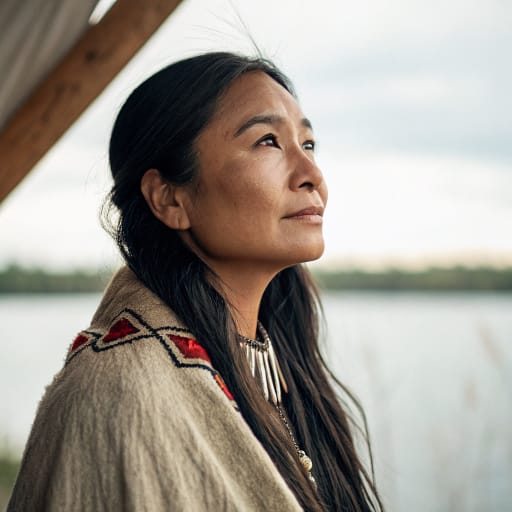
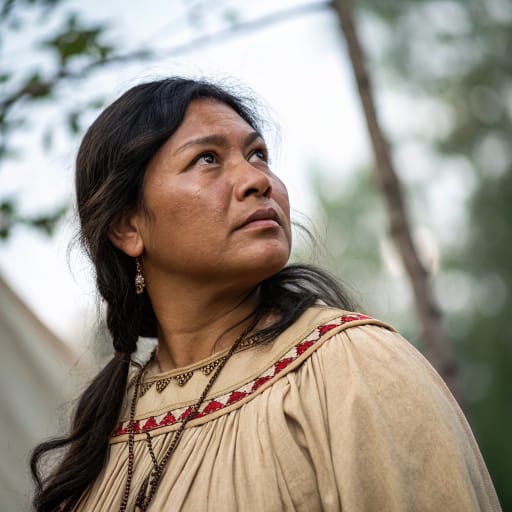
Typical Wangunk Phenotypes
Reference for AI generation: hair, eyes, skin, facial structure, build
Wangunk Body & Anatomy Reference
Per-feature anatomical profile for AI nude generation: Indigenous Northern American / Algonquian-Iroquoian phenotype
Wangunk Boobs & Breasts
The typical Wangunk bust is medium cup, moderate projection, in line with the wider Indigenous Northern American / Algonquian-Iroquoian pattern. Areolas usually fall in the 30-44mm range, with medium-brown areolar pigmentation against the copper-to-medium-brown skin tone. Compared with the smaller East Asian bust, Wangunk breasts sit forward and are generally full and moderate projection. A faithful AI render of Wangunk tits keeps that shape and areola size.
Wangunk Ass & Hips
Butt shape among Wangunk women: medium, moderate-to-full projection, over medium iliac crests. This follows Indigenous Northern American / Algonquian-Iroquoian ancestry and looks quite unlike the slim East Asian narrow-hip profile. An accurate Wangunk ass in adult AI imagery keeps both the silhouette and the overall build (mesomorph, broader frame in northern Indigenous populations) instead of a generic average.
Wangunk Vagina & Pussy
Vulvar anatomy among Wangunk women: medium-brown labial pigmentation. Pubic hair tends to be straight medium-coarse texture, in the usual inverted-triangle pattern. Both follow Indigenous Northern American / Algonquian-Iroquoian pigmentation, which is why Wangunk pussy renders should not fall back on a pale, sparse Western template.
Wangunk Dicks & Penis
The Wangunk cock profile, from Indigenous Northern American / Algonquian-Iroquoian anthropometric data: regional mean ~13cm erect; moderate girth; medium-brown shaft pigmentation. Pubic hair has a straight medium-coarse texture and forms the usual inverted-V pattern. Whether Wangunk men are circumcised follows religious and cultural practice rather than phenotype.
Wangunk Body, Curves & Build
Build and curves among Wangunk women follow the Indigenous Northern American / Algonquian-Iroquoian pattern: mesomorph, broader frame in northern Indigenous populations, mean adult female BMI 25-28. Proportions matter as much as skin tone, so Wangunk figures should keep their regional height and limb ratios.
Wangunk Skin Tone & Hair Texture
The Wangunk skin range is copper to medium-brown (Fitzpatrick III-V), and hair tends to be straight 1A, dark-brown to black, often thick and dense. That combination marks the Indigenous Northern American / Algonquian-Iroquoian phenotype, and skin tone is the trait AI generators most often get wrong for Wangunk women.
Explore phenotype categories
Structured taxonomy with peer-reviewed scales · 22 anatomical categories
Erotic Poses & Sex Positions
From the pose catalog: 219 named positions with reference skeletons
Frequently asked questions about Wangunk people
Where is the Wangunk homeland?
The Wangunk homeland is Connecticut River valley in central Connecticut, United States, around Middletown, Portland, Wethersfield and neighboring towns in North America.
What language do Wangunk people speak?
Wangunk people primarily speak Wangunk dialect of Southern New England Algonquian (Algonquian, Eastern Algonquian), no longer spoken; descendants speak English.
What religion do Wangunk people practice?
The predominant religion among Wangunk people is Historically traditional Southern New England Algonquian beliefs; many later became Christian through colonial-era missions and the Brothertown movement.






Make your own Wangunk images
Five a day, free, no credits to buy. The studio starts from this group's phenotype data, so you can set body type, pose and style and keep the traits accurate.
Start with Wangunk