No portrait yet
Unalachtigo Erotic
Lower Delaware River valley and Delaware Bay shore, in present-day southern New Jersey and northern Delaware, United States; the exact extent is disputed.
Unalachtigo, a sparsely recorded variety of Unami (Lenape; Eastern Algonquian branch of the Algic family), no longer spoken as a distinct dialect.
Traditional Lenape religion: a creator, spirit beings (manetuwak) and personal guardian spirits sought in visions; some later converts to Moravian Christianity.
One of three divisions of the Lenape (Delaware) in colonial accounts, alongside the Unami and Munsee; linked by Heckewelder to the Turkey emblem.
About Unalachtigo People
The Unalachtigo were one of the three divisions that colonial writers counted among the Lenape, or Delaware: the southern one, usually placed on the lower Delaware River and the Delaware Bay shore of what is now southern New Jersey and northern Delaware, from before European contact into the eighteenth century. They no longer exist as a separate body: their descendants merged into the wider Delaware nation and into families who never left New Jersey. The name is usually glossed as "people who live near the ocean," and it reaches us mainly through Moravian missionaries, who set the Unalachtigo beside the Unami upriver and the Munsee of the northern highlands. How solid that scheme ever was is an open question. John Heckewelder gave each division an animal emblem, the turkey for the Unalachtigo, but later scholars read Wolf, Turtle and Turkey as matrilineal clans running through every Lenape town, not as territories. One reading holds that the word began as a Munsee label for Unami speakers in west-central New Jersey, not a name for coastal people at all. Their speech was barely written down. What survives points to a variety of Unami, an Eastern Algonquian language and sister to Munsee, not a separate tongue.
Daily life followed the water. Families lived in small, self-governing villages of bark-covered houses, planted corn, beans and squash, and moved with the seasons to fish runs, shellfish beds and hunting grounds. Descent and clan passed through the mother. Religion centered on a creator, a host of lesser spirits called manetuwak, and the guardian a young person sought in a vision. Europeans reached this shore early: Dutch and Swedes traded and settled on the lower Delaware in the 1620s and 1630s, the English followed, and epidemics and land sales emptied the villages within a few generations. In 1758 the Lenape still living in southern New Jersey gave up their remaining claims in exchange for Brotherton, a reservation in Burlington County. It never prospered, and in 1802 most residents left to join the Stockbridge in New York, their descendants later moving on to Wisconsin. Others had already gone west with the main body of the Delaware, through Ohio, Indiana and Kansas to Indian Territory, and as the divisions merged along the way the Unalachtigo name fell out of use. The legacy is carried by the Delaware Tribe of Indians and the Delaware Nation in Oklahoma, the Stockbridge-Munsee Community in Wisconsin, the Delaware communities of Ontario, and the state-recognized Nanticoke Lenni-Lenape Tribal Nation in Cumberland County, New Jersey, which traces itself in part to the bay-shore Lenape who stayed.
Related ethnic groups
Groups that share Unalachtigo's homeland, region, language, or religious tradition. These are likely candidates for comparative phenotype reference.
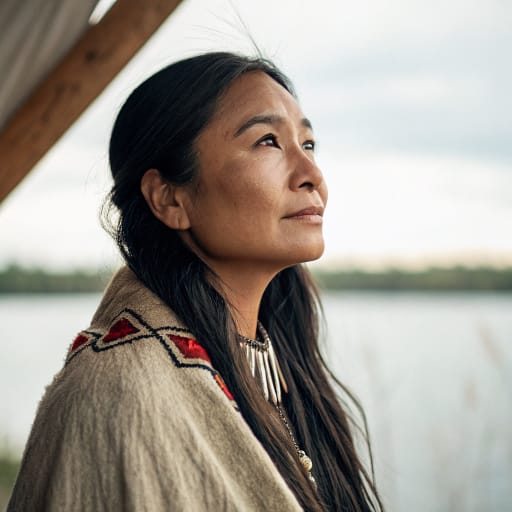
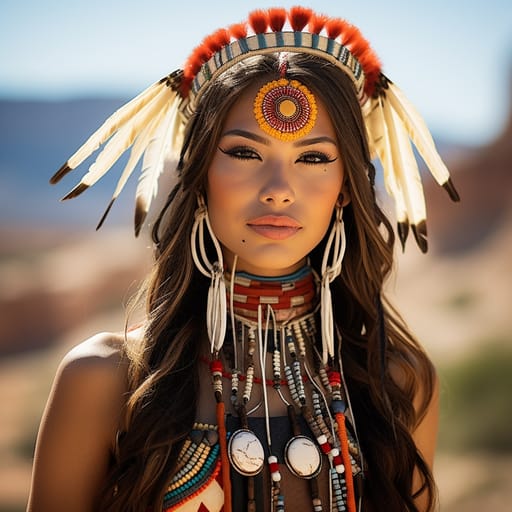
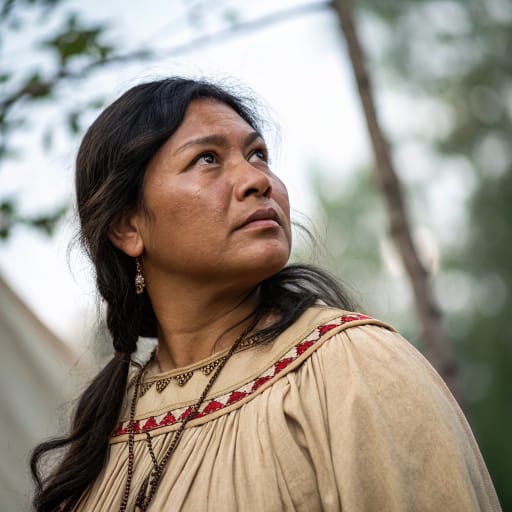
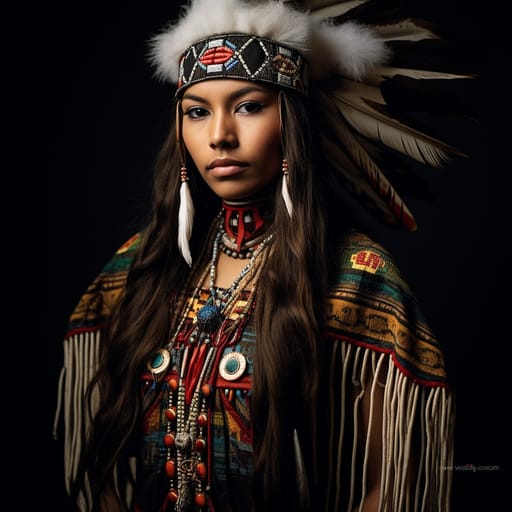

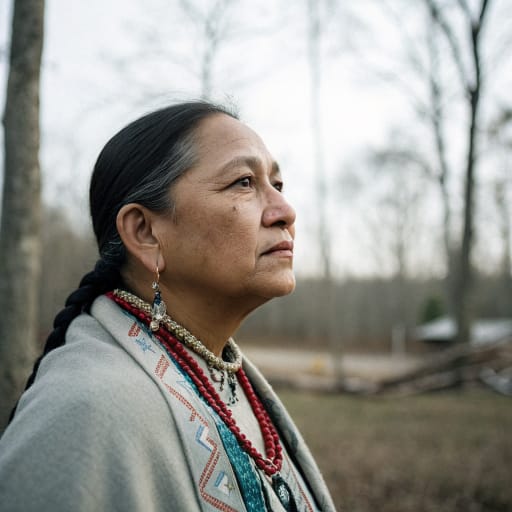
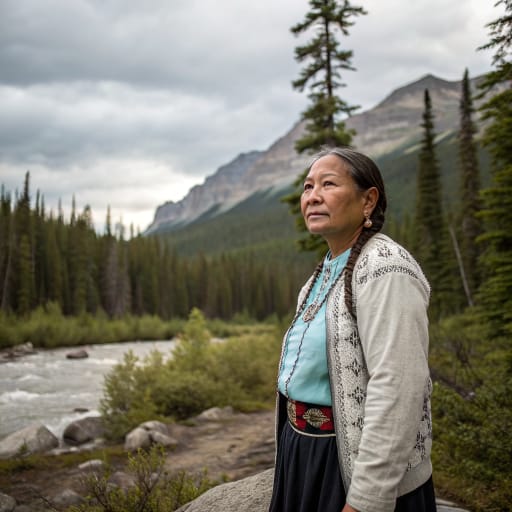
Typical Unalachtigo Phenotypes
Reference for AI generation: hair, eyes, skin, facial structure, build
Unalachtigo Body & Anatomy Reference
Anatomy by feature, Indigenous Northern American / Algonquian-Iroquoian phenotype
Unalachtigo Boobs & Breasts
Bust reference for Unalachtigo women: medium cup, moderate projection, which is typical of Indigenous Northern American / Algonquian-Iroquoian ancestry. Areolas measure about 30-44mm across, with medium-brown pigmentation. Body type (mesomorph, broader frame in northern Indigenous populations) shapes the bust as well, so Unalachtigo tits are usually full and moderate projection. In AI imagery, keep the forward-set shape rather than drifting toward the smaller East Asian bust.
Unalachtigo Ass & Hips
The Unalachtigo ass is typically medium, moderate-to-full projection, which sets it apart from the slim East Asian narrow-hip profile. Underneath, the pelvis shows medium iliac crests, part of the Indigenous Northern American / Algonquian-Iroquoian skeletal pattern. For Unalachtigo butt pics and AI renders, match that silhouette and the overall build (mesomorph, broader frame in northern Indigenous populations).
Unalachtigo Vagina & Pussy
Unalachtigo pussy and vulvar anatomy presents medium-brown labial pigmentation, consistent with the Indigenous Northern American / Algonquian-Iroquoian phenotype's pigmentation pattern. Unalachtigo pubic hair is typically straight medium-coarse texture, in the inverted-triangle pattern. For anatomically accurate Unalachtigo pussy renders the labial coloration should match the surrounding copper to medium-brown skin tone with a continuous gradient, and the hair should keep its straight medium-coarse texture.
Unalachtigo Dicks & Penis
Unalachtigo dicks follow the Indigenous Northern American / Algonquian-Iroquoian reference data: regional mean ~13cm erect; moderate girth; medium-brown shaft pigmentation. Shaft color should track the copper to medium-brown skin tone with a smooth change toward the glans, and Unalachtigo pubic hair keeps its straight medium-coarse texture.
Unalachtigo Body, Curves & Build
Unalachtigo body type and overall build presents as mesomorph, broader frame in northern Indigenous populations, with mean adult female BMI 25-28: the characteristic Indigenous Northern American / Algonquian-Iroquoian habitus. Unalachtigo curves and proportions should keep the regional skeletal frame (height, shoulder-to-hip ratio, limb proportions) rather than a generic mesomorph default.
Unalachtigo Skin Tone & Hair Texture
Unalachtigo skin sits in the copper to medium-brown (Fitzpatrick III-V) band. Hair is typically straight 1A, dark-brown to black, often thick and dense, in keeping with the Indigenous Northern American / Algonquian-Iroquoian phenotype. In nude renders the skin should stay one even tone from face to body, and body, pubic and head hair should match.
Explore phenotype categories
Structured taxonomy with peer-reviewed scales · 22 anatomical categories
Erotic Poses & Sex Positions
From the pose catalog: 219 named positions with reference skeletons
Frequently asked questions about Unalachtigo people
Where is the Unalachtigo homeland?
The Unalachtigo homeland is Lower Delaware River valley and Delaware Bay shore, in present-day southern New Jersey and northern Delaware, United States; the exact extent is disputed. in North America.
What language do Unalachtigo people speak?
Unalachtigo people primarily speak Unalachtigo, a sparsely recorded variety of Unami (Lenape; Eastern Algonquian branch of the Algic family), no longer spoken as a distinct dialect..
What religion do Unalachtigo people practice?
The predominant religion among Unalachtigo people is Traditional Lenape religion: a creator, spirit beings (manetuwak) and personal guardian spirits sought in visions; some later converts to Moravian Christianity..






Make your own Unalachtigo images
Five a day, free, no credits to buy. The studio starts from this group's phenotype data, so you can set body type, pose and style and keep the traits accurate.
Start with Unalachtigo