No portrait yet
Uduk Erotic
Hill country around Chali in southern Blue Nile State, Sudan, near the Ethiopian border; since 1987 largely displaced to refugee camps in western Ethiopia and in Maban County, South Sudan.
Uduk, called Twam pa by its speakers (Koman family, usually grouped under Nilo-Saharan); Sudanese Arabic as a second language.
Protestant Christianity, rooted in the Sudan Interior Mission at Chali, alongside indigenous belief centered on arum spirit power and ebony divination; a small Muslim minority.
One of the Koman-speaking peoples of the Sudan-Ethiopia borderland, alongside the Komo, Kwama and Opuuo; internally a northern cluster around Chali and a southern one in the Yabus valley, organized by matrilineal birth-groups.
About Uduk People
The Uduk call themselves 'kwanim pa, roughly "people of the homeland," and the name carries more weight than it first appears to. They are a small farming people, numbering in the low tens of thousands, from the hill country around Chali in the southern part of Sudan's Blue Nile State, close to the Ethiopian border. Their own account of themselves is a story of survivors: slave raiding in the late nineteenth century tore through these borderlands, and the communities that regrouped afterward were built from remnants, refugees and foundlings. That memory shaped their social rules. Descent runs through mothers, in matrilineal birth-groups, and the Uduk traditionally refuse bridewealth, on the reasoning that taking payment for a sister or daughter looks too much like selling a person.
Their language, which they call Twam pa, belongs to the small Koman family, a cluster spoken along the Sudan-Ethiopia frontier and usually placed within Nilo-Saharan, though that placement is debated. It has little in common with the Arabic of the Sudanese state or the Nilotic languages to the south, one reason the Uduk have so often been treated as marginal. The Sudan Interior Mission set up at Chali in 1938, and a large share of the Uduk became Christian; when foreign missionaries were expelled in 1964, the church carried on under local leaders. Alongside it ran older practices: ideas about arum, the spirit or animating force in people and the wild, and diviners who burn ebony wood over water and read the result to diagnose what is troubling someone. Anthropologist Wendy James documented all this over four decades.
The defining fact of recent Uduk life is displacement. A colonial boundary change in the 1950s left their district in northern Sudan rather than the south, and when the second civil war reached Blue Nile they were caught between the army and the SPLA. In 1987 their villages were burned and nearly the whole population fled to Ethiopia. What followed was years of forced trekking between camps on both sides of the border, Assosa, Itang, Nasir, and finally Bonga near Gambela, where many stayed for over a decade. People began returning home after the 2005 peace agreement, only for fighting to resume in Blue Nile in 2011 and push them out again, this time largely into refugee camps in Maban County, South Sudan, and back into Ethiopia. A small number were resettled in the United States. Through all of it they have kept the language, the hymns, the lyre and flute music, and a stubborn sense of being one people with one home to go back to.
Related ethnic groups
Groups that share Uduk's homeland, region, language, or religious tradition. These are likely candidates for comparative phenotype reference.
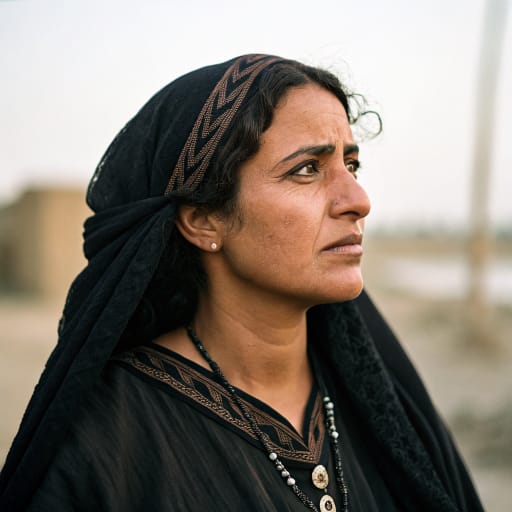
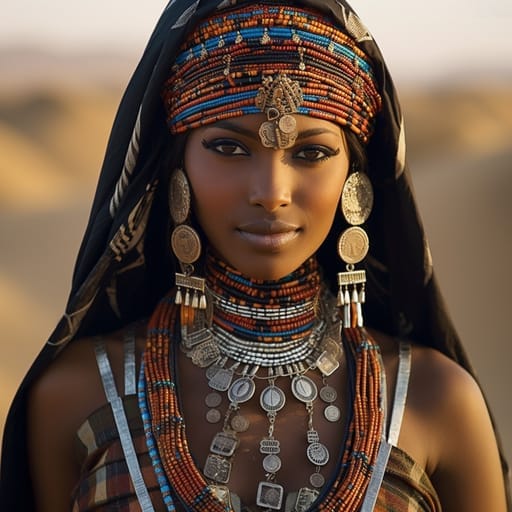
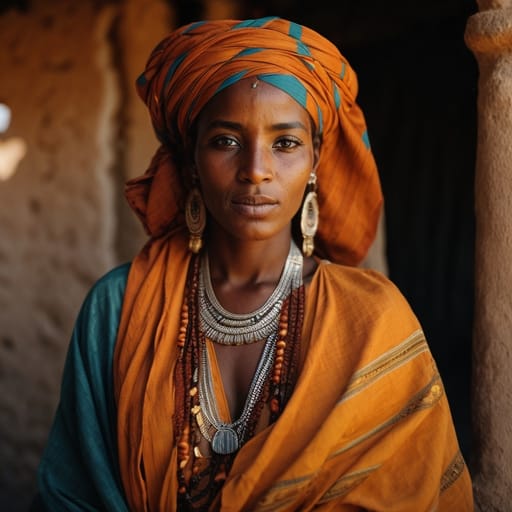
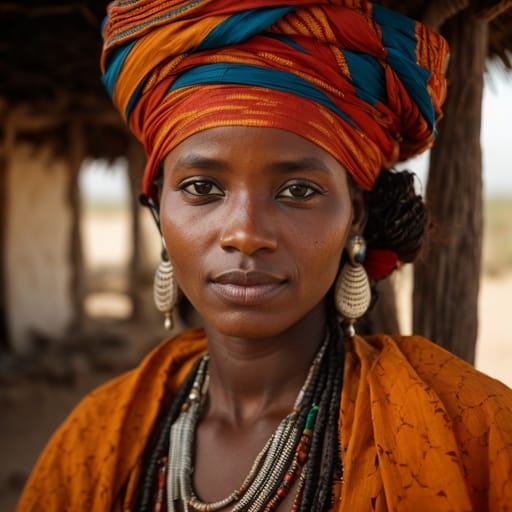
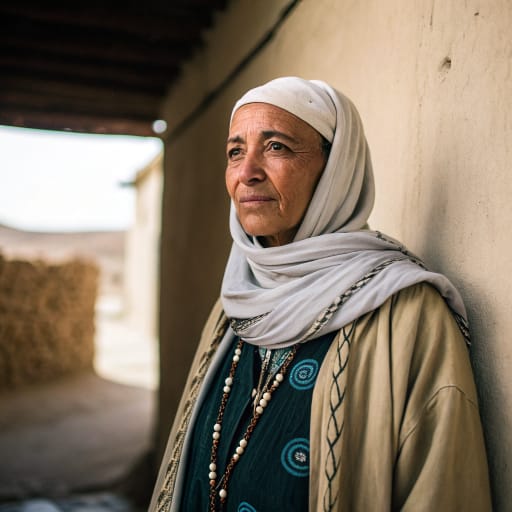
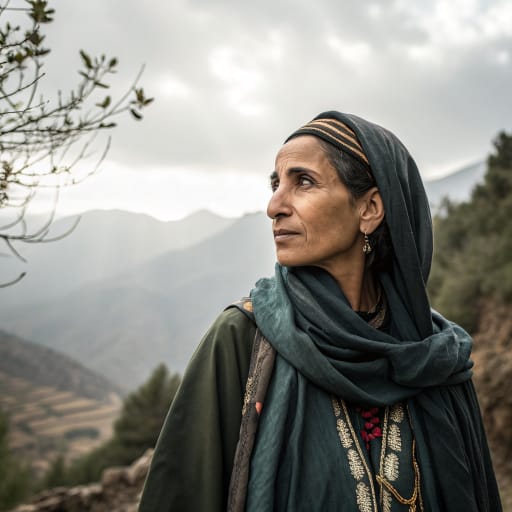
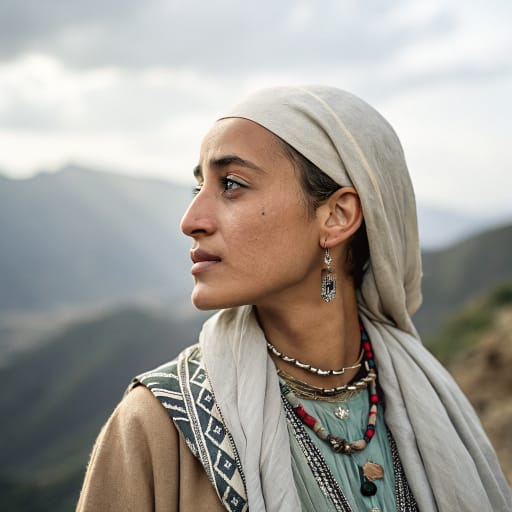
Typical Uduk Phenotypes
Reference for AI generation: hair, eyes, skin, facial structure, build
Uduk Body & Anatomy Reference
Anatomy by feature, Berber / Mediterranean-Saharan phenotype
Uduk Boobs & Breasts
Bust reference for Uduk women: medium-to-large cup, full, moderate projection, which is typical of Berber / Mediterranean-Saharan ancestry. Areolas measure about 30-44mm across, with medium-brown to dark-brown pigmentation. Body type (mesomorph with fuller hip-and-bust deposition) shapes the bust as well, so Uduk tits are usually fuller and softer than the Cushitic East African norm. In AI imagery, keep the forward-set shape rather than drifting toward the smaller East Asian bust profile.
Uduk Ass & Hips
The Uduk ass is typically medium-to-full, moderate projection, broader hip profile, which sets it apart from the slim narrow-hip Cushitic East African profile. Underneath, the pelvis shows medium-to-wide iliac crests, fuller gluteal-femoral fat distribution, part of the Berber / Mediterranean-Saharan skeletal pattern. For Uduk butt pics and AI renders, match that silhouette and the overall build (mesomorph with fuller hip-and-bust deposition).
Uduk Vagina & Pussy
Uduk pussy and vulvar anatomy presents medium-brown to dark-brown labial pigmentation, fuller labia minora, consistent with the Berber / Mediterranean-Saharan phenotype's pigmentation pattern. Uduk pubic hair is typically wavy-to-coiled medium-coarse texture, dense distribution, in the inverted-triangle pattern. For anatomically accurate Uduk pussy renders the labial coloration should match the surrounding olive to medium-brown skin tone with a continuous gradient, and the hair should keep its wavy-to-coiled medium-coarse texture.
Uduk Dicks & Penis
Uduk dicks follow the Berber / Mediterranean-Saharan reference data: regional mean ~13-14cm erect; moderate girth; medium-brown shaft pigmentation. Shaft color should track the olive to medium-brown skin tone with a smooth change toward the glans, and Uduk pubic hair keeps its wavy-to-coiled medium-coarse texture.
Uduk Body, Curves & Build
Uduk body type and overall build presents as mesomorph with fuller hip-and-bust deposition, with mean adult female BMI 24-28: the characteristic Berber / Mediterranean-Saharan habitus. Uduk curves and proportions should keep the regional skeletal frame (height, shoulder-to-hip ratio, limb proportions) rather than a generic mesomorph default.
Uduk Skin Tone & Hair Texture
Uduk skin sits in the olive to medium-brown (Fitzpatrick III-V) band. Hair is typically wavy-to-curly 2B-3C, often dark-brown to black, in keeping with the Berber / Mediterranean-Saharan phenotype. In nude renders the skin should stay one even tone from face to body, and body, pubic and head hair should match.
Explore phenotype categories
Structured taxonomy with peer-reviewed scales · 22 anatomical categories
Erotic Poses & Sex Positions
From the pose catalog: 219 named positions with reference skeletons
Frequently asked questions about Uduk people
Where is the Uduk homeland?
The Uduk homeland is Hill country around Chali in southern Blue Nile State, Sudan, near the Ethiopian border; since 1987 largely displaced to refugee camps in western Ethiopia and in Maban County, South Sudan. in Northern Africa.
What language do Uduk people speak?
Uduk people primarily speak Uduk, called Twam pa by its speakers (Koman family, usually grouped under Nilo-Saharan); Sudanese Arabic as a second language..
What religion do Uduk people practice?
The predominant religion among Uduk people is Protestant Christianity, rooted in the Sudan Interior Mission at Chali, alongside indigenous belief centered on arum spirit power and ebony divination; a small Muslim minority..






Make your own Uduk images
Five a day, free, no credits to buy. The studio starts from this group's phenotype data, so you can set body type, pose and style and keep the traits accurate.
Start with Uduk