No portrait yet
Tula Erotic
The Tula hill area of Kaltungo Local Government Area, southern Gombe State, northeastern Nigeria
Tula (Adamawa, Niger-Congo); Hausa widely used as a second language
Christianity and Islam, with some traditional religion still practiced
Main divisions: Tula Yiri, Tula Wange and Tula Baule; linguistically part of the Waja group of Adamawa-speaking peoples, alongside the Waja and Dadiya
About Tula People
The Tula are a hill people, and the hills explain a great deal about them. Their homeland is a rocky upland in southern Gombe State, in northeastern Nigeria, a short distance from the town of Kaltungo. The community is organized around a few core settlements whose names still mark its main divisions: Tula Yiri, Tula Wange and Tula Baule. By Nigerian standards they are a small people living among other small peoples. What holds them together is that ground, a shared language, and a long habit of holding their own in difficult country.
That language, also called Tula, belongs to the Adamawa languages of the Niger-Congo family. Its nearest relatives are spoken by neighboring hill communities such as the Waja and Dadiya. What makes it interesting is the language next door. Tangale, spoken in Kaltungo and the country around it, is a Chadic language, part of the unrelated Afroasiatic family. That makes the boundary between the Tula and their closest neighbors one of the deepest language divides in Africa, and people cross it every day. Hausa is the common language of trade across the region, and English is the language of school and government.
The terrain shaped Tula history. In the nineteenth century the Fulani emirate of Gombe spread across the surrounding plains, and hill peoples throughout this part of Nigeria used steep, broken ground to stay out of its reach and keep their autonomy. British rule in the early twentieth century brought the Tula into the colonial administration of Northern Nigeria, and their towns now sit within Kaltungo Local Government Area.
Religious life has changed sharply over the past century. Christian missions made deep inroads in southern Gombe, and churches are now central to community life for many Tula, while Islam has its own followers. The older traditional religion has not vanished entirely. Across the region, faith is bound up with identity. Like their neighbors, the Tula see themselves as a distinct minority in a north where Islam and the Hausa and Fulani have long set the tone.
Most Tula still farm in and around their home districts. Many others have moved to Gombe and other Nigerian cities for school and work, and they carry the name, and the hills behind it, with them.
Related ethnic groups
Groups that share Tula's homeland, region, language, or religious tradition. These are likely candidates for comparative phenotype reference.
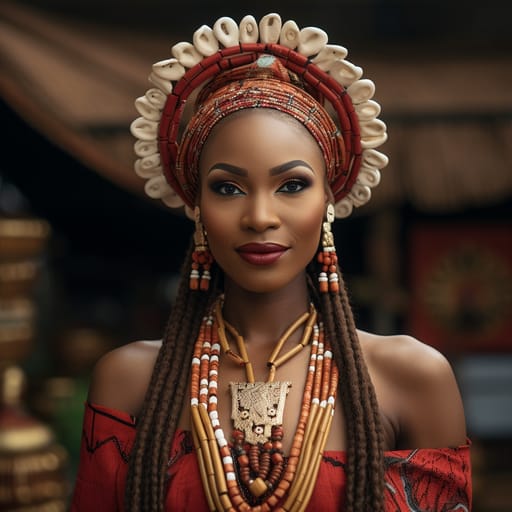
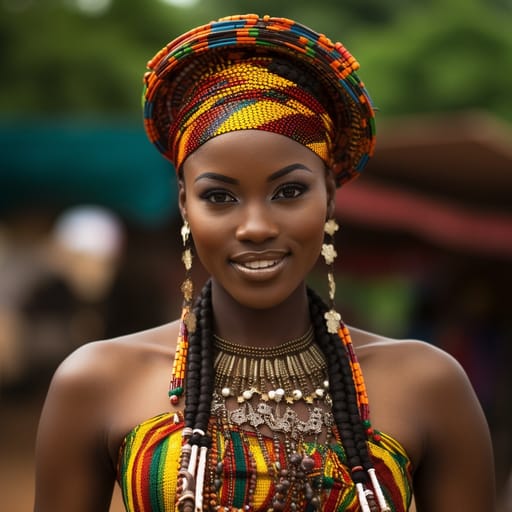
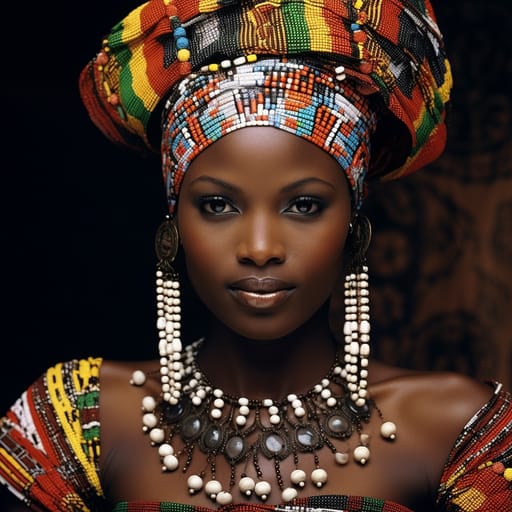
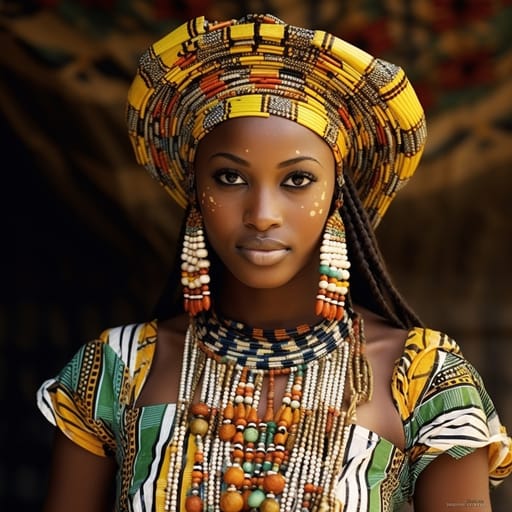
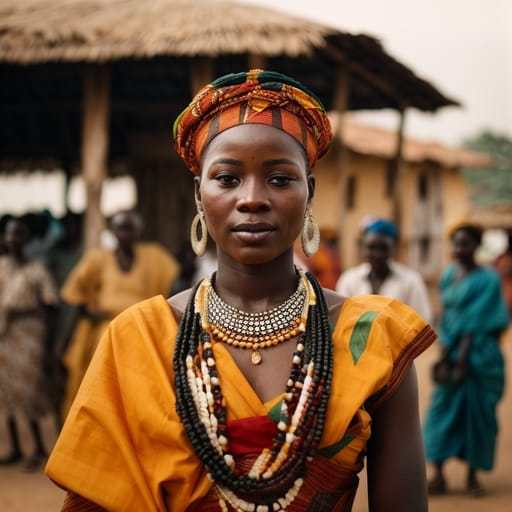
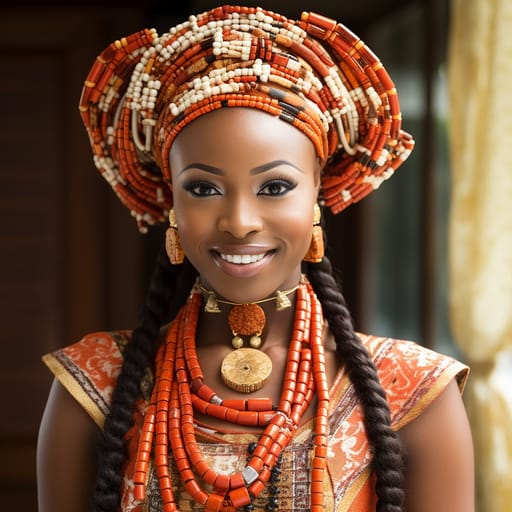
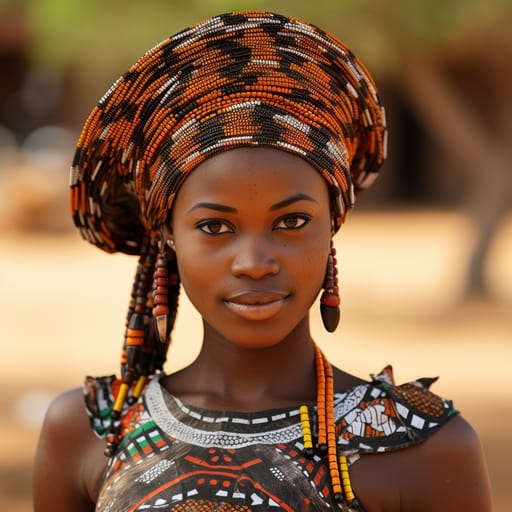
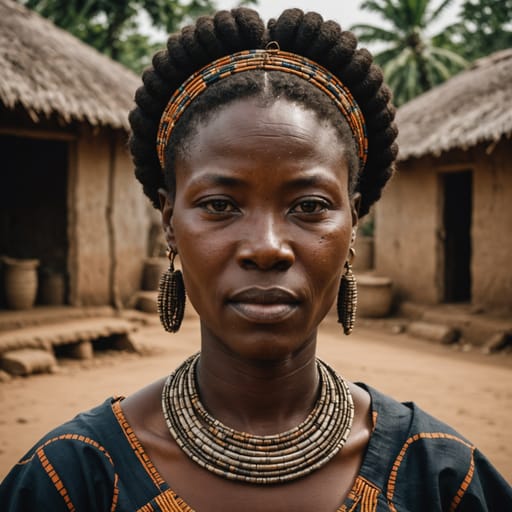
Typical Tula Phenotypes
Reference for AI generation: hair, eyes, skin, facial structure, build
Tula Body & Anatomy Reference
Anatomy by feature, West African Niger-Congo phenotype
Tula Boobs & Breasts
Tula boobs follow the West African Niger-Congo profile: medium-to-large cup, full, projecting. Areolar diameter is usually 35-50mm, and the coloring is deep-brown to near-black areolar pigmentation against the medium-to-deep-brown skin tone. Breast shape tracks body composition (mesomorph with strong gluteal-femoral fat distribution, mean adult female BMI 24-27), so Tula breasts tend to be fuller and more projecting than the East African norm. Expect a forward-set shape, not the smaller conical Cushitic East African profile.
Tula Ass & Hips
Tula ass and hip morphology presents as wide-set, full, heavily projected glutes, distinctly different from the slim narrow-hip Cushitic East African profile. The Tula pelvic profile shows wide iliac crests, broad gynoid pelvic pattern, high glute-to-waist ratio, anchored in the West African Niger-Congo skeletal pattern. Tula butt shots in adult AI imagery should render the wide-set, full, heavily projected glutes silhouette with the overall build (mesomorph with strong gluteal-femoral fat distribution) and the fat distribution typical of the West African Niger-Congo phenotype.
Tula Vagina & Pussy
Tula pussy anatomy typically shows deep-brown to near-black labial pigmentation, fuller labia minora. Pubic hair is usually tightly-coiled coarse texture, densely distributed. In AI-generated Tula nudes, labial color should blend into the medium-brown to deep-brown skin with a gradual transition, and the hair should keep its tightly-coiled coarse texture.
Tula Dicks & Penis
Penis reference for Tula men: regional mean ~14-15cm erect, above-average girth, ~13cm circumference. Coloring: deep-brown-to-near-black shaft pigmentation. An accurate Tula cock in AI imagery matches the surrounding medium-brown to deep-brown skin rather than a generic porn default. Circumcision depends on religion and custom, not ancestry.
Tula Body, Curves & Build
The Tula figure is generally mesomorph with strong gluteal-femoral fat distribution, with mean adult female BMI 24-27, characteristic of West African Niger-Congo ancestry. AI image tools tend to flatten regional body types into a few stock shapes; here the Tula build is kept as its own reference.
Tula Skin Tone & Hair Texture
Skin: medium-brown to deep-brown (Fitzpatrick V-VI). Hair: tight 4A-4C coil, often worn natural, braided, or relaxed. Both are typical of West African Niger-Congo ancestry. The most common mistake in AI nudes of Tula women is a body rendered lighter than the face.
Explore phenotype categories
Structured taxonomy with peer-reviewed scales · 22 anatomical categories
Erotic Poses & Sex Positions
From the pose catalog: 219 named positions with reference skeletons
Frequently asked questions about Tula people
Where is the Tula homeland?
The Tula homeland is The Tula hill area of Kaltungo Local Government Area, southern Gombe State, northeastern Nigeria in Western Africa.
What language do Tula people speak?
Tula people primarily speak Tula (Adamawa, Niger-Congo); Hausa widely used as a second language.
What religion do Tula people practice?
The predominant religion among Tula people is Christianity and Islam, with some traditional religion still practiced.






Make your own Tula images
Five a day, free, no credits to buy. The studio starts from this group's phenotype data, so you can set body type, pose and style and keep the traits accurate.
Start with Tula