No portrait yet
Tsaangi Erotic
Chaillu Massif on the border of Gabon and the Republic of the Congo: Ngounié, Ogooué-Lolo and Haut-Ogooué provinces in Gabon; the Niari forest around Mossendjo and Mayoko in Congo.
Tsaangi, also written Itsangi (Niger-Congo, Bantu, Nzebi group B.50); French in both countries, with Kituba as a trade language on the Congolese side.
Christianity (Catholic and Protestant) alongside ancestor veneration and regional initiation societies such as Mwiri, Njembe and Bwiti.
Part of the Nzebi group of Bantu peoples, with the Nzebi, Duma and Wandji; divided by the border into Gabonese and Congolese communities and organized by matrilineal clans.
About Tsaangi People
The Tsaangi are a small Bantu-speaking people of the Chaillu Massif, the wet, forested highlands that straddle the border between southern Gabon and the Republic of the Congo. The name also appears as Tsangui or Batsangui, the French spelling that still dominates on maps and in museum catalogs. What marks them out among their neighbors is not a territory, since they never had a state or a paramount chief, but a language, a web of matrilineal clans, and a reputation. In this stretch of forest the Tsaangi were known as the iron people: smelters and smiths whose blades, hoes and raw metal moved along precolonial trade paths to the Nzebi, the Punu and beyond. Their language, Tsaangi, sits in the Nzebi cluster of Bantu languages, alongside Nzebi, Duma and Wandji. The languages are close, and the peoples closer: Tsaangi and Nzebi share clan names, marriage ties and a long habit of living in interleaved villages. Descent runs through the mother. A child belongs to the mother's clan, and a maternal uncle traditionally carries more weight than a father. In Gabon, French does the work of school and town. On the Congolese side, around Mossendjo and Mayoko in the Niari forest, Kituba serves as the market language too.
Most Tsaangi today are Christian, Catholic or Protestant, and most also take seriously what Christianity never displaced: the ancestors, the healer's diagnosis, and the initiation societies common across southern Gabon, Mwiri for men and Njembe for women, with Bwiti present as well. Outsiders are most likely to have met the Tsaangi name in an auction catalog. Their white-faced masks, cousins of the better known Punu ones, are coated in kaolin and carry raised bands of scarification on the forehead and cheeks, echoing marks that were once cut into living faces. The twentieth century pulled the Chaillu apart and stitched it back in odd ways. French administrators regrouped scattered forest hamlets along roads. From 1962 to 1991 a manganese railway ran from Mbinda through Mayoko and Mossendjo toward the coast, bringing wage work, then taking it away when the ore was rerouted through Gabon. Imported metal had shut down the furnaces generations earlier. What remains is a farming life of cassava, plantain and peanuts, supplemented by hunting and by relatives in Libreville, Franceville, Dolisie or Pointe-Noire who send money home, and a border that cuts through clans who still treat it as a formality.
Related ethnic groups
Groups that share Tsaangi's homeland, region, language, or religious tradition. These are likely candidates for comparative phenotype reference.
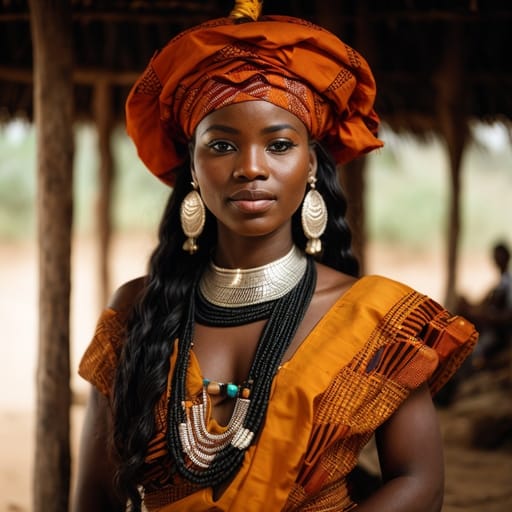
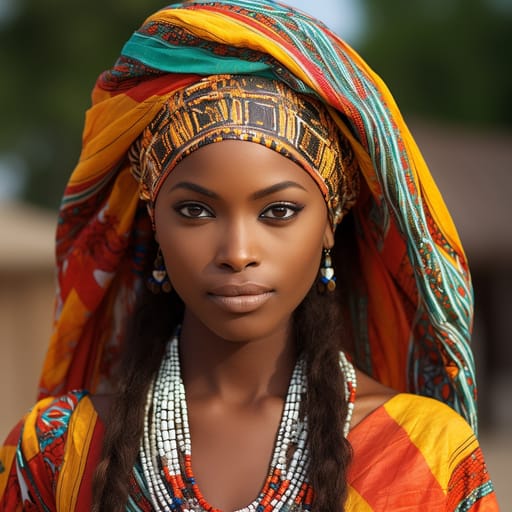
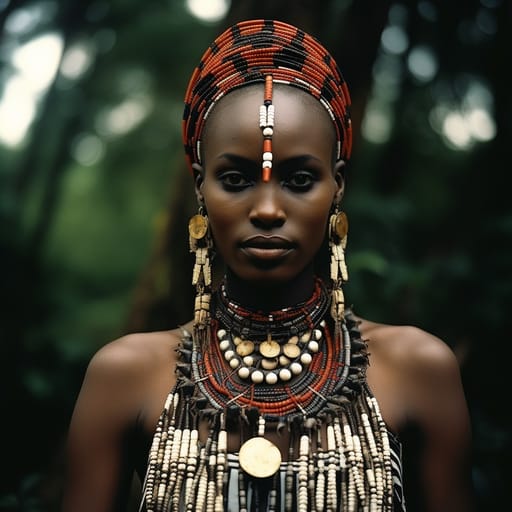
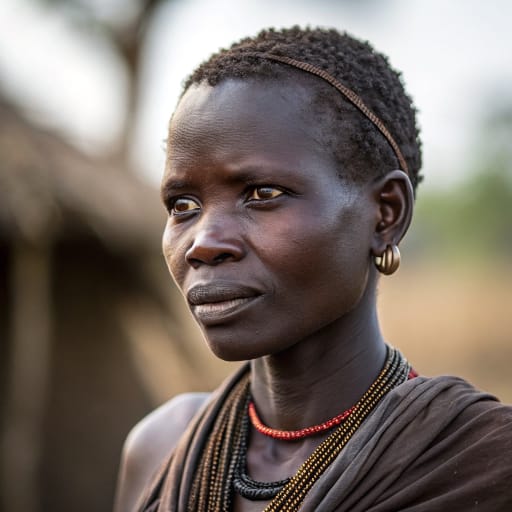
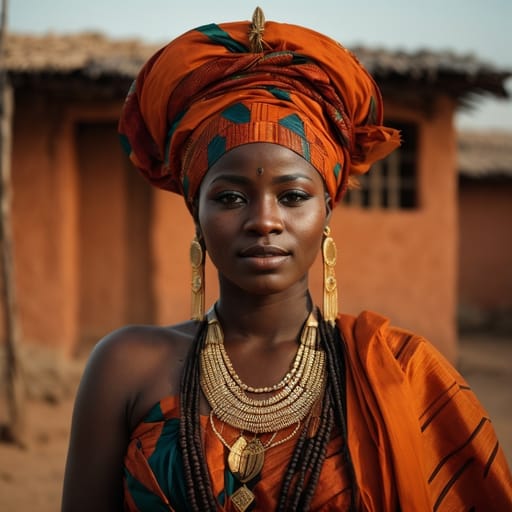
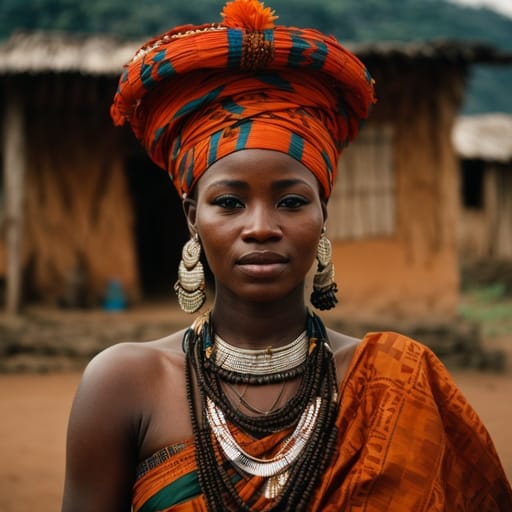
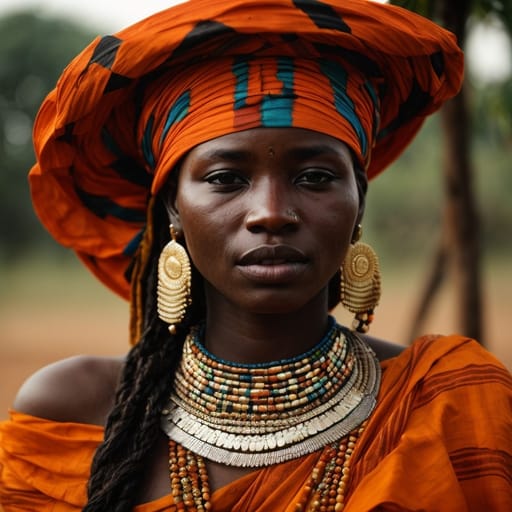
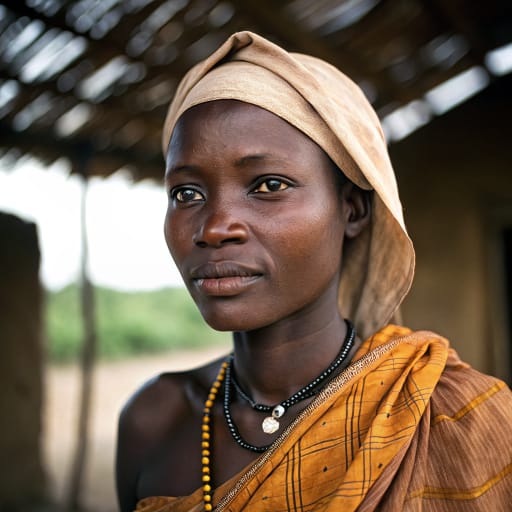
Typical Tsaangi Phenotypes
Reference for AI generation: hair, eyes, skin, facial structure, build
Tsaangi Body & Anatomy Reference
Bantu / Central African Niger-Congo phenotype: anatomy reference for AI nude generation
Tsaangi Boobs & Breasts
Bust reference for Tsaangi women: medium-to-large cup, full, projecting, which is typical of Bantu / Central African Niger-Congo ancestry. Areolas measure about 32-48mm across, with deep-brown pigmentation. Body type (mesomorph with strong gluteal-femoral fat deposition) shapes the bust as well, so Tsaangi tits are usually fuller projection than East African; comparable to West African norm. In AI imagery, keep the forward-set shape rather than drifting toward the smaller East African conical profile.
Tsaangi Ass & Hips
The Tsaangi ass is typically full, projected, wide-set glutes, which sets it apart from the slim narrow-hip Cushitic East African profile. Underneath, the pelvis shows broad iliac crests, gynoid pelvic pattern, part of the Bantu / Central African Niger-Congo skeletal pattern. For Tsaangi butt pics and AI renders, match that silhouette and the overall build (mesomorph with strong gluteal-femoral fat deposition).
Tsaangi Vagina & Pussy
Tsaangi pussy and vulvar anatomy presents deep-brown labial pigmentation, fuller labia minora, consistent with the Bantu / Central African Niger-Congo phenotype's pigmentation pattern. Tsaangi pubic hair is typically tightly-coiled coarse texture, dense distribution, in the inverted-triangle pattern. For anatomically accurate Tsaangi pussy renders the labial coloration should match the surrounding deep-brown skin tone with a continuous gradient, and the hair should keep its tightly-coiled coarse texture.
Tsaangi Dicks & Penis
Tsaangi dicks follow the Bantu / Central African Niger-Congo reference data: regional mean ~14cm erect; above-average girth; deep-brown shaft pigmentation. Shaft color should track the deep-brown skin tone with a smooth change toward the glans, and Tsaangi pubic hair keeps its tightly-coiled coarse texture.
Tsaangi Body, Curves & Build
Tsaangi body type and overall build presents as mesomorph with strong gluteal-femoral fat deposition, with mean adult female BMI 23-26: the characteristic Bantu / Central African Niger-Congo habitus. Tsaangi curves and proportions should keep the regional skeletal frame (height, shoulder-to-hip ratio, limb proportions) rather than a generic mesomorph default.
Tsaangi Skin Tone & Hair Texture
Tsaangi skin sits in the deep-brown (Fitzpatrick VI) band. Hair is typically tight 4A-4C coil, in keeping with the Bantu / Central African Niger-Congo phenotype. In nude renders the skin should stay one even tone from face to body, and body, pubic and head hair should match.
Explore phenotype categories
Structured taxonomy with peer-reviewed scales · 22 anatomical categories
Erotic Poses & Sex Positions
From the pose catalog: 219 named positions with reference skeletons
Frequently asked questions about Tsaangi people
Where is the Tsaangi homeland?
The Tsaangi homeland is Chaillu Massif on the border of Gabon and the Republic of the Congo: Ngounié, Ogooué-Lolo and Haut-Ogooué provinces in Gabon; the Niari forest around Mossendjo and Mayoko in Congo. in Central Africa.
What language do Tsaangi people speak?
Tsaangi people primarily speak Tsaangi, also written Itsangi (Niger-Congo, Bantu, Nzebi group B.50); French in both countries, with Kituba as a trade language on the Congolese side..
What religion do Tsaangi people practice?
The predominant religion among Tsaangi people is Christianity (Catholic and Protestant) alongside ancestor veneration and regional initiation societies such as Mwiri, Njembe and Bwiti..






Make your own Tsaangi images
Five a day, free, no credits to buy. The studio starts from this group's phenotype data, so you can set body type, pose and style and keep the traits accurate.
Start with Tsaangi