No portrait yet
Tooro Erotic
The Rwenzori foothills and surrounding highlands of western Uganda, centered on Fort Portal and the districts of Kabarole, Bunyangabu, Kyenjojo, Kamwenge and Ntoroko.
Rutooro, part of the Runyoro-Rutooro continuum (Bantu, Niger-Congo)
Mostly Christian, Anglican and Roman Catholic, with a Muslim minority; Cwezi spirit mediumship persists alongside.
A Great Lakes Bantu people of the Bunyoro-Kitara sphere, split from Bunyoro in the 1830s; historically divided into Bahuma pastoralists and Bairu cultivators, with the Batuku and Batagwenda counted within the Tooro Kingdom.
About Tooro People
The Tooro, Batooro in their own language, are a highland people of western Uganda whose identity begins with a secession. Around 1830 a prince named Kaboyo declined to wait for his father's throne and carried Bunyoro-Kitara's southern provinces off with him. Bunyoro never really accepted the loss, and the two centuries since have left the Batooro as both an offshoot of Bunyoro and emphatically not Bunyoro, a distinction outsiders miss and Batooro rarely drop. The language makes the point awkward: Rutooro and Runyoro are close enough that speakers cross between them without thinking, and linguists usually file them as a single Bantu unit, Runyoro-Rutooro, in the Great Lakes cluster alongside Luganda and Runyankore. Home is the country around Fort Portal, in the foothills of the Rwenzori, the snow-capped range old geographers called the Mountains of the Moon. It is cool, wet and unusually fertile: banana gardens, millet and cassava, tea estates the colonial period left behind, and volcanic crater lakes scattered through the hills. Cattle mattered too, historically the business of the Bahuma, the pastoralist stratum that lived alongside the cultivating Bairu in a hierarchy the twentieth century largely dismantled.
What visitors notice, if they stay long enough, is that everyone has a spare name. The empaako is a praise name drawn from a fixed set of about a dozen, Abwooli, Adyeri, Akiiki, Amooti, Araali and the others, with Okaali reserved for the king. It is given in infancy alongside the ordinary name, and it is what you use to greet someone properly: addressing a Mutooro by empaako softens the exchange and takes the edge off rank. The names look to be Luo in origin, carried south by the Babiito dynasty, which is most of the region's history compressed into a word. UNESCO listed the practice as endangered in 2013, and it has held up better than that implies. Most Batooro are Christian, Anglican or Catholic, with a Muslim minority, and Cwezi spirit mediumship persists underneath. The kingdom was abolished by Milton Obote in 1967 and restored in 1993; two years after that a three-year-old, Oyo Nyimba Kabamba Iguru Rukidi IV, was crowned Omukama and ruled through regents until he came of age. Its authority is ceremonial now, and its borders are smaller than they were: the Bakonzo and Bamba of the Rwenzori slopes spent the 1960s fighting their way out of Tooro rule and eventually won a kingdom of their own. At weddings and installations the runyege is still danced, men with seed-pod rattles bound below the knee, women answering, a courtship dance that has outlasted the courtship arrangements it was made for.
Related ethnic groups
Groups that share Tooro's homeland, region, language, or religious tradition. These are likely candidates for comparative phenotype reference.
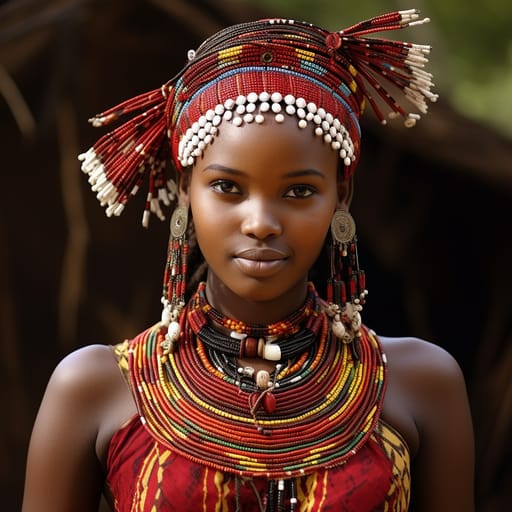
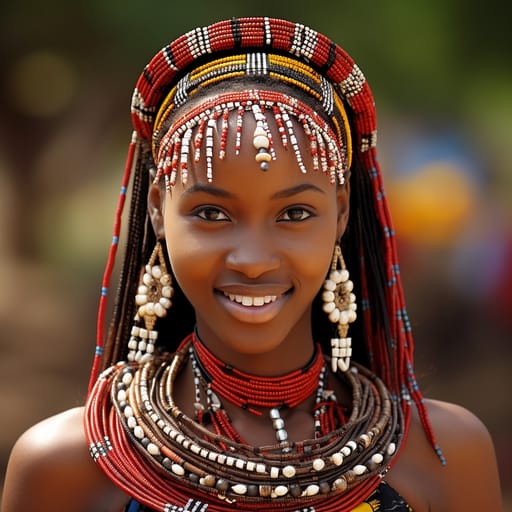
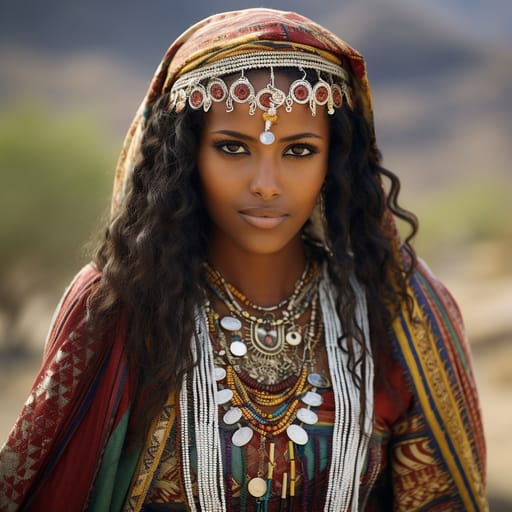
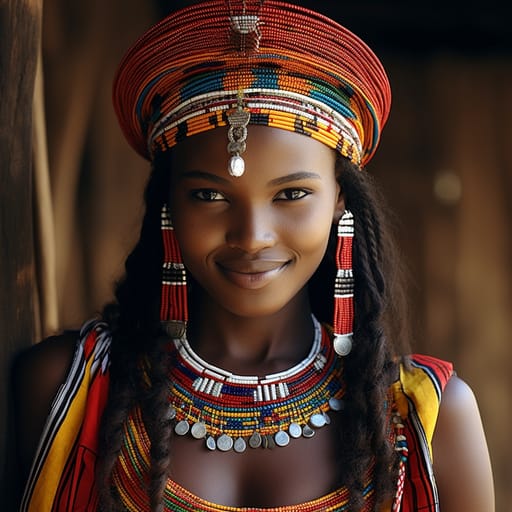
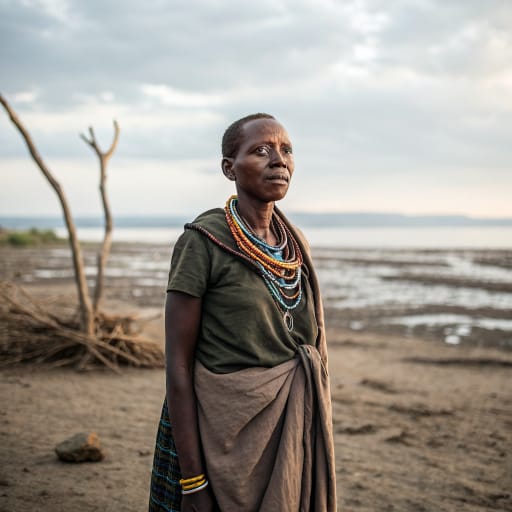
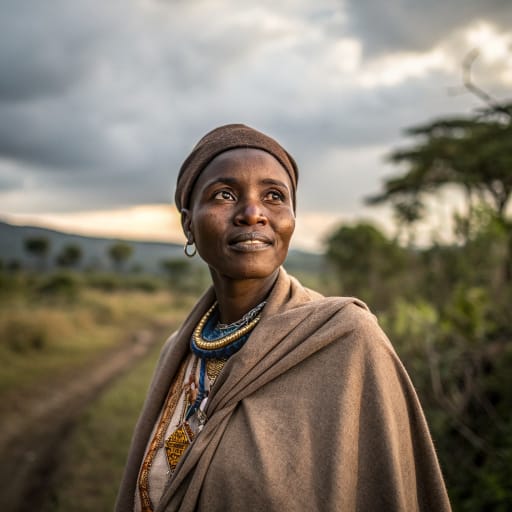
Typical Tooro Phenotypes
Reference for AI generation: hair, eyes, skin, facial structure, build
Tooro Body & Anatomy Reference
Anatomy by feature, Cushitic / Nilo-Cushitic East African phenotype
Tooro Boobs & Breasts
The typical Tooro bust is small-to-medium-cup, high-set, conical, in line with the wider Cushitic / Nilo-Cushitic East African pattern. Areolas usually fall in the 28-38mm range, with moderate-to-high areolar pigmentation against the brown-to-deep-brown skin tone. Compared with the lateral spread of the West African phenotype, Tooro breasts sit forward and are generally firmer and less projecting than the African-American or West African norm. A faithful AI render of Tooro tits keeps that shape and areola size.
Tooro Ass & Hips
Butt shape among Tooro women: small-to-medium, high-set, rounded, over narrow-to-medium iliac crests, longer torso-to-leg ratio. This follows Cushitic / Nilo-Cushitic East African ancestry and looks quite unlike the wide-set heavy-projection West African or African-American norm. An accurate Tooro ass in adult AI imagery keeps both the silhouette and the overall build (lean ectomorph-to-mesomorph) instead of a generic average.
Tooro Vagina & Pussy
Vulvar anatomy among Tooro women: brown-to-deep-brown labial pigmentation, narrow-to-medium labia minora projection. Pubic hair tends to be tightly-coiled coarse texture, densely distributed, in the usual inverted-triangle pattern. Both follow Cushitic / Nilo-Cushitic East African pigmentation, which is why Tooro pussy renders should not fall back on a pale, sparse Western template.
Tooro Dicks & Penis
The Tooro cock profile, from Cushitic / Nilo-Cushitic East African anthropometric data: regional mean ~13.5cm erect; moderate girth, ~12cm circumference; deeper-pigmented than the West African norm. Pubic hair has a tightly-coiled coarse texture and forms the usual inverted-V pattern. Whether Tooro men are circumcised follows religious and cultural practice rather than phenotype.
Tooro Body, Curves & Build
Build and curves among Tooro women follow the Cushitic / Nilo-Cushitic East African pattern: lean ectomorph-to-mesomorph, mean adult female BMI 19-22. Proportions matter as much as skin tone, so Tooro figures should keep their regional height and limb ratios.
Tooro Skin Tone & Hair Texture
The Tooro skin range is brown to deep brown (Fitzpatrick V-VI), and hair tends to be tight 4A-4C coil, often worn natural or in braided/twisted protective styles. That combination marks the Cushitic / Nilo-Cushitic East African phenotype, and skin tone is the trait AI generators most often get wrong for Tooro women.
Explore phenotype categories
Structured taxonomy with peer-reviewed scales · 22 anatomical categories
Erotic Poses & Sex Positions
From the pose catalog: 219 named positions with reference skeletons
Frequently asked questions about Tooro people
Where is the Tooro homeland?
The Tooro homeland is The Rwenzori foothills and surrounding highlands of western Uganda, centered on Fort Portal and the districts of Kabarole, Bunyangabu, Kyenjojo, Kamwenge and Ntoroko. in Eastern Africa.
What language do Tooro people speak?
Tooro people primarily speak Rutooro, part of the Runyoro-Rutooro continuum (Bantu, Niger-Congo).
What religion do Tooro people practice?
The predominant religion among Tooro people is Mostly Christian, Anglican and Roman Catholic, with a Muslim minority; Cwezi spirit mediumship persists alongside..






Make your own Tooro images
Five a day, free, no credits to buy. The studio starts from this group's phenotype data, so you can set body type, pose and style and keep the traits accurate.
Start with Tooro