No portrait yet
Tongva Erotic
The Los Angeles Basin and adjacent valleys of southern California, including parts of Los Angeles, Orange and San Bernardino counties, plus Santa Catalina, San Clemente and San Nicolas islands, United States.
Tongva, also called Gabrielino or Kizh (Takic branch of Uto-Aztecan), dormant through the twentieth century and now under revitalization; English and Spanish in daily life.
Historically the Chengiichngech tradition, with toloache initiation; Roman Catholic since the mission era, with ceremonial practice revived alongside it.
One of the Takic-speaking peoples of southern California, alongside the Serrano, Cahuilla and Luiseño; island communities of Pimu, Kinkipar and Haraasnga distinguished from the mainland villages. Descendants organize today as several separate bodies, incl
About Tongva People
The Tongva are the Indigenous people of the Los Angeles Basin, and their village names are still bolted to the freeway signs of a city that mostly does not know whose they were. Cahuenga, Cucamonga, Pacoima, Topanga, Tujunga, Azusa: that ending is a Tongva locative meaning roughly "place of." Their country ran from the Santa Monica Mountains down past the San Gabriel Valley to the coast, and out across open water to the southern Channel Islands, Pimu, Kinkipar and Haraasnga, known now as Santa Catalina, San Clemente and San Nicolas. The reach across that channel mattered. Tongva crews built plank canoes called ti'at, sewn with cordage and caulked with asphaltum, and ran them between the islands and the mainland carrying steatite quarried on Catalina: cooking bowls, comals, small carved effigies. Soapstone from those quarries turns up at sites hundreds of miles inland. The language is Takic, a branch of Uto-Aztecan that ties the Tongva to the Serrano, Cahuilla and Luiseño next door and, at a much greater distance, to Nahuatl.
Religious life centered on Chengiichngech, a figure who was lawgiver and enforcer at once, whose observance spread through the region in the years around contact and whose initiations involved toloache, a preparation of datura. Then came Mission San Gabriel in 1771, and with it forced labor, disease and a new name: the Spanish called everyone attached to that mission Gabrileño. In 1785 a medicine woman named Toypurina helped organize a revolt against the mission and was exiled north for it. The name "Tongva" itself entered print only around 1903, taken down from a single speaker, Narcisa Higuera. Some families use Kizh instead, and the disagreement is not pedantry, since it tracks the several separate organizations that carry the community today. None of them holds federal recognition. What holds instead is ground: Puvungna at Cal State Long Beach, defended through decades of construction fights; the springs at Kuruvungna, still running under a West Los Angeles high school; and an acre in Altadena handed to a Tongva land conservancy in 2022, the first land the people had held in the county in nearly two centuries. The language is being rebuilt on a similar footing, taught from field notes and mission records rather than passed down unbroken, in classes run by community members for community members.
Related ethnic groups
Groups that share Tongva's homeland, region, language, or religious tradition. These are likely candidates for comparative phenotype reference.
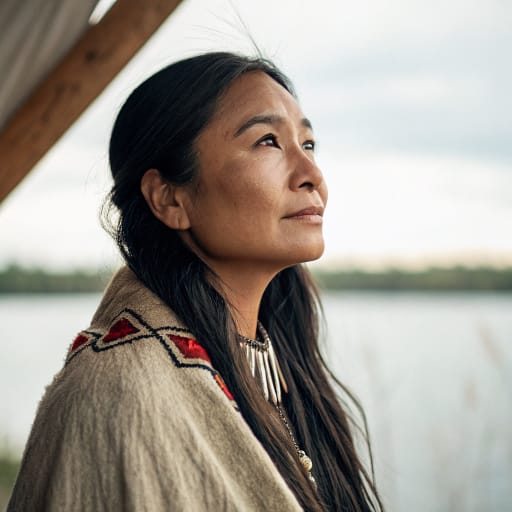
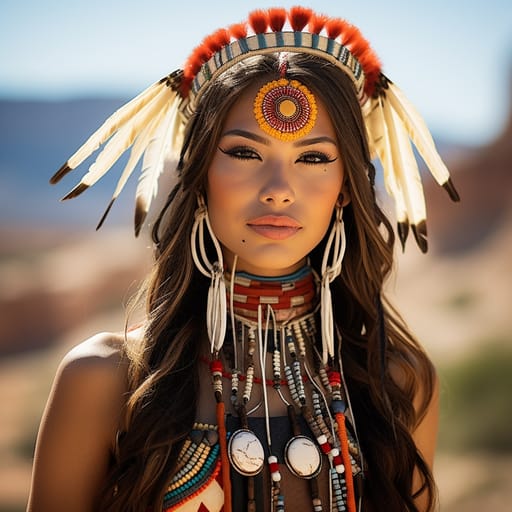
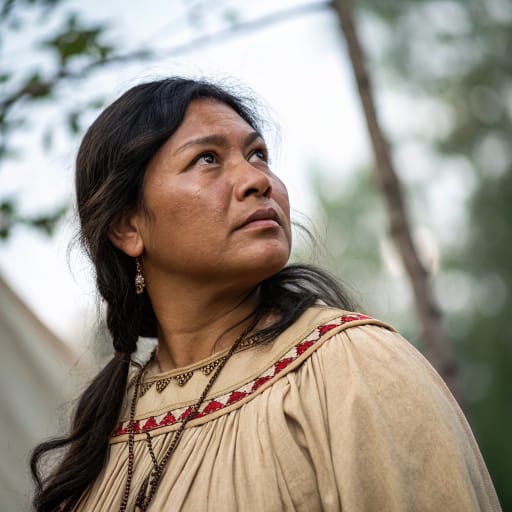
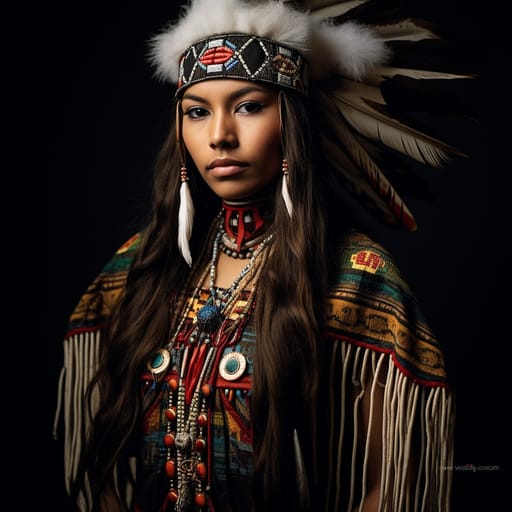
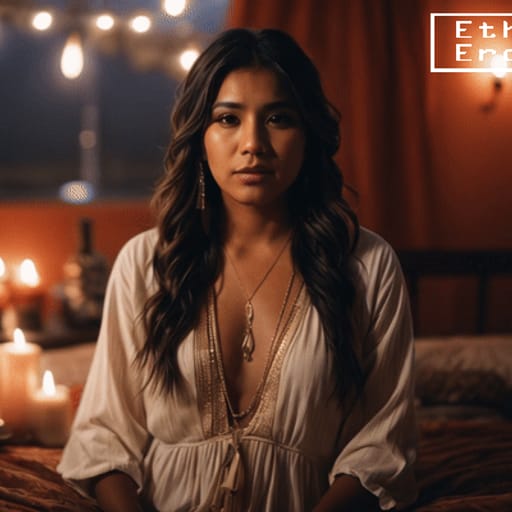
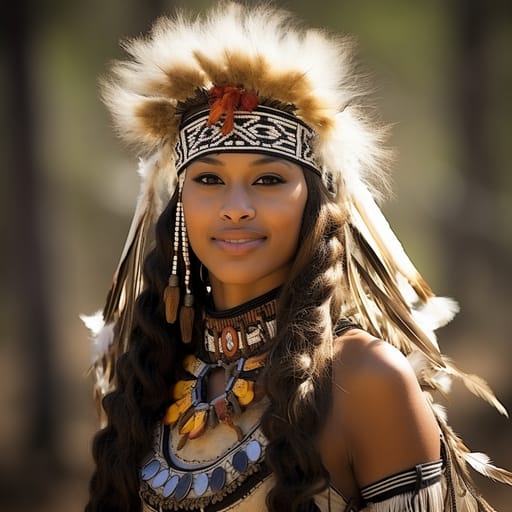
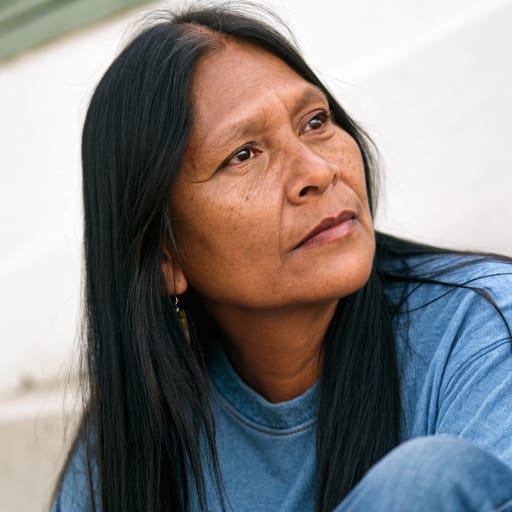
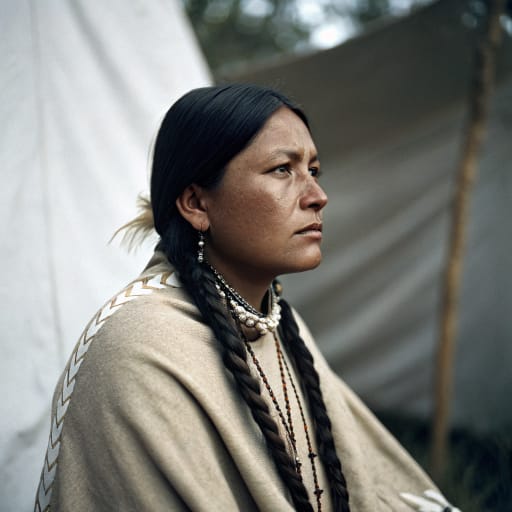
Typical Tongva Phenotypes
Reference for AI generation: hair, eyes, skin, facial structure, build
Tongva Body & Anatomy Reference
Anatomy by feature, Indigenous Northern American / Algonquian-Iroquoian phenotype
Tongva Boobs & Breasts
The typical Tongva bust is medium cup, moderate projection, in line with the wider Indigenous Northern American / Algonquian-Iroquoian pattern. Areolas usually fall in the 30-44mm range, with medium-brown areolar pigmentation against the copper-to-medium-brown skin tone. Compared with the smaller East Asian bust, Tongva breasts sit forward and are generally full and moderate projection. A faithful AI render of Tongva tits keeps that shape and areola size.
Tongva Ass & Hips
Butt shape among Tongva women: medium, moderate-to-full projection, over medium iliac crests. This follows Indigenous Northern American / Algonquian-Iroquoian ancestry and looks quite unlike the slim East Asian narrow-hip profile. An accurate Tongva ass in adult AI imagery keeps both the silhouette and the overall build (mesomorph, broader frame in northern Indigenous populations) instead of a generic average.
Tongva Vagina & Pussy
Vulvar anatomy among Tongva women: medium-brown labial pigmentation. Pubic hair tends to be straight medium-coarse texture, in the usual inverted-triangle pattern. Both follow Indigenous Northern American / Algonquian-Iroquoian pigmentation, which is why Tongva pussy renders should not fall back on a pale, sparse Western template.
Tongva Dicks & Penis
The Tongva cock profile, from Indigenous Northern American / Algonquian-Iroquoian anthropometric data: regional mean ~13cm erect; moderate girth; medium-brown shaft pigmentation. Pubic hair has a straight medium-coarse texture and forms the usual inverted-V pattern. Whether Tongva men are circumcised follows religious and cultural practice rather than phenotype.
Tongva Body, Curves & Build
Build and curves among Tongva women follow the Indigenous Northern American / Algonquian-Iroquoian pattern: mesomorph, broader frame in northern Indigenous populations, mean adult female BMI 25-28. Proportions matter as much as skin tone, so Tongva figures should keep their regional height and limb ratios.
Tongva Skin Tone & Hair Texture
The Tongva skin range is copper to medium-brown (Fitzpatrick III-V), and hair tends to be straight 1A, dark-brown to black, often thick and dense. That combination marks the Indigenous Northern American / Algonquian-Iroquoian phenotype, and skin tone is the trait AI generators most often get wrong for Tongva women.
Explore phenotype categories
Structured taxonomy with peer-reviewed scales · 22 anatomical categories
Erotic Poses & Sex Positions
From the pose catalog: 219 named positions with reference skeletons
Frequently asked questions about Tongva people
Where is the Tongva homeland?
The Tongva homeland is The Los Angeles Basin and adjacent valleys of southern California, including parts of Los Angeles, Orange and San Bernardino counties, plus Santa Catalina, San Clemente and San Nicolas islands, United States. in North America.
What language do Tongva people speak?
Tongva people primarily speak Tongva, also called Gabrielino or Kizh (Takic branch of Uto-Aztecan), dormant through the twentieth century and now under revitalization; English and Spanish in daily life..
What religion do Tongva people practice?
The predominant religion among Tongva people is Historically the Chengiichngech tradition, with toloache initiation; Roman Catholic since the mission era, with ceremonial practice revived alongside it..






Make your own Tongva images
Five a day, free, no credits to buy. The studio starts from this group's phenotype data, so you can set body type, pose and style and keep the traits accurate.
Start with Tongva