Help us get this right
Does this portrait look right for Tiwa?
Nobody has judged this one yet. You would be the first.
Tiwa Erotic
India (Assam, Meghalaya)
Hinduism
About Tiwa People
The Tiwa — historically called Lalung in colonial records, a name many of them have since rejected — live in the foothills and plains where Assam meets Meghalaya, split by geography into two communities that have drifted noticeably apart. The Hill Tiwa, concentrated in the Karbi Anglong and West Karbi Anglong districts and across the border in Meghalaya's Ri-Bhoi, retain matrilineal descent, traditional village councils, and a religious life centered on indigenous deities and ancestral spirits. The Plains Tiwa, settled in the lowland districts of Morigaon and Nagaon, are patrilineal, more thoroughly integrated into Assamese-speaking Hindu society, and in many villages have largely shifted away from the Tiwa language toward Assamese in daily use. Same people, two trajectories — a split that maps almost exactly onto altitude.
The Tiwa language belongs to the Sal branch of Sino-Tibetan, sitting alongside Boro, Garo, and Rabha rather than the Indo-Aryan Assamese spoken around them. Among the Hill Tiwa it remains a household tongue; among the Plains Tiwa it is endangered, surviving more in ritual vocabulary than ordinary speech. The community's Hinduism is a layered thing — Vaishnavite influence arrived through the Ekasarana movement of medieval Assam and reshaped public religious life, but underneath that, household and clan-level practice still revolves around Phra and Mahadeo, Tiwa names for forces that predate the Sanskritic vocabulary now layered on top. The two systems coexist without fully reconciling, and most Tiwa simply move between them as the occasion requires.
The political memory worth knowing is the Gobha Raj — a small Tiwa kingdom that survived as a tributary state under both the Ahoms and the British, giving the community a continuous tradition of its own kingship long after most surrounding hill peoples had been absorbed administratively. The Gobha king still exists as a ceremonial figure, presiding over the three-day Jonbeel Mela held each January at a crescent-shaped wetland near Jagiroad, where Tiwa, Karbi, Khasi, and Jaintia traders gather for what is one of the last functioning barter fairs in South Asia — no money changes hands, only goods. The other festival that defines the year is Wanchuwa, the post-harvest celebration of the Hill Tiwa, marked by the Langkhon dance and a clan-based reckoning of the year's yield. Today the Tiwa number somewhere around 370,000, recognized as a Scheduled Tribe in Assam and as an autonomous council within Meghalaya, negotiating, like much of Northeast India, between assimilation pressures and a steady, deliberate effort to hold their own institutions intact.
Related ethnic groups
Groups that share Tiwa's homeland, region, language, or religious tradition. These are likely candidates for comparative phenotype reference.
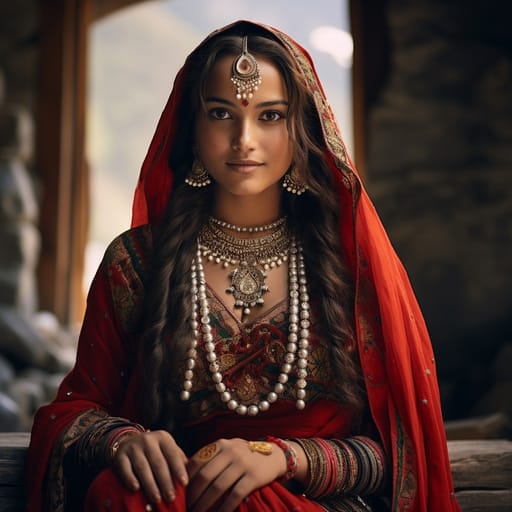
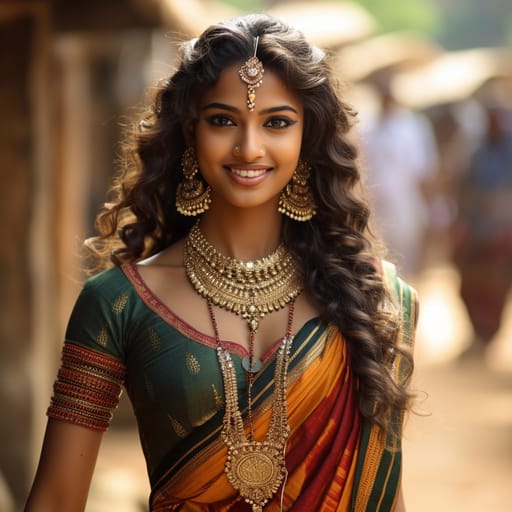
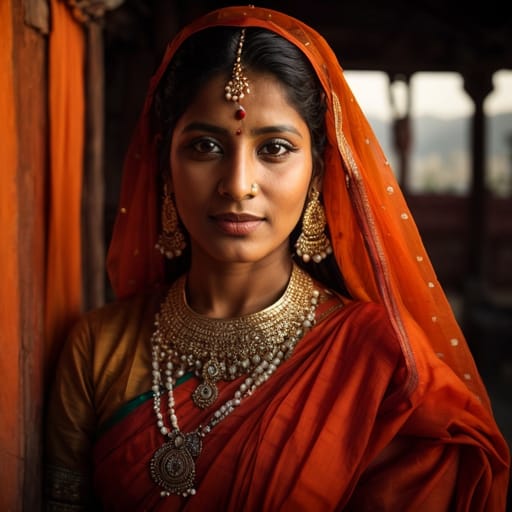
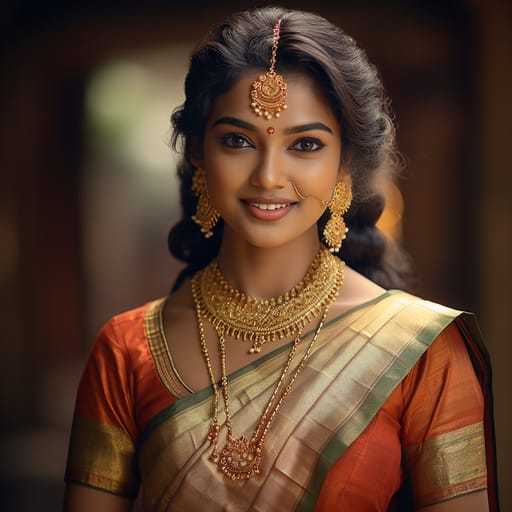
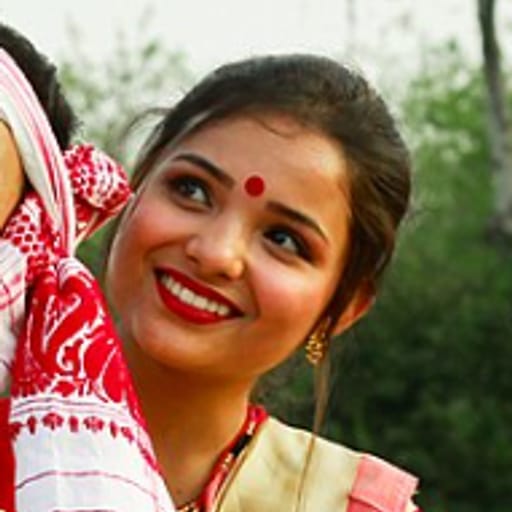
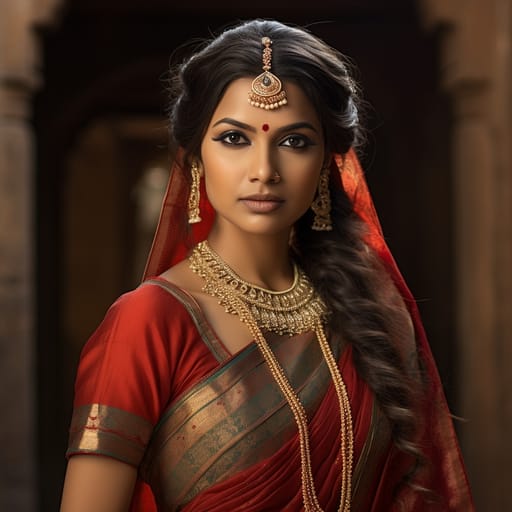
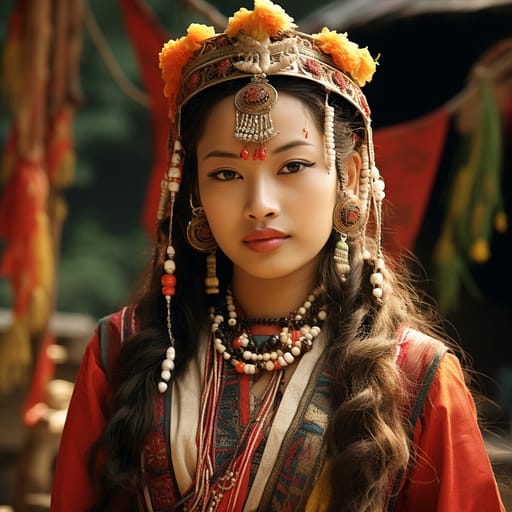
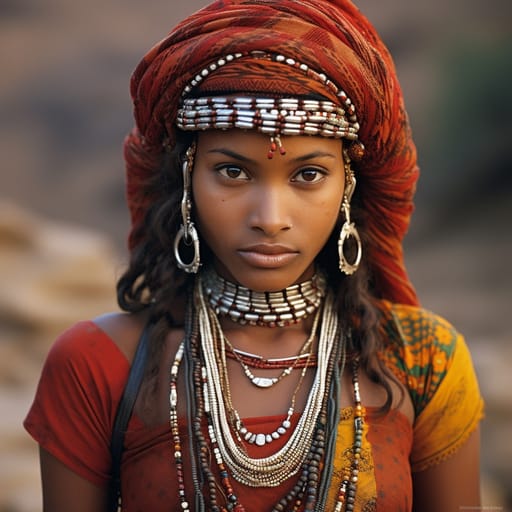
Typical Tiwa Phenotypes
Reference for AI generation: hair, eyes, skin, facial structure, build
The Tiwa are a Sino-Tibetan-speaking community of the Assam–Meghalaya borderlands, and their phenotype sits squarely in the Northeast Indian Tibeto-Burman cluster — closer in build and facial structure to Bodo, Karbi, and Mising neighbors than to the Indo-Aryan Assamese plains population they live alongside. The split between Hill Tiwa (Karbi Anglong, Meghalaya) and Plains Tiwa (Morigaon, Nagaon) tracks roughly with how strongly these features express: hill communities lean more visibly Tibeto-Burman, plains communities show more admixture with surrounding Assamese populations.
Hair is uniformly black, straight to gently wavy, with a coarse-to-medium shaft and high density. Greying tends to come late. Eye color is consistently dark brown to near-black. The epicanthic fold is common but not universal — present in a clear majority, often as a subtle inner-corner fold rather than the fuller monolid seen further east, and palpebral fissures run slightly oblique. Skin tone clusters in the Fitzpatrick III–IV range: warm wheat to light olive-brown with yellow undertones, generally lighter than Indo-Aryan Assamese neighbors, with hill subgroups trending a shade lighter than plains.
Facial structure is the clearest tell. Cheekbones sit high and broad, the midface is relatively flat, and the jaw is squared rather than tapered. Noses are short to medium with a low-to-medium bridge and moderate alar width — nothing like the high narrow nose of plains Indo-Aryans. Lips are medium in fullness, well-defined, and the chin is typically modest. Brow ridges are soft.
Build runs short to medium-short — adult men commonly 160–168 cm, women 148–155 cm — with compact, wiry proportions, narrow shoulders relative to South Asian averages, and a tendency toward lean musculature in younger adults shifting to a softer central distribution with age. Hands and feet are small. The overall impression is East/Southeast Asian facial geometry on a small-framed South Asian body, with a skin tone that bridges the two.
Tiwa Body & Anatomy Reference
Per-feature anatomical profile for AI nude generation: Indo-Aryan / Dravidian South Asian phenotype
Tiwa Boobs & Breasts
The typical Tiwa bust is medium-to-large cup, moderate-to-full projection, in line with the wider Indo-Aryan / Dravidian South Asian pattern. Areolas usually fall in the 32-46mm range, with medium-brown to dark-brown areolar pigmentation against the wheatish-to-brown skin tone. Compared with the smaller East Asian bust profile, Tiwa breasts sit forward and are generally full and soft, generally fuller than the East Asian norm. A faithful AI render of Tiwa tits keeps that shape and areola size.
Tiwa Ass & Hips
Butt shape among Tiwa women: medium-to-full, moderate-to-high projection, classic curvy hip profile, over medium-to-wide iliac crests, full gluteal-femoral fat distribution. This follows Indo-Aryan / Dravidian South Asian ancestry and looks quite unlike the slim hip profile of East Asian women. An accurate Tiwa ass in adult AI imagery keeps both the silhouette and the overall build (endomorph-to-mesomorph with fuller hip deposition) instead of a generic average.
Tiwa Vagina & Pussy
Vulvar anatomy among Tiwa women: medium-brown to dark-brown labial pigmentation, fuller labia minora projection. Pubic hair tends to be straight-to-wavy coarse texture, dense distribution, in the usual inverted-triangle pattern. Both follow Indo-Aryan / Dravidian South Asian pigmentation, which is why Tiwa pussy renders should not fall back on a pale, sparse Western template.
Tiwa Dicks & Penis
The Tiwa cock profile, from Indo-Aryan / Dravidian South Asian anthropometric data: regional mean ~13cm erect; moderate girth; medium-brown shaft pigmentation. Pubic hair has a straight-to-wavy coarse texture and forms the usual inverted-V pattern. Whether Tiwa men are circumcised follows religious and cultural practice rather than phenotype.
Tiwa Body, Curves & Build
Build and curves among Tiwa women follow the Indo-Aryan / Dravidian South Asian pattern: endomorph-to-mesomorph with fuller hip deposition, mean adult female BMI 22-25. Proportions matter as much as skin tone, so Tiwa figures should keep their regional height and limb ratios.
Tiwa Skin Tone & Hair Texture
The Tiwa skin range is wheatish to brown (Fitzpatrick III-V), and hair tends to be straight-to-wavy 1A-2B, dense, dark-brown to black. That combination marks the Indo-Aryan / Dravidian South Asian phenotype, and skin tone is the trait AI generators most often get wrong for Tiwa women.
Data depth
0/100Coverage of image-grounded phenotype observations · drives AI generation diversity
- Sample size
- 0/40· 0 images
- Image quality
- 0/30· 0% high
- Confidence
- 0/20
- Source diversity
- 0/10
- ·No image observations yet
Explore phenotype categories
Structured taxonomy with peer-reviewed scales · 22 anatomical categories
Erotic Poses & Sex Positions
From the pose catalog: 219 named positions with reference skeletons
Frequently asked questions about Tiwa people
Where is the Tiwa homeland?
The Tiwa homeland is India (Assam, Meghalaya) in Southern Asia.
What language do Tiwa people speak?
Tiwa people primarily speak Sino-Tibetan / Sal / Tiwa.
What religion do Tiwa people practice?
The predominant religion among Tiwa people is Hinduism.






Make your own Tiwa images
Five a day, free, no credits to buy. The studio starts from this group's phenotype data, so you can set body type, pose and style and keep the traits accurate.
Start with Tiwa