No portrait yet
Tharis Erotic
The Thar Desert, centered on Tharparkar and Umerkot districts in Sindh, Pakistan, with related communities across the border in western Rajasthan, India
Dhatki, also called Thari (Indo-Aryan, Rajasthani group); Sindhi (Indo-Aryan); Parkari Koli (Indo-Aryan) around Nagarparkar
Hinduism and Islam, both widely practiced; Hindus make up a large share of the population in Tharparkar
Hindu communities including Meghwar, Kolhi, Bheel and Sodha Rajputs; Muslim clans including Samma branches; part of wider Sindhi and Rajasthani society
About Tharis People
Tharis take their name from the land. They are the people of the Thar, the sand desert on both sides of the border between Sindh in Pakistan and Rajasthan in India. The name matters most in the Sindh districts of Tharparkar and Umerkot, where being Thari sets someone apart from the irrigated Indus plains to the west. What holds them together is less a single lineage than a shared way of living in a hard place: dunes, deep wells, goats and camels, and millet sown on the bet that the monsoon will show up. When it does not, families drive their herds toward the canal country and wait for rain. The everyday language is Dhatki, often just called Thari. It is a Rajasthani language close to Marwari, and people use it alongside Sindhi and, around Nagarparkar, Parkari Koli. Religion divides in a way that is rare in Pakistan. Hindus make up a large share of the population, among them Meghwar, Kolhi and Bheel communities and the Sodha Rajputs who once ruled Umerkot, while Muslim Tharis include Samma clans among others. Many villages hold both faiths, and peacocks walk through settlements largely unbothered. In Mithi, Muslim residents have long been known for not slaughtering cows out of regard for their Hindu neighbors.
The desert has seen more history than its quiet suggests. The Mughal emperor Akbar was born at Umerkot in 1542, while his father Humayun was on the run. Partition drew a border through the sand, and the 1971 war sent many Thari Hindu families across it into Rajasthan, leaving family ties that still reach both ways. Today the coal field around Islamkot has brought mines, power plants and paved roads, along with open arguments over land, water and who gets hired. Culture lives in cloth, song and story. Women work dense mirror embroidery and piece ralli quilts together from scraps, and round mud houses with cone-shaped thatch roofs, called chaunra, keep out the summer heat. The folk heroine Marvi, a Thari girl held in the fort at Umerkot who turned down its comforts because she longed for her own village, was sung into Sindhi poetry by Shah Abdul Latif Bhittai. She is still the desert's symbol of loyalty to home. The singer Mai Bhagi brought Thari folk song to listeners across Pakistan.
Related ethnic groups
Groups that share Tharis's homeland, region, language, or religious tradition. These are likely candidates for comparative phenotype reference.
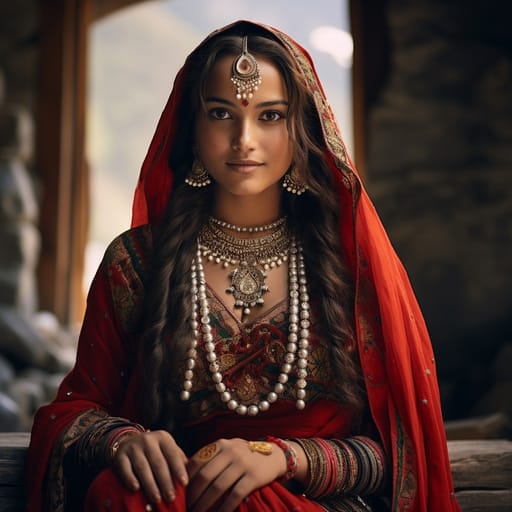
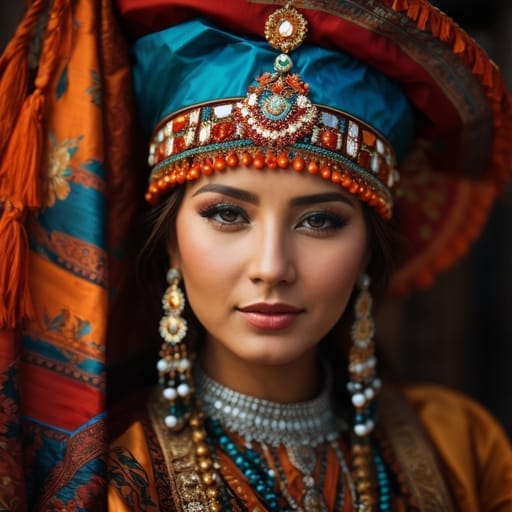
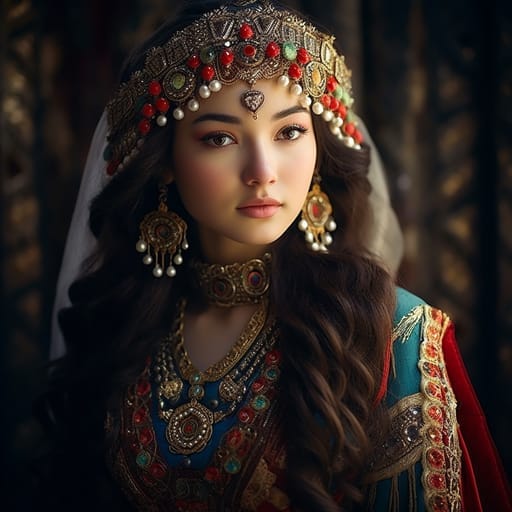
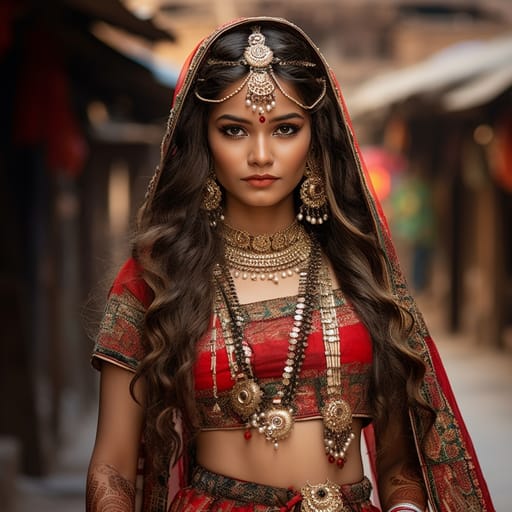
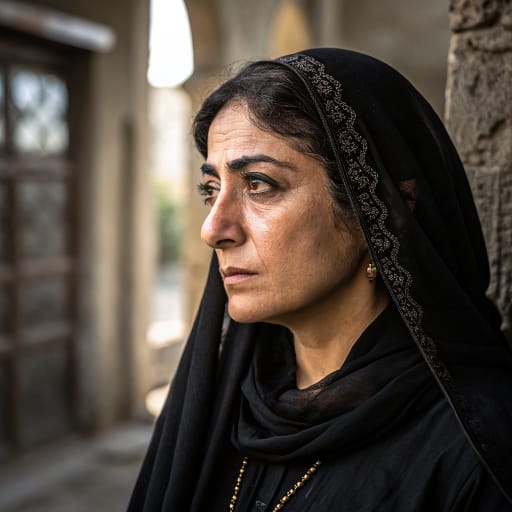
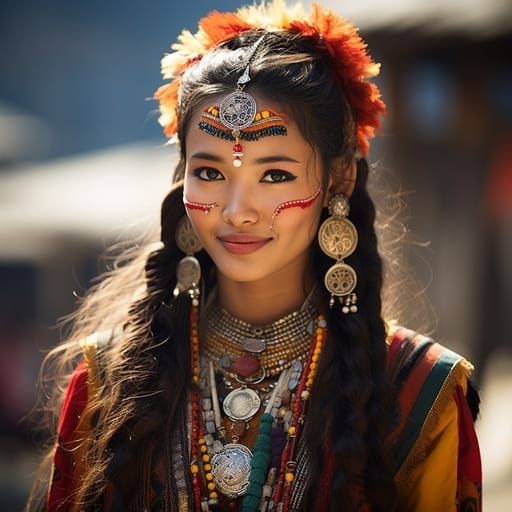
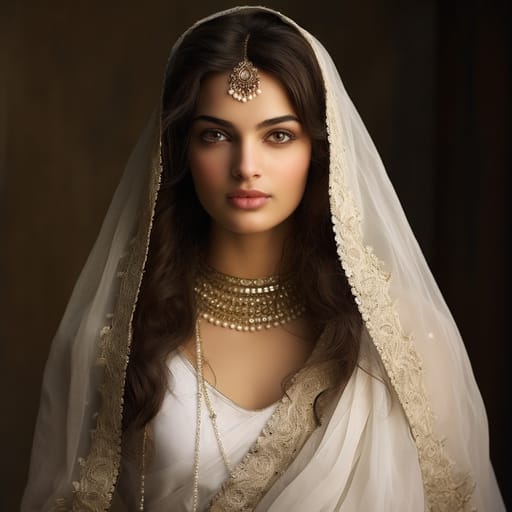
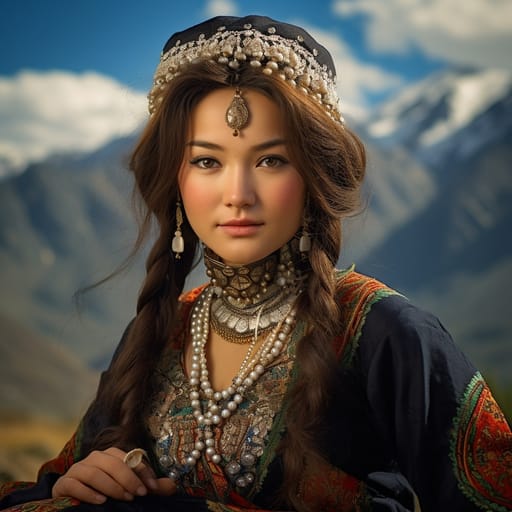
Typical Tharis Phenotypes
Reference for AI generation: hair, eyes, skin, facial structure, build
Tharis Body & Anatomy Reference
Per-feature anatomical profile for AI nude generation: Indo-Aryan / Dravidian South Asian phenotype
Tharis Boobs & Breasts
The typical Tharis bust is medium-to-large cup, moderate-to-full projection, in line with the wider Indo-Aryan / Dravidian South Asian pattern. Areolas usually fall in the 32-46mm range, with medium-brown to dark-brown areolar pigmentation against the wheatish-to-brown skin tone. Compared with the smaller East Asian bust profile, Tharis breasts sit forward and are generally full and soft, generally fuller than the East Asian norm. A faithful AI render of Tharis tits keeps that shape and areola size.
Tharis Ass & Hips
Butt shape among Tharis women: medium-to-full, moderate-to-high projection, classic curvy hip profile, over medium-to-wide iliac crests, full gluteal-femoral fat distribution. This follows Indo-Aryan / Dravidian South Asian ancestry and looks quite unlike the slim hip profile of East Asian women. An accurate Tharis ass in adult AI imagery keeps both the silhouette and the overall build (endomorph-to-mesomorph with fuller hip deposition) instead of a generic average.
Tharis Vagina & Pussy
Vulvar anatomy among Tharis women: medium-brown to dark-brown labial pigmentation, fuller labia minora projection. Pubic hair tends to be straight-to-wavy coarse texture, dense distribution, in the usual inverted-triangle pattern. Both follow Indo-Aryan / Dravidian South Asian pigmentation, which is why Tharis pussy renders should not fall back on a pale, sparse Western template.
Tharis Dicks & Penis
The Tharis cock profile, from Indo-Aryan / Dravidian South Asian anthropometric data: regional mean ~13cm erect; moderate girth; medium-brown shaft pigmentation. Pubic hair has a straight-to-wavy coarse texture and forms the usual inverted-V pattern. Whether Tharis men are circumcised follows religious and cultural practice rather than phenotype.
Tharis Body, Curves & Build
Build and curves among Tharis women follow the Indo-Aryan / Dravidian South Asian pattern: endomorph-to-mesomorph with fuller hip deposition, mean adult female BMI 22-25. Proportions matter as much as skin tone, so Tharis figures should keep their regional height and limb ratios.
Tharis Skin Tone & Hair Texture
The Tharis skin range is wheatish to brown (Fitzpatrick III-V), and hair tends to be straight-to-wavy 1A-2B, dense, dark-brown to black. That combination marks the Indo-Aryan / Dravidian South Asian phenotype, and skin tone is the trait AI generators most often get wrong for Tharis women.
Explore phenotype categories
Structured taxonomy with peer-reviewed scales · 22 anatomical categories
Erotic Poses & Sex Positions
From the pose catalog: 219 named positions with reference skeletons
Frequently asked questions about Tharis people
Where is the Tharis homeland?
The Tharis homeland is The Thar Desert, centered on Tharparkar and Umerkot districts in Sindh, Pakistan, with related communities across the border in western Rajasthan, India in Southern Asia.
What language do Tharis people speak?
Tharis people primarily speak Dhatki, also called Thari (Indo-Aryan, Rajasthani group); Sindhi (Indo-Aryan); Parkari Koli (Indo-Aryan) around Nagarparkar.
What religion do Tharis people practice?
The predominant religion among Tharis people is Hinduism and Islam, both widely practiced; Hindus make up a large share of the population in Tharparkar.






Make your own Tharis images
Five a day, free, no credits to buy. The studio starts from this group's phenotype data, so you can set body type, pose and style and keep the traits accurate.
Start with Tharis