No portrait yet
Taku Erotic
Taku River valley and Taku Inlet near Juneau, southeastern Alaska (USA), upriver to Atlin and the surrounding lake plateau in northwestern British Columbia (Canada).
Tlingit (Na-Dene); English is now the everyday language for most.
Christianity (Russian Orthodox, Presbyterian and other churches) alongside traditional Tlingit clan ceremony and spiritual practice.
A kwáan (regional division) of the Tlingit. Split between the Douglas Indian Association (Alaska) and the Taku River Tlingit First Nation (Atlin, BC). Wolf/Eagle and Raven (Crow) moieties; Yanyeidí a leading clan.
About Taku People
The Taku are a Tlingit people named for a river, and the river explains nearly everything about them. Tʼaaḵu Ḵwáan, a name usually glossed along the lines of geese flood upriver people, is one of the kwáan, the regional divisions of Tlingit country. Its territory follows the Taku River from a glacier-fed inlet just southeast of Juneau, Alaska, up through the Coast Mountains to the lake plateau around Atlin in northwestern British Columbia. That valley is one of the few workable passes between the rainforest coast and the dry interior, and the Taku built their standing on controlling it. They moved coastal goods inland, brought furs and hides back from Athabaskan neighbors such as the Tahltan and Tagish, and guarded the middleman role hard. The Hudson's Bay Company opened Fort Durham on the coast nearby in 1840 and abandoned it within three years.
Their language is Tlingit, a Na-Dene language distantly related to the Athabaskan languages of the interior but nowhere near mutually intelligible with them. Fluent speakers are now mostly elders, and teaching programs in both Juneau and Atlin are working to change that. Society is matrilineal and split into two sides, Wolf (or Eagle) and Raven, which inland people call Crow. You belong to your mother's clan, you marry into the opposite side, and clans hold crests, names, songs and house histories as property. The Yanyeidí, a Wolf clan, are the group most closely tied to the Taku River itself. Obligations between the two sides are settled publicly at the ḵu.éexʼ, the memorial feast outsiders call a potlatch. Many families are Christian, a legacy of Russian Orthodox and Presbyterian missions on the coast, and clan ceremony carries on alongside church life rather than in competition with it.
The international boundary cut the kwáan in two. On the Alaska side, descendants are centered in Juneau and Douglas and represented by the Douglas Indian Association, which they share with the neighboring Aakʼw Ḵwáan. In 1962 the city of Douglas burned the Douglas Indian Village while many residents were away fishing, clearing the ground for a harbor project, and that loss is still a live grievance. On the Canadian side, the Taku River Tlingit First Nation is based at Atlin. Its challenge to a mine access road through the Taku watershed reached the Supreme Court of Canada in 2004. The court found the province had met its obligations, but the ruling helped establish the Crown's duty to consult Indigenous nations before approving development. The watershed is still largely roadless, all five species of Pacific salmon run the river, and the fishery anchors the people on both sides of the line.
Related ethnic groups
Groups that share Taku's homeland, region, language, or religious tradition. These are likely candidates for comparative phenotype reference.
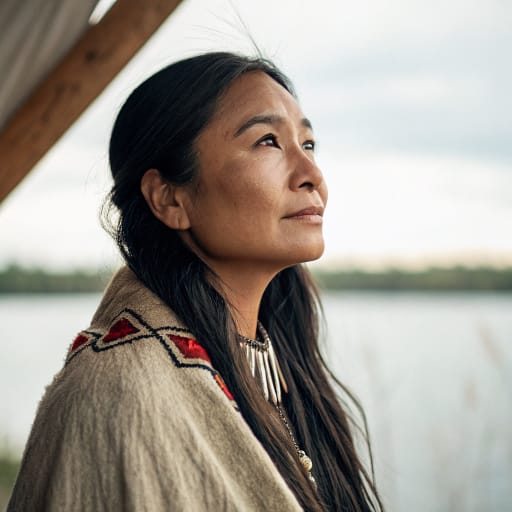

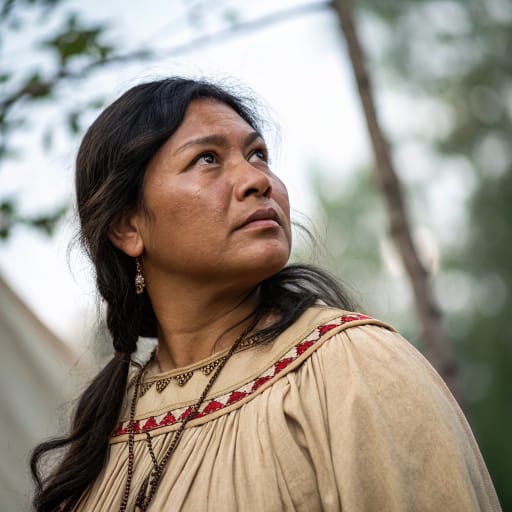
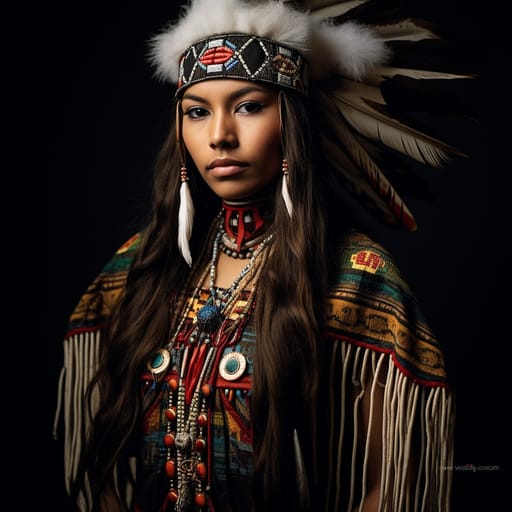
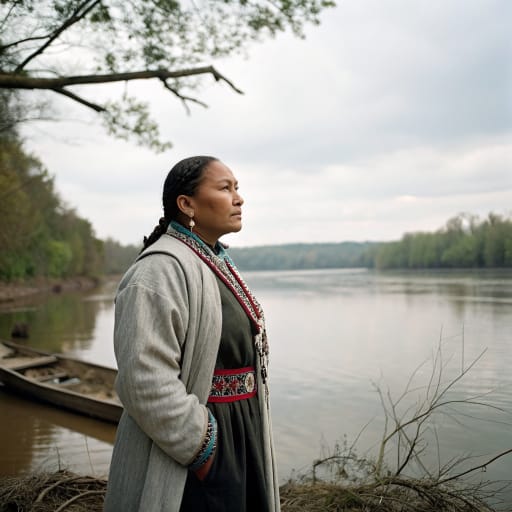

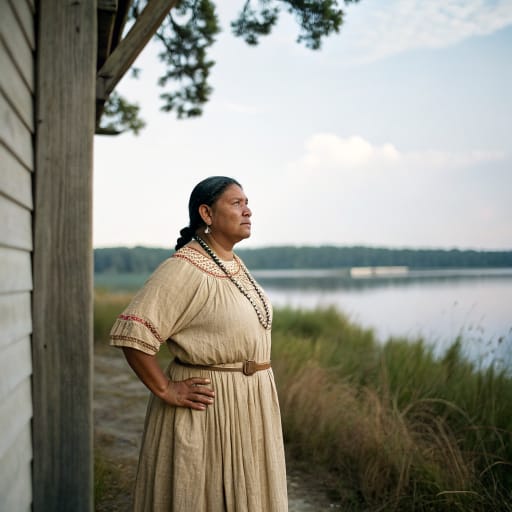
Typical Taku Phenotypes
Reference for AI generation: hair, eyes, skin, facial structure, build
Taku Body & Anatomy Reference
Indigenous Northern American / Algonquian-Iroquoian phenotype: anatomy reference for AI nude generation
Taku Boobs & Breasts
The typical Taku bust is medium cup, moderate projection, in line with the wider Indigenous Northern American / Algonquian-Iroquoian pattern. Areolas usually fall in the 30-44mm range, with medium-brown areolar pigmentation against the copper-to-medium-brown skin tone. Compared with the smaller East Asian bust, Taku breasts sit forward and are generally full and moderate projection. A faithful AI render of Taku tits keeps that shape and areola size.
Taku Ass & Hips
Butt shape among Taku women: medium, moderate-to-full projection, over medium iliac crests. This follows Indigenous Northern American / Algonquian-Iroquoian ancestry and looks quite unlike the slim East Asian narrow-hip profile. An accurate Taku ass in adult AI imagery keeps both the silhouette and the overall build (mesomorph, broader frame in northern Indigenous populations) instead of a generic average.
Taku Vagina & Pussy
Vulvar anatomy among Taku women: medium-brown labial pigmentation. Pubic hair tends to be straight medium-coarse texture, in the usual inverted-triangle pattern. Both follow Indigenous Northern American / Algonquian-Iroquoian pigmentation, which is why Taku pussy renders should not fall back on a pale, sparse Western template.
Taku Dicks & Penis
The Taku cock profile, from Indigenous Northern American / Algonquian-Iroquoian anthropometric data: regional mean ~13cm erect; moderate girth; medium-brown shaft pigmentation. Pubic hair has a straight medium-coarse texture and forms the usual inverted-V pattern. Whether Taku men are circumcised follows religious and cultural practice rather than phenotype.
Taku Body, Curves & Build
Build and curves among Taku women follow the Indigenous Northern American / Algonquian-Iroquoian pattern: mesomorph, broader frame in northern Indigenous populations, mean adult female BMI 25-28. Proportions matter as much as skin tone, so Taku figures should keep their regional height and limb ratios.
Taku Skin Tone & Hair Texture
The Taku skin range is copper to medium-brown (Fitzpatrick III-V), and hair tends to be straight 1A, dark-brown to black, often thick and dense. That combination marks the Indigenous Northern American / Algonquian-Iroquoian phenotype, and skin tone is the trait AI generators most often get wrong for Taku women.
Explore phenotype categories
Structured taxonomy with peer-reviewed scales · 22 anatomical categories
Erotic Poses & Sex Positions
From the pose catalog: 219 named positions with reference skeletons
Frequently asked questions about Taku people
Where is the Taku homeland?
The Taku homeland is Taku River valley and Taku Inlet near Juneau, southeastern Alaska (USA), upriver to Atlin and the surrounding lake plateau in northwestern British Columbia (Canada). in North America.
What language do Taku people speak?
Taku people primarily speak Tlingit (Na-Dene); English is now the everyday language for most..
What religion do Taku people practice?
The predominant religion among Taku people is Christianity (Russian Orthodox, Presbyterian and other churches) alongside traditional Tlingit clan ceremony and spiritual practice..






Make your own Taku images
Five a day, free, no credits to buy. The studio starts from this group's phenotype data, so you can set body type, pose and style and keep the traits accurate.
Start with Taku