Help us get this right
Does this portrait look right for Tagbanwa?
One tap. It takes a second and it is recorded.
1 says it looks right, 0 say it looks off.
Tagbanwa Erotic
central and northern Palawan (and Calamian Islands), Philippines
Indigenous animism; some Christianity
Central Tagbanwa, Calamian Tagbanwa
About Tagbanwa People
Tagbanwa are an Austronesian people of Palawan in the western Philippines, among the oldest documented indigenous groups of the island, living in its central and northern parts and in the Calamian Islands. They speak Palawanic and Kalamian languages and, like the Hanunoo Mangyan, preserve their own syllabic script, the Tagbanwa script, one of the surviving Brahmi-derived writing systems of the Philippines. Like the other surviving Philippine paleographs, it was inscribed on UNESCO's Memory of the World register in recognition of its rarity.
Society and subsistence
Tagbanwa livelihood rests on swidden rice farming, fishing, and the gathering of forest products such as honey, rattan, and almaciga resin. Society is kin based, with ritual specialists mediating between the community and a rich world of ancestral and nature spirits. The Calamian Tagbanwa of the Coron area hold recognised ancestral rights over their islands and surrounding waters, which they manage for fishing and the gathering of edible swiftlet nests. A central ceremony is the pagdiwata, a rice wine ritual in which mediums, often women, enter trance to communicate with the spirits, offer thanks, and seek healing. Custom, oral tradition, and the writing of songs and messages on bamboo tie the community to its ancestors and land.
Appearance and adornment
The Tagbanwa share the Filipino Austronesian physical type, with brown skin, dark eyes, straight black hair, and a slight build. Traditional male dress was a simple loincloth and female dress a wrapped skirt, with the upper body often bare or lightly covered. Personal adornment included brass and copper ornaments, beaded necklaces and belts, combs, and bracelets. Woven baskets, mats, and betel containers show fine craftsmanship. Betel chewing was widespread, and older practices included the filing and blackening of the teeth as a mark of beauty. Today most Tagbanwa wear ordinary clothing, keeping traditional dress for ritual occasions.
Related ethnic groups
Groups that share Tagbanwa's homeland, region, language, or religious tradition. These are likely candidates for comparative phenotype reference.
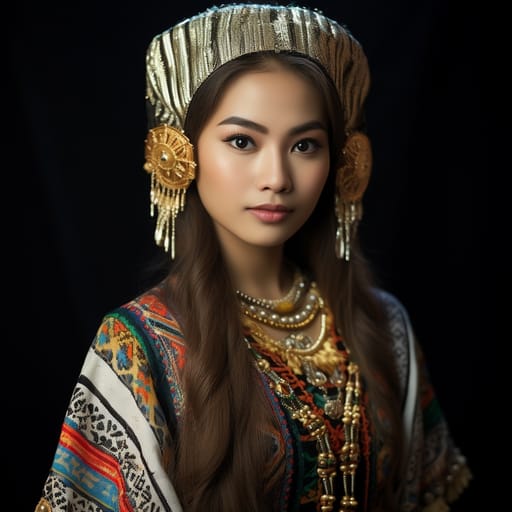
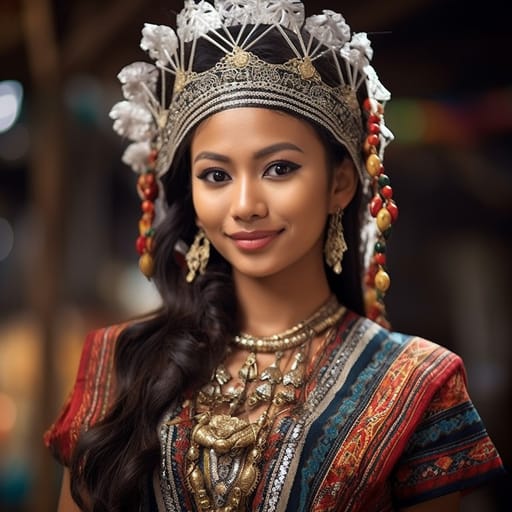
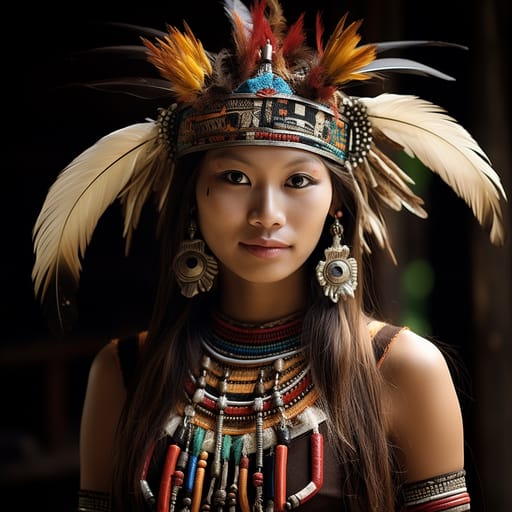
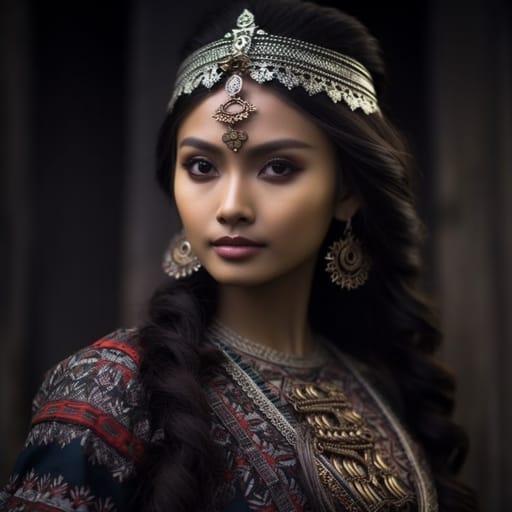
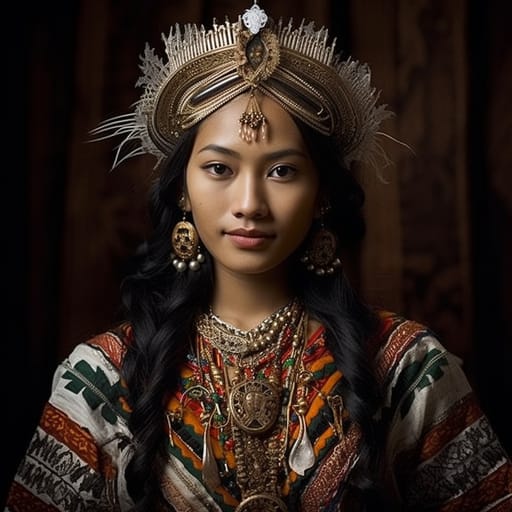
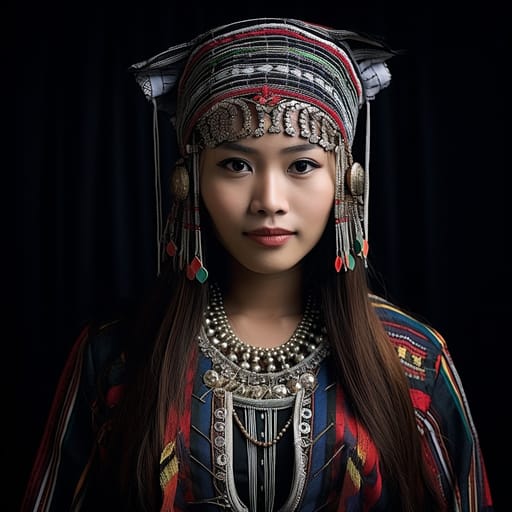
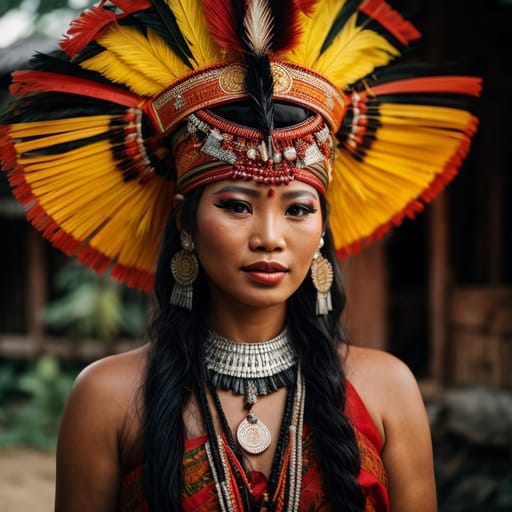
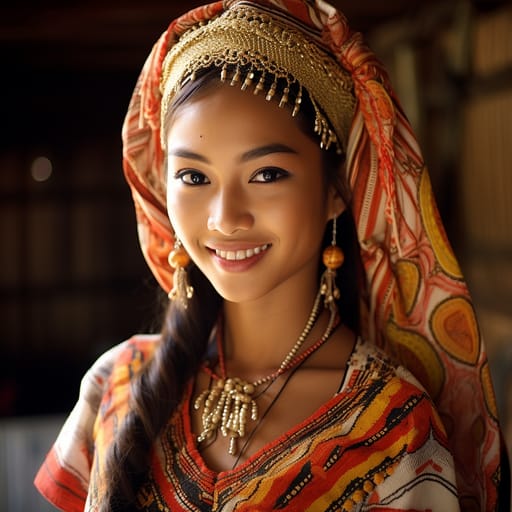
Typical Tagbanwa Phenotypes
Reference for AI generation: hair, eyes, skin, facial structure, build
Tagbanwa Body & Anatomy Reference
Per-feature anatomical profile for AI nude generation: Southeast Asian Austronesian / Austroasiatic phenotype
Tagbanwa Boobs & Breasts
Bust reference for Tagbanwa women: small-to-medium cup, modest projection, which is typical of Southeast Asian Austronesian / Austroasiatic ancestry. Areolas measure about 26-38mm across, with medium-brown to dark-brown pigmentation. Body type (ectomorph, petite frame) shapes the bust as well, so Tagbanwa tits are usually firm, modest projection. In AI imagery, keep the forward-set shape rather than drifting toward the fuller South Asian or Polynesian bust.
Tagbanwa Ass & Hips
The Tagbanwa ass is typically small-to-medium, modest projection, narrower hip profile, which sets it apart from the fuller glutes of the Pacific Islander phenotype. Underneath, the pelvis shows narrow-to-medium iliac crests, part of the Southeast Asian Austronesian / Austroasiatic skeletal pattern. For Tagbanwa butt pics and AI renders, match that silhouette and the overall build (ectomorph, petite frame).
Tagbanwa Vagina & Pussy
Tagbanwa pussy and vulvar anatomy presents medium-brown to dark-brown labial pigmentation, consistent with the Southeast Asian Austronesian / Austroasiatic phenotype's pigmentation pattern. Tagbanwa pubic hair is typically straight-to-wavy fine-to-medium texture, in the inverted-triangle pattern. For anatomically accurate Tagbanwa pussy renders the labial coloration should match the surrounding tan to medium-brown skin tone with a continuous gradient, and the hair should keep its straight-to-wavy fine-to-medium texture.
Tagbanwa Dicks & Penis
Tagbanwa dicks follow the Southeast Asian Austronesian / Austroasiatic reference data: regional mean ~11cm erect; moderate girth; medium-brown shaft pigmentation. Shaft color should track the tan to medium-brown skin tone with a smooth change toward the glans, and Tagbanwa pubic hair keeps its straight-to-wavy fine-to-medium texture.
Tagbanwa Body, Curves & Build
Tagbanwa body type and overall build presents as ectomorph, petite frame, with mean adult female BMI 20-23: the characteristic Southeast Asian Austronesian / Austroasiatic habitus. Tagbanwa curves and proportions should keep the regional skeletal frame (height, shoulder-to-hip ratio, limb proportions) rather than a generic mesomorph default.
Tagbanwa Skin Tone & Hair Texture
Tagbanwa skin sits in the tan to medium-brown (Fitzpatrick III-V) band. Hair is typically straight-to-wavy 1A-2A, dark-brown to black, in keeping with the Southeast Asian Austronesian / Austroasiatic phenotype. In nude renders the skin should stay one even tone from face to body, and body, pubic and head hair should match.
Explore phenotype categories
Structured taxonomy with peer-reviewed scales · 22 anatomical categories
Erotic Poses & Sex Positions
From the pose catalog: 219 named positions with reference skeletons
Frequently asked questions about Tagbanwa people
Where is the Tagbanwa homeland?
The Tagbanwa homeland is central and northern Palawan (and Calamian Islands), Philippines in Southeast Asia.
What language do Tagbanwa people speak?
Tagbanwa people primarily speak Tagbanwa (Austronesian, Palawanic/Kalamian).
What religion do Tagbanwa people practice?
The predominant religion among Tagbanwa people is Indigenous animism; some Christianity.






Make your own Tagbanwa images
Five a day, free, no credits to buy. The studio starts from this group's phenotype data, so you can set body type, pose and style and keep the traits accurate.
Start with Tagbanwa