No portrait yet
Sunuwar Erotic
Middle hills of eastern Nepal along the Sun Koshi, Likhu and Molung rivers, chiefly Okhaldhunga, Ramechhap, Dolakha and Solukhumbu districts, with communities in Sikkim, Darjeeling and Bhutan.
Sunuwar, called Kõits Lo by its speakers (Sino-Tibetan, Western Kiranti), with Nepali as the dominant second language
Mundhum ancestral tradition layered with Hinduism, with a growing number registering as Kirat; some Buddhist influence and recent Christian conversion
Counted among the Kiranti peoples of eastern Nepal; internally divided into the Barah Jat, the twelve clans, and the Das Jat, the ten
About Sunuwar People
The Sunuwar call themselves Kõits, and their language Kõits Lo. The outside name ties them to the Sun Koshi, the river draining the country they have farmed for centuries: the middle hills of eastern Nepal between the Sun Koshi, the Likhu and the Molung, in what are now Okhaldhunga, Ramechhap, Dolakha and Solukhumbu districts. It is terraced hillside at middle altitude, below the Sherpa high country and well above the plains, planted in millet, maize and rice and grazed by buffalo and goats. A great many Sunuwar carry the surname Mukhia, from the old office of village headman, which says something about where the group sat in the local order under the Shah and Rana states. Descent is reckoned through clans sorted into two blocks, the Barah Jat and the Das Jat, the twelve and the ten. Those clan lines are not decoration. They still shape who may marry whom and which ancestral deities a household is obliged to feed.
The language is Kiranti, a branch of Sino-Tibetan, and its nearest relatives are Bahing and Wambule, spoken a few valleys away. Its verbs do heavy work: a single form can mark both the actor and the one acted upon, machinery with no counterpart in the Nepali that dominates the schools and the market. Transmission has thinned accordingly, and fewer people speak Sunuwar than claim the name. Against that stands a script. In the 1940s a Sunuwar named Jenticha built an alphabet for the language, one of the few purpose-made scripts to come out of Nepal's hill peoples, and it is taught today more as a claim to standing than as a working orthography. Ritual life runs through two offices, the Poimbo and the Ngiami, who conduct the ancestor rites, address the clan deities and treat the kinds of trouble read as spiritual rather than medical. Census forms have long recorded most Sunuwar as Hindu, and the ordinary calendar does carry Hindu festivals, but the household rites underneath belong to the Mundhum tradition, and a growing share now register as Kirat outright. Sunuwar men were recruited into Gurkha regiments from the nineteenth century, which seeded communities in Darjeeling, Sikkim and Bhutan. The same pull now runs toward Kathmandu, the Gulf and Malaysia. Since 1990 the group has organized as one of Nepal's recognized indigenous nationalities, and much of the current energy goes into language classes, written Mundhum and the argument over who counts as Kirat.
Related ethnic groups
Groups that share Sunuwar's homeland, region, language, or religious tradition. These are likely candidates for comparative phenotype reference.
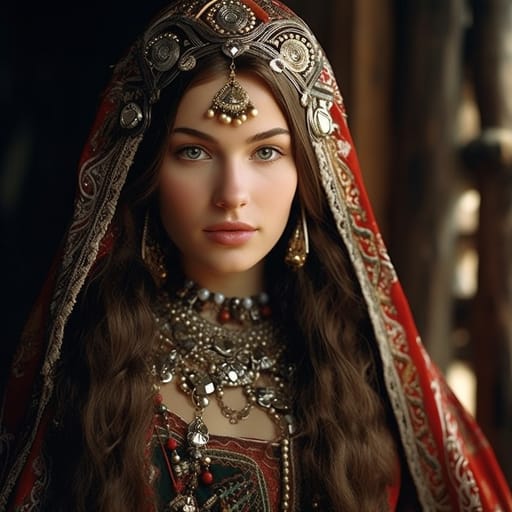
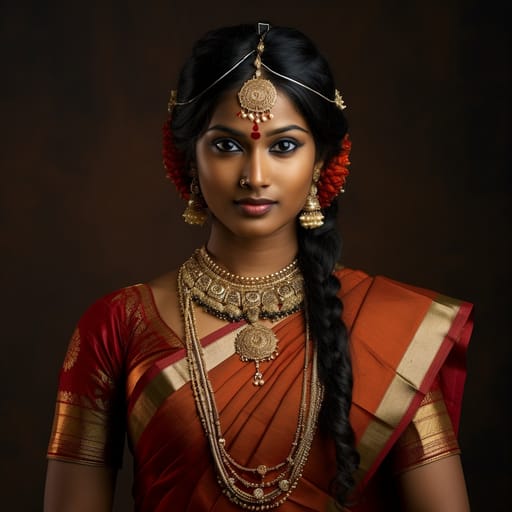
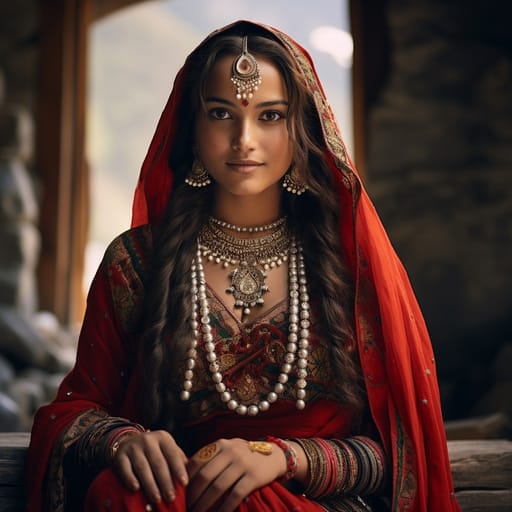
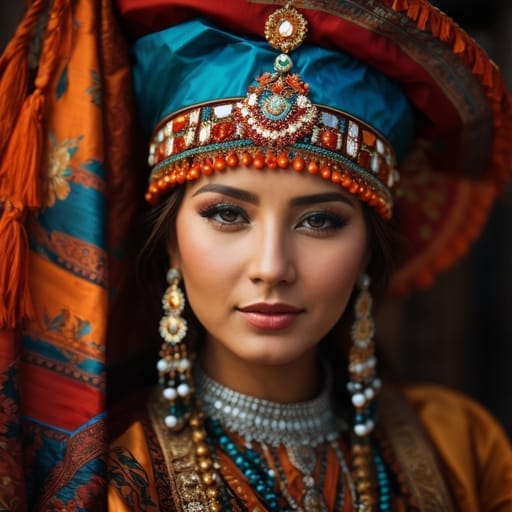
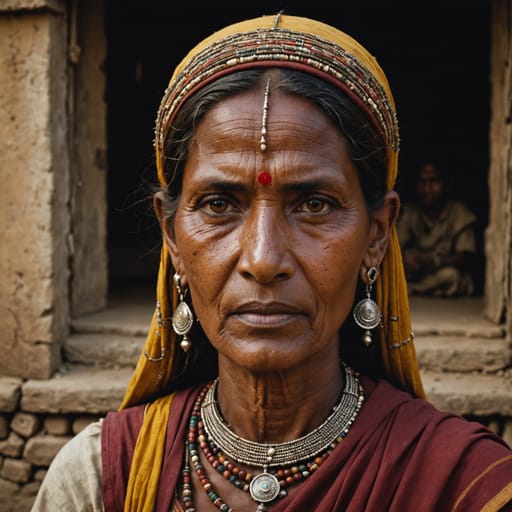
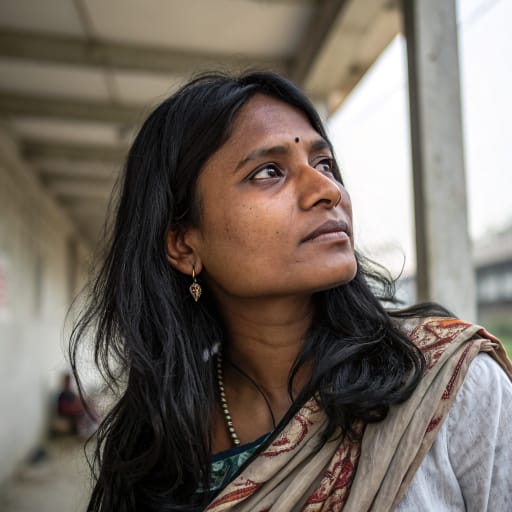
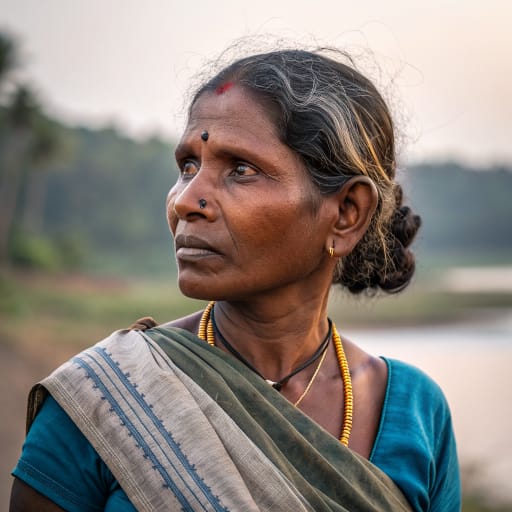
Typical Sunuwar Phenotypes
Reference for AI generation: hair, eyes, skin, facial structure, build
Sunuwar Body & Anatomy Reference
Per-feature anatomical profile for AI nude generation: Indo-Aryan / Dravidian South Asian phenotype
Sunuwar Boobs & Breasts
The typical Sunuwar bust is medium-to-large cup, moderate-to-full projection, in line with the wider Indo-Aryan / Dravidian South Asian pattern. Areolas usually fall in the 32-46mm range, with medium-brown to dark-brown areolar pigmentation against the wheatish-to-brown skin tone. Compared with the smaller East Asian bust profile, Sunuwar breasts sit forward and are generally full and soft, generally fuller than the East Asian norm. A faithful AI render of Sunuwar tits keeps that shape and areola size.
Sunuwar Ass & Hips
Butt shape among Sunuwar women: medium-to-full, moderate-to-high projection, classic curvy hip profile, over medium-to-wide iliac crests, full gluteal-femoral fat distribution. This follows Indo-Aryan / Dravidian South Asian ancestry and looks quite unlike the slim hip profile of East Asian women. An accurate Sunuwar ass in adult AI imagery keeps both the silhouette and the overall build (endomorph-to-mesomorph with fuller hip deposition) instead of a generic average.
Sunuwar Vagina & Pussy
Vulvar anatomy among Sunuwar women: medium-brown to dark-brown labial pigmentation, fuller labia minora projection. Pubic hair tends to be straight-to-wavy coarse texture, dense distribution, in the usual inverted-triangle pattern. Both follow Indo-Aryan / Dravidian South Asian pigmentation, which is why Sunuwar pussy renders should not fall back on a pale, sparse Western template.
Sunuwar Dicks & Penis
The Sunuwar cock profile, from Indo-Aryan / Dravidian South Asian anthropometric data: regional mean ~13cm erect; moderate girth; medium-brown shaft pigmentation. Pubic hair has a straight-to-wavy coarse texture and forms the usual inverted-V pattern. Whether Sunuwar men are circumcised follows religious and cultural practice rather than phenotype.
Sunuwar Body, Curves & Build
Build and curves among Sunuwar women follow the Indo-Aryan / Dravidian South Asian pattern: endomorph-to-mesomorph with fuller hip deposition, mean adult female BMI 22-25. Proportions matter as much as skin tone, so Sunuwar figures should keep their regional height and limb ratios.
Sunuwar Skin Tone & Hair Texture
The Sunuwar skin range is wheatish to brown (Fitzpatrick III-V), and hair tends to be straight-to-wavy 1A-2B, dense, dark-brown to black. That combination marks the Indo-Aryan / Dravidian South Asian phenotype, and skin tone is the trait AI generators most often get wrong for Sunuwar women.
Explore phenotype categories
Structured taxonomy with peer-reviewed scales · 22 anatomical categories
Erotic Poses & Sex Positions
From the pose catalog: 219 named positions with reference skeletons
Frequently asked questions about Sunuwar people
Where is the Sunuwar homeland?
The Sunuwar homeland is Middle hills of eastern Nepal along the Sun Koshi, Likhu and Molung rivers, chiefly Okhaldhunga, Ramechhap, Dolakha and Solukhumbu districts, with communities in Sikkim, Darjeeling and Bhutan. in Southern Asia.
What language do Sunuwar people speak?
Sunuwar people primarily speak Sunuwar, called Kõits Lo by its speakers (Sino-Tibetan, Western Kiranti), with Nepali as the dominant second language.
What religion do Sunuwar people practice?
The predominant religion among Sunuwar people is Mundhum ancestral tradition layered with Hinduism, with a growing number registering as Kirat; some Buddhist influence and recent Christian conversion.






Make your own Sunuwar images
Five a day, free, no credits to buy. The studio starts from this group's phenotype data, so you can set body type, pose and style and keep the traits accurate.
Start with Sunuwar