Help us get this right
Does this portrait look right for Bihari Muslims?
Nobody has judged this one yet. You would be the first.
Bihari Muslims Erotic
Bihar in eastern India, with large displaced communities in Bangladesh and in Karachi, Pakistan
Urdu, Bhojpuri, Magahi, Maithili (Indo-Aryan)
Sunni Islam, mainly Hanafi, with strong Sufi shrine attachment and a Shia minority
Ashraf and Ajlaf or Pasmanda strata; Syed, Sheikh, Pathan and Ansari biradaris; the stateless Bihari community in Bangladesh
About Bihari Muslims People
Ask where the Bihari Muslims live and there are two right answers. One is Bihar, flat river country in eastern India with the Ganges running through it, rice and sugarcane, and a Muslim population of roughly one in six that has been settled there since the Delhi sultanates. The other is Dhaka, where the descendants of families who left Bihar in 1947 still live in camps in the Mohammadpur district. Almost everything about the group runs through that fork. In Bihar they speak what their neighbors speak: Bhojpuri in the west, Magahi around Patna and Gaya, Maithili in the north, all Indo-Aryan. Urdu is the language of the sermon, the ghazal and the qazi's court, and the state made it a second official language in 1980. Sunni Islam of the Hanafi school predominates, worked into daily life through Sufi lineages, the Firdausi order at Bihar Sharif, the shrine complex at Maner, the khanqahs of Phulwari Sharif on the edge of Patna. Since 1921 Phulwari Sharif has also housed the Imarat-e-Shariah, which maintains its own network of qazis handling marriage, divorce and inheritance for Muslims across Bihar, Jharkhand and Odisha, running alongside the state courts.
The internal line that matters most is not sect but descent. Ashraf families claim Arab, Persian or Afghan origin. The Ajlaf majority are weavers, butchers, oil pressers and cultivators, and they have their own politics. The Momin Conference, built among Ansari weavers under Abdul Qaiyum Ansari in the 1930s and 1940s, argued against the Muslim League and against Partition on the grounds that a landlord's country would not be theirs. The Pasmanda movement that took shape in Patna in the 1990s is its direct heir. Events made the counterargument. Bihar's massacres of Muslims in late 1946 pushed tens of thousands east into Bengal, and Partition sent many more. They went to East Pakistan rather than West because it was close and there was work on the railways and in the jute mills. In 1971 that choice curdled. Bangladeshi independence left them stateless and branded as loyalists, and roughly a quarter of a million remain in camps that were never meant to last, the largest known as Geneva Camp for the Red Cross money behind it. A 2008 High Court ruling granted citizenship to those born after 1971, which settled the legal question and little else. Back in Bihar, life stayed braided with the neighbors. Sher Shah Suri, who took Delhi and laid the Grand Trunk Road, was born at Sasaram, and Bismillah Khan, born at Dumraon into a family of Muslim court musicians, spent his life playing the shehnai at a Hindu temple in Benares.
Related ethnic groups
Groups that share Bihari Muslims's homeland, region, language, or religious tradition. These are likely candidates for comparative phenotype reference.
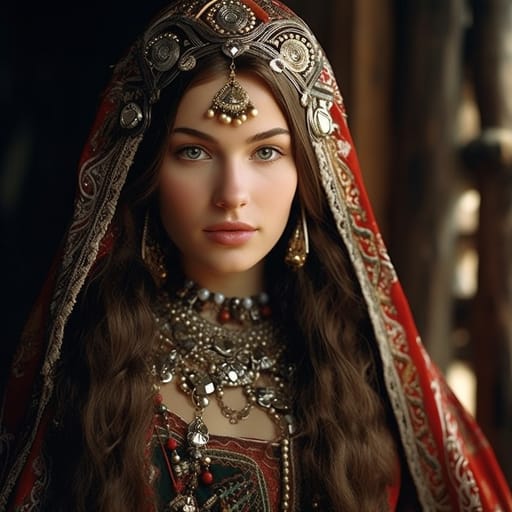
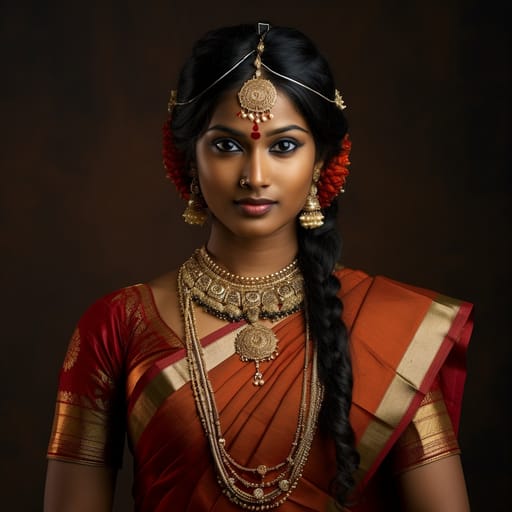
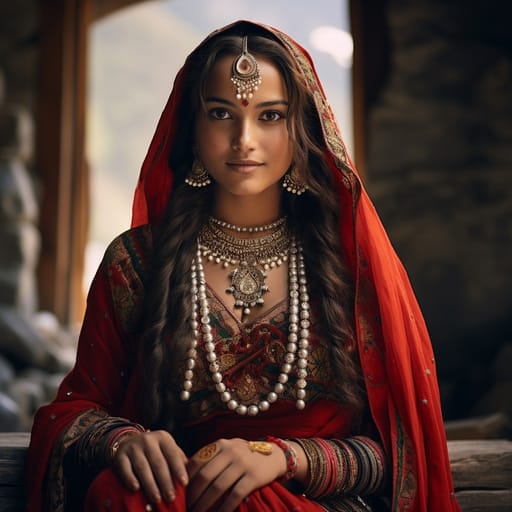
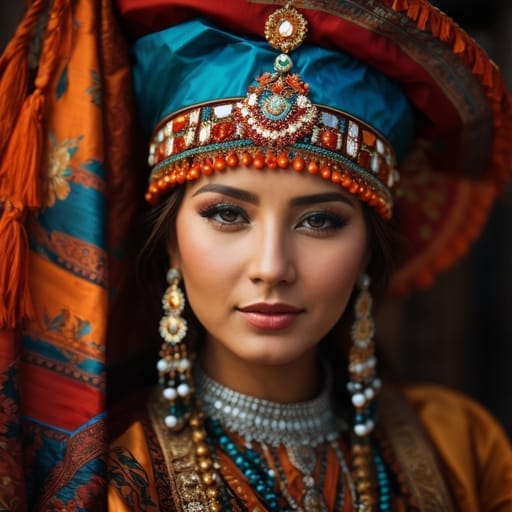
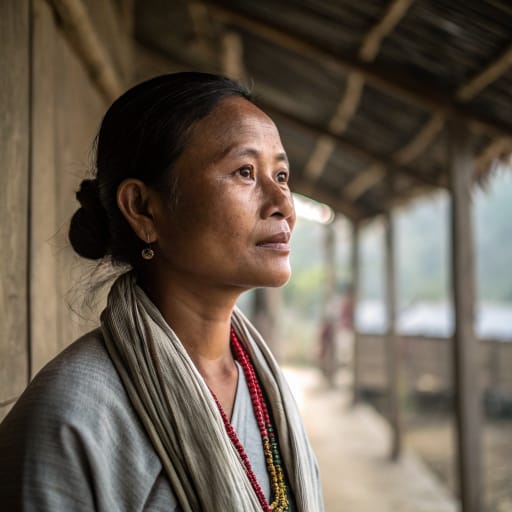
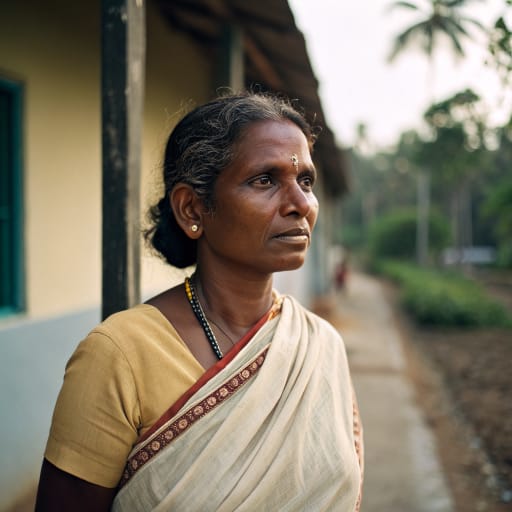
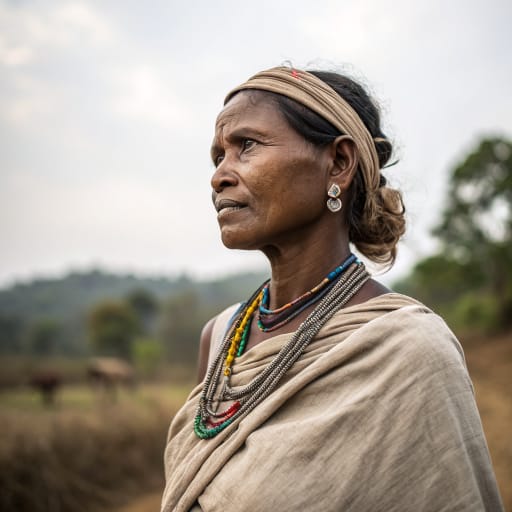
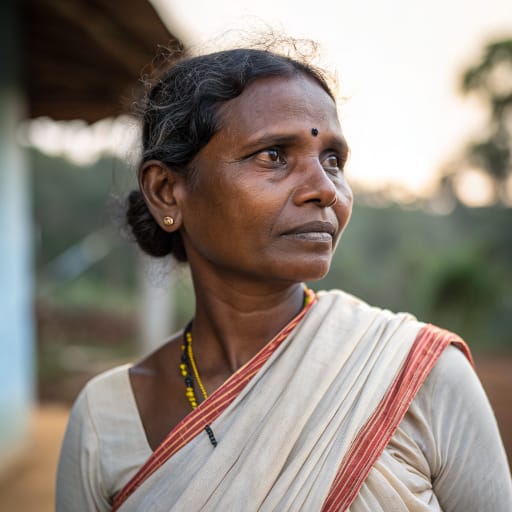
Typical Bihari Muslims Phenotypes
Reference for AI generation: hair, eyes, skin, facial structure, build
Bihari Muslims Body & Anatomy Reference
Anatomy by feature, Indo-Aryan / Dravidian South Asian phenotype
Bihari Muslims Boobs & Breasts
The typical Bihari Muslims bust is medium-to-large cup, moderate-to-full projection, in line with the wider Indo-Aryan / Dravidian South Asian pattern. Areolas usually fall in the 32-46mm range, with medium-brown to dark-brown areolar pigmentation against the wheatish-to-brown skin tone. Compared with the smaller East Asian bust profile, Bihari Muslims breasts sit forward and are generally full and soft, generally fuller than the East Asian norm. A faithful AI render of Bihari Muslims tits keeps that shape and areola size.
Bihari Muslims Ass & Hips
Butt shape among Bihari Muslims women: medium-to-full, moderate-to-high projection, classic curvy hip profile, over medium-to-wide iliac crests, full gluteal-femoral fat distribution. This follows Indo-Aryan / Dravidian South Asian ancestry and looks quite unlike the slim hip profile of East Asian women. An accurate Bihari Muslims ass in adult AI imagery keeps both the silhouette and the overall build (endomorph-to-mesomorph with fuller hip deposition) instead of a generic average.
Bihari Muslims Vagina & Pussy
Vulvar anatomy among Bihari Muslims women: medium-brown to dark-brown labial pigmentation, fuller labia minora projection. Pubic hair tends to be straight-to-wavy coarse texture, dense distribution, in the usual inverted-triangle pattern. Both follow Indo-Aryan / Dravidian South Asian pigmentation, which is why Bihari Muslims pussy renders should not fall back on a pale, sparse Western template.
Bihari Muslims Dicks & Penis
The Bihari Muslims cock profile, from Indo-Aryan / Dravidian South Asian anthropometric data: regional mean ~13cm erect; moderate girth; medium-brown shaft pigmentation. Pubic hair has a straight-to-wavy coarse texture and forms the usual inverted-V pattern. Whether Bihari Muslims men are circumcised follows religious and cultural practice rather than phenotype.
Bihari Muslims Body, Curves & Build
Build and curves among Bihari Muslims women follow the Indo-Aryan / Dravidian South Asian pattern: endomorph-to-mesomorph with fuller hip deposition, mean adult female BMI 22-25. Proportions matter as much as skin tone, so Bihari Muslims figures should keep their regional height and limb ratios.
Bihari Muslims Skin Tone & Hair Texture
The Bihari Muslims skin range is wheatish to brown (Fitzpatrick III-V), and hair tends to be straight-to-wavy 1A-2B, dense, dark-brown to black. That combination marks the Indo-Aryan / Dravidian South Asian phenotype, and skin tone is the trait AI generators most often get wrong for Bihari Muslims women.
Explore phenotype categories
Structured taxonomy with peer-reviewed scales · 22 anatomical categories
Erotic Poses & Sex Positions
From the pose catalog: 219 named positions with reference skeletons
Frequently asked questions about Bihari Muslims people
Where is the Bihari Muslims homeland?
The Bihari Muslims homeland is Bihar in eastern India, with large displaced communities in Bangladesh and in Karachi, Pakistan in Southern Asia.
What language do Bihari Muslims people speak?
Bihari Muslims people primarily speak Urdu, Bhojpuri, Magahi, Maithili (Indo-Aryan).
What religion do Bihari Muslims people practice?
The predominant religion among Bihari Muslims people is Sunni Islam, mainly Hanafi, with strong Sufi shrine attachment and a Shia minority.






Make your own Bihari Muslims images
Five a day, free, no credits to buy. The studio starts from this group's phenotype data, so you can set body type, pose and style and keep the traits accurate.
Start with Bihari Muslims