No portrait yet
Suku Erotic
Savanna country east of the Kwango River in Kwango Province, southwestern Democratic Republic of the Congo, centered on the Feshi area.
Kisuku (Niger-Congo, Bantu, Kongo branch); Kituba and French also widely used.
Christianity from Catholic and Protestant missions, alongside ancestor veneration and protective charms.
Bantu people of the Kongo cultural sphere, closely related to the Yaka, historically united under the Meni Kongo kingship.
About Suku People
The Suku are a Bantu people of the southwestern Congo savanna. For generations they understood themselves as a kingdom rather than a scattering of villages, organized around a paramount ruler with the title Meni Kongo. That title points west, toward the old Kongo kingdom, and it carries a claim of descent that still shapes how the Suku place themselves among their neighbors.
Their country is open grassland cut by wooded river valleys east of the Kwango River, in what is now Kwango Province of the Democratic Republic of the Congo. Women do most of the farming, with cassava as the staple. Men hunt, trap and tap palm wine. The language, Kisuku, belongs to the Kongo branch of Bantu and is closely related to Yaka and Kikongo. Most people also speak Kituba, the trade form of Kikongo used across the region, and many speak some French.
Kinship runs through the mother's line, and the matrilineage is the unit that matters. It acts as one body: it holds rights over land and people, pays and collects compensation, and answers as a group for what its members do. The anthropologist Igor Kopytoff lived among the Suku in the late colonial period and built one of his best known arguments on them. He argued that the Suku treat the dead ancestors much like senior elders, as part of the same chain of authority rather than a separate spiritual order. Christianity came with the missions and is now widespread. It sits alongside that older logic of lineage, ancestors and protective charms rather than replacing it.
The region's politics were never quiet. When Yaka rulers of Lunda descent established themselves in the Kwango valley, the balance of power shifted, and the Suku kingdom stayed a distinct polity next to them. Belgian rule later brought both peoples under a single colonial administration, which reduced the independence of the old kingship without erasing it.
Outsiders mostly know the Suku through their masks. The hemba is a carved wooden helmet mask, often topped with an animal figure and trimmed with raffia. It traditionally appears around the n-khanda initiation, when boys who have been circumcised and kept in seclusion come back to village life as young men. The larger kakungu mask belongs to the initiation specialists and is meant to intimidate. In a museum these pieces are sculpture. At home they were tools of a rite that decided who counted as an adult.
Related ethnic groups
Groups that share Suku's homeland, region, language, or religious tradition. These are likely candidates for comparative phenotype reference.
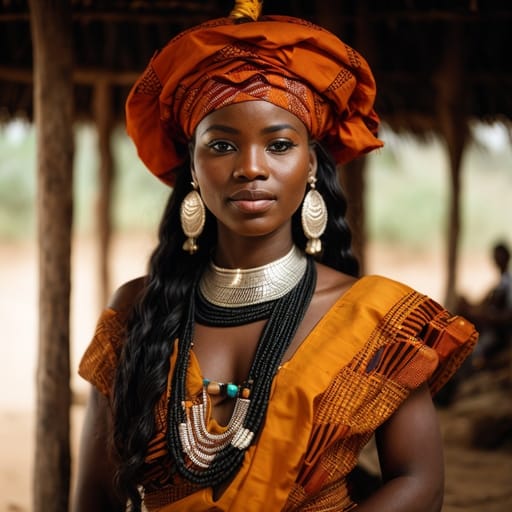
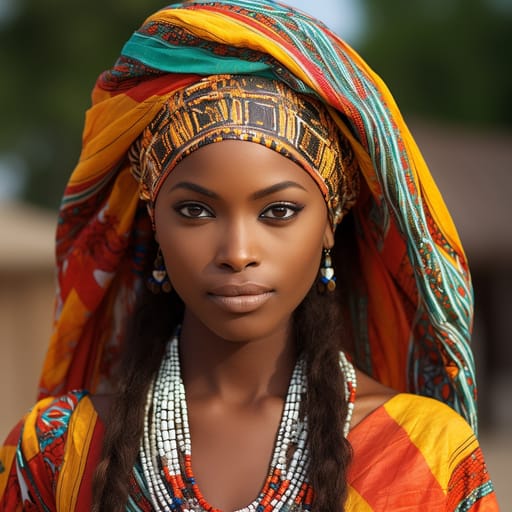
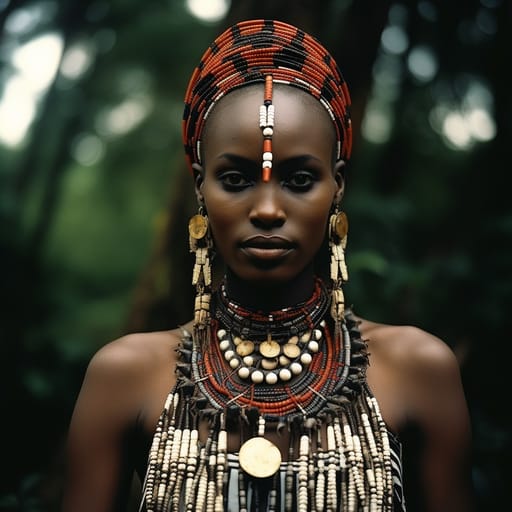
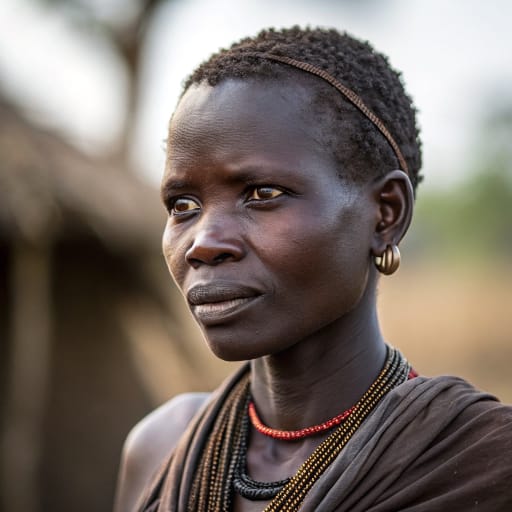
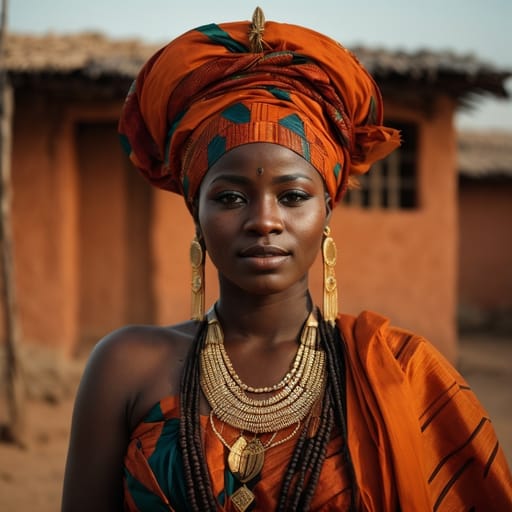
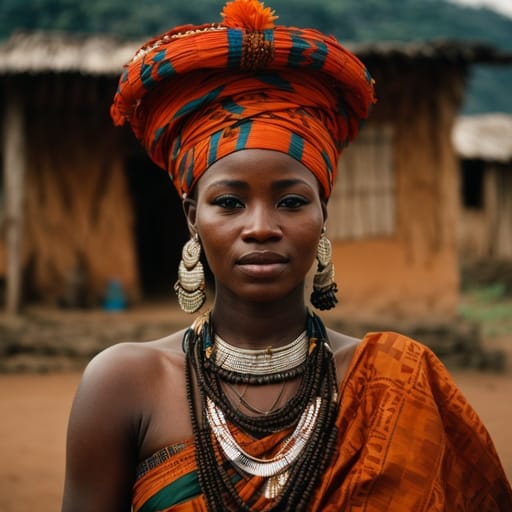
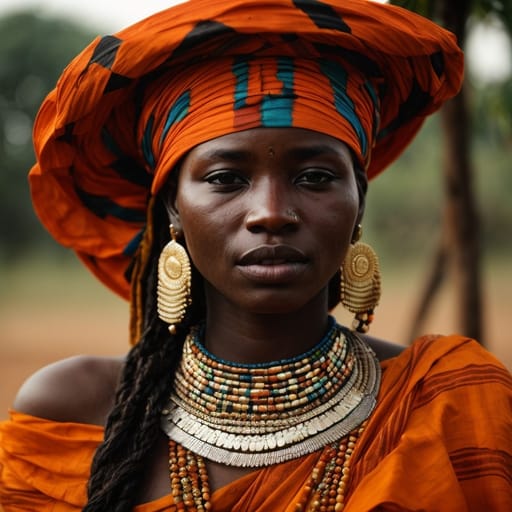
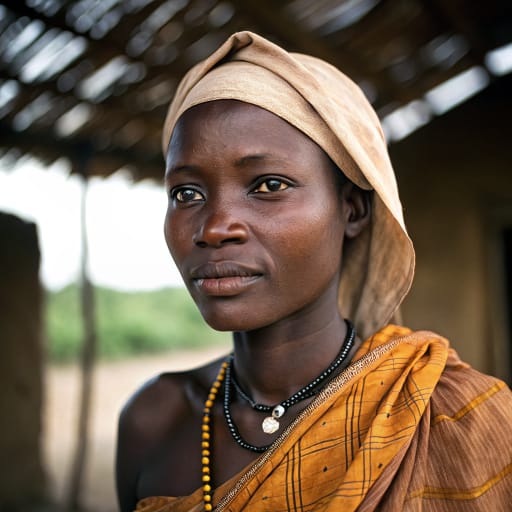
Typical Suku Phenotypes
Reference for AI generation: hair, eyes, skin, facial structure, build
Suku Body & Anatomy Reference
Bantu / Central African Niger-Congo phenotype: anatomy reference for AI nude generation
Suku Boobs & Breasts
Suku boobs follow the Bantu / Central African Niger-Congo profile: medium-to-large cup, full, projecting. Areolar diameter is usually 32-48mm, and the coloring is deep-brown areolar pigmentation against the deep-brown skin tone. Breast shape tracks body composition (mesomorph with strong gluteal-femoral fat deposition, mean adult female BMI 23-26), so Suku breasts tend to be fuller projection than East African; comparable to West African norm. Expect a forward-set shape, not the smaller East African conical profile.
Suku Ass & Hips
Suku ass and hip morphology presents as full, projected, wide-set glutes, distinctly different from the slim narrow-hip Cushitic East African profile. The Suku pelvic profile shows broad iliac crests, gynoid pelvic pattern, anchored in the Bantu / Central African Niger-Congo skeletal pattern. Suku butt shots in adult AI imagery should render the full, projected, wide-set glutes silhouette with the overall build (mesomorph with strong gluteal-femoral fat deposition) and the fat distribution typical of the Bantu / Central African Niger-Congo phenotype.
Suku Vagina & Pussy
Suku pussy anatomy typically shows deep-brown labial pigmentation, fuller labia minora. Pubic hair is usually tightly-coiled coarse texture, dense distribution. In AI-generated Suku nudes, labial color should blend into the deep-brown skin with a gradual transition, and the hair should keep its tightly-coiled coarse texture.
Suku Dicks & Penis
Penis reference for Suku men: regional mean ~14cm erect, above-average girth. Coloring: deep-brown shaft pigmentation. An accurate Suku cock in AI imagery matches the surrounding deep-brown skin rather than a generic porn default. Circumcision depends on religion and custom, not ancestry.
Suku Body, Curves & Build
The Suku figure is generally mesomorph with strong gluteal-femoral fat deposition, with mean adult female BMI 23-26, characteristic of Bantu / Central African Niger-Congo ancestry. AI image tools tend to flatten regional body types into a few stock shapes; here the Suku build is kept as its own reference.
Suku Skin Tone & Hair Texture
Skin: deep-brown (Fitzpatrick VI). Hair: tight 4A-4C coil. Both are typical of Bantu / Central African Niger-Congo ancestry. The most common mistake in AI nudes of Suku women is a body rendered lighter than the face.
Explore phenotype categories
Structured taxonomy with peer-reviewed scales · 22 anatomical categories
Erotic Poses & Sex Positions
From the pose catalog: 219 named positions with reference skeletons
Frequently asked questions about Suku people
Where is the Suku homeland?
The Suku homeland is Savanna country east of the Kwango River in Kwango Province, southwestern Democratic Republic of the Congo, centered on the Feshi area. in Central Africa.
What language do Suku people speak?
Suku people primarily speak Kisuku (Niger-Congo, Bantu, Kongo branch); Kituba and French also widely used..
What religion do Suku people practice?
The predominant religion among Suku people is Christianity from Catholic and Protestant missions, alongside ancestor veneration and protective charms..






Make your own Suku images
Five a day, free, no credits to buy. The studio starts from this group's phenotype data, so you can set body type, pose and style and keep the traits accurate.
Start with Suku