No portrait yet
Shiwei Erotic
Upper Amur and Argun river basins and the Greater Khingan range, in present-day northeastern Inner Mongolia and Heilongjiang, China, with adjoining parts of eastern Mongolia and the Russian Far East.
Shiwei, unwritten and known only through Chinese records; most likely early Mongolic or para-Mongolic and close to Khitan (Mongolic), with Tungusic speech probable among the northernmost groups.
Shamanism, with offerings to sky and earth and veneration of ancestors.
Recorded as Southern, Northern, Bo, Shenmodada and Great Shiwei, with further tribes named later including the Mengwu Shiwei, taken as the earliest attested Mongols; part of the wider Mongolic world alongside the Khitan and Kumo Xi.
About Shiwei People
The Shiwei were a loose group of hunting and stock raising tribes who lived from roughly the fifth century to the tenth along the upper Amur, the Argun, and the eastern flank of the Greater Khingan range, in what is now northeastern Inner Mongolia, Heilongjiang, and the Russian border country beyond. They wrote nothing themselves, so they survive in Chinese dynastic histories, which filed them in five divisions: Southern, Northern, Bo, Shenmodada, and Great Shiwei, adding further tribal names as Tang officials learned the country better. One of those names is the reason anyone but specialists still reads about them. The Mengwu Shiwei of the New Book of Tang carry the earliest secure appearance of the word that became Mongol, and the standard account has the Mongols emerging from Shiwei tribes that moved west out of the forest and onto the open plateau.
They were forest people before they were steppe people, and the Chinese notices are unusually concrete about the difference. They kept pigs and cattle, rode few horses, and were recorded, with something close to puzzlement, as having no sheep at all. They hauled goods by ox cart, crossed water in birch bark boats, and wintered in dug shelters. Northern groups trapped sable for a living and were described in caps of fox and raccoon dog fur and coats of fish skin. They did not smelt iron and took it in trade from Goguryeo. Their politics stopped at the tribe: chiefs held the title mohefu, nobody ruled all of them, and they sent tribute in turn to the Turkic khaganates, the Tang, and the Uyghurs, depending on who was nearest. A man who wanted a wife worked three years in her father's household before he could take her home. The dead were laid on platforms built up in trees and mourned for three years, and ritual life ran through shamans and through offerings to sky and earth. The Khitan Liao took the Shiwei country early in the tenth century and the name goes quiet after that. Historians still argue over whether Shiwei ever named one people or was a filing label for many small ones speaking related languages, and the Mongol origin story written down much later by Rashid al-Din places the beginning in a mountain enclosure called Ergune Kun, a name that echoes the Argun. What is not in dispute is the direction of travel: river and forest tribes came out of the Khingan, and three centuries later their descendants held the largest land empire in history.
Related ethnic groups
Groups that share Shiwei's homeland, region, language, or religious tradition. These are likely candidates for comparative phenotype reference.
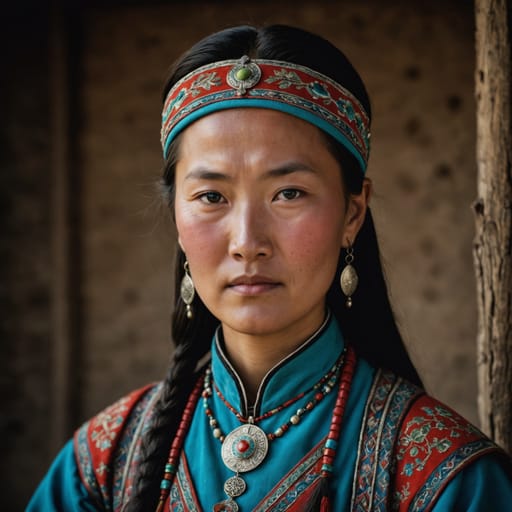
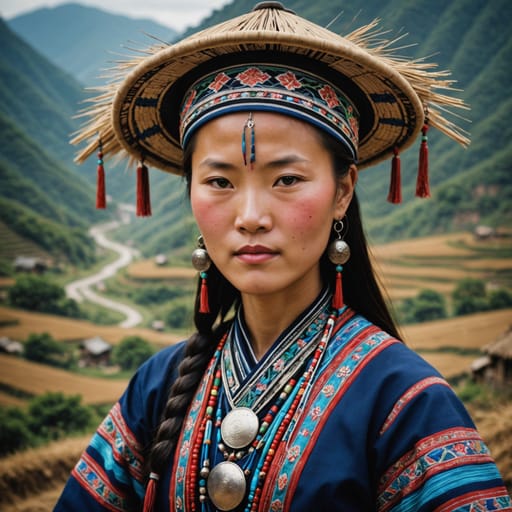
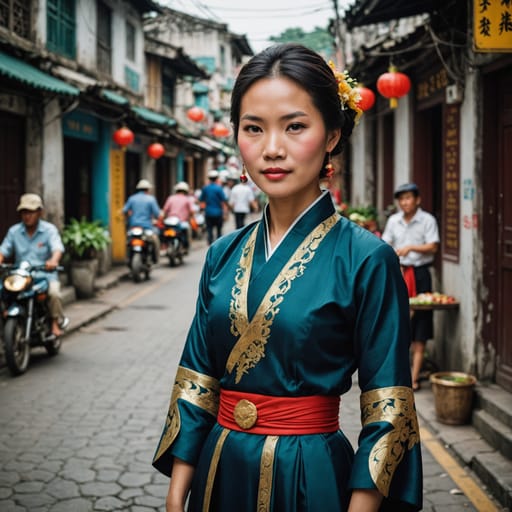
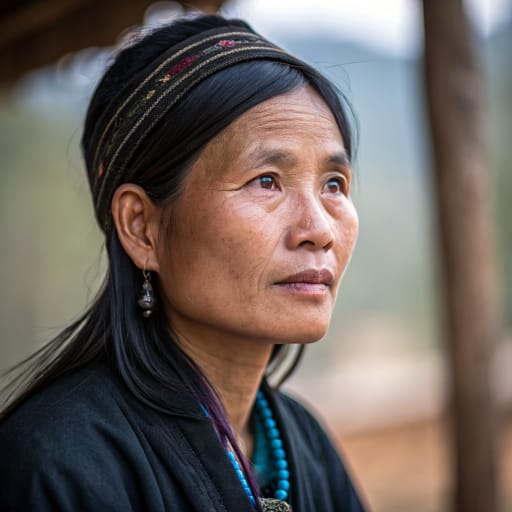
Typical Shiwei Phenotypes
Reference for AI generation: hair, eyes, skin, facial structure, build
Shiwei Body & Anatomy Reference
Per-feature anatomical profile for AI nude generation: East Asian Sinitic / Mongoloid phenotype
Shiwei Boobs & Breasts
Bust reference for Shiwei women: small-to-medium cup, modest projection, which is typical of East Asian Sinitic / Mongoloid ancestry. Areolas measure about 26-36mm across, with light-pink to medium-brown pigmentation. Body type (ectomorph-to-mesomorph, lean frame) shapes the bust as well, so Shiwei tits are usually firm and modestly projecting; smaller cup size than the South Asian or Western Asian average. In AI imagery, keep the forward-set shape rather than drifting toward the fuller South Asian or Levantine bust profile.
Shiwei Ass & Hips
The Shiwei ass is typically small-to-medium, modest projection, narrower hip profile, which sets it apart from the fuller projected glutes of the West African or Polynesian phenotype. Underneath, the pelvis shows narrower iliac crests, less gluteal-femoral fat deposition, part of the East Asian Sinitic / Mongoloid skeletal pattern. For Shiwei butt pics and AI renders, match that silhouette and the overall build (ectomorph-to-mesomorph, lean frame).
Shiwei Vagina & Pussy
Shiwei pussy and vulvar anatomy presents light-pink to medium-brown labial pigmentation, smaller labia minora, consistent with the East Asian Sinitic / Mongoloid phenotype's pigmentation pattern. Shiwei pubic hair is typically straight fine texture, sparser distribution than the South Asian norm, in the inverted-triangle pattern. For anatomically accurate Shiwei pussy renders the labial coloration should match the surrounding light to medium skin tone with a continuous gradient, and the hair should keep its straight fine texture.
Shiwei Dicks & Penis
Shiwei dicks follow the East Asian Sinitic / Mongoloid reference data: regional mean ~11-12cm erect; moderate girth; light-brown shaft pigmentation. Shaft color should track the light to medium skin tone with a smooth change toward the glans, and Shiwei pubic hair keeps its straight fine texture.
Shiwei Body, Curves & Build
Shiwei body type and overall build presents as ectomorph-to-mesomorph, lean frame, with mean adult female BMI 20-23: the characteristic East Asian Sinitic / Mongoloid habitus. Shiwei curves and proportions should keep the regional skeletal frame (height, shoulder-to-hip ratio, limb proportions) rather than a generic mesomorph default.
Shiwei Skin Tone & Hair Texture
Shiwei skin sits in the light to medium (Fitzpatrick II-IV) band. Hair is typically straight 1A, fine-to-medium, predominantly black, in keeping with the East Asian Sinitic / Mongoloid phenotype. In nude renders the skin should stay one even tone from face to body, and body, pubic and head hair should match.
Explore phenotype categories
Structured taxonomy with peer-reviewed scales · 22 anatomical categories
Erotic Poses & Sex Positions
From the pose catalog: 219 named positions with reference skeletons
Frequently asked questions about Shiwei people
Where is the Shiwei homeland?
The Shiwei homeland is Upper Amur and Argun river basins and the Greater Khingan range, in present-day northeastern Inner Mongolia and Heilongjiang, China, with adjoining parts of eastern Mongolia and the Russian Far East. in East Asia.
What language do Shiwei people speak?
Shiwei people primarily speak Shiwei, unwritten and known only through Chinese records; most likely early Mongolic or para-Mongolic and close to Khitan (Mongolic), with Tungusic speech probable among the northernmost groups..
What religion do Shiwei people practice?
The predominant religion among Shiwei people is Shamanism, with offerings to sky and earth and veneration of ancestors..






Make your own Shiwei images
Five a day, free, no credits to buy. The studio starts from this group's phenotype data, so you can set body type, pose and style and keep the traits accurate.
Start with Shiwei