No portrait yet
Sanka Erotic
Mountain districts and river valleys across rural Japan
Japanese (Japonic); the secret Sanka script described in 1930s popular writing is generally regarded as invented
Local bands known by trade names such as Mitsukuri (basket makers) and Minaoshi (basket menders); often grouped with Japan's other itinerant and marginal populations
About Sanka People
The Sanka were itinerant families who worked the mountains and river valleys of Japan from at least the nineteenth century until the years after World War II. Then their wandering life ended and they merged into the settled Japanese population. No Sanka community exists today. What remains is a name, a trail of police records and folklore notes, and a legend that grew far larger than the people behind it. The word was never theirs. Its characters suggest a mountain lair, and it was a label used by police and newspapers. It carried the suspicion that settled society kept for anyone without a fixed address. Locally, the people behind the label were often known by their trade: in some districts as Mitsukuri (basket makers) or Minaoshi (basket menders). They wove and repaired the bamboo winnowing baskets that farming households relied on, made other bamboo goods, and fished the rivers. They moved between camps along riverbanks and traded their work with nearby villages. They spoke Japanese, and what set them apart was a way of making a living, not a separate language.
The modern state closed in on that life. Meiji-era household registration and the policing of vagrancy treated people without a registered home as a problem, and the press routinely linked the Sanka to theft. Folklorists, Yanagita Kunio among them, took a careful interest early in the twentieth century. Then in the 1930s the writer Misumi Kan made the Sanka a popular sensation. His stories and supposed field reports described secret laws, a hidden chain of command and even a private script. He later recast this material as scholarship, and later researchers have treated much of it as invention. Where the Sanka came from has never been settled. Theories range from peasants driven out by famine or war to survivors of an older population, and the evidence doesn't firmly support any of them. Many scholars doubt they were an ethnic group at all and see them instead as a social and occupational category of Japan's rural poor. After the war, the household registry and the rapid industrialization of the countryside left little room for a wandering life. By the later twentieth century the Sanka had ceased to exist as a recognizable group. They live on in folklore studies, novels and film, where the harder task is separating the working families who mended baskets by the river from the romantic outlaws invented for readers.
Related ethnic groups
Groups that share Sanka's homeland, region, language, or religious tradition. These are likely candidates for comparative phenotype reference.
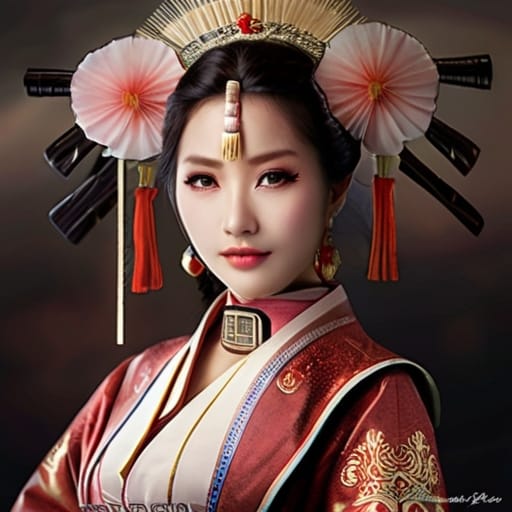
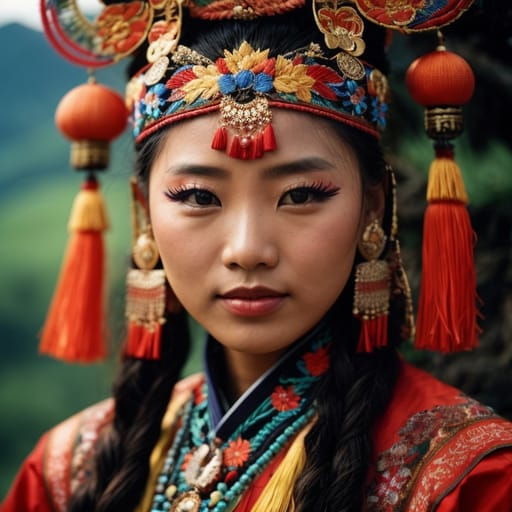
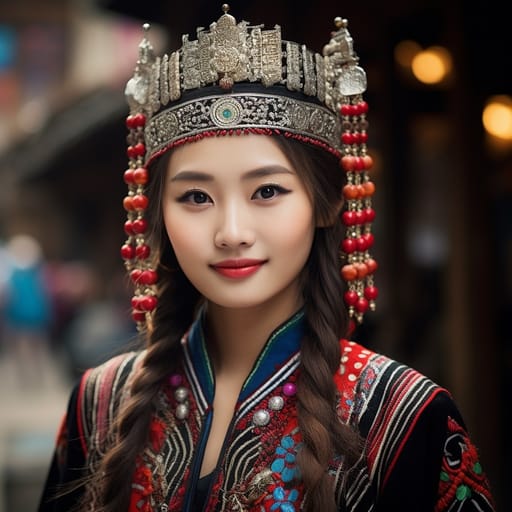
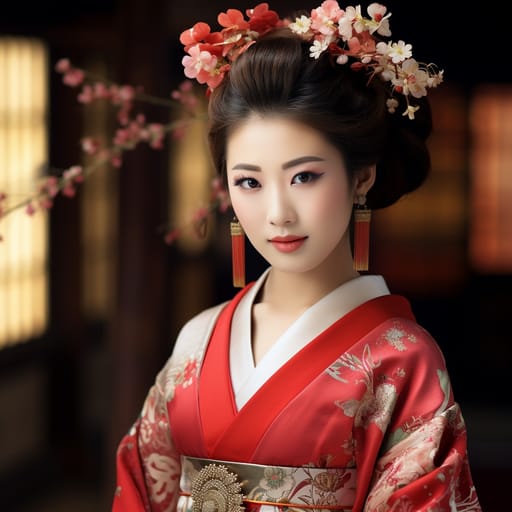
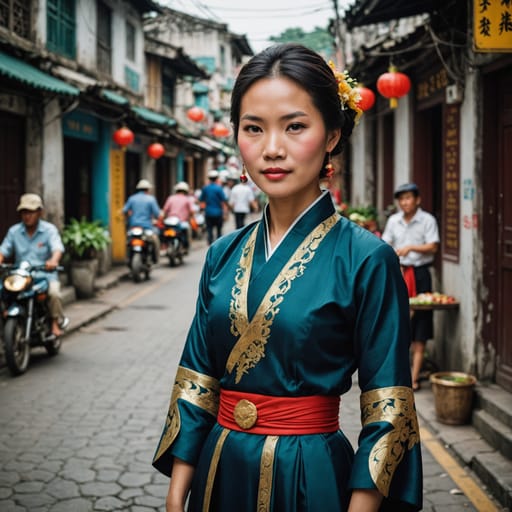
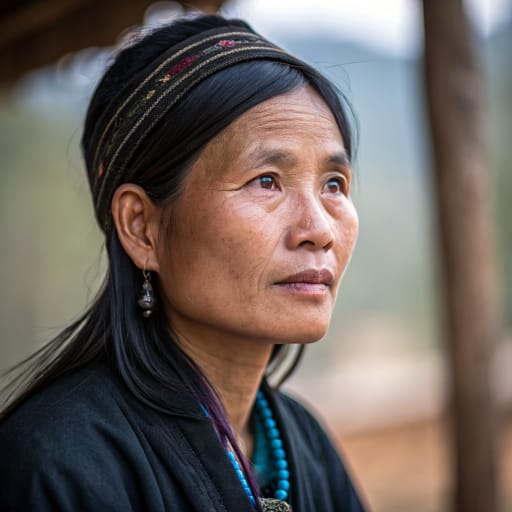
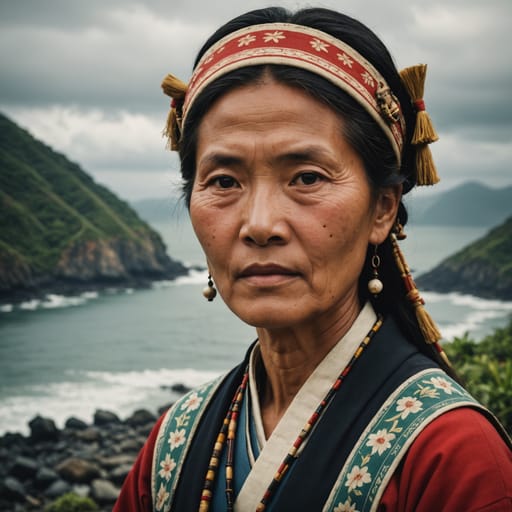
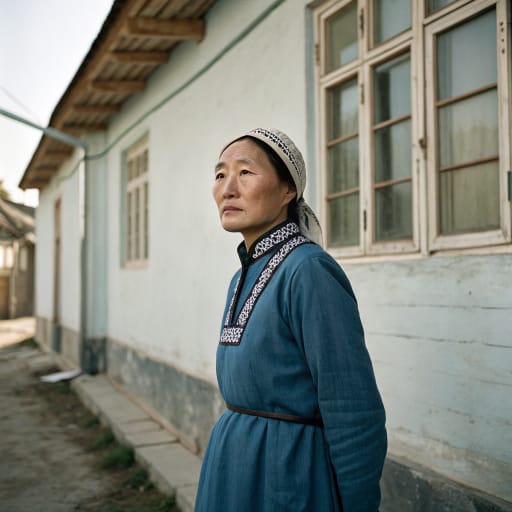
Typical Sanka Phenotypes
Reference for AI generation: hair, eyes, skin, facial structure, build
Sanka Body & Anatomy Reference
Anatomy by feature, East Asian Sinitic / Mongoloid phenotype
Sanka Boobs & Breasts
Sanka boobs follow the East Asian Sinitic / Mongoloid profile: small-to-medium cup, modest projection. Areolar diameter is usually 26-36mm, and the coloring is light-pink to medium-brown areolar pigmentation against the light-to-medium skin tone. Breast shape tracks body composition (ectomorph-to-mesomorph, lean frame, mean adult female BMI 20-23), so Sanka breasts tend to be firm and modestly projecting; smaller cup size than the South Asian or Western Asian average. Expect a forward-set shape, not the fuller South Asian or Levantine bust profile.
Sanka Ass & Hips
Sanka ass and hip morphology presents as small-to-medium, modest projection, narrower hip profile, distinctly different from the fuller projected glutes of the West African or Polynesian phenotype. The Sanka pelvic profile shows narrower iliac crests, less gluteal-femoral fat deposition, anchored in the East Asian Sinitic / Mongoloid skeletal pattern. Sanka butt shots in adult AI imagery should render the small-to-medium, modest projection, narrower hip profile silhouette with the overall build (ectomorph-to-mesomorph, lean frame) and the fat distribution typical of the East Asian Sinitic / Mongoloid phenotype.
Sanka Vagina & Pussy
Sanka pussy anatomy typically shows light-pink to medium-brown labial pigmentation, smaller labia minora. Pubic hair is usually straight fine texture, sparser distribution than the South Asian norm. In AI-generated Sanka nudes, labial color should blend into the light to medium skin with a gradual transition, and the hair should keep its straight fine texture.
Sanka Dicks & Penis
Penis reference for Sanka men: regional mean ~11-12cm erect, moderate girth. Coloring: light-brown shaft pigmentation. An accurate Sanka cock in AI imagery matches the surrounding light to medium skin rather than a generic porn default. Circumcision depends on religion and custom, not ancestry.
Sanka Body, Curves & Build
The Sanka figure is generally ectomorph-to-mesomorph, lean frame, with mean adult female BMI 20-23, characteristic of East Asian Sinitic / Mongoloid ancestry. AI image tools tend to flatten regional body types into a few stock shapes; here the Sanka build is kept as its own reference.
Sanka Skin Tone & Hair Texture
Skin: light to medium (Fitzpatrick II-IV). Hair: straight 1A, fine-to-medium, predominantly black. Both are typical of East Asian Sinitic / Mongoloid ancestry. The most common mistake in AI nudes of Sanka women is a body rendered lighter than the face.
Explore phenotype categories
Structured taxonomy with peer-reviewed scales · 22 anatomical categories
Erotic Poses & Sex Positions
From the pose catalog: 219 named positions with reference skeletons
Frequently asked questions about Sanka people
Where is the Sanka homeland?
The Sanka homeland is Mountain districts and river valleys across rural Japan in East Asia.
What language do Sanka people speak?
Sanka people primarily speak Japanese (Japonic); the secret Sanka script described in 1930s popular writing is generally regarded as invented.






Make your own Sanka images
Five a day, free, no credits to buy. The studio starts from this group's phenotype data, so you can set body type, pose and style and keep the traits accurate.
Start with Sanka