No portrait yet
Sakuye Erotic
Northern Kenya: around Dabel near Moyale in Marsabit County, and the Waso area of Isiolo County along the Ewaso Ng'iro river.
Borana dialect of Oromo (Afroasiatic, Cushitic); Swahili widely used as a second language.
Sunni Islam, often with Sufi devotion linked to Sheikh Hussein of Bale; older camel-herding rites persist alongside.
Cushitic-speaking camel pastoralists of Rendille-related origin, historically allied to the Borana in the Worr Libin; two main sections, around Dabel (Marsabit County) and in the Waso area (Isiolo County).
About Sakuye People
The Sakuye are camel people of northern Kenya who speak the language of their cattle-keeping neighbors. Their name comes from Saku, the Borana word for Marsabit Mountain, and the usual account of their origin runs through that mountain: Rendille-related camel herders who drifted north from Marsabit, fell in with the Borana, and took up the Borana dialect of Oromo while keeping their camels and much of the ritual that goes with them. The result is a people who sound Borana and herd like Rendille, and who have never been fully either. Today they live mainly in two pockets: around Dabel, near Moyale in Marsabit County, and in the Waso country of Isiolo County, along the Ewaso Ng'iro. They number a few tens of thousands.
For generations the Sakuye were partners in the Worr Libin, the Borana-led alliance that dominated the region, which gave them a place in a larger political order and access to its wells and pasture. Their clans tell a different story from their language. The anthropologist Günther Schlee traced Sakuye clan ties across ethnic lines to the Rendille, the Gabra and several Somali groups, all heirs to an older camel-herding culture with shared sacrifices and a ritual calendar built around the herd. Islam arrived in the first half of the twentieth century and took firm hold, often in a Sufi form linked to the shrine of Sheikh Hussein in Bale, Ethiopia. Dabel in particular became known as a settlement of sheikhs and devotees. The older camel rites did not vanish so much as get folded in under Muslim practice.
The break in Sakuye history is the Shifta War of the 1960s, when secessionists backed by Somalia fought the new Kenyan state across the north. The Sakuye were treated as sympathizers. Security forces confined them to guarded villages and shot or confiscated their herds, and a people who had been among the better-off camel owners of the district came out of the decade nearly stockless. Oromo speakers in Isiolo still call the period gaaf daaba, the time when everything stopped. Many Sakuye ended up on the edges of Isiolo town burning charcoal, farming small plots, working for wages or living on relief. Herds have been rebuilt since, slowly and unevenly, and camels remain the measure of a proper Sakuye life, even for families who now own none.
Related ethnic groups
Groups that share Sakuye's homeland, region, language, or religious tradition. These are likely candidates for comparative phenotype reference.
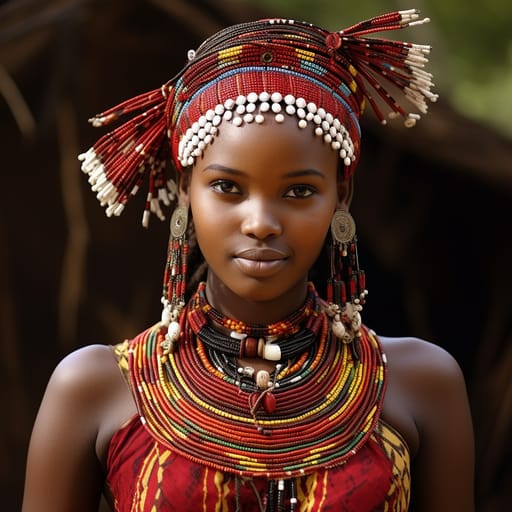
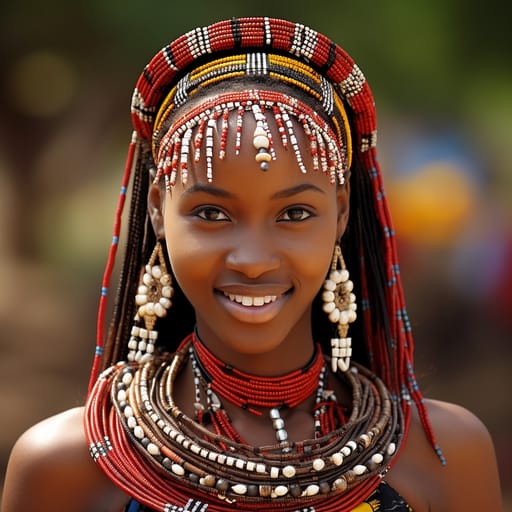
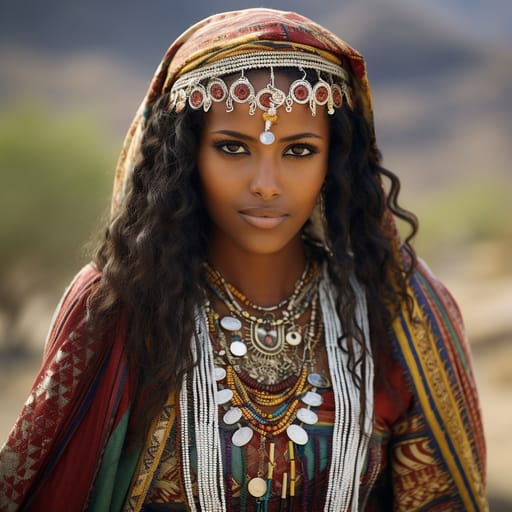
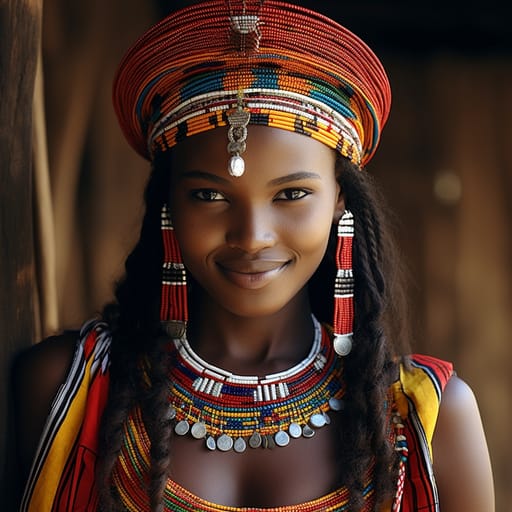
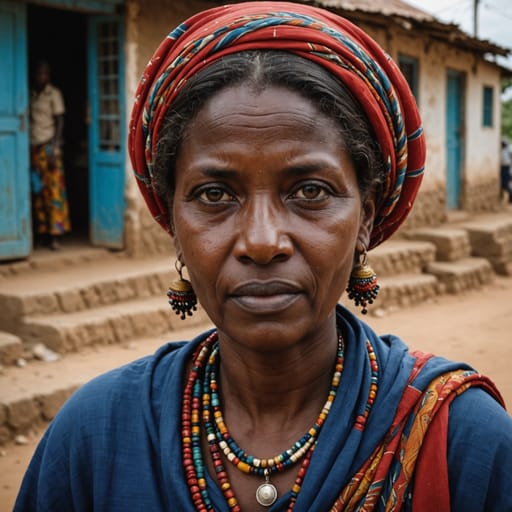
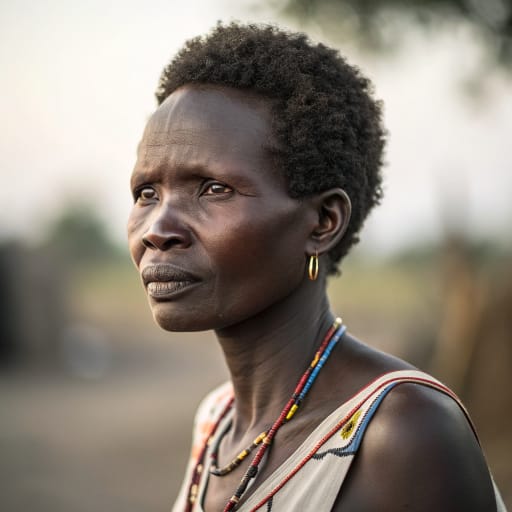
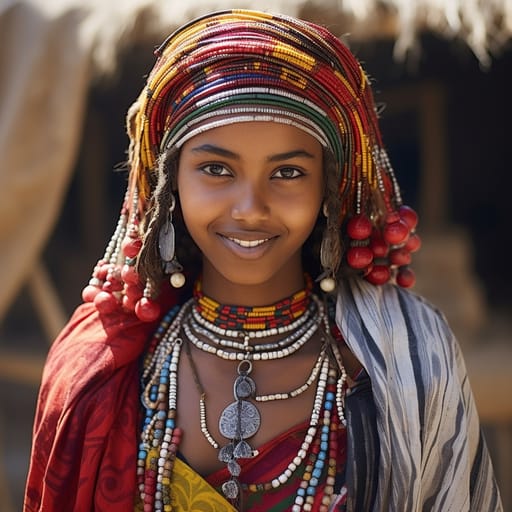
Typical Sakuye Phenotypes
Reference for AI generation: hair, eyes, skin, facial structure, build
Sakuye Body & Anatomy Reference
Cushitic / Nilo-Cushitic East African phenotype: anatomy reference for AI nude generation
Sakuye Boobs & Breasts
Sakuye tits and boobs run small-to-medium-cup, high-set, conical, the classic Cushitic / Nilo-Cushitic East African bust profile. Sakuye nipples and areolas show moderate-to-high areolar pigmentation against the brown-to-deep-brown skin tone, with areolar diameter typically in the 28-38mm range and forward-set positioning rather than the lateral spread of the West African phenotype. Sakuye breasts trend firmer and less projecting than the African-American or West African norm, a function of the lean ectomorph-to-mesomorph body habitus and the mean adult female BMI 19-22. For anatomically accurate AI-generated Sakuye nudes the render preserves the small-to-medium-cup, high-set, conical shape, 28-38mm areolas with moderate-to-high pigmentation, and the torso proportions of the Cushitic / Nilo-Cushitic East African phenotype.
Sakuye Ass & Hips
Sakuye hips and butt usually read as small-to-medium, high-set, rounded. The skeletal base is narrow-to-medium iliac crests, longer torso-to-leg ratio, the Cushitic / Nilo-Cushitic East African pattern. Set against the wide-set heavy-projection West African or African-American norm, the difference is easy to see, and the hip-to-waist ratio is often what identifies Sakuye women in photos.
Sakuye Vagina & Pussy
Expect brown-to-deep-brown labial pigmentation, narrow-to-medium labia minora projection on Sakuye women, in keeping with Cushitic / Nilo-Cushitic East African ancestry. The pubic hair is tightly-coiled coarse texture, densely distributed. Coloring should run evenly from the brown to deep brown skin of the thighs to the labia, and Sakuye nude imagery should keep the hair's tightly-coiled coarse texture.
Sakuye Dicks & Penis
Sakuye dick and penile anatomy in adult AI generation should anchor on the regional reference data: regional mean ~13.5cm erect, moderate girth, ~12cm circumference, and deeper-pigmented than the West African norm. The Sakuye cock profile reflects the Cushitic / Nilo-Cushitic East African population's anthropometric measurements. The shaft pigmentation should track the surrounding brown to deep brown skin tone, and the pubic hair should keep its tightly-coiled coarse texture in the typical inverted-V escutcheon.
Sakuye Body, Curves & Build
Sakuye body type: lean ectomorph-to-mesomorph, with mean adult female BMI 19-22. This is the typical Cushitic / Nilo-Cushitic East African build. Height range, shoulder-to-hip ratio and fat distribution all follow from it, which is what an accurate Sakuye nude body should show.
Sakuye Skin Tone & Hair Texture
Sakuye skin tone falls in the brown to deep brown (Fitzpatrick V-VI) band, the surface signal most often miscalibrated by generic AI nude generators. Sakuye hair texture is typically tight 4A-4C coil, often worn natural or in braided/twisted protective styles, characteristic of the Cushitic / Nilo-Cushitic East African phenotype. In Sakuye nude renders the skin should hold that band consistently across the body.
Explore phenotype categories
Structured taxonomy with peer-reviewed scales · 22 anatomical categories
Erotic Poses & Sex Positions
From the pose catalog: 219 named positions with reference skeletons
Frequently asked questions about Sakuye people
Where is the Sakuye homeland?
The Sakuye homeland is Northern Kenya: around Dabel near Moyale in Marsabit County, and the Waso area of Isiolo County along the Ewaso Ng'iro river. in Eastern Africa.
What language do Sakuye people speak?
Sakuye people primarily speak Borana dialect of Oromo (Afroasiatic, Cushitic); Swahili widely used as a second language..
What religion do Sakuye people practice?
The predominant religion among Sakuye people is Sunni Islam, often with Sufi devotion linked to Sheikh Hussein of Bale; older camel-herding rites persist alongside..






Make your own Sakuye images
Five a day, free, no credits to buy. The studio starts from this group's phenotype data, so you can set body type, pose and style and keep the traits accurate.
Start with Sakuye