Help us get this right
Does this portrait look right for Rolong?
One tap. It takes a second and it is recorded.
1 says it looks right, 0 say it looks off.
Rolong Erotic
North West and Free State provinces of South Africa, around Mahikeng and Thaba Nchu, and the Barolong Farms area of southern Botswana
Setswana, Serolong dialect (Bantu, Sotho-Tswana)
Predominantly Christian, notably Methodist, alongside Zionist and independent churches; respect for ancestors (badimo) persists
A Tswana people; four main branches: Ratlou, Tshidi (Ratshidi), Seleka and Rapulana
About Rolong People
The Rolong, or Barolong as they call themselves, are one of the oldest Setswana-speaking chiefdoms. What holds them together is descent more than a single territory. They trace their line to an ancestor named Morolong and honor the kudu, tholo, as their totem. They are not one polity but a family of related houses. In the eighteenth century, after the rule of a chief named Tau, the line split among his heirs into four main branches: the Ratlou, Tshidi, Seleka and Rapulana. Each has its own kgosi and its own account of where it settled. Today those houses live across South Africa's North West and Free State provinces and in the south of Botswana, where the Barolong are one of the eight principal chiefdoms with a seat in the national House of Chiefs.
Their speech, Serolong, is a dialect of Setswana in the Sotho-Tswana branch of the Bantu languages. It is close enough to Sesotho that speakers of the two largely understand each other. That matters at Thaba Nchu, a Barolong town set in Sesotho-speaking country.
The nineteenth century reshaped them. The wars and displacements of the 1820s scattered Barolong communities, and in 1833 the Seleka under Moroka settled at Thaba Nchu with Wesleyan Methodist missionaries. When Mzilikazi's Ndebele attacked the arriving Voortrekkers, Moroka sent the trekkers oxen, and Barolong fighters joined the Boer strike against the Ndebele in 1837. The alliance earned them little in the long run: the Orange Free State annexed Thaba Nchu in 1884. Further north, the Tshidi under Montshiwa held on at Mafikeng against Boer settlers who carved out the short-lived republic of Goshen, until British forces arrived in 1885. Fifteen years later the Barolong town beside colonial Mafeking was caught inside the famous siege. Its residents fought and went hungry while the British garrison collected the fame.
Methodism put down deep roots, and Christianity is now the norm, in mainline congregations as well as Zionist and other independent churches. Respect for the badimo, the ancestors, is still present at funerals, weddings and family rituals. The Barolong also gave South Africa Sol Plaatje, a founder of the organization that became the ANC. His novel Mhudi is set among his own people during the Ndebele wars and was one of the first novels in English by a Black South African.
Related ethnic groups
Groups that share Rolong's homeland, region, language, or religious tradition. These are likely candidates for comparative phenotype reference.
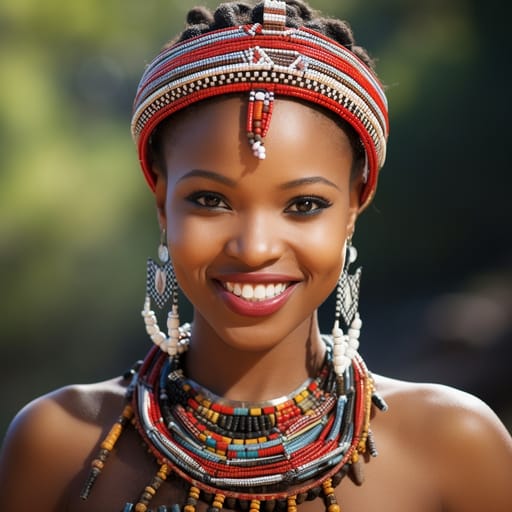
Zulu
same region (Southern Africa)
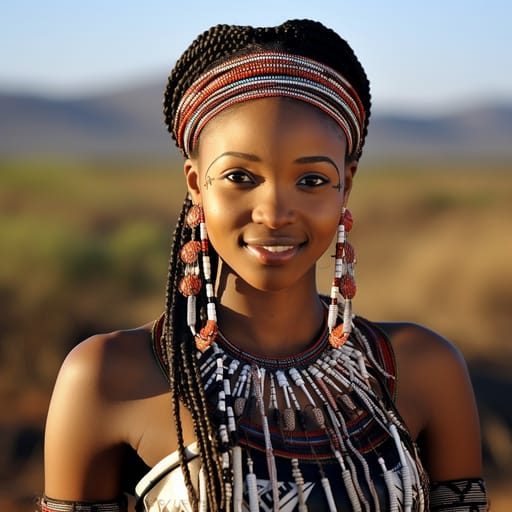
Pedi
same region (Southern Africa)
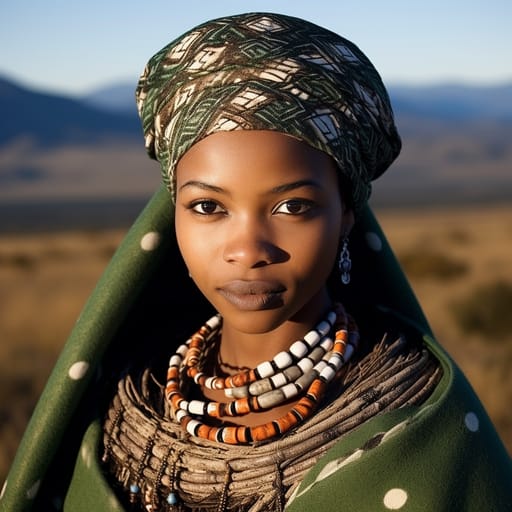
Sotho
same region (Southern Africa)
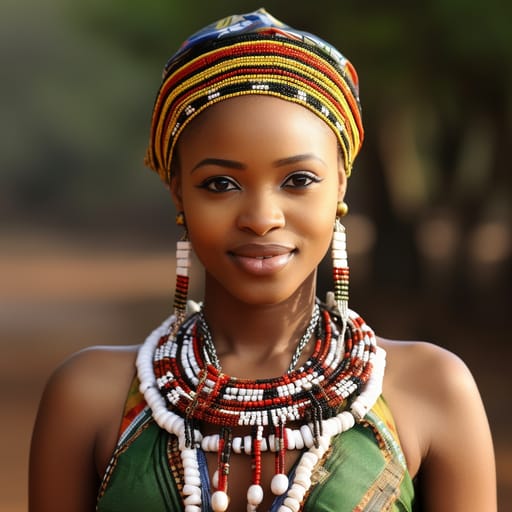
Venda
same region (Southern Africa)

Afrikaners
same region (Southern Africa)
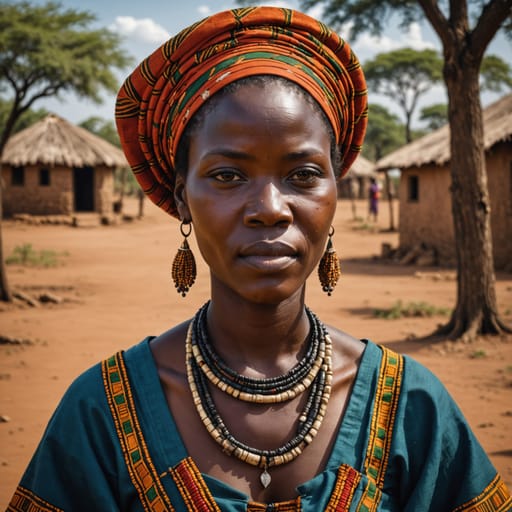
Ngoni Zambia
same region (Southern Africa)
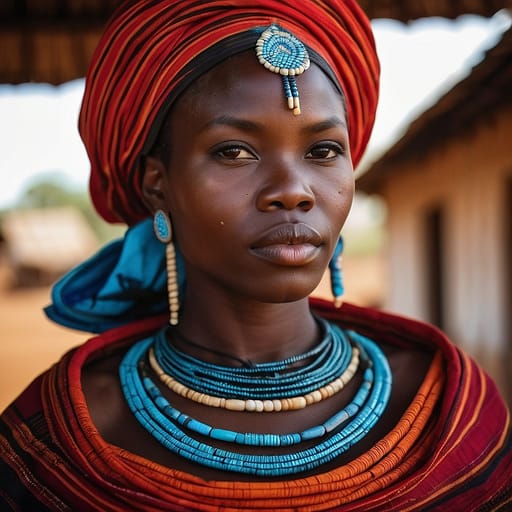
Ngoni Malawi
same region (Southern Africa)
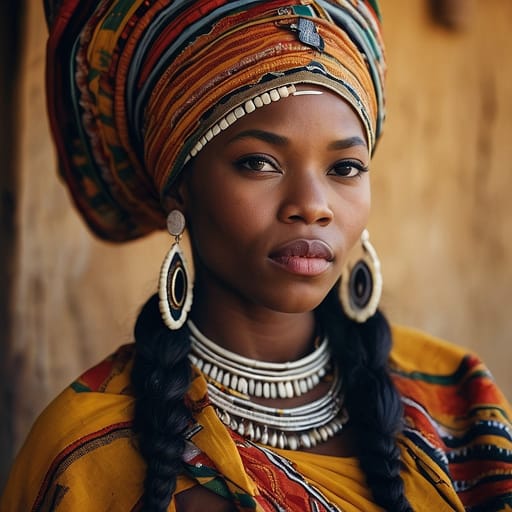
South Africa Other
same region (Southern Africa)
Typical Rolong Phenotypes
Reference for AI generation: hair, eyes, skin, facial structure, build
Rolong Body & Anatomy Reference
Per-feature anatomical profile for AI nude generation: Bantu / Khoisan Southern African phenotype
Rolong Boobs & Breasts
Bust reference for Rolong women: medium cup, full but moderate projection, which is typical of Bantu / Khoisan Southern African ancestry. Areolas measure about 30-44mm across, with medium-brown to deep-brown pigmentation. Body type (mesomorph; Khoisan-descended sub-populations show distinctive steatopygic fat deposition) shapes the bust as well, so Rolong tits are usually moderately full; less projecting than West African norm. In AI imagery, keep the forward-set shape rather than drifting toward the heavier West African bust.
Rolong Ass & Hips
The Rolong ass is typically the distinctive Khoisan-influenced steatopygic profile in some sub-populations (San, Khoekhoe); broader gluteal projection in Bantu-speaking groups, which sets it apart from the slim Cushitic East African profile. Underneath, the pelvis shows wide iliac crests with notable lordosis in Khoisan-descended sub-populations, part of the Bantu / Khoisan Southern African skeletal pattern. For Rolong butt pics and AI renders, match that silhouette and the overall build (mesomorph; Khoisan-descended sub-populations show distinctive steatopygic fat deposition).
Rolong Vagina & Pussy
Rolong pussy and vulvar anatomy presents deep-brown labial pigmentation; the elongated labia minora documented in some Khoisan-descended populations, consistent with the Bantu / Khoisan Southern African phenotype's pigmentation pattern. Rolong pubic hair is typically tightly-coiled coarse texture, in the inverted-triangle pattern. For anatomically accurate Rolong pussy renders the labial coloration should match the surrounding medium-brown to deep-brown skin tone with a continuous gradient, and the hair should keep its tightly-coiled coarse texture.
Rolong Dicks & Penis
Rolong dicks follow the Bantu / Khoisan Southern African reference data: regional mean ~14cm erect; moderate-to-above-average girth; deep-brown shaft pigmentation. Shaft color should track the medium-brown to deep-brown skin tone with a smooth change toward the glans, and Rolong pubic hair keeps its tightly-coiled coarse texture.
Rolong Body, Curves & Build
Rolong body type and overall build presents as mesomorph; Khoisan-descended sub-populations show distinctive steatopygic fat deposition, with mean adult female BMI 24-28: the characteristic Bantu / Khoisan Southern African habitus. Rolong curves and proportions should keep the regional skeletal frame (height, shoulder-to-hip ratio, limb proportions) rather than a generic mesomorph default.
Rolong Skin Tone & Hair Texture
Rolong skin sits in the medium-brown to deep-brown (Fitzpatrick V-VI); lighter in Khoisan-descended populations band. Hair is typically tightly-coiled 4A-4C; the distinctive 'peppercorn' tight-spiral texture in Khoisan-descended populations, in keeping with the Bantu / Khoisan Southern African phenotype. In nude renders the skin should stay one even tone from face to body, and body, pubic and head hair should match.
Explore phenotype categories
Structured taxonomy with peer-reviewed scales · 22 anatomical categories
Erotic Poses & Sex Positions
From the pose catalog: 219 named positions with reference skeletons
Frequently asked questions about Rolong people
Where is the Rolong homeland?
The Rolong homeland is North West and Free State provinces of South Africa, around Mahikeng and Thaba Nchu, and the Barolong Farms area of southern Botswana in Southern Africa.
What language do Rolong people speak?
Rolong people primarily speak Setswana, Serolong dialect (Bantu, Sotho-Tswana).
What religion do Rolong people practice?
The predominant religion among Rolong people is Predominantly Christian, notably Methodist, alongside Zionist and independent churches; respect for ancestors (badimo) persists.






Make your own Rolong images
Five a day, free, no credits to buy. The studio starts from this group's phenotype data, so you can set body type, pose and style and keep the traits accurate.
Start with Rolong