No portrait yet
Quilombolas Erotic
Rural and peri-urban communities across Brazil, concentrated in Bahia and Maranhão, with many also in Minas Gerais, Pará, Goiás and other states
Portuguese (Indo-European, Romance); some communities retain African-derived vocabularies, such as cupópia in Cafundó, São Paulo
Mostly Catholic, often centered on patron saints and feast days; growing evangelical Protestant presence; Afro-Brazilian religions such as Candomblé and Umbanda in some communities
Part of the wider Afro-Brazilian population; regional communities include the Kalunga of Goiás, the Alcântara communities of Maranhão and the Trombetas River quilombolas of Pará
About Quilombolas People
Quilombolas are not held together by an ancestral language or a single homeland. They are held together by history and by land: they descend from the quilombos, the free Black settlements that formed across colonial and imperial Brazil, and they still live on, or fight for, the ground those settlements held. The word traces to kilombo, a Kimbundu term from Angola for a camp, a reminder of where many of the people who built them were taken from. The 2022 census, the first to count them, found about 1.3 million quilombolas, spread across thousands of communities, most heavily in Bahia and Maranhão, but also along Amazon rivers in Pará, on the savanna uplands of Goiás, and in the hills of Minas Gerais.
The most famous, Palmares, held out in the hills of present-day Alagoas for most of the seventeenth century before colonial forces destroyed it. Its best-known leader, Zumbi, was killed on November 20, 1695, a date Brazil now keeps as a national holiday, the Day of Zumbi and Black Consciousness. Yet Palmares is a misleading template. Many communities never began as hideouts. Some grew on land bought by freed people, some on plantations that owners bequeathed or simply walked away from, some on church property. What they share is generations of collective occupation by Black families who were never handed paper for it.
That paper is the modern struggle. The 1988 Constitution promised title to quilombo descendants occupying their lands, and since 2003 self-identification has been the legal starting point. Titling has moved slowly: the first title came in 1995, most territories remain unresolved, and communities contend with ranchers, mining, dams and government projects. In Alcântara, Maranhão, families were relocated in the 1980s for a rocket launch base, a dispute that went all the way to the Inter-American human rights system.
Quilombolas speak Portuguese, in the rural varieties of their regions. A few communities keep traces of African speech: in Cafundó, in São Paulo state, residents use cupópia, a Bantu-derived vocabulary laid over Portuguese grammar. Religious life is largely Catholic and organized around patron saints and feast days, with evangelical churches gaining ground and Afro-Brazilian practice alive in many places. Drum and dance forms such as jongo in the Southeast, tambor de crioula in Maranhão and samba de roda in Bahia carry memory as much as entertainment. Small farming, fishing and communal land use still shape daily life for many, even as younger people move back and forth between village and city.
Related ethnic groups
Groups that share Quilombolas's homeland, region, language, or religious tradition. These are likely candidates for comparative phenotype reference.
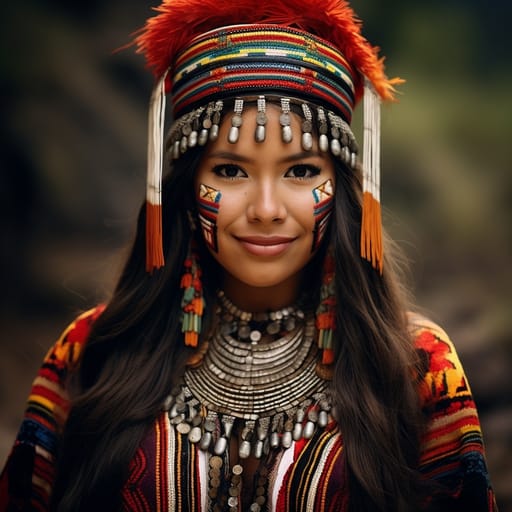
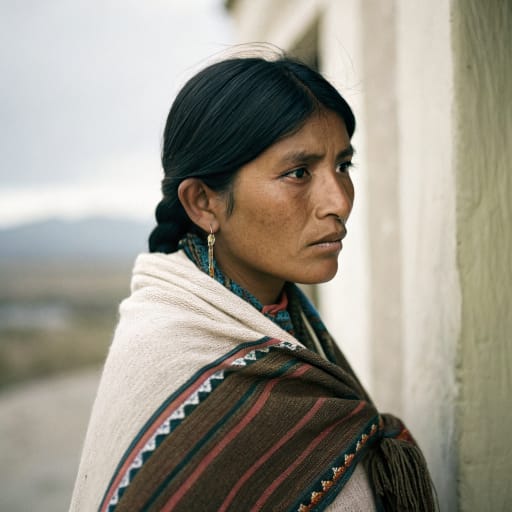
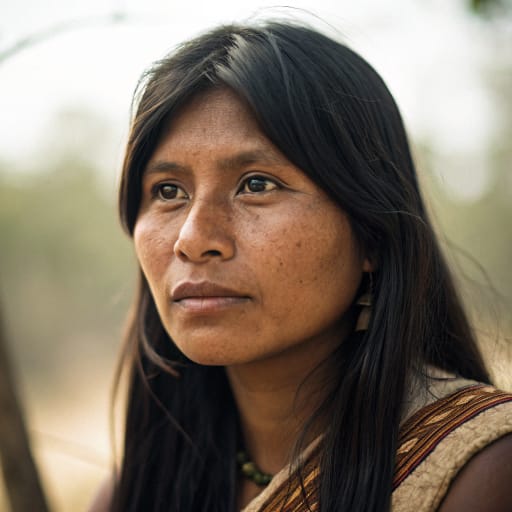
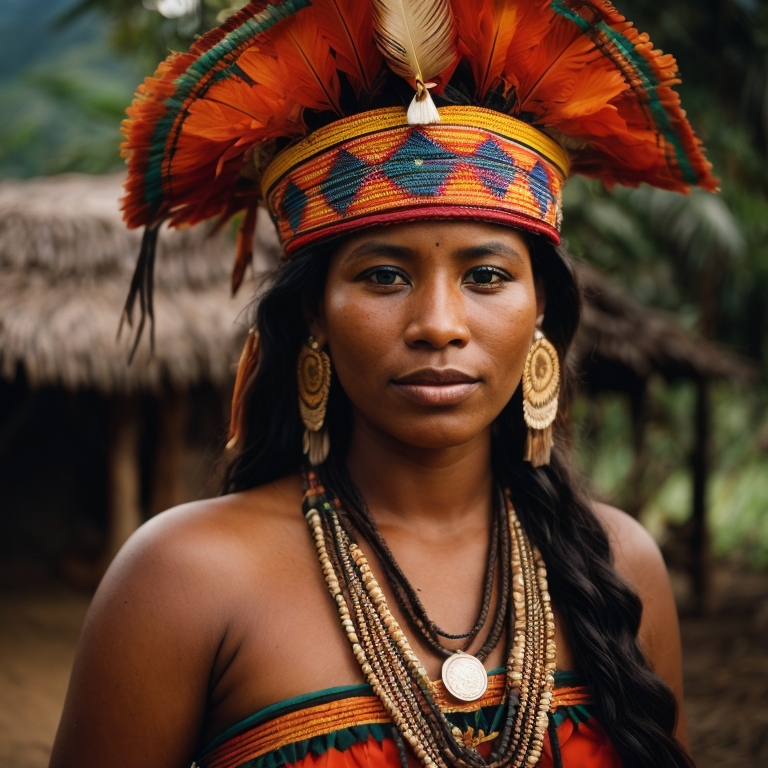
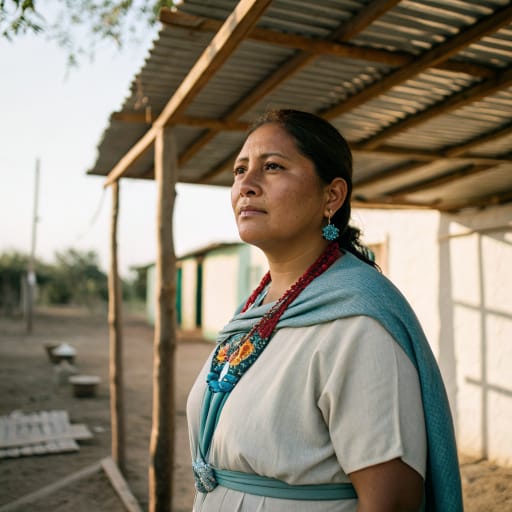
Typical Quilombolas Phenotypes
Reference for AI generation: hair, eyes, skin, facial structure, build
Quilombolas Body & Anatomy Reference
South American Indigenous / European-Mestizo / Afro-Latino mix phenotype: anatomy reference for AI nude generation
Quilombolas Boobs & Breasts
Quilombolas tits and boobs run medium-to-large cup, full, high projection, the classic South American Indigenous / European-Mestizo / Afro-Latino mix bust profile. Quilombolas nipples and areolas show medium-brown to dark-brown areolar pigmentation against the tan-to-deep-brown skin tone, with areolar diameter typically in the 32-46mm range and forward-set positioning rather than the smaller bust profile of Andean Indigenous sub-populations. Quilombolas breasts trend the classic Brazilian / Latina curvy bust profile in lowland populations; smaller and shorter-set in Andean Indigenous populations, a function of the endomorph-to-mesomorph with high gluteal-femoral deposition body habitus and the mean adult female BMI 25-28. For anatomically accurate AI-generated Quilombolas nudes the render preserves the medium-to-large cup, full, high projection shape, 32-46mm areolas with medium-brown to dark-brown pigmentation, and the torso proportions of the South American Indigenous / European-Mestizo / Afro-Latino mix phenotype.
Quilombolas Ass & Hips
Quilombolas hips and butt usually read as full, high projection, the famous Brazilian / Latina bunda profile. The skeletal base is wide iliac crests, very full gluteal-femoral fat deposition (the hallmark Brazilian / Latina hip-to-waist ratio), the South American Indigenous / European-Mestizo / Afro-Latino mix pattern. Set against the slim narrow-hip East Asian profile, the difference is easy to see, and the hip-to-waist ratio is often what identifies Quilombolas women in photos.
Quilombolas Vagina & Pussy
Expect medium-brown to dark-brown labial pigmentation, fuller labia minora on Quilombolas women, in keeping with South American Indigenous / European-Mestizo / Afro-Latino mix ancestry. The pubic hair is wavy-to-curly coarse dark texture, dense distribution. Coloring should run evenly from the tan to deep-brown skin of the thighs to the labia, and Quilombolas nude imagery should keep the hair's wavy-to-curly coarse dark texture.
Quilombolas Dicks & Penis
Quilombolas dick and penile anatomy in adult AI generation should anchor on the regional reference data: regional mean ~13cm erect, moderate-to-above-average girth, and medium-brown shaft pigmentation. The Quilombolas cock profile reflects the South American Indigenous / European-Mestizo / Afro-Latino mix population's anthropometric measurements. The shaft pigmentation should track the surrounding tan to deep-brown skin tone, and the pubic hair should keep its wavy-to-curly coarse dark texture in the typical inverted-V escutcheon.
Quilombolas Body, Curves & Build
Quilombolas body type: endomorph-to-mesomorph with high gluteal-femoral deposition, with mean adult female BMI 25-28. This is the typical South American Indigenous / European-Mestizo / Afro-Latino mix build. Height range, shoulder-to-hip ratio and fat distribution all follow from it, which is what an accurate Quilombolas nude body should show.
Quilombolas Skin Tone & Hair Texture
Quilombolas skin tone falls in the tan to deep-brown (Fitzpatrick III-VI) band, the surface signal most often miscalibrated by generic AI nude generators. Quilombolas hair texture is typically straight-to-curly 1A-3C, varies widely by ancestral composition, characteristic of the South American Indigenous / European-Mestizo / Afro-Latino mix phenotype. In Quilombolas nude renders the skin should hold that band consistently across the body.
Explore phenotype categories
Structured taxonomy with peer-reviewed scales · 22 anatomical categories
Erotic Poses & Sex Positions
From the pose catalog: 219 named positions with reference skeletons
Frequently asked questions about Quilombolas people
Where is the Quilombolas homeland?
The Quilombolas homeland is Rural and peri-urban communities across Brazil, concentrated in Bahia and Maranhão, with many also in Minas Gerais, Pará, Goiás and other states in South America.
What language do Quilombolas people speak?
Quilombolas people primarily speak Portuguese (Indo-European, Romance); some communities retain African-derived vocabularies, such as cupópia in Cafundó, São Paulo.
What religion do Quilombolas people practice?
The predominant religion among Quilombolas people is Mostly Catholic, often centered on patron saints and feast days; growing evangelical Protestant presence; Afro-Brazilian religions such as Candomblé and Umbanda in some communities.






Make your own Quilombolas images
Five a day, free, no credits to buy. The studio starts from this group's phenotype data, so you can set body type, pose and style and keep the traits accurate.
Start with Quilombolas