Help us get this right
Does this portrait look right for Guaraní?
One tap. It takes a second and it is recorded.
3 say it looks right, 0 say it looks off.
Guaraní Erotic
Tupian / Guarani
Christianity / Catholicism
Chiriguanos, along with Mestizos such as Paraguayans
About Guaraní People
The Guaraní are one of the few Indigenous peoples of the Americas whose language survived colonization not as a heritage tongue but as a working national language. In Paraguay, Guaraní is co-official with Spanish and spoken — comfortably, daily — by the majority of the population, including by people who do not identify as Indigenous. That fact alone reshapes how the group sits in the region: Guaraní identity bleeds into Paraguayan identity at the linguistic level in a way that has no real parallel elsewhere on the continent.
Their homeland stretches across the subtropical lowlands east of the Andes — the Paraná and Paraguay river basins, the forested hill country of Misiones in northeast Argentina, and the eastern Bolivian foothills where the Chiriguano (Ava Guaraní) settled after a long westward migration before European arrival. The language belongs to the Tupí-Guaraní branch of the Tupian family, closely related to the Tupinambá tongues that once dominated coastal Brazil. Internally, the people divide into several recognized branches — the Mbyá, Paĩ Tavyterã, Avá Chiripá, and Aché in Paraguay; the Chiriguanos in Bolivia; the Kaiowá across the Brazilian border — each with its own dialect and ceremonial life, despite being lumped together by outsiders.
The colonial encounter here was unusual. The Jesuit Reductions of the 17th and 18th centuries gathered Guaraní communities into self-governing mission towns that produced printed books in Guaraní, polyphonic music, and a militia capable of beating back Portuguese slavers. When the Jesuits were expelled in 1767, the Reductions collapsed, and what followed — wars, forced labor on yerba mate plantations, the catastrophic Triple Alliance War of 1864–70 — devastated the population without erasing the language. Today's Guaraní Catholicism reflects that long fusion: saints' days observed alongside older cosmological ideas about tekoha, the proper place of dwelling, and the search for the yvy marãe'ỹ, the land-without-evil that has driven recurrent eastward migrations for centuries.
Distinctive practices persist in the rural communities — the chewing of yerba mate as tereré in the Paraguayan heat, the ñembo'e chanted prayers led by a karaí or shaman-singer, and an unusually egalitarian approach to child-rearing among the forest groups that early ethnographers found difficult to categorize. Land conflict, particularly in Brazilian Mato Grosso do Sul, remains the central political issue facing Guaraní communities now.
Related ethnic groups
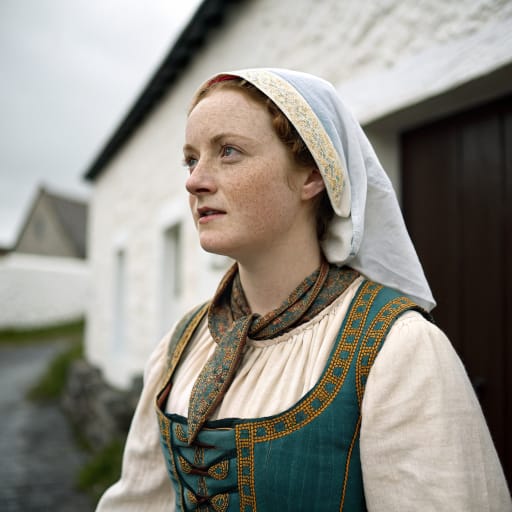
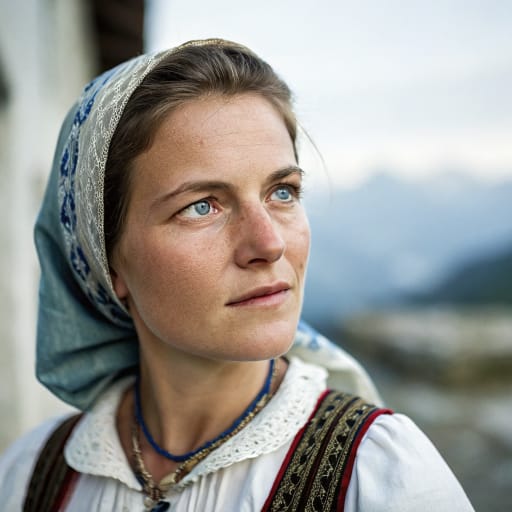
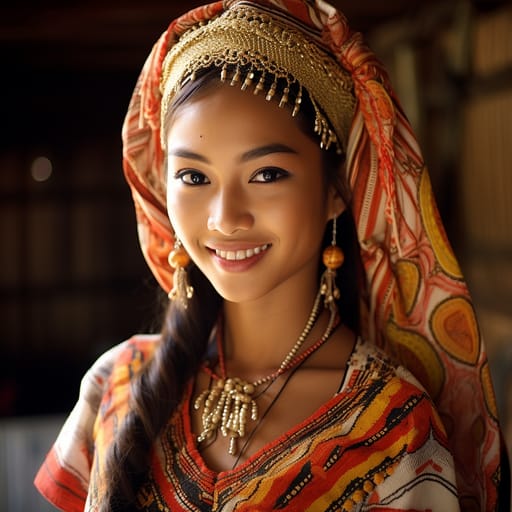
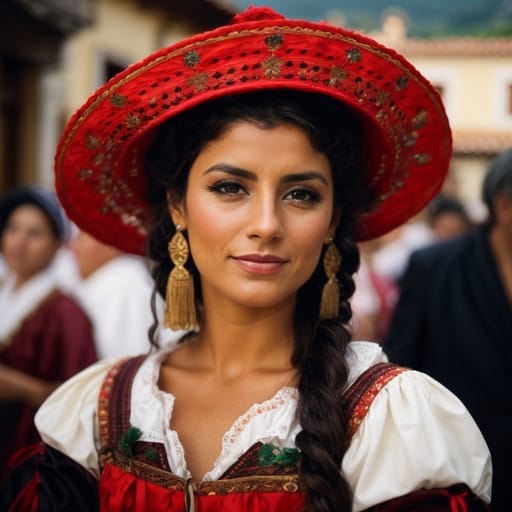
Groups that share Guaraní's homeland, region, language, or religious tradition. These are likely candidates for comparative phenotype reference.
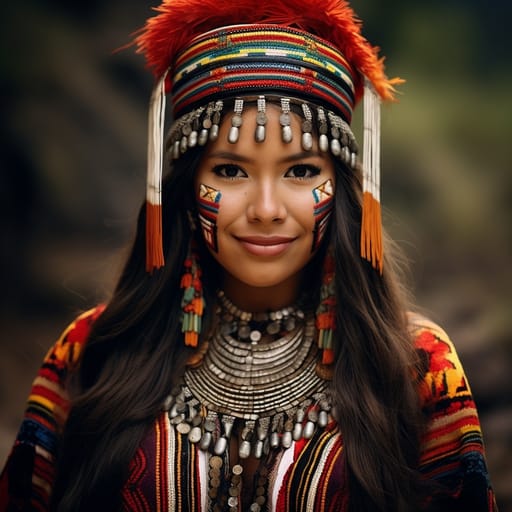
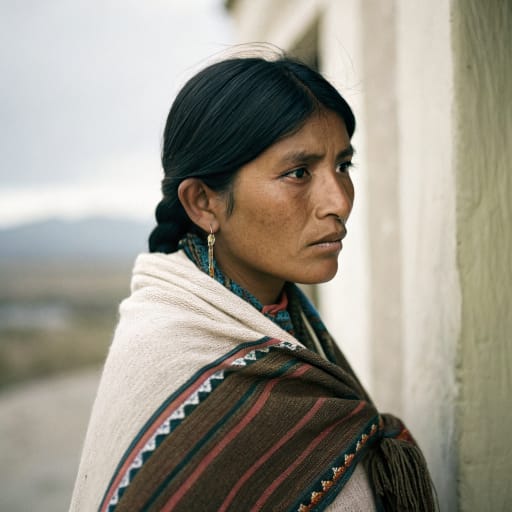
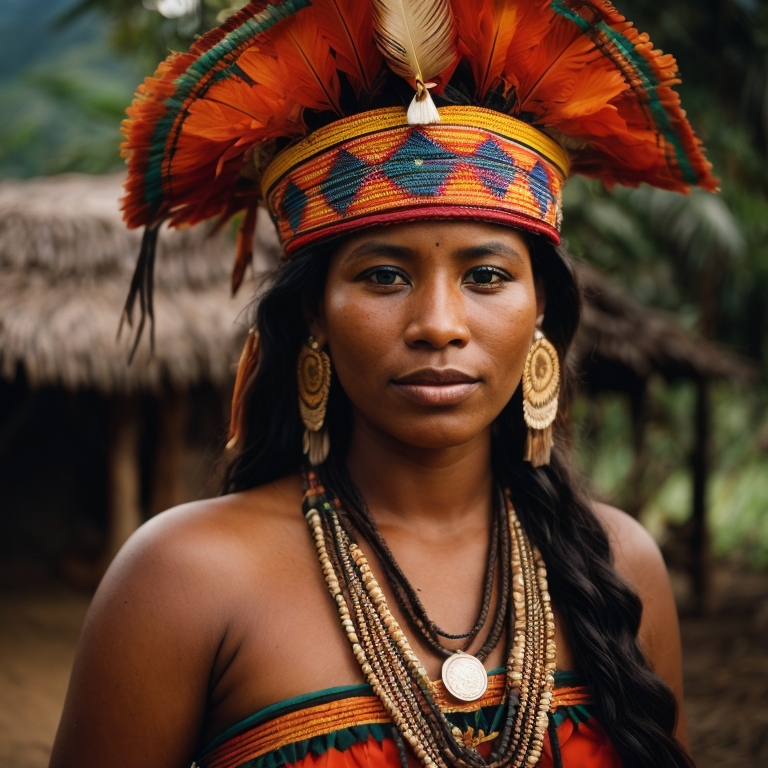
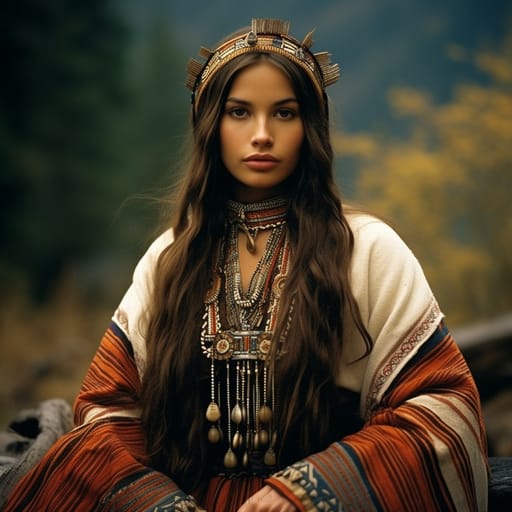
Geographic Distribution: Guaraní populations across 1 country
Each row is ranked by the group's share of that country's population, with the source citation drawn from published census and demographic surveys. Click through for the full per-country phenotype profile.
| Country | Share | Source |
|---|---|---|
| Bolivia | 3.0% | INE 2012 Census, self-identified Guaraní (~3%, ~300,000); concentrated in southeastern Bolivia (Santa Cruz, Tarija, Chuquisaca) and the Chaco lowlands |
Typical Guaraní Phenotypes
Reference for AI generation: hair, eyes, skin, facial structure, build
The Guaraní phenotype reads as classically Amerindian-lowland: compact, broad-faced, with the strong horizontal facial planes typical of Tupi-Guaraní speakers across the Paraná and Paraguay river basins. What distinguishes Guaraní from Andean Indigenous populations is a softer, rounder facial geometry — less prominent zygomatic projection, a flatter midface, and a wider mandibular base.
Hair is uniformly straight, coarse-textured, and jet-black, often with a faint blue-black sheen; natural wave or curl is essentially absent in unadmixed lineages. It grows thick and grows late to gray. Body and facial hair are sparse — beards are typically thin and patchy even in older men. Eyes are dark brown to near-black, almond-shaped, set under a low-to-moderate epicanthic fold that softens with age; the palpebral fissure tends to be narrower than in European populations but more open than in East Asian ones. Brows are dark and straight rather than arched.
Skin tone sits in the Fitzpatrick III–IV range with warm copper or olive-bronze undertones — the characteristic "tawny" coloration colonial chroniclers remarked on. It tans deeply and rarely burns. Noses are short with a low-to-moderate bridge and a moderately wide alar base; tips are often slightly bulbous rather than refined. Lips are medium-full with a well-defined vermilion border, and the philtrum is typically short. Jaws are square but not heavy, giving a face that reads broad rather than long.
Stature is on the shorter side — adult men commonly 1.60–1.68 m, women proportionally smaller — with stocky, muscular builds, short limbs relative to torso, and a tendency toward central adiposity in middle age. Among the Chiriguanos of the Bolivian Chaco, features run slightly more angular and stature marginally taller, reflecting older Guaraní migrations into Andean foothill zones. The Paraguayan mestizo majority pulls the national phenotype toward lighter skin, occasional light-brown hair, and finer noses, but the underlying Guaraní substrate — the straight black hair, the warm undertone, the broad face — remains visibly dominant.
Guaraní Body & Anatomy Reference
Anatomy by feature, South American Indigenous / European-Mestizo / Afro-Latino mix phenotype
Guaraní Boobs & Breasts
Bust reference for Guaraní women: medium-to-large cup, full, high projection, which is typical of South American Indigenous / European-Mestizo / Afro-Latino mix ancestry. Areolas measure about 32-46mm across, with medium-brown to dark-brown pigmentation. Body type (endomorph-to-mesomorph with high gluteal-femoral deposition) shapes the bust as well, so Guaraní tits are usually the classic Brazilian / Latina curvy bust profile in lowland populations; smaller and shorter-set in Andean Indigenous populations. In AI imagery, keep the forward-set shape rather than drifting toward the smaller bust profile of Andean Indigenous sub-populations.
Guaraní Ass & Hips
The Guaraní ass is typically full, high projection, the famous Brazilian / Latina bunda profile, which sets it apart from the slim narrow-hip East Asian profile. Underneath, the pelvis shows wide iliac crests, very full gluteal-femoral fat deposition (the hallmark Brazilian / Latina hip-to-waist ratio), part of the South American Indigenous / European-Mestizo / Afro-Latino mix skeletal pattern. For Guaraní butt pics and AI renders, match that silhouette and the overall build (endomorph-to-mesomorph with high gluteal-femoral deposition).
Guaraní Vagina & Pussy
Guaraní pussy and vulvar anatomy presents medium-brown to dark-brown labial pigmentation, fuller labia minora, consistent with the South American Indigenous / European-Mestizo / Afro-Latino mix phenotype's pigmentation pattern. Guaraní pubic hair is typically wavy-to-curly coarse dark texture, dense distribution, in the inverted-triangle pattern. For anatomically accurate Guaraní pussy renders the labial coloration should match the surrounding tan to deep-brown skin tone with a continuous gradient, and the hair should keep its wavy-to-curly coarse dark texture.
Guaraní Dicks & Penis
Guaraní dicks follow the South American Indigenous / European-Mestizo / Afro-Latino mix reference data: regional mean ~13cm erect; moderate-to-above-average girth; medium-brown shaft pigmentation. Shaft color should track the tan to deep-brown skin tone with a smooth change toward the glans, and Guaraní pubic hair keeps its wavy-to-curly coarse dark texture.
Guaraní Body, Curves & Build
Guaraní body type and overall build presents as endomorph-to-mesomorph with high gluteal-femoral deposition, with mean adult female BMI 25-28: the characteristic South American Indigenous / European-Mestizo / Afro-Latino mix habitus. Guaraní curves and proportions should keep the regional skeletal frame (height, shoulder-to-hip ratio, limb proportions) rather than a generic mesomorph default.
Guaraní Skin Tone & Hair Texture
Guaraní skin sits in the tan to deep-brown (Fitzpatrick III-VI) band. Hair is typically straight-to-curly 1A-3C, varies widely by ancestral composition, in keeping with the South American Indigenous / European-Mestizo / Afro-Latino mix phenotype. In nude renders the skin should stay one even tone from face to body, and body, pubic and head hair should match.
Data depth
10/100Coverage of image-grounded phenotype observations · drives AI generation diversity
- Sample size
- 10/40· 3 images
- Image quality
- 0/30· 0% high
- Confidence
- 0/20· mean 0.35
- Source diversity
- 0/10· wikipedia
- ·Small sample (n<10)
- ·Low overall confidence
- ·Mostly low-quality source images
- ·Wikipedia-only source, not population-representative
Observed Distribution: Image Sample
Empirical observations from analyzed photographs · supplementary signal, not population truth
Sample: 3 images analyzed (3 wikipedia). Quality: 0 high, 2 medium, 1 low, 0 very_low. Avg analyzer confidence: 0.35.
Skin tone (Fitzpatrick): IV (33%), unclear (67%)
Hair color: black (67%), other (33%)
Hair texture: straight (67%), wavy (33%)
Eye color: unclear (100%)
Epicanthic fold: 0% present, 33% absent, 67% unclear
Caveats: Sample size 3 is small, so the observed distribution should be treated as suggestive, not definitive. Quality skews toward older or low-resolution photos; phenotype detail may be lossy. Low average analyzer confidence: many photos partially obscured or historical. Sample is 100% Wikipedia notable people, which skews toward male, public-life, and modern figures, not population-representative.
Last aggregated: May 7, 2026
Explore phenotype categories
Structured taxonomy with peer-reviewed scales · 22 anatomical categories
Notable Guaraní People
3 reference figures, sourced from Wikipedia
- Juliana, a 16th-century woman known for killing her Spanish master and urging other In…
- Sepé Tiarayú, a Guaraní War leader popularly venerated as a saint in Brazil and Argentina.
- Andrés Guazurary, popularly known as Andresito, a caudillo and governor of the province of Misi…
Erotic Poses & Sex Positions
From the pose catalog: 219 named positions with reference skeletons
Frequently asked questions about Guaraní people
Where is the Guaraní homeland?
The Guaraní homeland is Paraguay, Misiones (Argentina), Bolivia in South America.
What countries do Guaraní people live in?
Guaraní populations are documented across 1 country: Bolivia.
What language do Guaraní people speak?
Guaraní people primarily speak Tupian / Guarani.
What religion do Guaraní people practice?
The predominant religion among Guaraní people is Christianity / Catholicism.






Make your own Guaraní images
Five a day, free, no credits to buy. The studio starts from this group's phenotype data, so you can set body type, pose and style and keep the traits accurate.
Start with Guaraní