Help us get this right
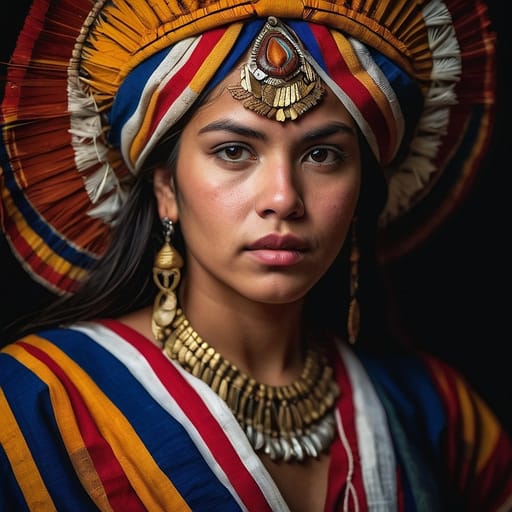
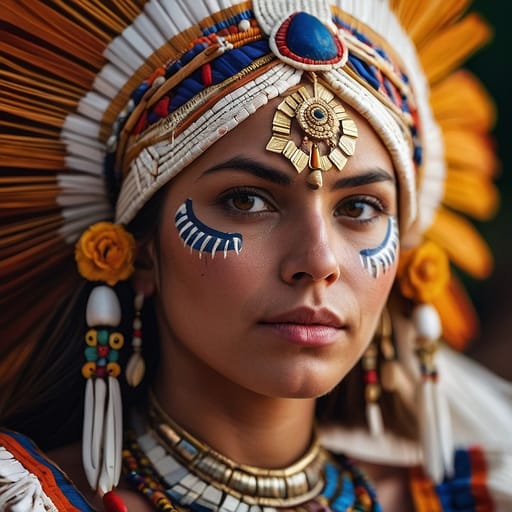
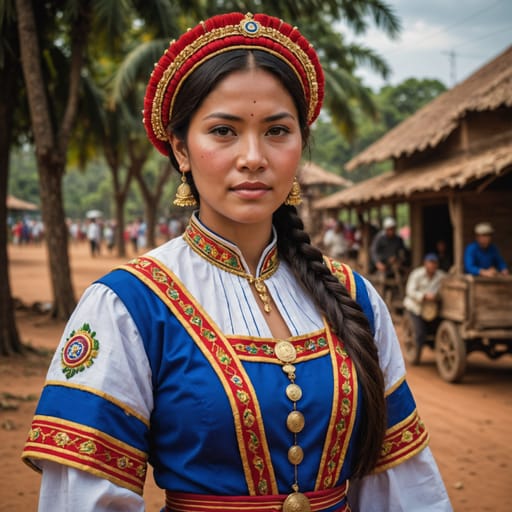
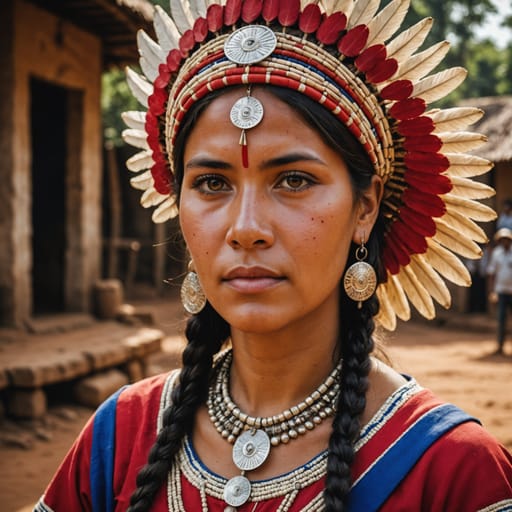
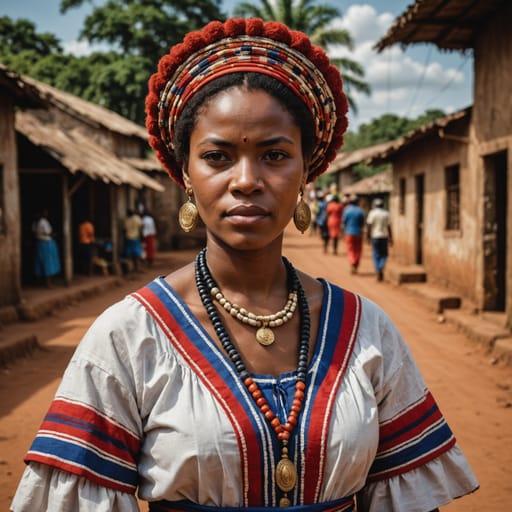
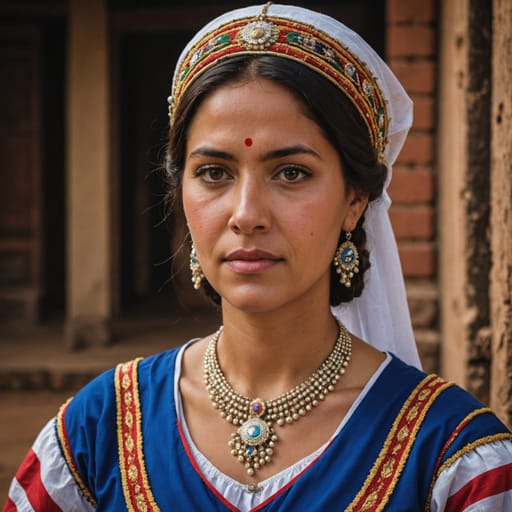
Does this portrait look right for Mestizo Paraguayan?
Nobody has judged this one yet. You would be the first.
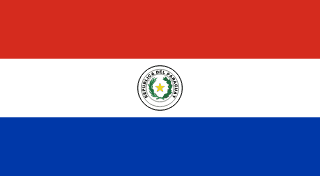

Paraguay
PYLatin America
Paraguay is home to 6 documented ethnic groups in Latin America, led by Mestizo Paraguayan (~86%), White Paraguayan (~8%), Asian Paraguayan (~3%), Indigenous Paraguayan (~2%). This page blends their phenotype and demographic data into one weighted reference: skin tone, facial features, hair texture and build, drawn from published census and ancestry sources.
Demographic Composition
Composition weights are derived from self-identification in published census and demographic surveys. Each row links to the source ethnic-group atlas page.
| Ethnic group | Weight | Source |
|---|---|---|
 Mestizo Paraguayan Mestizo Paraguayan | 86.0% | DGEEC 2012 Census (Encuesta Permanente de Hogares 2022 update); Mestizo Paraguayan represents the dominant national identity, the residual after enumerated Indigenous and white-Paraguayan populations are subtracted (~85-87%) |
 White Paraguayan White Paraguayan | 8.0% | Estimated from DGEEC and Latinobarómetro waves placing self-identified white-Paraguayan share at 7-10%; concentrated in Asunción, the Central department, and a substantial Mennonite-Paraguayan community in the Chaco (Filadelfia, Loma Plata) |
 Asian Paraguayan Asian Paraguayan | 2.5% | Estimated from immigration records and DGEEC data; combines Korean-Paraguayan (concentrated in Asunción and Ciudad del Este, ~5,000-7,000), Japanese-Paraguayan (~10,000+, descended from agricultural colonization in Itapúa, Alto Paraná, and Caaguazú departments), Taiwanese-Paraguayan, and the very large Brazilian-Brazilian/Paraguayan brasiguaios population (estimated 250,000-500,000) of Brazilian descent in Alto Paraná, Canindeyú, and Itapúa departments which is partially captured here and partially in mestizo-paraguayan |
 Indigenous Paraguayan Indigenous Paraguayan | 2.0% | DGEEC 2022 Indigenous Census (Censo Nacional de Población y Viviendas para Pueblos Indígenas), self-identified Indigenous (~2.0%, ~140,000+) across 19 recognized peoples in five language families; the largest groups are Avá Guaraní, Mbyá Guaraní, Paĩ Tavyterã, Aché, Nivaclé, Enxet, and Ayoreo |
 Afro-Paraguayan Afro-Paraguayan | 1.0% | Estimated from demographic surveys; Paraguay does not enumerate Afro-Paraguayan as a separate census category, but advocacy organizations and qualitative surveys place the population at ~1% (~70,000+), descending from colonial-era enslaved Africans concentrated in Camba Cua (Asunción), Kambacuá, Emboscada, and other historical Afro-descendant communities |
 Other Paraguayan Other Paraguayan | 0.5% | Residual: Lebanese-Paraguayan diaspora, Argentine-Paraguayan and other regional immigrant communities, Romani-Paraguayan, and other smaller groups not separately enumerated |
Paraguay Phenotype Profile
Paraguay's population is among the most demographically homogeneous in Latin America in terms of self-identification — approximately 86% identify as Mestizo, with relatively limited migration from outside the immediate Paraguayan-Brazilian-Argentine-Bolivian neighborhood until the 20th c. introduction of distinct German, Mennonite, Japanese, Korean, and Lebanese immigration streams. The defining feature of Paraguayan ethnogenesis is the early and deep mestizaje between Spanish colonial settlers (small in number, concentrated at Asunción) and the surrounding Tupi-Guaraní-speaking population — producing a national population that is officially bilingual (Spanish and Guaraní, with Guaraní spoken by approximately 90% of the population) and that carries some of the highest Tupi-Guaraní Indigenous ancestry in any non-Indigenous-self-identified Latin American population. Genome-wide studies place average Indigenous ancestry at 50-65% nationally, with substantial regional variance.
Skin tone across the population spans Fitzpatrick II-V with III the modal range nationally. The Eastern Region (where the bulk of the national population lives) shows a relatively narrow Mestizo phenotype distribution. The Chaco Region — the Western half of Paraguay containing Boquerón, Presidente Hayes, and Alto Paraguay departments — hosts the demographically distinct Mennonite-Paraguayan community (Northern European phenotype distribution, Fitzpatrick I-II, light hair common, light eye variants common) plus several distinct Indigenous Chaco populations (Mataco-Mataguayo, Maskoyan, Zamuco peoples) with their own phenotype distributions. Hair is overwhelmingly straight to wavy black/dark brown across the broader Mestizo population, with Mennonite light-hair variants being the most visible exception. Eye color is predominantly brown nationally, with elevated light-eye frequencies in Mennonite and German-Paraguayan communities. Stature is intermediate — somewhat taller than Andean Mestizo populations of Bolivia or Peru, somewhat shorter than the broader Argentine population.
Paraguay Body & Anatomy Reference
Per-feature anatomical profile for AI nude generation: South American Indigenous / European-Mestizo / Afro-Latino mix phenotype dominant in Paraguay
Paraguay Women: Boobs & Breasts
Paraguay women's tits and boobs reflect the medium-to-large cup, full, high projection South American Indigenous / European-Mestizo / Afro-Latino mix bust profile dominant in the Paraguay demographic composition. Paraguay nipples and areolas show medium-brown to dark-brown areolar pigmentation against the tan-to-deep-brown skin tone, with areolar diameter typically in the 32-46mm range, distinct from the the smaller bust profile of Andean Indigenous sub-populations. Paraguay breast morphology trends the classic Brazilian / Latina curvy bust profile in lowland populations; smaller and shorter-set in Andean Indigenous populations, a function of the endomorph-to-mesomorph with high gluteal-femoral deposition body habitus and mean adult female BMI 25-28. For anatomically-accurate AI-generated Paraguay nude women the render should preserve: medium-to-large cup, full, high projection shape, 32-46mm areolas with regional pigmentation, and the torso proportions of the South American Indigenous / European-Mestizo / Afro-Latino mix phenotype.
Paraguay Women: Ass & Hips
Paraguay women's ass and hip morphology presents as full, high projection, the famous Brazilian / Latina bunda profile, distinctly different from the slim narrow-hip East Asian profile. Paraguay pelvic profile shows wide iliac crests, very full gluteal-femoral fat deposition (the hallmark Brazilian / Latina hip-to-waist ratio), anchored in the South American Indigenous / European-Mestizo / Afro-Latino mix skeletal pattern that dominates the Paraguay ethnic composition. Paraguay butt shots in adult AI imagery should render the full, high projection, the famous Brazilian / Latina bunda profile silhouette with the endomorph-to-mesomorph with high gluteal-femoral deposition build and the gluteal-femoral fat distribution typical of the South American Indigenous / European-Mestizo / Afro-Latino mix phenotype rather than defaulting to a globally-averaged shape that generic AI generators produce.
Paraguay Women: Vagina & Pussy
Paraguay women's pussy and vulvar anatomy presents medium-brown to dark-brown labial pigmentation, fuller labia minora, consistent with the South American Indigenous / European-Mestizo / Afro-Latino mix phenotype's pigmentation pattern dominant in Paraguay. Paraguay pubic hair is typically wavy-to-curly coarse dark texture, dense distribution, distributed in the inverted-triangle pattern with regional-typical density. AI-generated Paraguay nude imagery should preserve the medium-brown to dark-brown labial pigmentation and the wavy-to-curly coarse dark texture hair texture rather than defaulting to a Western-European pink-and-sparse template. For anatomically-accurate Paraguay pussy renders the labial pigmentation should match the surrounding tan to deep-brown skin tone of the South American Indigenous / European-Mestizo / Afro-Latino mix phenotype.
Paraguay Men: Dicks & Penis
Paraguay men's dick and penile anatomy in adult AI generation should anchor on the regional reference data: regional mean ~13cm erect, moderate-to-above-average girth, and medium-brown shaft pigmentation. Paraguay cock profile reflects the South American Indigenous / European-Mestizo / Afro-Latino mix ancestral population's anthropometric measurements rather than a globally-averaged Western-pornography default. For anatomically-accurate Paraguay nude male imagery the shaft pigmentation should track the surrounding tan to deep-brown skin tone, with continuous glans-to-shaft pigmentation transition and the wavy-to-curly coarse dark texture pubic-hair texture distributed in the typical inverted-V escutcheon. Circumcision status across Paraguay men varies by religious and cultural tradition rather than ancestral phenotype.
Paraguay People: Body, Curves & Build
Paraguay body type and overall build presents as endomorph-to-mesomorph with high gluteal-femoral deposition, with mean adult female BMI 25-28: the characteristic South American Indigenous / European-Mestizo / Afro-Latino mix habitus dominant in the Paraguay demographic composition. Paraguay curves and proportions in adult AI imagery should preserve the regional skeletal frame (height, shoulder-to-hip ratio, limb proportions) rather than scaling to a Western-European mesomorph default. The Paraguay nude female form, when rendered with anatomical fidelity, shows the height range, frame width, and adipose distribution pattern typical of the South American Indigenous / European-Mestizo / Afro-Latino mix phenotype. Generic AI image generators tend to collapse regional body types into a few default shapes; the Ethnic Erotic phenotype-anchored approach preserves the Paraguay build as its own reference category.
Paraguay People: Skin Tone & Hair Texture
Paraguay skin tone falls in the tan to deep-brown (Fitzpatrick III-VI) band, the surface signal most often miscalibrated by generic AI nude generators trained on Western-photographic datasets. Paraguay hair texture is typically straight-to-curly 1A-3C, varies widely by ancestral composition, characteristic of the South American Indigenous / European-Mestizo / Afro-Latino mix phenotype. For anatomically-accurate Paraguay nude renders the skin should hold the Fitzpatrick band consistently across body surface rather than showing the lighter-than-face body shading that AI generators default to. Paraguay hair pigmentation and texture on body, pubic, and head should match across the figure rather than mixing textures (a common AI artefact).
A descriptive view, not a claim about individuals
This page shows a weighted aggregate of phenotype observations across the Paraguay population, based on demographic composition from published census and ancestry sources. Phenotypes within any country are far more varied than the aggregate suggests; this is a descriptive reference, not a deterministic claim about any individual. For source-level detail on individual ethnic groups, see the constituent atlas pages linked below.
Methodology Notes
Composition weights are derived from Paraguay's DGEEC 2012 Census and 2022 update, plus the dedicated 2022 DGEEC Indigenous Census. Paraguay does not enumerate Mestizo, white-Paraguayan, or Afro-Paraguayan as separate self-identification categories in the general census, so weights for these come from Latinobarómetro and other survey sources plus residual calculation. Caveats: (1) the white-Paraguayan / Mestizo boundary is socially fluid and the Mennonite-Paraguayan demographically-distinct sub-population is captured only weakly; (2) Afro-Paraguayan recognition is institutionally weak and the population is likely undercounted relative to its true descendant size; (3) the brasiguaios population is large (~250,000-500,000) and creates a substantial methodological challenge for census enumeration since the population is partially Paraguay-born, partially Brazilian-born long-term residents, and self-identifies inconsistently across surveys; (4) the 19 officially-recognized Indigenous peoples carry substantial phenotype heterogeneity within the umbrella aggregate.
Primary Sources
- 1.Dirección General de Estadística, Encuestas y Censos (DGEEC). Censo Nacional de Población y Viviendas 2012. Asunción: DGEEC; 2014.
- 2.Dirección General de Estadística, Encuestas y Censos (DGEEC). III Censo Nacional Indígena 2022. Asunción: DGEEC; 2023.
- 3.Hill K, Hurtado AM. Aché Life History: The Ecology and Demography of a Foraging People. New York: Aldine de Gruyter; 1996.
- 4.Telesca I, Argüello AM. Pueblos indígenas, Estado y educación: Una experiencia paraguaya. Revista Paraguaya de Sociología. 2014;52(146):143-168.
- 5.Toledo Tovar R. La inmigración japonesa en el Paraguay y los nikkei en el Mercosur. Estudios Paraguayos. 2018;36(1):201-222.
Other countries in Latin America
Aggregate phenotype references for neighbouring Latin America nations, weighted by demographic composition.
- Antigua and Barbuda
- Argentina
- Bahamas
- Barbados
- Belize
- Bolivia
- Brazil
- Chile
- Colombia
- Costa Rica
- Cuba
- Dominica
- Dominican Republic
- Ecuador
- El Salvador
- Grenada
- Guatemala
- Guyana
- Haiti
- Honduras
- Jamaica
- Mexico
- Nicaragua
- Panama
- Peru
- Puerto Rico
- Saint Kitts and Nevis
- Saint Lucia
- Saint Vincent and the Grenadines
- Suriname
- Trinidad and Tobago
- Uruguay
- Venezuela