No portrait yet
Mawayana Erotic
Mixed villages shared with the Waiwai and Trio: the Mapuera River area of Pará in northern Brazil, Kwamalasamutu in southern Suriname, and far southern Guyana. Older territory lay around the Acarai range on the Brazil and Guyana border.
Mawayana (Arawakan, closest to Wapishana), now nearly extinct; most speak Waiwai or Trio (Cariban), plus Portuguese, Dutch or English.
Evangelical Protestant Christianity since the mission era of the 1950s and 1960s, with older shamanic beliefs persisting in the background.
Arawakan people of the Guianas, linguistically nearest to the Wapishana; socially part of the composite Waiwai and Trio village communities.
About Mawayana People
The Mawayana are the Frog People of the Guiana highlands, and the first thing to know about them is that you will not find a Mawayana village on any map. Their name comes from the Cariban languages of their neighbors (mawa, frog, plus yana, people), and for the past few generations they have lived inside other peoples' settlements: with the Waiwai on the Mapuera River in the Brazilian state of Pará and in the far south of Guyana, and with the Trio at Kwamalasamutu in southern Suriname. They are a people held together less by territory than by kinship, memory and a language almost nobody speaks anymore.
That language is the core of their distinctness. Mawayana belongs to the Arawakan family, with Wapishana of the Rupununi savannas as its closest living relative, while nearly everyone around them speaks a Cariban language. Generations at close quarters left marks that linguists find remarkable: Mawayana took on not only words but grammatical habits from Waiwai and Trio, including a separate we that leaves out the person being addressed. Today only a handful of elderly people still speak it. Younger Mawayana grow up in Waiwai or Trio, plus Portuguese, English or Dutch depending on which side of a border they were born.
Their older home was the forested headwater country around the Acarai range, where the upper Essequibo and the Mapuera rise on opposite sides of the divide between Guyana and Brazil. The explorer Robert Schomburgk passed through in the 1840s and wrote of them under their Wapishana name, Maopityan. Epidemics thinned them badly in the century that followed. The decisive turn came in the 1950s and 1960s, when American evangelical missionaries working among the Waiwai, and Waiwai converts acting as missionaries themselves, drew the scattered forest peoples into large mission villages. The Mawayana came in, intermarried and converted. Some then traveled with the mission to Suriname to help evangelize the Trio, and stayed.
Daily life looks much like that of their hosts: bitter cassava gardens, cassava bread, hunting and fishing, church on Sunday, with older shamanic ideas surviving quietly under the Christian surface. What keeps Mawayana identity alive is genealogy. In these composite villages people know exactly whose grandparents were Frog People, and a person may be Waiwai or Trio to an outsider and Mawayana at home. That layered belonging is why head counts vary so much, and why a group that seems to have dissolved into its neighbors keeps turning out to be still there.
Related ethnic groups
Groups that share Mawayana's homeland, region, language, or religious tradition. These are likely candidates for comparative phenotype reference.
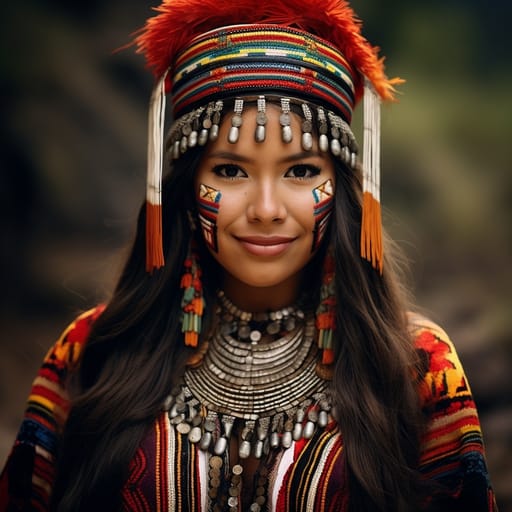
Quechua
same region (South America)
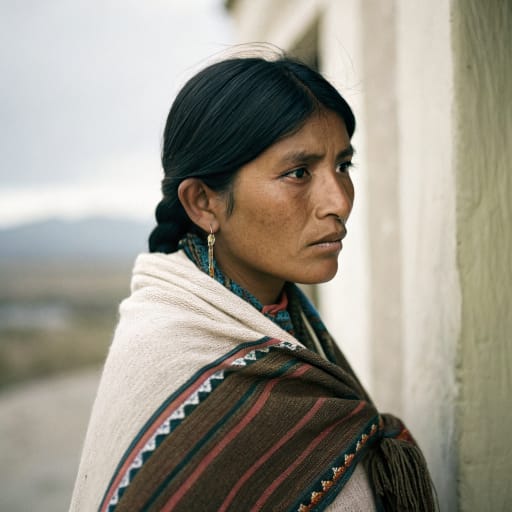
Aymara
same region (South America)
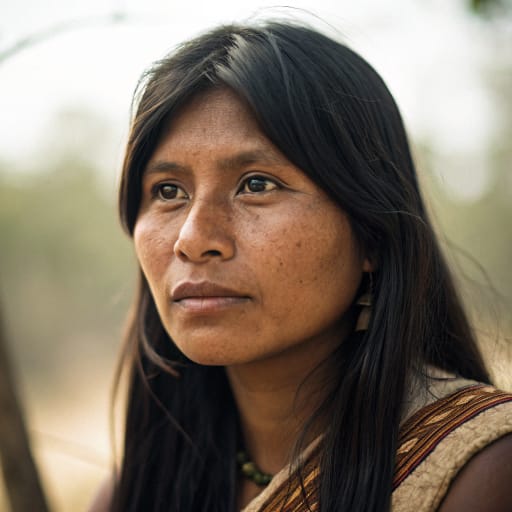
Guaraní
same region (South America)
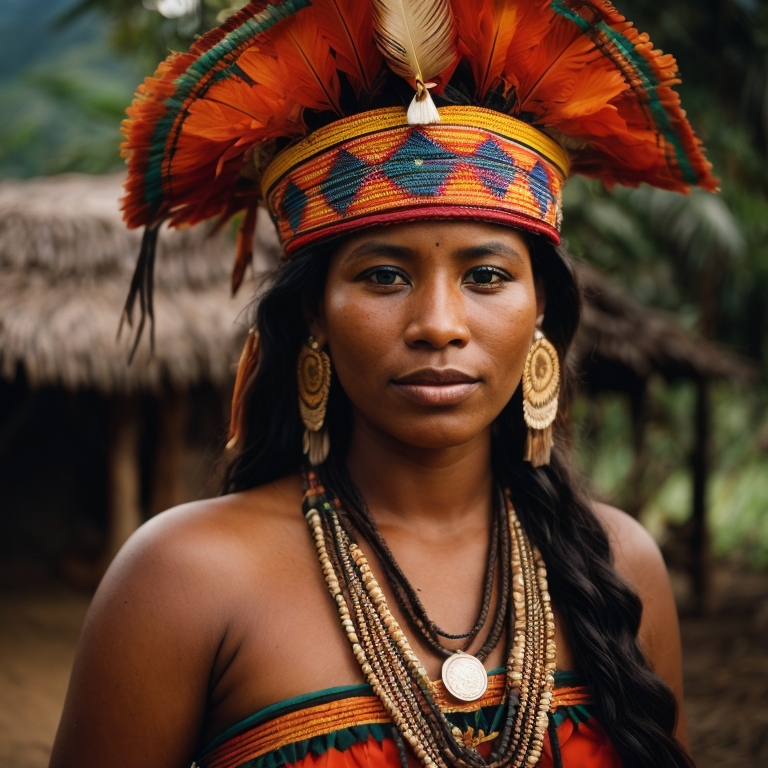
Emberá
same region (South America)
Mapuche
same region (South America)
White Argentine
same region (South America)
Mestizo Argentine
same region (South America)
Middle Eastern Argentine
same region (South America)
Typical Mawayana Phenotypes
Reference for AI generation: hair, eyes, skin, facial structure, build
Mawayana Body & Anatomy Reference
Anatomy by feature, South American Indigenous / European-Mestizo / Afro-Latino mix phenotype
Mawayana Boobs & Breasts
Bust reference for Mawayana women: medium-to-large cup, full, high projection, which is typical of South American Indigenous / European-Mestizo / Afro-Latino mix ancestry. Areolas measure about 32-46mm across, with medium-brown to dark-brown pigmentation. Body type (endomorph-to-mesomorph with high gluteal-femoral deposition) shapes the bust as well, so Mawayana tits are usually the classic Brazilian / Latina curvy bust profile in lowland populations; smaller and shorter-set in Andean Indigenous populations. In AI imagery, keep the forward-set shape rather than drifting toward the smaller bust profile of Andean Indigenous sub-populations.
Mawayana Ass & Hips
The Mawayana ass is typically full, high projection, the famous Brazilian / Latina bunda profile, which sets it apart from the slim narrow-hip East Asian profile. Underneath, the pelvis shows wide iliac crests, very full gluteal-femoral fat deposition (the hallmark Brazilian / Latina hip-to-waist ratio), part of the South American Indigenous / European-Mestizo / Afro-Latino mix skeletal pattern. For Mawayana butt pics and AI renders, match that silhouette and the overall build (endomorph-to-mesomorph with high gluteal-femoral deposition).
Mawayana Vagina & Pussy
Mawayana pussy and vulvar anatomy presents medium-brown to dark-brown labial pigmentation, fuller labia minora, consistent with the South American Indigenous / European-Mestizo / Afro-Latino mix phenotype's pigmentation pattern. Mawayana pubic hair is typically wavy-to-curly coarse dark texture, dense distribution, in the inverted-triangle pattern. For anatomically accurate Mawayana pussy renders the labial coloration should match the surrounding tan to deep-brown skin tone with a continuous gradient, and the hair should keep its wavy-to-curly coarse dark texture.
Mawayana Dicks & Penis
Mawayana dicks follow the South American Indigenous / European-Mestizo / Afro-Latino mix reference data: regional mean ~13cm erect; moderate-to-above-average girth; medium-brown shaft pigmentation. Shaft color should track the tan to deep-brown skin tone with a smooth change toward the glans, and Mawayana pubic hair keeps its wavy-to-curly coarse dark texture.
Mawayana Body, Curves & Build
Mawayana body type and overall build presents as endomorph-to-mesomorph with high gluteal-femoral deposition, with mean adult female BMI 25-28: the characteristic South American Indigenous / European-Mestizo / Afro-Latino mix habitus. Mawayana curves and proportions should keep the regional skeletal frame (height, shoulder-to-hip ratio, limb proportions) rather than a generic mesomorph default.
Mawayana Skin Tone & Hair Texture
Mawayana skin sits in the tan to deep-brown (Fitzpatrick III-VI) band. Hair is typically straight-to-curly 1A-3C, varies widely by ancestral composition, in keeping with the South American Indigenous / European-Mestizo / Afro-Latino mix phenotype. In nude renders the skin should stay one even tone from face to body, and body, pubic and head hair should match.
Explore phenotype categories
Structured taxonomy with peer-reviewed scales · 22 anatomical categories
Erotic Poses & Sex Positions
From the pose catalog: 219 named positions with reference skeletons
Frequently asked questions about Mawayana people
Where is the Mawayana homeland?
The Mawayana homeland is Mixed villages shared with the Waiwai and Trio: the Mapuera River area of Pará in northern Brazil, Kwamalasamutu in southern Suriname, and far southern Guyana. Older territory lay around the Acarai range on the Brazil and Guyana border. in South America.
What language do Mawayana people speak?
Mawayana people primarily speak Mawayana (Arawakan, closest to Wapishana), now nearly extinct; most speak Waiwai or Trio (Cariban), plus Portuguese, Dutch or English..
What religion do Mawayana people practice?
The predominant religion among Mawayana people is Evangelical Protestant Christianity since the mission era of the 1950s and 1960s, with older shamanic beliefs persisting in the background..






Make your own Mawayana images
Five a day, free, no credits to buy. The studio starts from this group's phenotype data, so you can set body type, pose and style and keep the traits accurate.
Start with Mawayana