Help us get this right
Does this portrait look right for Aché?
Nobody has judged this one yet. You would be the first.
Aché Erotic
Atlantic Forest of eastern Paraguay, now living in several communities in the country's east, including areas around the Mbaracayú Forest reserve
Aché (Tupian, Tupi-Guarani branch); most also speak Guarani (Tupian) and many speak Spanish (Indo-European)
Mostly Christian, evangelical Protestant and Catholic, a result of the missions that ran settlements after contact
Northern Aché, Yvytyruzu Aché, Ypety Aché and Ñacunday Aché; part of the wider family of Tupi-Guarani-speaking peoples
About Aché People
For generations, the Aché were a people Paraguayan settlers heard about far more often than they met. They lived in small, mobile bands in the subtropical Atlantic Forest of eastern Paraguay. They hunted with long bows, cut down palms for starch and edible larvae, and raided bee nests for wild honey, and they avoided lasting contact with outsiders until the second half of the twentieth century. Aché is their own word for people. The older name, Guayakí, came from Guarani-speaking neighbors and carried contempt. Their language belongs to the Tupi-Guarani branch of the Tupian family. That makes it a relative of the Guarani spoken across most of Paraguay, but it is a separate language rather than a dialect, and most Aché today also speak Guarani. Four regional groups are usually recognized: the Northern Aché, who are the largest, and the Yvytyruzu, Ypety and Ñacunday Aché. Each was once its own network of bands.
When contact came, it was brutal. As ranching, logging and settlement pushed into the forest, Aché bands were hunted down and their children were taken and sold as servants. Survivors were moved onto reservations, where respiratory epidemics killed many within a few years. In the 1970s, researchers and human rights advocates accused the Stroessner government of genocide, and Aché leaders later took that charge to an Argentine court under universal jurisdiction. Many older Aché were born in the forest and still remember life before contact. Today about two thousand Aché live in a handful of communities in eastern Paraguay. They farm, take wage work and still hunt where forest survives, including under traditional-use rights inside the Mbaracayú Forest reserve. Most are Christian, a legacy of the Protestant and Catholic missions that ran the early settlements. The Aché are also among the most closely studied foragers anywhere, the subject of decades of fieldwork on hunting, food sharing, growth and mortality. One finding keeps coming up: meat from a hunt is shared across the whole band, and the hunter often eats only a small part of what he brought in. Sharing is less a courtesy than the basic logic of camp life.
Related ethnic groups
Groups that share Aché's homeland, region, language, or religious tradition. These are likely candidates for comparative phenotype reference.
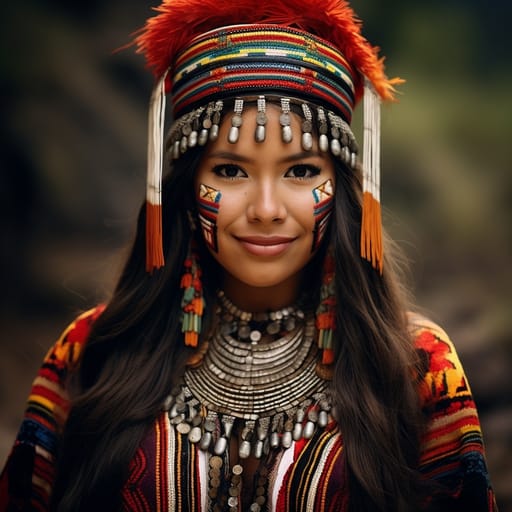
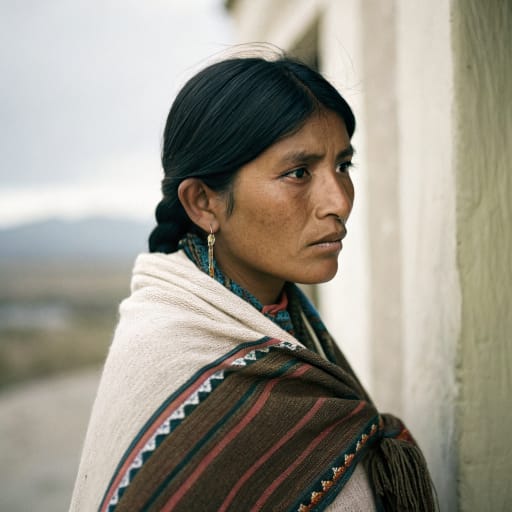
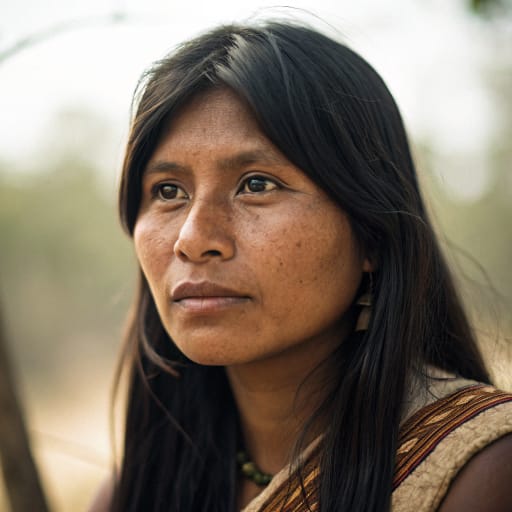
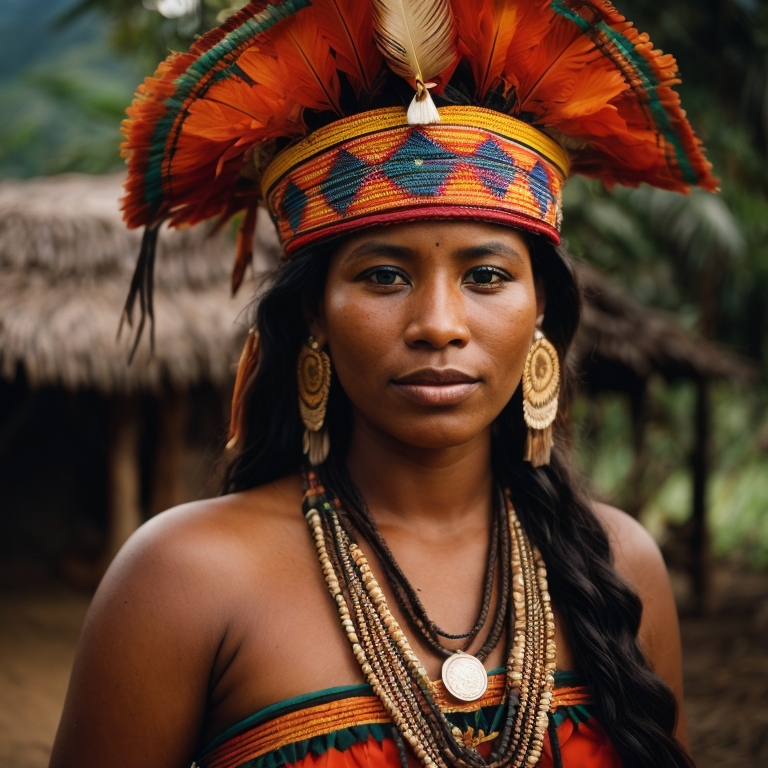
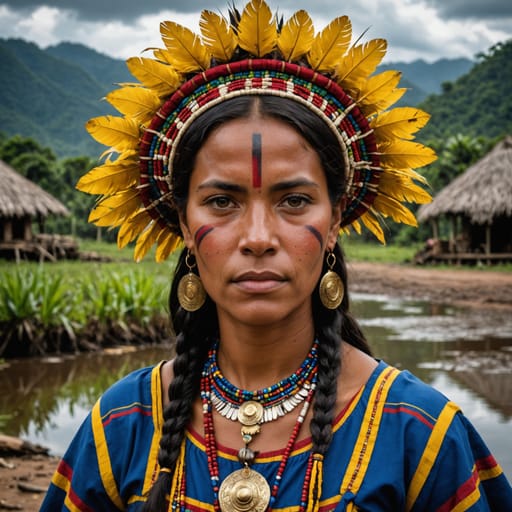
Typical Aché Phenotypes
Reference for AI generation: hair, eyes, skin, facial structure, build
Aché Body & Anatomy Reference
Per-feature anatomical profile for AI nude generation: South American Indigenous / European-Mestizo / Afro-Latino mix phenotype
Aché Boobs & Breasts
The typical Aché bust is medium-to-large cup, full, high projection, in line with the wider South American Indigenous / European-Mestizo / Afro-Latino mix pattern. Areolas usually fall in the 32-46mm range, with medium-brown to dark-brown areolar pigmentation against the tan-to-deep-brown skin tone. Compared with the smaller bust profile of Andean Indigenous sub-populations, Aché breasts sit forward and are generally the classic Brazilian / Latina curvy bust profile in lowland populations; smaller and shorter-set in Andean Indigenous populations. A faithful AI render of Aché tits keeps that shape and areola size.
Aché Ass & Hips
Butt shape among Aché women: full, high projection, the famous Brazilian / Latina bunda profile, over wide iliac crests, very full gluteal-femoral fat deposition (the hallmark Brazilian / Latina hip-to-waist ratio). This follows South American Indigenous / European-Mestizo / Afro-Latino mix ancestry and looks quite unlike the slim narrow-hip East Asian profile. An accurate Aché ass in adult AI imagery keeps both the silhouette and the overall build (endomorph-to-mesomorph with high gluteal-femoral deposition) instead of a generic average.
Aché Vagina & Pussy
Vulvar anatomy among Aché women: medium-brown to dark-brown labial pigmentation, fuller labia minora. Pubic hair tends to be wavy-to-curly coarse dark texture, dense distribution, in the usual inverted-triangle pattern. Both follow South American Indigenous / European-Mestizo / Afro-Latino mix pigmentation, which is why Aché pussy renders should not fall back on a pale, sparse Western template.
Aché Dicks & Penis
The Aché cock profile, from South American Indigenous / European-Mestizo / Afro-Latino mix anthropometric data: regional mean ~13cm erect; moderate-to-above-average girth; medium-brown shaft pigmentation. Pubic hair has a wavy-to-curly coarse dark texture and forms the usual inverted-V pattern. Whether Aché men are circumcised follows religious and cultural practice rather than phenotype.
Aché Body, Curves & Build
Build and curves among Aché women follow the South American Indigenous / European-Mestizo / Afro-Latino mix pattern: endomorph-to-mesomorph with high gluteal-femoral deposition, mean adult female BMI 25-28. Proportions matter as much as skin tone, so Aché figures should keep their regional height and limb ratios.
Aché Skin Tone & Hair Texture
The Aché skin range is tan to deep-brown (Fitzpatrick III-VI), and hair tends to be straight-to-curly 1A-3C, varies widely by ancestral composition. That combination marks the South American Indigenous / European-Mestizo / Afro-Latino mix phenotype, and skin tone is the trait AI generators most often get wrong for Aché women.
Explore phenotype categories
Structured taxonomy with peer-reviewed scales · 22 anatomical categories
Erotic Poses & Sex Positions
From the pose catalog: 219 named positions with reference skeletons
Frequently asked questions about Aché people
Where is the Aché homeland?
The Aché homeland is Atlantic Forest of eastern Paraguay, now living in several communities in the country's east, including areas around the Mbaracayú Forest reserve in South America.
What language do Aché people speak?
Aché people primarily speak Aché (Tupian, Tupi-Guarani branch); most also speak Guarani (Tupian) and many speak Spanish (Indo-European).
What religion do Aché people practice?
The predominant religion among Aché people is Mostly Christian, evangelical Protestant and Catholic, a result of the missions that ran settlements after contact.






Make your own Aché images
Five a day, free, no credits to buy. The studio starts from this group's phenotype data, so you can set body type, pose and style and keep the traits accurate.
Start with Aché