No portrait yet
Xerente Erotic
Cerrado on the right bank of the Tocantins River, around Tocantínia in the state of Tocantins, Brazil.
Xerente, also called Akwẽ (Central Jê, Macro-Jê family), with Portuguese as a second language.
Traditional Sun and Moon cosmology, alongside Catholicism and, more recently, evangelical Protestant churches.
Central Jê (Akwẽ) branch, with the Xavante and the Xakriabá; internally divided into two patrilineal moieties and the clans within them.
About Xerente People
Ask a Xerente who they are and the answer starts with a half. Every person is born into one of two patrilineal moieties, associated with the Sun and the Moon, and that inheritance sets the terms of a life: you marry out of your own half and into the other, you carry the painted design that belongs to your clan within it, and in ceremony your half stands opposite the other rather than beside it. The designs are the visible part of the system. Genipap goes on black, annatto red, in circles or in straight bars depending on the clan, and anyone who knows the code can read a person's descent off their skin. Old villages followed the same logic: a horseshoe of houses opening east onto a cleared plaza, one moiety on each arm. They call themselves Akwẽ, which means people. Their language, Akwẽ or Xerente, is Central Jê within the Macro-Jê family, and it is in better shape than most Indigenous languages in Brazil, learned first at home with Portuguese arriving later at school. The homeland is cerrado on the right bank of the Tocantins River in the state of Tocantins, near the town of Tocantínia: gallery forest along the water, dry scrub and grass everywhere else.
The Xerente and the Xavante were a single people until the early nineteenth century, when the Goiás gold frontier pushed them apart and one part crossed the Araguaia west into Mato Grosso. The languages are still close enough that linguists sometimes treat them as two dialects of one thing. Those who stayed on the Tocantins spent the rest of the century being gathered into mission settlements, losing ground to cattle, and walking away from both. Two demarcated territories near Tocantínia hold a population in the low thousands today. The recent inflection point was the Lajeado dam, finished on the Tocantins in 2001, whose licensing obliged the operator to fund a long compensation program for the Xerente. Money arriving on that scale, into communities with no prior experience of it, did what money does: villages multiplied as families split off to run their own affairs, and the handful of settlements of a generation ago is now dozens. Palmas, a state capital invented from nothing in 1989, went up within easy driving distance. Catholic missionaries came early and evangelical churches came later, and both sit alongside the older cosmology rather than having replaced it. The log races are still run, relay teams carrying sections of buriti palm on the shoulder, and the moieties still line up against each other to do it.
Related ethnic groups
Groups that share Xerente's homeland, region, language, or religious tradition. These are likely candidates for comparative phenotype reference.
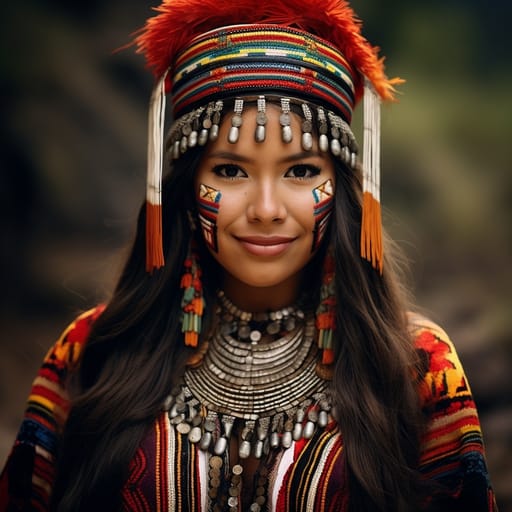
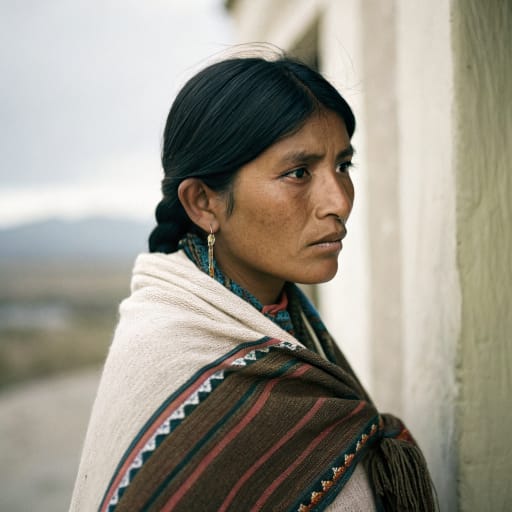
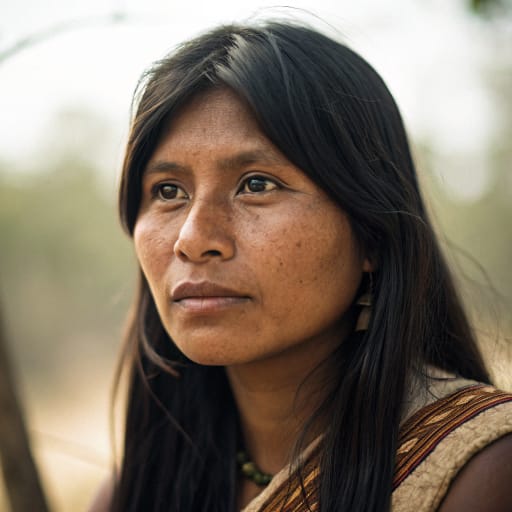
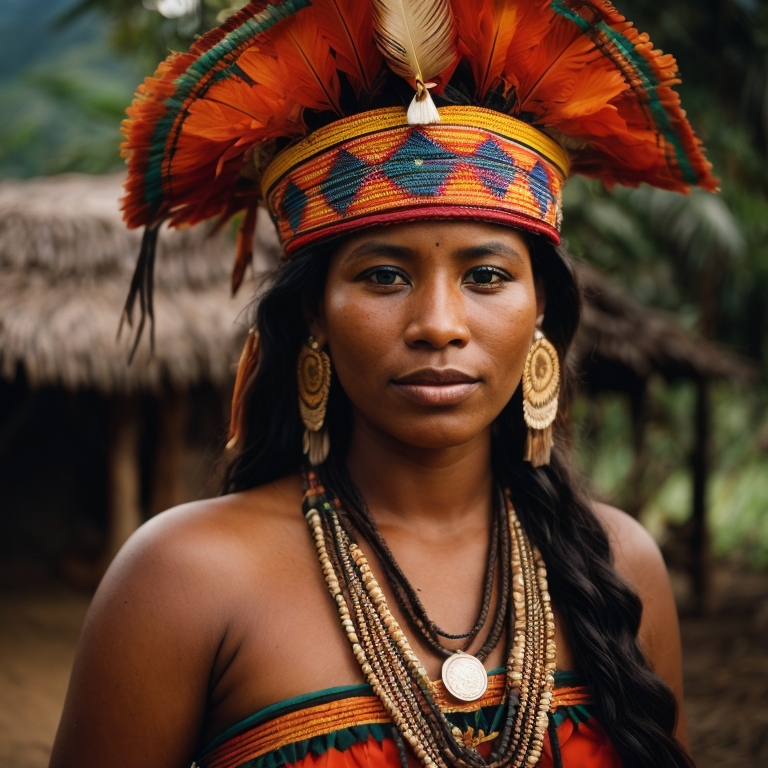
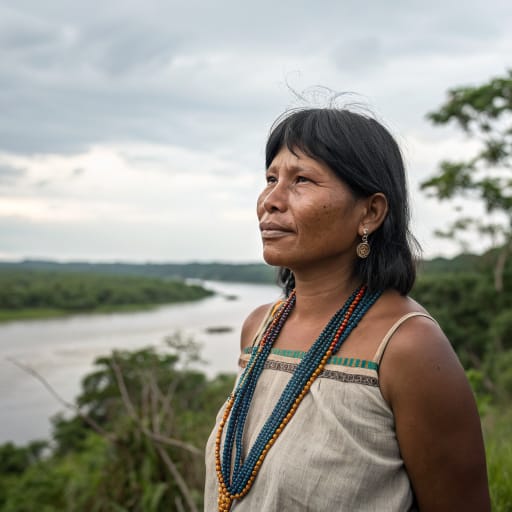
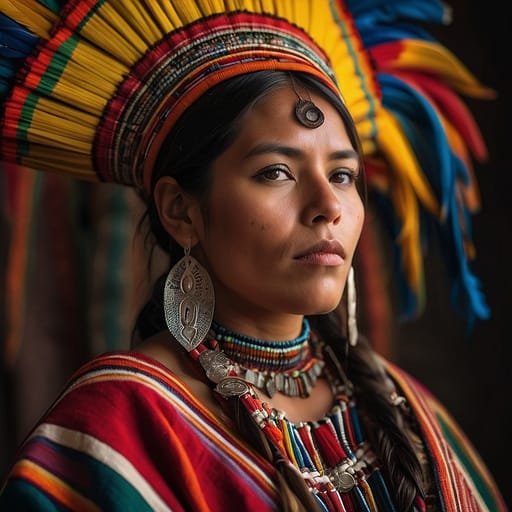
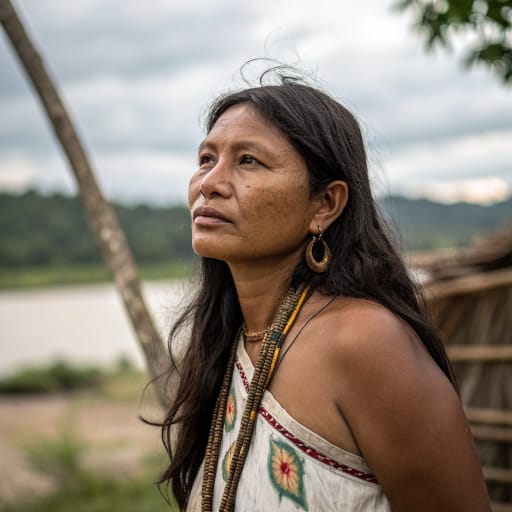
Typical Xerente Phenotypes
Reference for AI generation: hair, eyes, skin, facial structure, build
Xerente Body & Anatomy Reference
Per-feature anatomical profile for AI nude generation: South American Indigenous / European-Mestizo / Afro-Latino mix phenotype
Xerente Boobs & Breasts
Bust reference for Xerente women: medium-to-large cup, full, high projection, which is typical of South American Indigenous / European-Mestizo / Afro-Latino mix ancestry. Areolas measure about 32-46mm across, with medium-brown to dark-brown pigmentation. Body type (endomorph-to-mesomorph with high gluteal-femoral deposition) shapes the bust as well, so Xerente tits are usually the classic Brazilian / Latina curvy bust profile in lowland populations; smaller and shorter-set in Andean Indigenous populations. In AI imagery, keep the forward-set shape rather than drifting toward the smaller bust profile of Andean Indigenous sub-populations.
Xerente Ass & Hips
The Xerente ass is typically full, high projection, the famous Brazilian / Latina bunda profile, which sets it apart from the slim narrow-hip East Asian profile. Underneath, the pelvis shows wide iliac crests, very full gluteal-femoral fat deposition (the hallmark Brazilian / Latina hip-to-waist ratio), part of the South American Indigenous / European-Mestizo / Afro-Latino mix skeletal pattern. For Xerente butt pics and AI renders, match that silhouette and the overall build (endomorph-to-mesomorph with high gluteal-femoral deposition).
Xerente Vagina & Pussy
Xerente pussy and vulvar anatomy presents medium-brown to dark-brown labial pigmentation, fuller labia minora, consistent with the South American Indigenous / European-Mestizo / Afro-Latino mix phenotype's pigmentation pattern. Xerente pubic hair is typically wavy-to-curly coarse dark texture, dense distribution, in the inverted-triangle pattern. For anatomically accurate Xerente pussy renders the labial coloration should match the surrounding tan to deep-brown skin tone with a continuous gradient, and the hair should keep its wavy-to-curly coarse dark texture.
Xerente Dicks & Penis
Xerente dicks follow the South American Indigenous / European-Mestizo / Afro-Latino mix reference data: regional mean ~13cm erect; moderate-to-above-average girth; medium-brown shaft pigmentation. Shaft color should track the tan to deep-brown skin tone with a smooth change toward the glans, and Xerente pubic hair keeps its wavy-to-curly coarse dark texture.
Xerente Body, Curves & Build
Xerente body type and overall build presents as endomorph-to-mesomorph with high gluteal-femoral deposition, with mean adult female BMI 25-28: the characteristic South American Indigenous / European-Mestizo / Afro-Latino mix habitus. Xerente curves and proportions should keep the regional skeletal frame (height, shoulder-to-hip ratio, limb proportions) rather than a generic mesomorph default.
Xerente Skin Tone & Hair Texture
Xerente skin sits in the tan to deep-brown (Fitzpatrick III-VI) band. Hair is typically straight-to-curly 1A-3C, varies widely by ancestral composition, in keeping with the South American Indigenous / European-Mestizo / Afro-Latino mix phenotype. In nude renders the skin should stay one even tone from face to body, and body, pubic and head hair should match.
Explore phenotype categories
Structured taxonomy with peer-reviewed scales · 22 anatomical categories
Erotic Poses & Sex Positions
From the pose catalog: 219 named positions with reference skeletons
Frequently asked questions about Xerente people
Where is the Xerente homeland?
The Xerente homeland is Cerrado on the right bank of the Tocantins River, around Tocantínia in the state of Tocantins, Brazil. in South America.
What language do Xerente people speak?
Xerente people primarily speak Xerente, also called Akwẽ (Central Jê, Macro-Jê family), with Portuguese as a second language..
What religion do Xerente people practice?
The predominant religion among Xerente people is Traditional Sun and Moon cosmology, alongside Catholicism and, more recently, evangelical Protestant churches..






Make your own Xerente images
Five a day, free, no credits to buy. The studio starts from this group's phenotype data, so you can set body type, pose and style and keep the traits accurate.
Start with Xerente