Help us get this right
Does this portrait look right for E'ñepa?
Nobody has judged this one yet. You would be the first.
E'ñepa Erotic
The Cuchivero River basin and neighboring savanna and forest of west-central Bolivar State, Venezuela, south and east of Caicara del Orinoco.
E'nepa, also called Panare (Cariban)
Traditional E'nepa cosmology and shamanic practice, with a minority of evangelical Protestant converts from twentieth century missions.
Cariban peoples of the middle Orinoco and the Guianas; the language is usually grouped with Mapoyo and Yabarana.
About E'ñepa People
E'ñepa is what they call themselves, and it is close to their word for a person; Panare is the name that came from outside and stuck to the maps. They are a Cariban-speaking people of west-central Bolivar State in Venezuela, living in the rolling savanna and gallery forest between the Orinoco and the northern rim of the Guiana Highlands, concentrated in the Cuchivero basin and south of the frontier town of Caicara del Orinoco. There are only a few thousand of them, spread across dozens of small settlements rather than gathered into towns. Linguistically they belong with the Ye'kuana, Pemon and Kari'na, not with their Saliban-speaking Piaroa neighbors to the west, and the language is still spoken by children, which in that part of Venezuela is not a given. A settlement is built around a large conical thatched house that shelters several related families, with garden clearings cut and burned out of the surrounding bush. Bitter manioc is the staple: grated, pressed in a woven tube to squeeze out the poison, then baked into flat casabe bread. Men hunt with bows, and E'nepa basketry, tight and geometric in dark and pale fiber, has been traded to criollo neighbors for generations.
Red identifies them at a distance. Men wear a cotton loincloth of it, hung from a beaded belt, with bands of beadwork below the knee, and both men and women paint their skin with onoto, the red-orange pigment pressed from annatto seed. A boy receiving his first loincloth is being made an adult, and the ceremonial cycle around that, with dancing and fermented manioc beer, sits at the center of E'nepa social life. The last century arrived from the north: cattle ranching, road building, and diamond and gold strikes in their own watersheds brought settlers deep into the Cuchivero country, and from the 1970s the American evangelical New Tribes Mission worked the same ground. Its E'nepa-language materials became notorious, rewriting the crucifixion so that the Panare themselves killed Christ, guilt engineered as a conversion tool; anthropologists and indigenous rights campaigners made a scandal of it, and the mission was expelled from Venezuela in 2005. What is striking is how much the E'nepa held onto through all of it, taking shotguns, cash and schooling on their own terms without surrendering the language or the loincloth. The 1999 constitution promised them titled territory. Demarcation has been slow, and the country's economic collapse has pulled some families toward the mining camps and the highway.
Related ethnic groups
Groups that share E'ñepa's homeland, region, language, or religious tradition. These are likely candidates for comparative phenotype reference.
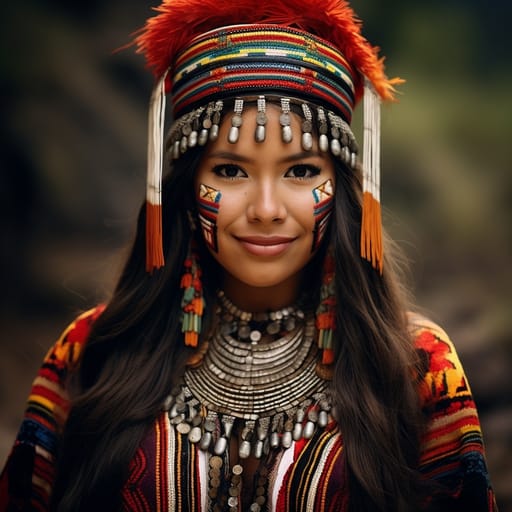
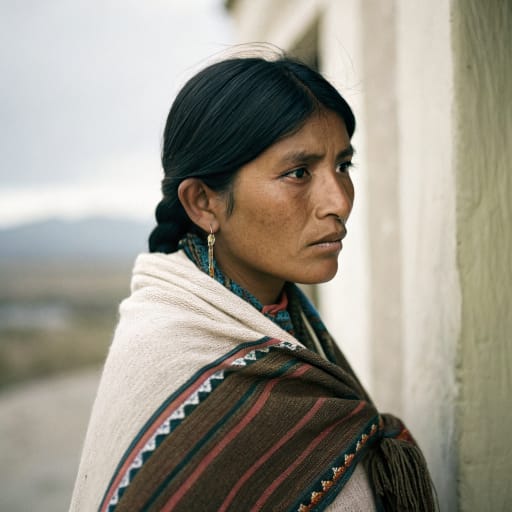
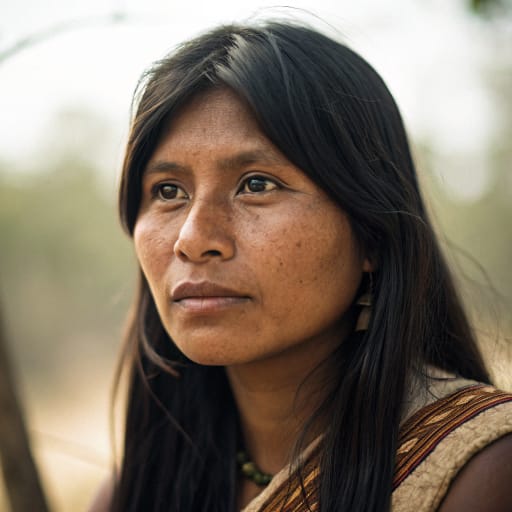
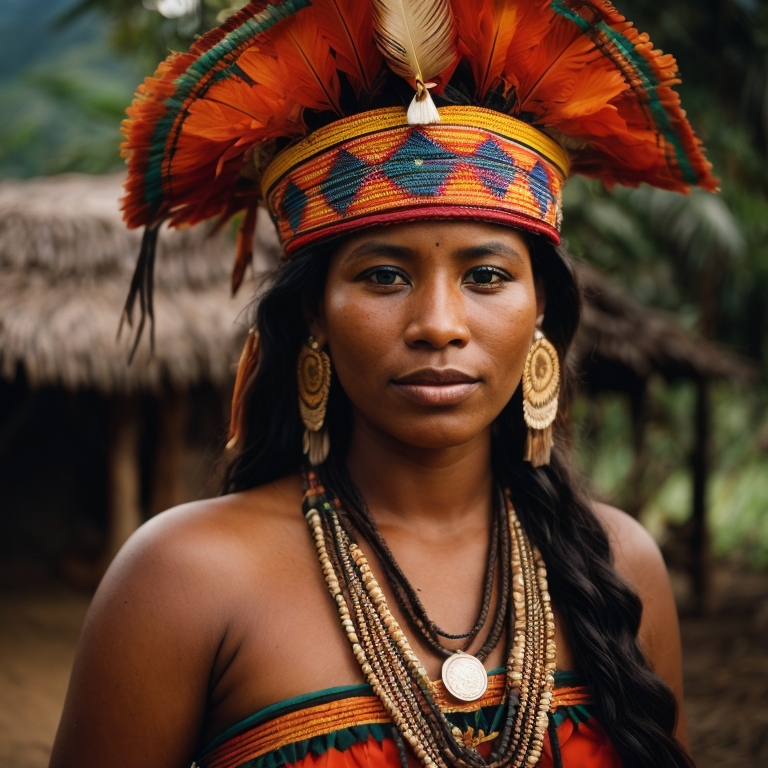
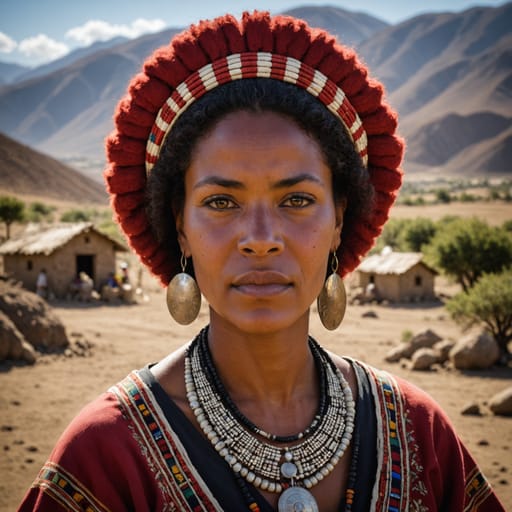
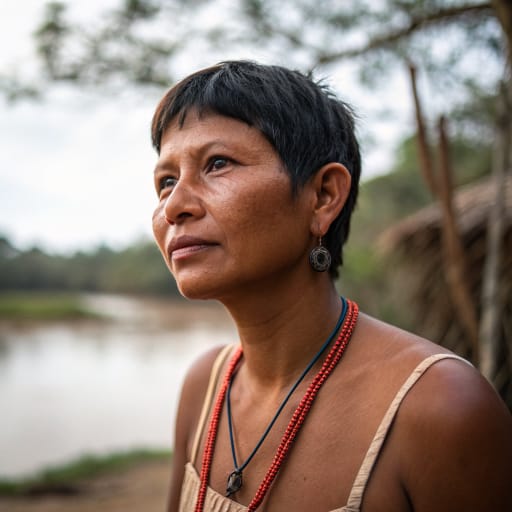
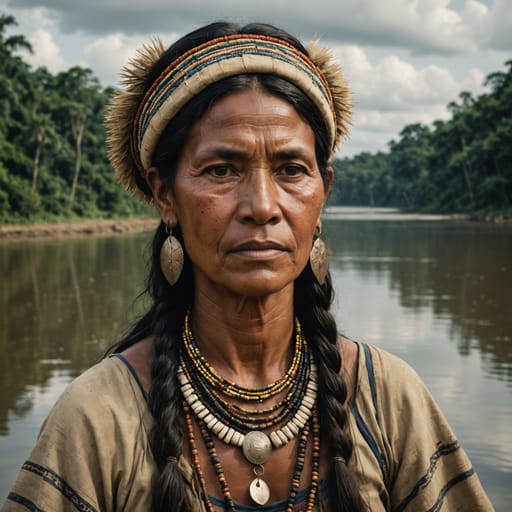
Typical E'ñepa Phenotypes
Reference for AI generation: hair, eyes, skin, facial structure, build
E'ñepa Body & Anatomy Reference
South American Indigenous / European-Mestizo / Afro-Latino mix phenotype: anatomy reference for AI nude generation
E'ñepa Boobs & Breasts
Bust reference for E'ñepa women: medium-to-large cup, full, high projection, which is typical of South American Indigenous / European-Mestizo / Afro-Latino mix ancestry. Areolas measure about 32-46mm across, with medium-brown to dark-brown pigmentation. Body type (endomorph-to-mesomorph with high gluteal-femoral deposition) shapes the bust as well, so E'ñepa tits are usually the classic Brazilian / Latina curvy bust profile in lowland populations; smaller and shorter-set in Andean Indigenous populations. In AI imagery, keep the forward-set shape rather than drifting toward the smaller bust profile of Andean Indigenous sub-populations.
E'ñepa Ass & Hips
The E'ñepa ass is typically full, high projection, the famous Brazilian / Latina bunda profile, which sets it apart from the slim narrow-hip East Asian profile. Underneath, the pelvis shows wide iliac crests, very full gluteal-femoral fat deposition (the hallmark Brazilian / Latina hip-to-waist ratio), part of the South American Indigenous / European-Mestizo / Afro-Latino mix skeletal pattern. For E'ñepa butt pics and AI renders, match that silhouette and the overall build (endomorph-to-mesomorph with high gluteal-femoral deposition).
E'ñepa Vagina & Pussy
E'ñepa pussy and vulvar anatomy presents medium-brown to dark-brown labial pigmentation, fuller labia minora, consistent with the South American Indigenous / European-Mestizo / Afro-Latino mix phenotype's pigmentation pattern. E'ñepa pubic hair is typically wavy-to-curly coarse dark texture, dense distribution, in the inverted-triangle pattern. For anatomically accurate E'ñepa pussy renders the labial coloration should match the surrounding tan to deep-brown skin tone with a continuous gradient, and the hair should keep its wavy-to-curly coarse dark texture.
E'ñepa Dicks & Penis
E'ñepa dicks follow the South American Indigenous / European-Mestizo / Afro-Latino mix reference data: regional mean ~13cm erect; moderate-to-above-average girth; medium-brown shaft pigmentation. Shaft color should track the tan to deep-brown skin tone with a smooth change toward the glans, and E'ñepa pubic hair keeps its wavy-to-curly coarse dark texture.
E'ñepa Body, Curves & Build
E'ñepa body type and overall build presents as endomorph-to-mesomorph with high gluteal-femoral deposition, with mean adult female BMI 25-28: the characteristic South American Indigenous / European-Mestizo / Afro-Latino mix habitus. E'ñepa curves and proportions should keep the regional skeletal frame (height, shoulder-to-hip ratio, limb proportions) rather than a generic mesomorph default.
E'ñepa Skin Tone & Hair Texture
E'ñepa skin sits in the tan to deep-brown (Fitzpatrick III-VI) band. Hair is typically straight-to-curly 1A-3C, varies widely by ancestral composition, in keeping with the South American Indigenous / European-Mestizo / Afro-Latino mix phenotype. In nude renders the skin should stay one even tone from face to body, and body, pubic and head hair should match.
Explore phenotype categories
Structured taxonomy with peer-reviewed scales · 22 anatomical categories
Erotic Poses & Sex Positions
From the pose catalog: 219 named positions with reference skeletons
Frequently asked questions about E'ñepa people
Where is the E'ñepa homeland?
The E'ñepa homeland is The Cuchivero River basin and neighboring savanna and forest of west-central Bolivar State, Venezuela, south and east of Caicara del Orinoco. in South America.
What language do E'ñepa people speak?
E'ñepa people primarily speak E'nepa, also called Panare (Cariban).
What religion do E'ñepa people practice?
The predominant religion among E'ñepa people is Traditional E'nepa cosmology and shamanic practice, with a minority of evangelical Protestant converts from twentieth century missions..






Make your own E'ñepa images
Five a day, free, no credits to buy. The studio starts from this group's phenotype data, so you can set body type, pose and style and keep the traits accurate.
Start with E'ñepa