Help us get this right
Does this portrait look right for Yucuna?
Nobody has judged this one yet. You would be the first.
Yucuna Erotic
Mirití-Paraná River basin and nearby stretches of the Caquetá River, Amazonas department, southeastern Colombia
Yucuna (Arawakan), also spoken as a first language by the Matapí; many also speak Spanish and neighboring Tukanoan languages
Indigenous shamanic tradition, including Yuruparí initiation rites, alongside Catholic and evangelical Christian influence
Arawakan-speaking people of the northwest Amazon, organized in patrilineal clans; closely linked to the Matapí and intermarried with Tanimuka and Letuama neighbors
About Yucuna People
The Yucuna are a small Amazonian people of southeastern Colombia. The quickest way to place them is by their river and their language. Their villages sit along the Mirití-Paraná, a tributary of the Caquetá in the department of Amazonas, and they speak an Arawakan language. That sets them apart on a river where close neighbors such as the Tanimuka and Letuama speak Tukanoan languages. The difference has never kept them apart. The Yucuna, who call themselves Kamejeya, marry, trade and dance with these neighbors. The Matapí, once a separate people, took up Yucuna as their everyday language and now live largely inside the same social world.
Daily life follows the pattern of the northwest Amazon. Families clear forest gardens for bitter manioc, which women turn into cassava bread and drinks, while men fish and hunt. Society is organized into patrilineal clans. The large communal house, the maloca, is still where serious talk happens, often in the evening over coca powder and tobacco. Shamans still carry real weight: they heal, protect, and bargain with the spirit owners of animals, fish and forest places, whose goodwill nobody takes for granted. Catholic and evangelical missionaries have both worked in the region, but the ritual calendar has held on. Its best known part is Yuruparí, the cycle of sacred flutes and trumpets tied to the initiation of boys. Women are forbidden to see these instruments.
Fewer outsiders know how much of Yucuna ceremony is about exchange. At dances built around fruit harvests or game, one group arrives carrying food and the hosts answer with drink. The handover takes place through long, formal speeches traded between the two sides. Anthropologists who have lived among the Yucuna see these speeches as a key to the whole society: debts and duties between clans and peoples are spoken aloud, weighed and settled in public. Their encounter with outsiders also ran on exchange, and on worse terms. During the rubber boom and the decades of trading that followed, white patrons drew Yucuna workers into debt arrangements that were hard to escape. Today much of their land lies within a collectively titled Indigenous reserve that they share with neighboring peoples, and community captains speak for the villages in dealings with the Colombian state.
Related ethnic groups
Groups that share Yucuna's homeland, region, language, or religious tradition. These are likely candidates for comparative phenotype reference.
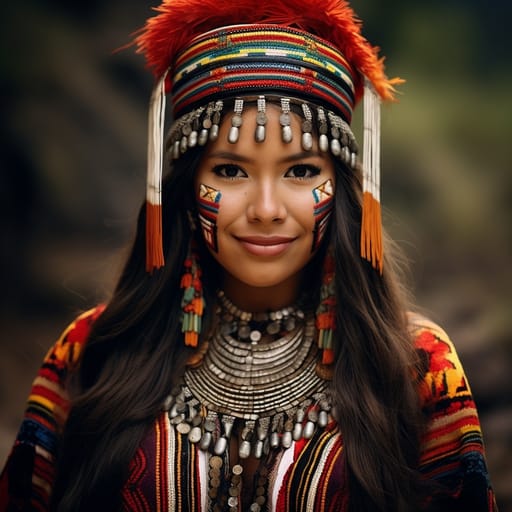
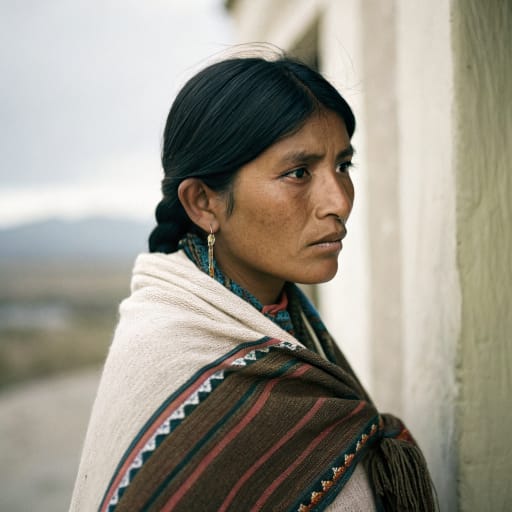
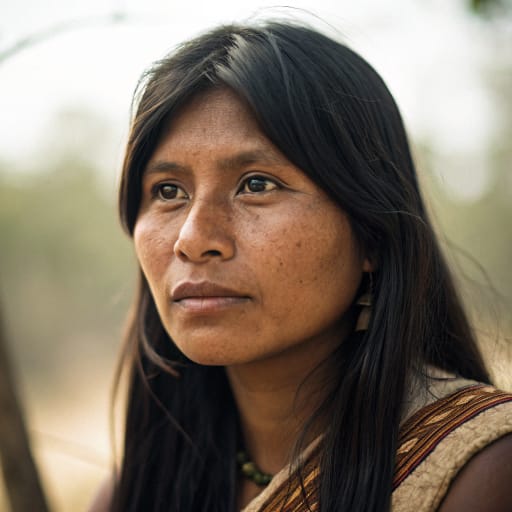
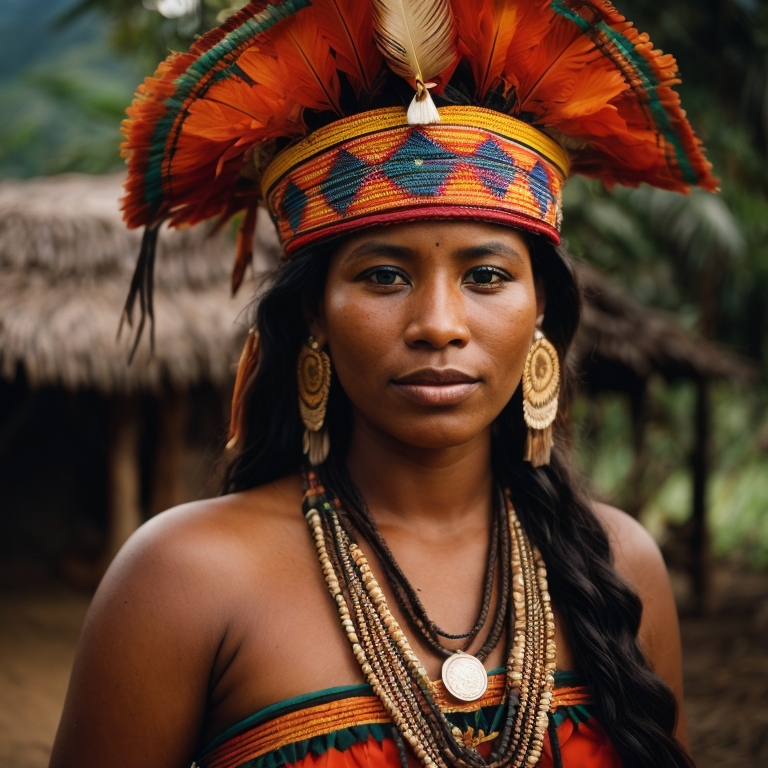
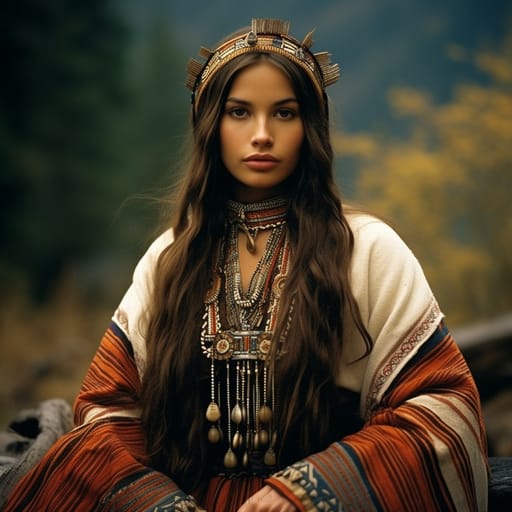
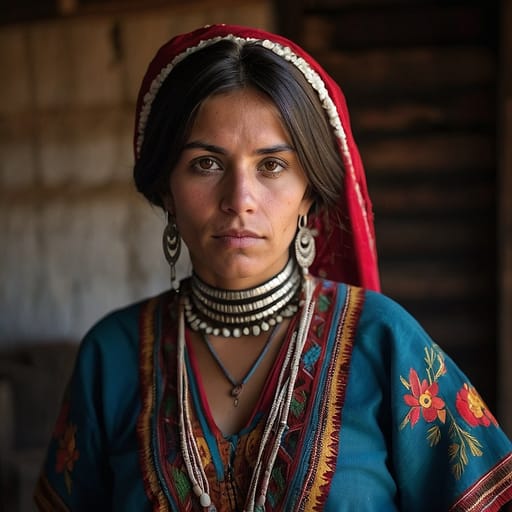
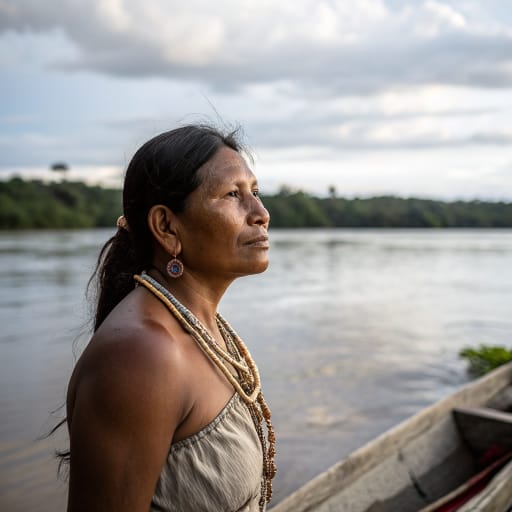
Typical Yucuna Phenotypes
Reference for AI generation: hair, eyes, skin, facial structure, build
Yucuna Body & Anatomy Reference
Anatomy by feature, South American Indigenous / European-Mestizo / Afro-Latino mix phenotype
Yucuna Boobs & Breasts
The typical Yucuna bust is medium-to-large cup, full, high projection, in line with the wider South American Indigenous / European-Mestizo / Afro-Latino mix pattern. Areolas usually fall in the 32-46mm range, with medium-brown to dark-brown areolar pigmentation against the tan-to-deep-brown skin tone. Compared with the smaller bust profile of Andean Indigenous sub-populations, Yucuna breasts sit forward and are generally the classic Brazilian / Latina curvy bust profile in lowland populations; smaller and shorter-set in Andean Indigenous populations. A faithful AI render of Yucuna tits keeps that shape and areola size.
Yucuna Ass & Hips
Butt shape among Yucuna women: full, high projection, the famous Brazilian / Latina bunda profile, over wide iliac crests, very full gluteal-femoral fat deposition (the hallmark Brazilian / Latina hip-to-waist ratio). This follows South American Indigenous / European-Mestizo / Afro-Latino mix ancestry and looks quite unlike the slim narrow-hip East Asian profile. An accurate Yucuna ass in adult AI imagery keeps both the silhouette and the overall build (endomorph-to-mesomorph with high gluteal-femoral deposition) instead of a generic average.
Yucuna Vagina & Pussy
Vulvar anatomy among Yucuna women: medium-brown to dark-brown labial pigmentation, fuller labia minora. Pubic hair tends to be wavy-to-curly coarse dark texture, dense distribution, in the usual inverted-triangle pattern. Both follow South American Indigenous / European-Mestizo / Afro-Latino mix pigmentation, which is why Yucuna pussy renders should not fall back on a pale, sparse Western template.
Yucuna Dicks & Penis
The Yucuna cock profile, from South American Indigenous / European-Mestizo / Afro-Latino mix anthropometric data: regional mean ~13cm erect; moderate-to-above-average girth; medium-brown shaft pigmentation. Pubic hair has a wavy-to-curly coarse dark texture and forms the usual inverted-V pattern. Whether Yucuna men are circumcised follows religious and cultural practice rather than phenotype.
Yucuna Body, Curves & Build
Build and curves among Yucuna women follow the South American Indigenous / European-Mestizo / Afro-Latino mix pattern: endomorph-to-mesomorph with high gluteal-femoral deposition, mean adult female BMI 25-28. Proportions matter as much as skin tone, so Yucuna figures should keep their regional height and limb ratios.
Yucuna Skin Tone & Hair Texture
The Yucuna skin range is tan to deep-brown (Fitzpatrick III-VI), and hair tends to be straight-to-curly 1A-3C, varies widely by ancestral composition. That combination marks the South American Indigenous / European-Mestizo / Afro-Latino mix phenotype, and skin tone is the trait AI generators most often get wrong for Yucuna women.
Explore phenotype categories
Structured taxonomy with peer-reviewed scales · 22 anatomical categories
Erotic Poses & Sex Positions
From the pose catalog: 219 named positions with reference skeletons
Frequently asked questions about Yucuna people
Where is the Yucuna homeland?
The Yucuna homeland is Mirití-Paraná River basin and nearby stretches of the Caquetá River, Amazonas department, southeastern Colombia in South America.
What language do Yucuna people speak?
Yucuna people primarily speak Yucuna (Arawakan), also spoken as a first language by the Matapí; many also speak Spanish and neighboring Tukanoan languages.
What religion do Yucuna people practice?
The predominant religion among Yucuna people is Indigenous shamanic tradition, including Yuruparí initiation rites, alongside Catholic and evangelical Christian influence.






Make your own Yucuna images
Five a day, free, no credits to buy. The studio starts from this group's phenotype data, so you can set body type, pose and style and keep the traits accurate.
Start with Yucuna