No portrait yet
Tremembé Erotic
Coastal Ceará, Brazil, around Itarema, Acaraú and Itapipoca; historically the shoreline from the Parnaíba delta to Ceará
Portuguese; the original Tremembé language (unclassified, extinct) survives only as words in Torém songs
Roman Catholic, alongside the Torém ritual tradition
Communities of Almofala and Itarema, Córrego João Pereira, and Barra do Mundaú (Itapipoca), all in Ceará; one of the Indigenous peoples of Northeast Brazil
About Tremembé People
The Tremembé are a coastal people of Ceará, in Brazil's northeast. For more than a century, officials said they no longer existed. They went on living anyway, in fishing and farming villages among the dunes around Almofala, Itarema, Acaraú and Itapipoca. Since the 1980s they have made their case in court, in their own schools and on the land itself.
Before colonization, Tremembé bands ranged along the shore between the Parnaíba delta and the Ceará coast. They lived off the sea, the mangroves and the lagoons behind the dunes. Colonial writers described them as strong swimmers and a hard people to subdue. In the early 1700s missionaries gathered many of them into a mission village at Almofala, built around a church dedicated to Our Lady of the Conception. In the 1860s the provincial government of Ceará declared its Indigenous peoples extinct. On paper the Tremembé became caboclos, rural peasants of mixed descent, and their land passed into private hands. The Almofala church spent decades buried under moving dunes before the sand shifted off it in the 20th century. The community's own history followed a similar course.
The original Tremembé language is gone and was never securely classified. What survives are words carried in the songs of the Torém, a circle dance led by a singer with a maracá, with mocororó, a fermented cashew drink, passed around. For generations the Torém was one of the few public signs that a distinct people still lived here, and it became the center of Tremembé identity when the community began pressing its claims. Daily life is Portuguese-speaking and largely Catholic, and the Torém sits alongside the Church rather than against it.
Today the Tremembé live in several communities rather than one bloc. Almofala and the surrounding villages of Itarema form the largest core, with others at Córrego João Pereira and at Barra do Mundaú in Itapipoca. Their politics center on territory. In Itarema they have fought a coconut plantation company over land, and at the mouth of the Mundaú River they have opposed a large foreign-backed resort project. They also run their own schools and a teacher training program built around Tremembé history. Fishing, small farming and the cashew harvest still set the rhythm of the year, and a people once declared extinct now holds officially recognized land.
Related ethnic groups
Groups that share Tremembé's homeland, region, language, or religious tradition. These are likely candidates for comparative phenotype reference.

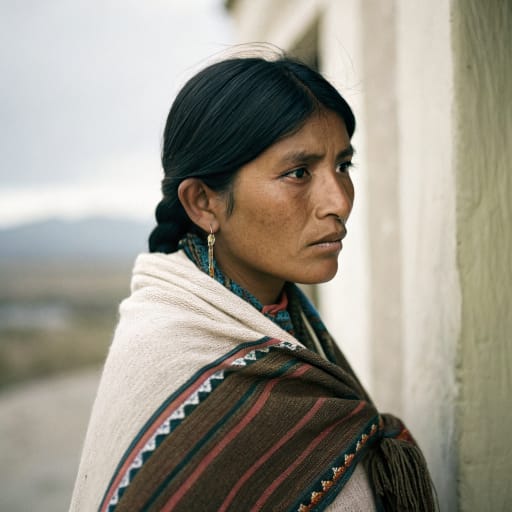
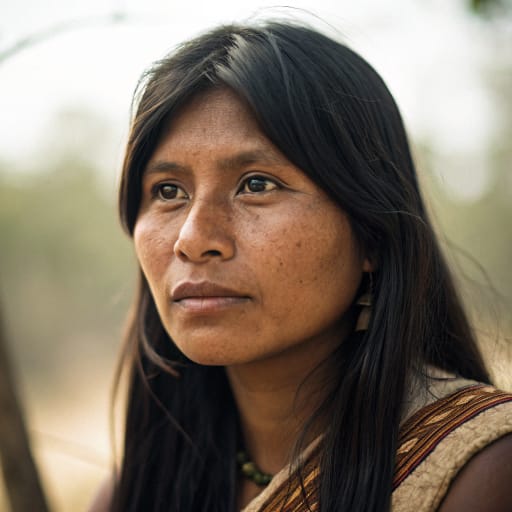
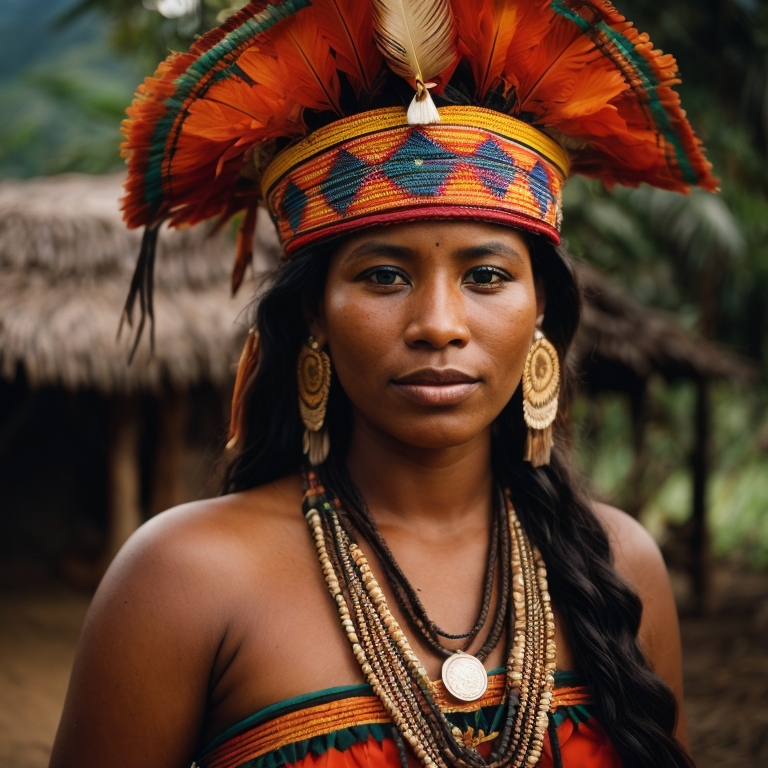
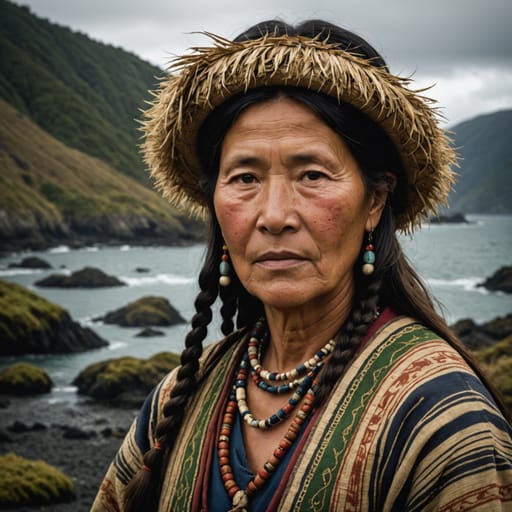
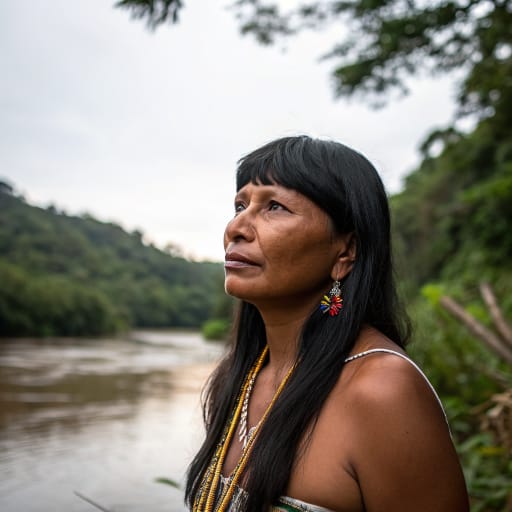
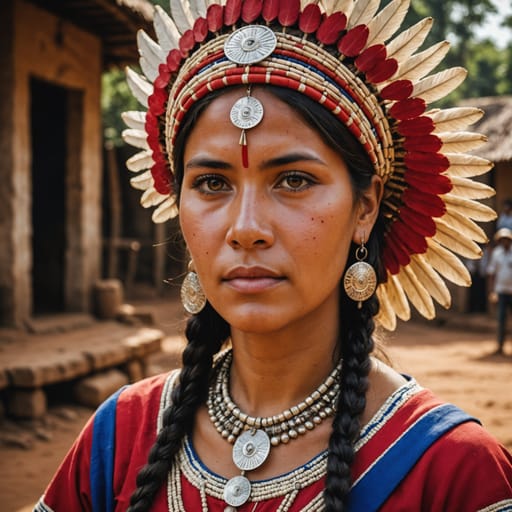
Typical Tremembé Phenotypes
Reference for AI generation: hair, eyes, skin, facial structure, build
Tremembé Body & Anatomy Reference
Per-feature anatomical profile for AI nude generation: South American Indigenous / European-Mestizo / Afro-Latino mix phenotype
Tremembé Boobs & Breasts
The typical Tremembé bust is medium-to-large cup, full, high projection, in line with the wider South American Indigenous / European-Mestizo / Afro-Latino mix pattern. Areolas usually fall in the 32-46mm range, with medium-brown to dark-brown areolar pigmentation against the tan-to-deep-brown skin tone. Compared with the smaller bust profile of Andean Indigenous sub-populations, Tremembé breasts sit forward and are generally the classic Brazilian / Latina curvy bust profile in lowland populations; smaller and shorter-set in Andean Indigenous populations. A faithful AI render of Tremembé tits keeps that shape and areola size.
Tremembé Ass & Hips
Butt shape among Tremembé women: full, high projection, the famous Brazilian / Latina bunda profile, over wide iliac crests, very full gluteal-femoral fat deposition (the hallmark Brazilian / Latina hip-to-waist ratio). This follows South American Indigenous / European-Mestizo / Afro-Latino mix ancestry and looks quite unlike the slim narrow-hip East Asian profile. An accurate Tremembé ass in adult AI imagery keeps both the silhouette and the overall build (endomorph-to-mesomorph with high gluteal-femoral deposition) instead of a generic average.
Tremembé Vagina & Pussy
Vulvar anatomy among Tremembé women: medium-brown to dark-brown labial pigmentation, fuller labia minora. Pubic hair tends to be wavy-to-curly coarse dark texture, dense distribution, in the usual inverted-triangle pattern. Both follow South American Indigenous / European-Mestizo / Afro-Latino mix pigmentation, which is why Tremembé pussy renders should not fall back on a pale, sparse Western template.
Tremembé Dicks & Penis
The Tremembé cock profile, from South American Indigenous / European-Mestizo / Afro-Latino mix anthropometric data: regional mean ~13cm erect; moderate-to-above-average girth; medium-brown shaft pigmentation. Pubic hair has a wavy-to-curly coarse dark texture and forms the usual inverted-V pattern. Whether Tremembé men are circumcised follows religious and cultural practice rather than phenotype.
Tremembé Body, Curves & Build
Build and curves among Tremembé women follow the South American Indigenous / European-Mestizo / Afro-Latino mix pattern: endomorph-to-mesomorph with high gluteal-femoral deposition, mean adult female BMI 25-28. Proportions matter as much as skin tone, so Tremembé figures should keep their regional height and limb ratios.
Tremembé Skin Tone & Hair Texture
The Tremembé skin range is tan to deep-brown (Fitzpatrick III-VI), and hair tends to be straight-to-curly 1A-3C, varies widely by ancestral composition. That combination marks the South American Indigenous / European-Mestizo / Afro-Latino mix phenotype, and skin tone is the trait AI generators most often get wrong for Tremembé women.
Explore phenotype categories
Structured taxonomy with peer-reviewed scales · 22 anatomical categories
Erotic Poses & Sex Positions
From the pose catalog: 219 named positions with reference skeletons
Frequently asked questions about Tremembé people
Where is the Tremembé homeland?
The Tremembé homeland is Coastal Ceará, Brazil, around Itarema, Acaraú and Itapipoca; historically the shoreline from the Parnaíba delta to Ceará in South America.
What language do Tremembé people speak?
Tremembé people primarily speak Portuguese; the original Tremembé language (unclassified, extinct) survives only as words in Torém songs.
What religion do Tremembé people practice?
The predominant religion among Tremembé people is Roman Catholic, alongside the Torém ritual tradition.






Make your own Tremembé images
Five a day, free, no credits to buy. The studio starts from this group's phenotype data, so you can set body type, pose and style and keep the traits accurate.
Start with Tremembé