Help us get this right
Does this portrait look right for Chono?
Nobody has judged this one yet. You would be the first.
Chono Erotic
Archipelagos of southern Chile between Chiloé and the Gulf of Penas: the Guaitecas and Chonos islands and the coast of the Taitao Peninsula (Chile)
Chono (extinct, unclassified; a link to Kawésqar has been proposed)
Indigenous beliefs, largely unrecorded; partial Catholic conversion through Jesuit missions in the 18th century
Bands named in colonial sources include the Caucahue; grouped culturally with the Kawésqar and Yaghan as the canoe peoples of the Patagonian channels
About Chono People
The Chono were a historical people, canoe nomads of the fjords and islands between Chiloé and the Gulf of Penas in southern Chile, documented by the Spanish from the sixteenth century and gone as a distinct group by the nineteenth, their descendants absorbed into the mixed Chilote population of the islands. What set them apart was the boat. Chono life ran on the dalca, a canoe built from three planks sewn together with plant fiber and caulked with bark, light enough to carry over a portage and stout enough for the open channels of the Chonos Archipelago, which still carries their name. Families lived in these boats and in quick shelters of poles and skins on the beach, moving constantly between sea-lion rookeries, shellfish beds and kelp. Women dove for mussels and sea urchins in water the Spanish thought lethal; men worked the harpoon. They kept dogs, and wove the hair of a woolly local breed into cloaks. At the northern edge of their range, in the Guaitecas, they grew potatoes in small plots, the southernmost farming in the Americas before Europeans came.
The Chono language is extinct and barely recorded: a Jesuit catechism, a scatter of place names and a few words in colonial reports are all that survive, not enough to place it with confidence in any family, though some linguists suspect a link to Kawésqar to the south. Missionary sources name several bands, among them the Caucahue, without making clear whether these were dialect groups, clans or simply the people met on different voyages. The Spanish on Chiloé wanted them as labor and as converts. The Jesuits wanted them as pilots too, because Chono guides knew the portage across the Ofqui isthmus that let a canoe skip the open water around the Taitao Peninsula. In 1710 a group of Chono asked to be settled on Guar Island in the Reloncaví Sound, and from 1764 the mission at Cailín, on the southern tip of Chiloé, gathered others. Neither held them for long: a people built around movement did not take to fixed villages, and the missionaries complained that their converts drifted back to the channels. Epidemics, absorption into Chilote society and the northward push of the Kawésqar into emptied waters finished the job. Their dead were laid in caves along the fjords, and shell middens thousands of years deep mark the beaches they used. The dalca outlived them: Chilote sailors and Spanish explorers adopted it, and it carried the colony's traffic through the fjords well into the nineteenth century.
Related ethnic groups
Groups that share Chono's homeland, region, language, or religious tradition. These are likely candidates for comparative phenotype reference.
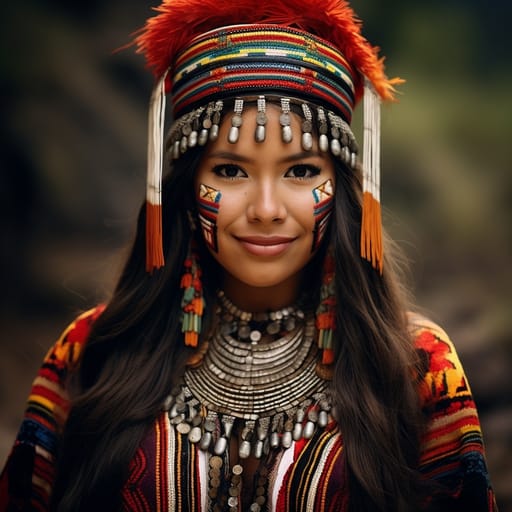
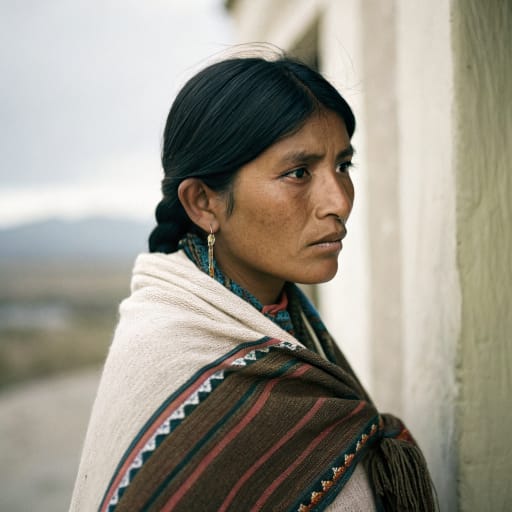
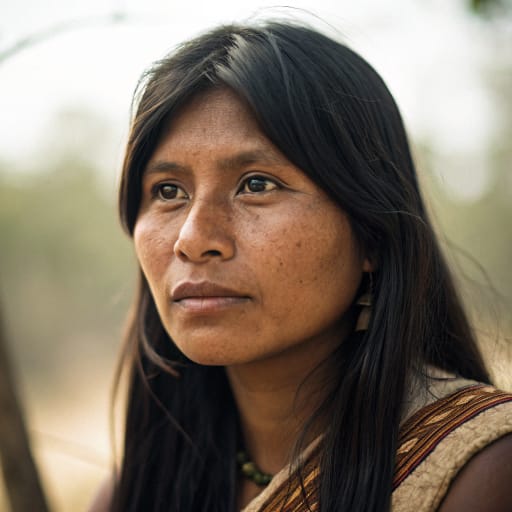
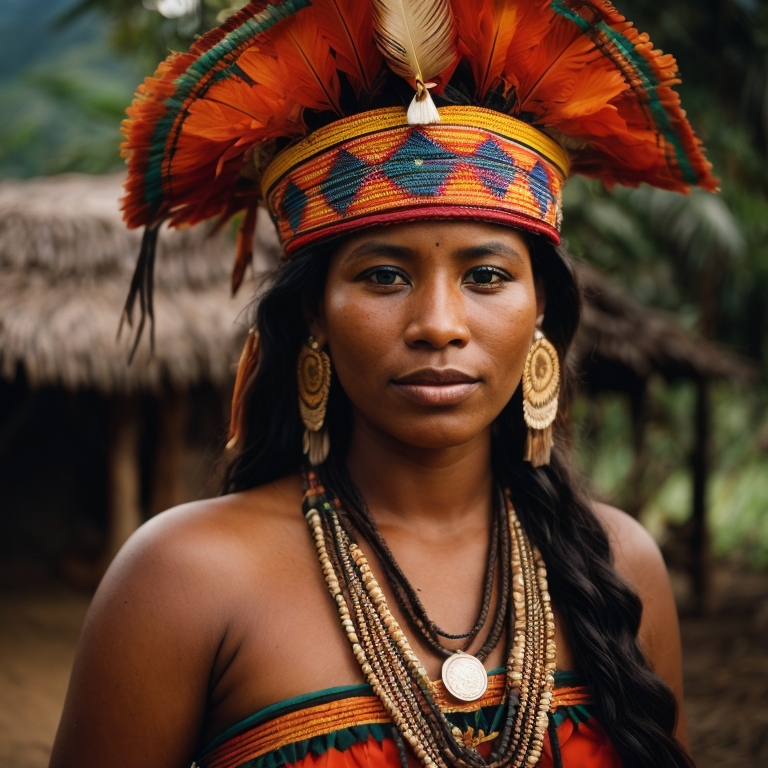
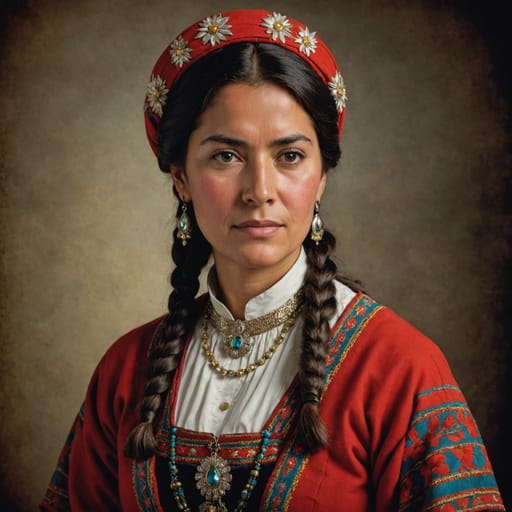
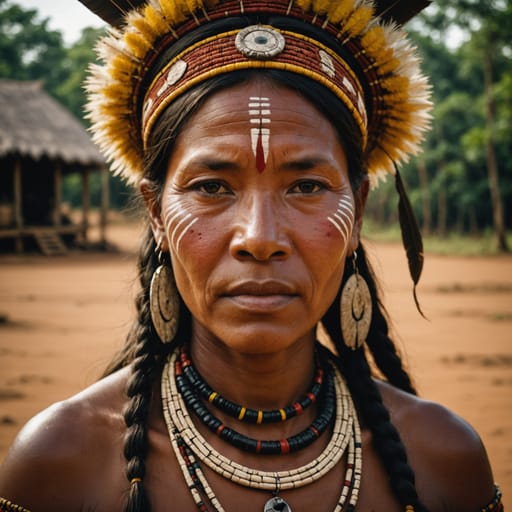
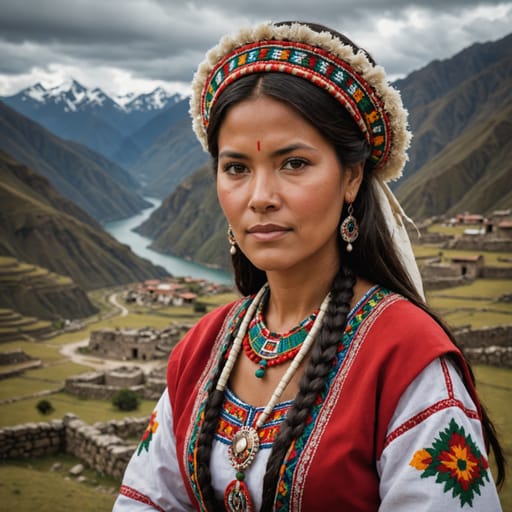
Typical Chono Phenotypes
Reference for AI generation: hair, eyes, skin, facial structure, build
Chono Body & Anatomy Reference
Per-feature anatomical profile for AI nude generation: South American Indigenous / European-Mestizo / Afro-Latino mix phenotype
Chono Boobs & Breasts
Bust reference for Chono women: medium-to-large cup, full, high projection, which is typical of South American Indigenous / European-Mestizo / Afro-Latino mix ancestry. Areolas measure about 32-46mm across, with medium-brown to dark-brown pigmentation. Body type (endomorph-to-mesomorph with high gluteal-femoral deposition) shapes the bust as well, so Chono tits are usually the classic Brazilian / Latina curvy bust profile in lowland populations; smaller and shorter-set in Andean Indigenous populations. In AI imagery, keep the forward-set shape rather than drifting toward the smaller bust profile of Andean Indigenous sub-populations.
Chono Ass & Hips
The Chono ass is typically full, high projection, the famous Brazilian / Latina bunda profile, which sets it apart from the slim narrow-hip East Asian profile. Underneath, the pelvis shows wide iliac crests, very full gluteal-femoral fat deposition (the hallmark Brazilian / Latina hip-to-waist ratio), part of the South American Indigenous / European-Mestizo / Afro-Latino mix skeletal pattern. For Chono butt pics and AI renders, match that silhouette and the overall build (endomorph-to-mesomorph with high gluteal-femoral deposition).
Chono Vagina & Pussy
Chono pussy and vulvar anatomy presents medium-brown to dark-brown labial pigmentation, fuller labia minora, consistent with the South American Indigenous / European-Mestizo / Afro-Latino mix phenotype's pigmentation pattern. Chono pubic hair is typically wavy-to-curly coarse dark texture, dense distribution, in the inverted-triangle pattern. For anatomically accurate Chono pussy renders the labial coloration should match the surrounding tan to deep-brown skin tone with a continuous gradient, and the hair should keep its wavy-to-curly coarse dark texture.
Chono Dicks & Penis
Chono dicks follow the South American Indigenous / European-Mestizo / Afro-Latino mix reference data: regional mean ~13cm erect; moderate-to-above-average girth; medium-brown shaft pigmentation. Shaft color should track the tan to deep-brown skin tone with a smooth change toward the glans, and Chono pubic hair keeps its wavy-to-curly coarse dark texture.
Chono Body, Curves & Build
Chono body type and overall build presents as endomorph-to-mesomorph with high gluteal-femoral deposition, with mean adult female BMI 25-28: the characteristic South American Indigenous / European-Mestizo / Afro-Latino mix habitus. Chono curves and proportions should keep the regional skeletal frame (height, shoulder-to-hip ratio, limb proportions) rather than a generic mesomorph default.
Chono Skin Tone & Hair Texture
Chono skin sits in the tan to deep-brown (Fitzpatrick III-VI) band. Hair is typically straight-to-curly 1A-3C, varies widely by ancestral composition, in keeping with the South American Indigenous / European-Mestizo / Afro-Latino mix phenotype. In nude renders the skin should stay one even tone from face to body, and body, pubic and head hair should match.
Explore phenotype categories
Structured taxonomy with peer-reviewed scales · 22 anatomical categories
Erotic Poses & Sex Positions
From the pose catalog: 219 named positions with reference skeletons
Frequently asked questions about Chono people
Where is the Chono homeland?
The Chono homeland is Archipelagos of southern Chile between Chiloé and the Gulf of Penas: the Guaitecas and Chonos islands and the coast of the Taitao Peninsula (Chile) in South America.
What language do Chono people speak?
Chono people primarily speak Chono (extinct, unclassified; a link to Kawésqar has been proposed).
What religion do Chono people practice?
The predominant religion among Chono people is Indigenous beliefs, largely unrecorded; partial Catholic conversion through Jesuit missions in the 18th century.






Make your own Chono images
Five a day, free, no credits to buy. The studio starts from this group's phenotype data, so you can set body type, pose and style and keep the traits accurate.
Start with Chono