No portrait yet
Umutina Erotic
Terra Indígena Umutina, between the Paraguay and Bugres rivers near Barra do Bugres, Mato Grosso, Brazil
Umutina (Bororoan, Macro-Jê), no longer spoken as a first language and under revitalization; Portuguese (Indo-European, Romance) in daily use
Largely Christian, alongside revived traditional ceremonial practice
Bororoan-speaking people related to the Bororo; many families also descend from Paresí, Nambikwara, Bororo, Bakairi, Kayabi and Irantxe through intermarriage
About Umutina People
The Umutina are a small Indigenous people of southwestern Mato Grosso, Brazil. For a long time the outside world knew them by another name: Barbados, the bearded ones. Settlers moving up the upper Paraguay River noticed that Umutina men wore beards, and that nickname was in use long before anyone learned what the people called themselves. Today the Umutina live on a demarcated territory between the Paraguay and Bugres rivers, near the town of Barra do Bugres. It is river country, and fishing has always mattered there as much as the garden plot.
Their language belongs to the Bororoan branch of the Macro-Jê family, so the Bororo are their closest linguistic relatives. Being related to a larger people did not protect them. In the late nineteenth and early twentieth centuries, rubber tappers and collectors of ipecac root moved into Umutina country, and violence and disease came with them. Contact with Brazil's Indian Protection Service in the early 1900s did not stop the epidemics. By the middle of the century only a few dozen Umutina were left. The Brazilian ethnographer Harald Schultz worked among them in the 1940s, and his photographs and notes are now some of the most important records of Umutina life from that time.
They survived, but in a different form. Families from other peoples were settled on the same land, and marriages with Paresí, Nambikwara, Bororo, Bakairi, Kayabi and Irantxe families followed. Many people in the territory now have ancestors from several of these nations and still identify as Umutina. The population has grown back to several hundred. The Umutina language did not recover the same way: it is no longer anyone's first language, and daily life runs in Portuguese.
What stands out now is the effort to rebuild. At school, children learn Umutina words, songs and names, drawn from what elders remember and from the old ethnographic records. Festivals bring back body painting, dances and traditional games for young people who grew up speaking only Portuguese. Christianity is part of village life, and so is the renewed ceremonial practice. For the Umutina, identity does not rest on an unbroken line. It rests on the fact that they were nearly written off and chose to keep their name.
Related ethnic groups
Groups that share Umutina's homeland, region, language, or religious tradition. These are likely candidates for comparative phenotype reference.
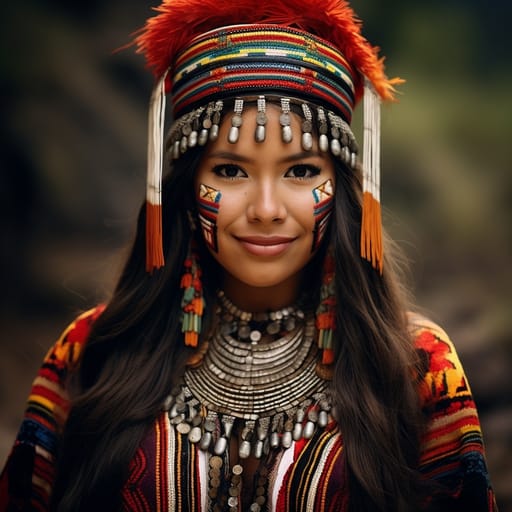
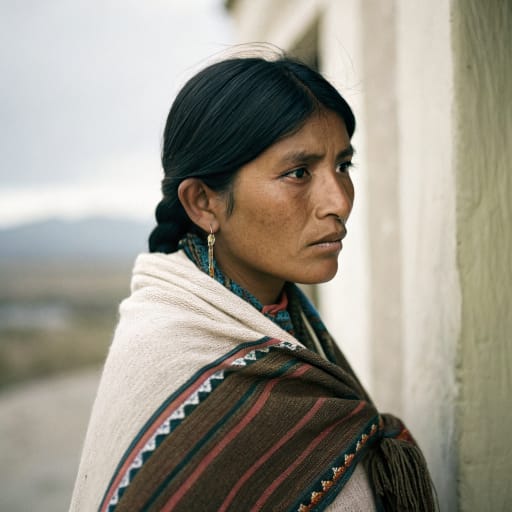
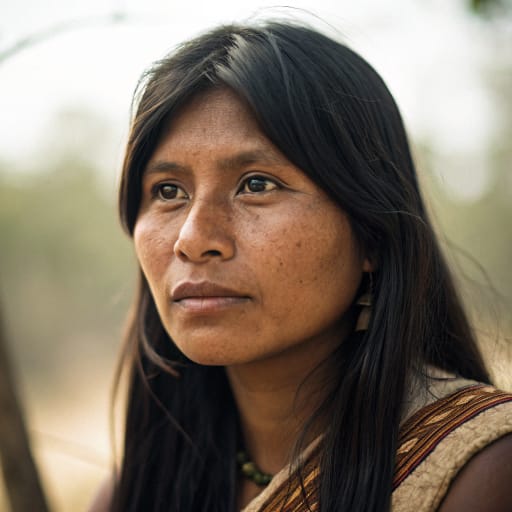
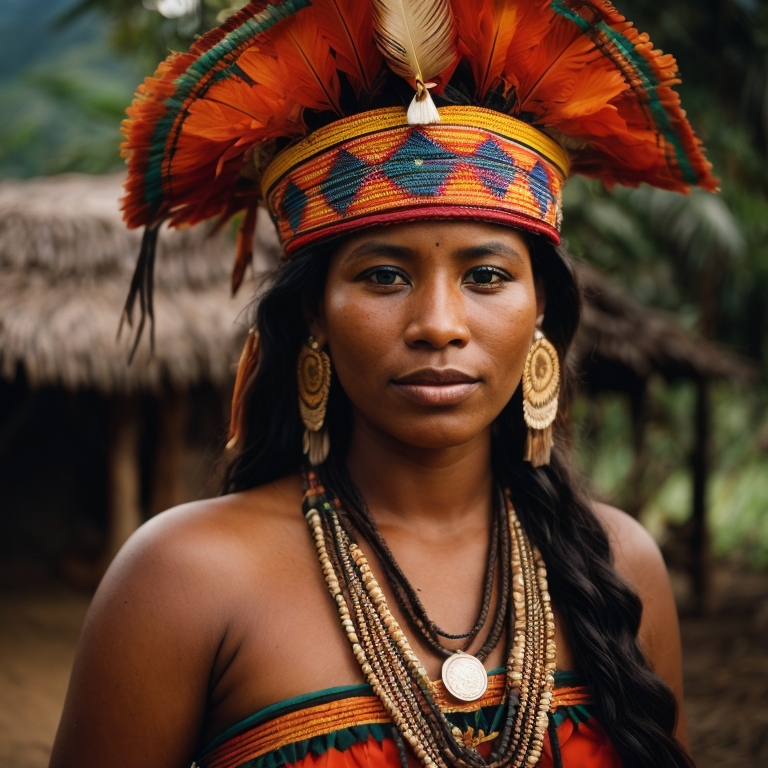
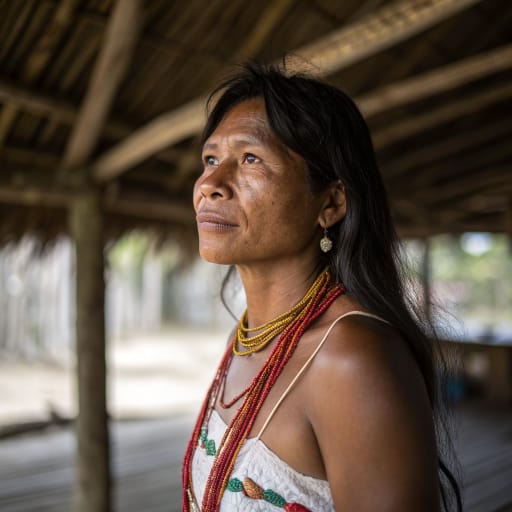
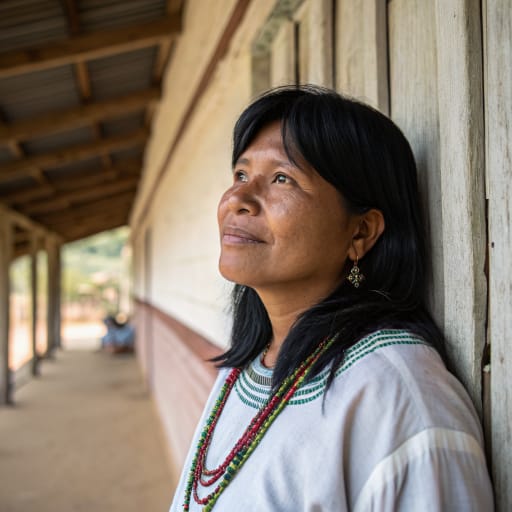
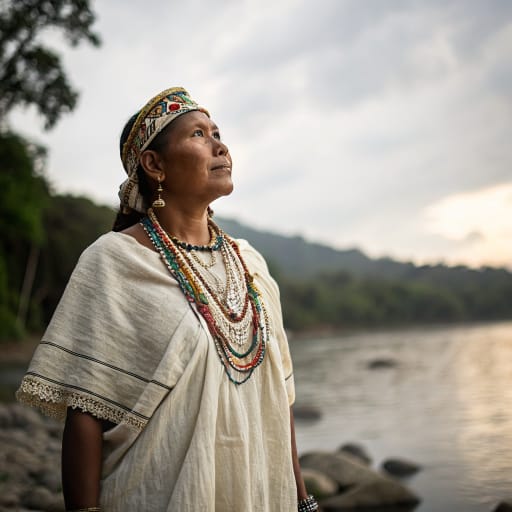
Typical Umutina Phenotypes
Reference for AI generation: hair, eyes, skin, facial structure, build
Umutina Body & Anatomy Reference
Per-feature anatomical profile for AI nude generation: South American Indigenous / European-Mestizo / Afro-Latino mix phenotype
Umutina Boobs & Breasts
Bust reference for Umutina women: medium-to-large cup, full, high projection, which is typical of South American Indigenous / European-Mestizo / Afro-Latino mix ancestry. Areolas measure about 32-46mm across, with medium-brown to dark-brown pigmentation. Body type (endomorph-to-mesomorph with high gluteal-femoral deposition) shapes the bust as well, so Umutina tits are usually the classic Brazilian / Latina curvy bust profile in lowland populations; smaller and shorter-set in Andean Indigenous populations. In AI imagery, keep the forward-set shape rather than drifting toward the smaller bust profile of Andean Indigenous sub-populations.
Umutina Ass & Hips
The Umutina ass is typically full, high projection, the famous Brazilian / Latina bunda profile, which sets it apart from the slim narrow-hip East Asian profile. Underneath, the pelvis shows wide iliac crests, very full gluteal-femoral fat deposition (the hallmark Brazilian / Latina hip-to-waist ratio), part of the South American Indigenous / European-Mestizo / Afro-Latino mix skeletal pattern. For Umutina butt pics and AI renders, match that silhouette and the overall build (endomorph-to-mesomorph with high gluteal-femoral deposition).
Umutina Vagina & Pussy
Umutina pussy and vulvar anatomy presents medium-brown to dark-brown labial pigmentation, fuller labia minora, consistent with the South American Indigenous / European-Mestizo / Afro-Latino mix phenotype's pigmentation pattern. Umutina pubic hair is typically wavy-to-curly coarse dark texture, dense distribution, in the inverted-triangle pattern. For anatomically accurate Umutina pussy renders the labial coloration should match the surrounding tan to deep-brown skin tone with a continuous gradient, and the hair should keep its wavy-to-curly coarse dark texture.
Umutina Dicks & Penis
Umutina dicks follow the South American Indigenous / European-Mestizo / Afro-Latino mix reference data: regional mean ~13cm erect; moderate-to-above-average girth; medium-brown shaft pigmentation. Shaft color should track the tan to deep-brown skin tone with a smooth change toward the glans, and Umutina pubic hair keeps its wavy-to-curly coarse dark texture.
Umutina Body, Curves & Build
Umutina body type and overall build presents as endomorph-to-mesomorph with high gluteal-femoral deposition, with mean adult female BMI 25-28: the characteristic South American Indigenous / European-Mestizo / Afro-Latino mix habitus. Umutina curves and proportions should keep the regional skeletal frame (height, shoulder-to-hip ratio, limb proportions) rather than a generic mesomorph default.
Umutina Skin Tone & Hair Texture
Umutina skin sits in the tan to deep-brown (Fitzpatrick III-VI) band. Hair is typically straight-to-curly 1A-3C, varies widely by ancestral composition, in keeping with the South American Indigenous / European-Mestizo / Afro-Latino mix phenotype. In nude renders the skin should stay one even tone from face to body, and body, pubic and head hair should match.
Explore phenotype categories
Structured taxonomy with peer-reviewed scales · 22 anatomical categories
Erotic Poses & Sex Positions
From the pose catalog: 219 named positions with reference skeletons
Frequently asked questions about Umutina people
Where is the Umutina homeland?
The Umutina homeland is Terra Indígena Umutina, between the Paraguay and Bugres rivers near Barra do Bugres, Mato Grosso, Brazil in South America.
What language do Umutina people speak?
Umutina people primarily speak Umutina (Bororoan, Macro-Jê), no longer spoken as a first language and under revitalization; Portuguese (Indo-European, Romance) in daily use.
What religion do Umutina people practice?
The predominant religion among Umutina people is Largely Christian, alongside revived traditional ceremonial practice.






Make your own Umutina images
Five a day, free, no credits to buy. The studio starts from this group's phenotype data, so you can set body type, pose and style and keep the traits accurate.
Start with Umutina