No portrait yet
Tacana Erotic
Andean piedmont and adjacent Amazon lowlands of northern La Paz Department, Bolivia, around Tumupasa, Ixiamas and San Buenaventura, with families in Beni and Pando
Takana (Tacanan family), with Spanish now dominant in most communities
Roman Catholic since the Franciscan missions, layered over Tacana cosmology and shamanic practice
One of the Tacanan peoples, with Cavineña, Araona, Ese Ejja and Reyesano (Maropa); itself consolidated from several piedmont groups gathered into mission towns
About Tacana People
The Tacana live where the Andes quit. Their homeland is the piedmont of northern La Paz Department in Bolivia, where the last ridges of the cordillera give way to flooded forest along the Beni, Tuichi and Madidi rivers, with Tumupasa, Ixiamas and San Buenaventura as the towns that hold them. The position matters. High enough to trade with the sierra, low enough to be Amazonian, the Tacana worked the corridor between highland and forest as go-betweens, and the Franciscans who arrived at the turn of the eighteenth century used exactly that, founding Tumupasa in 1713 and gathering several distinct piedmont groups into mission towns where one language and one name eventually settled over all of them. Much of what Tacana means today was made in those missions. The rubber boom then pulled the young men north into the Beni and Pando on debt contracts, and some families never came back.
Takana gives its name to the Tacanan language family, alongside Cavineña, Araona, Ese Ejja and Reyesano, all of them crowded into the same corner of Bolivia and neighboring Peru. Whether Tacanan and Panoan descend from a common ancestor is an old argument that has never been settled. The language itself is losing ground: Spanish comes first for most Tacana born since the middle of the last century, and fluency clusters among the old, which is what bilingual schooling and the communities' own recording work are up against. Catholicism is universal and worn lightly over an older layer that has not gone anywhere, one in which the forest has owners who must be asked before their animals are taken, and in which illness can have causes a clinic cannot reach. That body of myth happens to be among the best documented in lowland Bolivia, written down at length by a Frobenius Institute expedition in the early 1950s. A living is made from swidden plots of plantain, rice and manioc, from hunting and river fishing, from Brazil nut and palm thatch harvests, and increasingly from tourism running out of Rurrenabaque. The Tacana organized as CIPTA in 1992 and won collective title to their territory in the early 2000s, on the boundary of Madidi National Park, and have since run their own territorial management plan worked out with biologists on the park side of the line.
Related ethnic groups
Groups that share Tacana's homeland, region, language, or religious tradition. These are likely candidates for comparative phenotype reference.
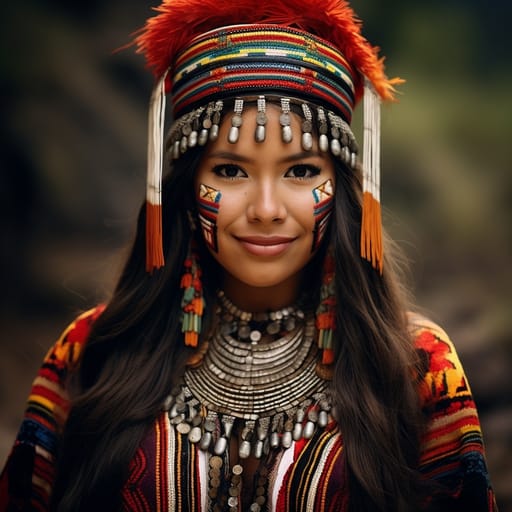
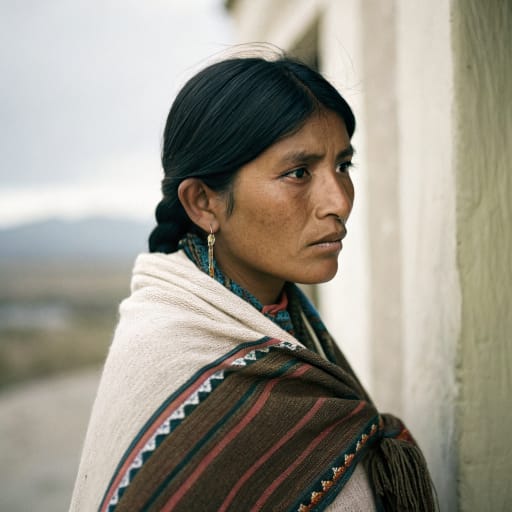
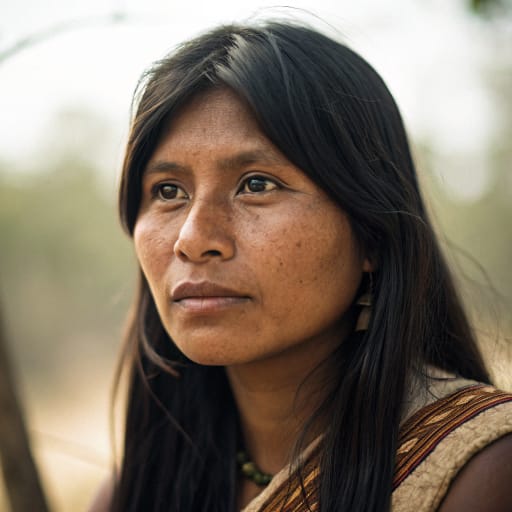
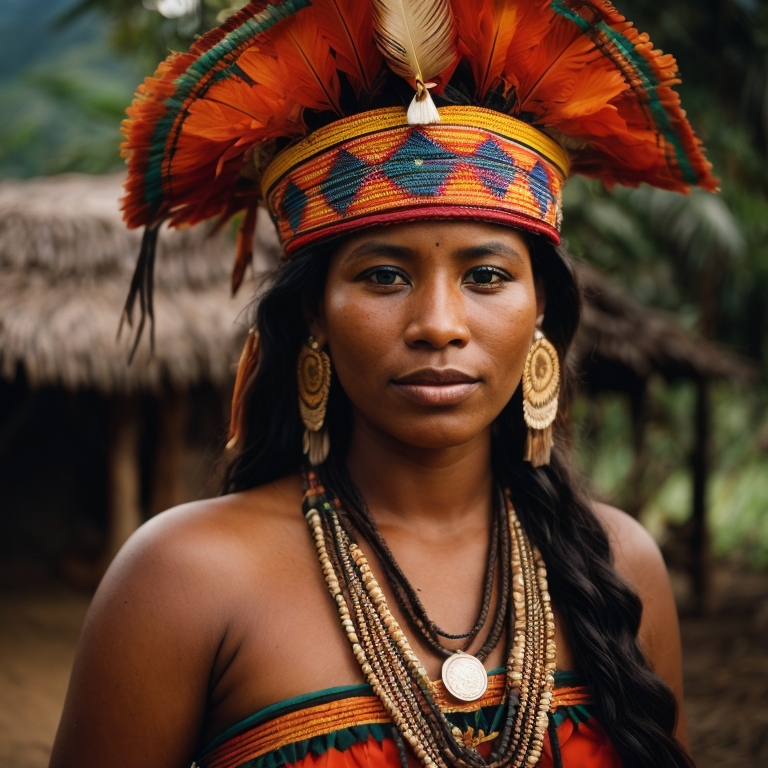
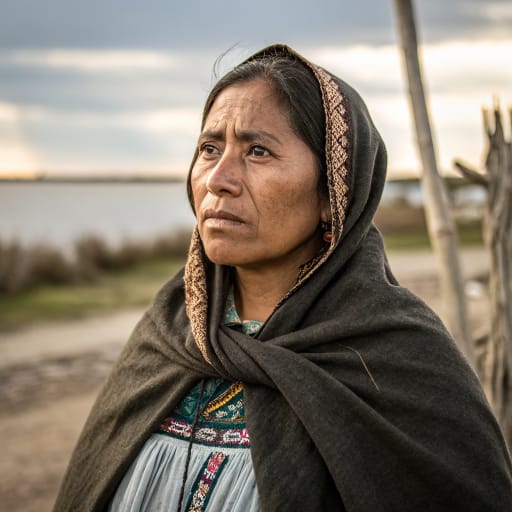
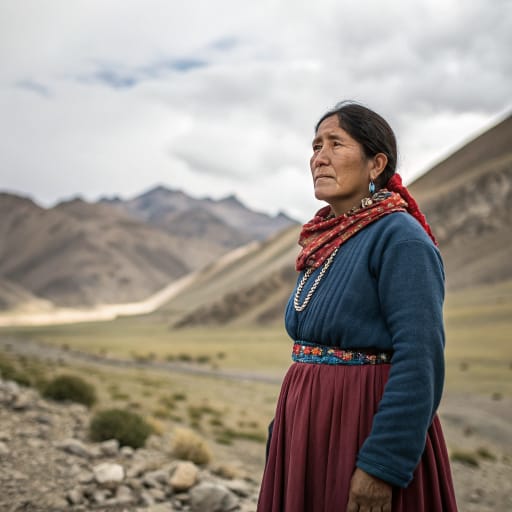
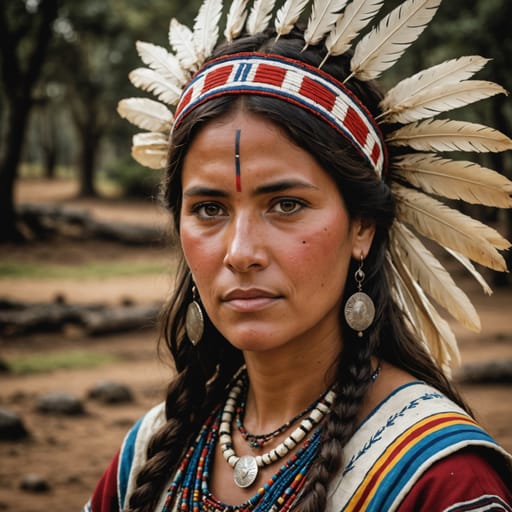
Typical Tacana Phenotypes
Reference for AI generation: hair, eyes, skin, facial structure, build
Tacana Body & Anatomy Reference
South American Indigenous / European-Mestizo / Afro-Latino mix phenotype: anatomy reference for AI nude generation
Tacana Boobs & Breasts
Tacana tits and boobs run medium-to-large cup, full, high projection, the classic South American Indigenous / European-Mestizo / Afro-Latino mix bust profile. Tacana nipples and areolas show medium-brown to dark-brown areolar pigmentation against the tan-to-deep-brown skin tone, with areolar diameter typically in the 32-46mm range and forward-set positioning rather than the smaller bust profile of Andean Indigenous sub-populations. Tacana breasts trend the classic Brazilian / Latina curvy bust profile in lowland populations; smaller and shorter-set in Andean Indigenous populations, a function of the endomorph-to-mesomorph with high gluteal-femoral deposition body habitus and the mean adult female BMI 25-28. For anatomically accurate AI-generated Tacana nudes the render preserves the medium-to-large cup, full, high projection shape, 32-46mm areolas with medium-brown to dark-brown pigmentation, and the torso proportions of the South American Indigenous / European-Mestizo / Afro-Latino mix phenotype.
Tacana Ass & Hips
Tacana hips and butt usually read as full, high projection, the famous Brazilian / Latina bunda profile. The skeletal base is wide iliac crests, very full gluteal-femoral fat deposition (the hallmark Brazilian / Latina hip-to-waist ratio), the South American Indigenous / European-Mestizo / Afro-Latino mix pattern. Set against the slim narrow-hip East Asian profile, the difference is easy to see, and the hip-to-waist ratio is often what identifies Tacana women in photos.
Tacana Vagina & Pussy
Expect medium-brown to dark-brown labial pigmentation, fuller labia minora on Tacana women, in keeping with South American Indigenous / European-Mestizo / Afro-Latino mix ancestry. The pubic hair is wavy-to-curly coarse dark texture, dense distribution. Coloring should run evenly from the tan to deep-brown skin of the thighs to the labia, and Tacana nude imagery should keep the hair's wavy-to-curly coarse dark texture.
Tacana Dicks & Penis
Tacana dick and penile anatomy in adult AI generation should anchor on the regional reference data: regional mean ~13cm erect, moderate-to-above-average girth, and medium-brown shaft pigmentation. The Tacana cock profile reflects the South American Indigenous / European-Mestizo / Afro-Latino mix population's anthropometric measurements. The shaft pigmentation should track the surrounding tan to deep-brown skin tone, and the pubic hair should keep its wavy-to-curly coarse dark texture in the typical inverted-V escutcheon.
Tacana Body, Curves & Build
Tacana body type: endomorph-to-mesomorph with high gluteal-femoral deposition, with mean adult female BMI 25-28. This is the typical South American Indigenous / European-Mestizo / Afro-Latino mix build. Height range, shoulder-to-hip ratio and fat distribution all follow from it, which is what an accurate Tacana nude body should show.
Tacana Skin Tone & Hair Texture
Tacana skin tone falls in the tan to deep-brown (Fitzpatrick III-VI) band, the surface signal most often miscalibrated by generic AI nude generators. Tacana hair texture is typically straight-to-curly 1A-3C, varies widely by ancestral composition, characteristic of the South American Indigenous / European-Mestizo / Afro-Latino mix phenotype. In Tacana nude renders the skin should hold that band consistently across the body.
Explore phenotype categories
Structured taxonomy with peer-reviewed scales · 22 anatomical categories
Erotic Poses & Sex Positions
From the pose catalog: 219 named positions with reference skeletons
Frequently asked questions about Tacana people
Where is the Tacana homeland?
The Tacana homeland is Andean piedmont and adjacent Amazon lowlands of northern La Paz Department, Bolivia, around Tumupasa, Ixiamas and San Buenaventura, with families in Beni and Pando in South America.
What language do Tacana people speak?
Tacana people primarily speak Takana (Tacanan family), with Spanish now dominant in most communities.
What religion do Tacana people practice?
The predominant religion among Tacana people is Roman Catholic since the Franciscan missions, layered over Tacana cosmology and shamanic practice.






Make your own Tacana images
Five a day, free, no credits to buy. The studio starts from this group's phenotype data, so you can set body type, pose and style and keep the traits accurate.
Start with Tacana