No portrait yet
Vilela Erotic
Gran Chaco of northern Argentina, historically along the Bermejo River; today mainly Chaco and Santiago del Estero provinces
Vilela (Lule-Vilela family, sometimes classed as an isolate), nearly extinct; Spanish is the everyday language
Christianity, mainly Roman Catholic and evangelical
Historical bands including the Chunupí, Pasaín, Atalalá and Omoampa; linguistically linked to the extinct Lule
About Vilela People
The Vilela are a Chaco people, and the main fact about them is that they are still here. For much of the twentieth century, ethnographers wrote about them in the past tense. They described a river people who had supposedly melted into their neighbors after missions, frontier wars and forced labor. Families in northern Argentina kept the name anyway. In recent decades they have used it openly, both when identifying themselves to census takers and in organized communities in Chaco and Santiago del Estero provinces.
Their historical territory followed the Bermejo River, which carries heavy loads of silt southeast across the Gran Chaco to join the Paraguay. Colonial accounts describe a people who lived off the water as fishers and hunters and, like other Chaco peoples, also depended on seasonal harvests from the dry forest. They were never one political unit. Spanish writers recorded a cluster of bands under names such as Chunupí, Pasaín, Atalalá and Omoampa, and grouped them together mostly because they spoke the same language.
That language is what sets them apart. Vilela is not part of the Guaycuruan family spoken by the Qom and Mocoví, or the Mataguayan family spoken by the Wichí, the two groups that dominate the region. Linguists usually pair it with the extinct Lule language in a small Lule-Vilela family, but that link is debated, and some treat Vilela as an isolate, a language with no known relatives. Jesuit missionaries wrote down the first word lists in the eighteenth century. By the end of the twentieth, only a handful of elderly speakers and partial speakers were left. The recordings linguists made with them are now the main way anyone can hear the language again.
In the 1700s the Jesuits set up mission settlements, called reductions, along the Chaco frontier, and those ended when the order was expelled in 1767. The bigger blow came later. In the late nineteenth and early twentieth centuries, Argentine military campaigns opened the Chaco to settlers, logging and cotton. Survivors ended up in the wage labor that reshaped the region, often working alongside other indigenous peoples. Marrying into those neighboring groups was common, which helps explain why outsiders were so quick to declare the Vilela gone.
Today most Vilela are Christian, either Catholic or evangelical, like much of the indigenous Chaco. Daily life looks much like that of other rural and small-town households in northern Argentina. What defines the community now is a choice to hold on to a name, family histories and whatever words have survived, even though official histories had already closed the file on them.
Related ethnic groups
Groups that share Vilela's homeland, region, language, or religious tradition. These are likely candidates for comparative phenotype reference.
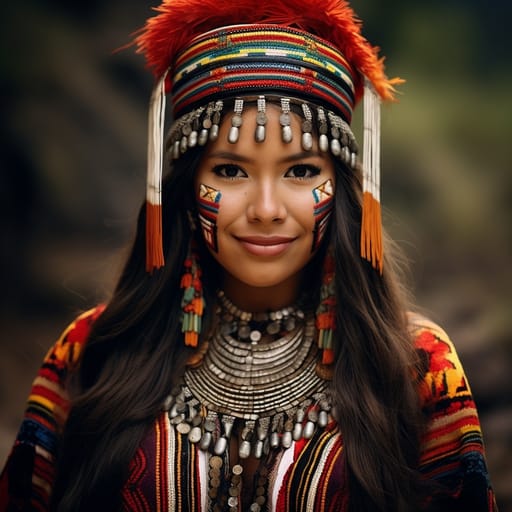
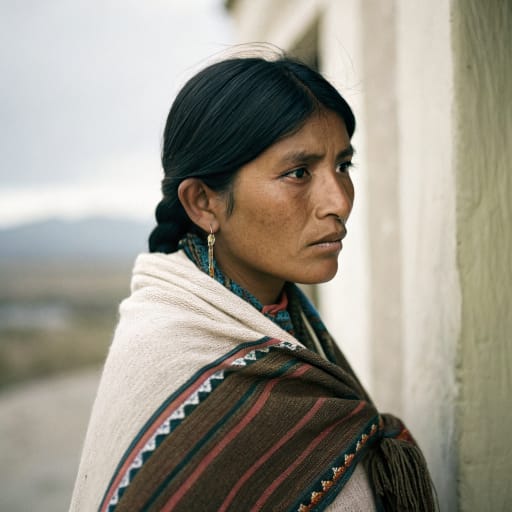
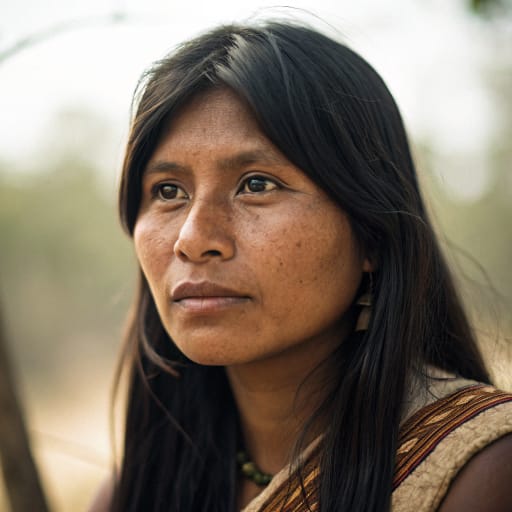
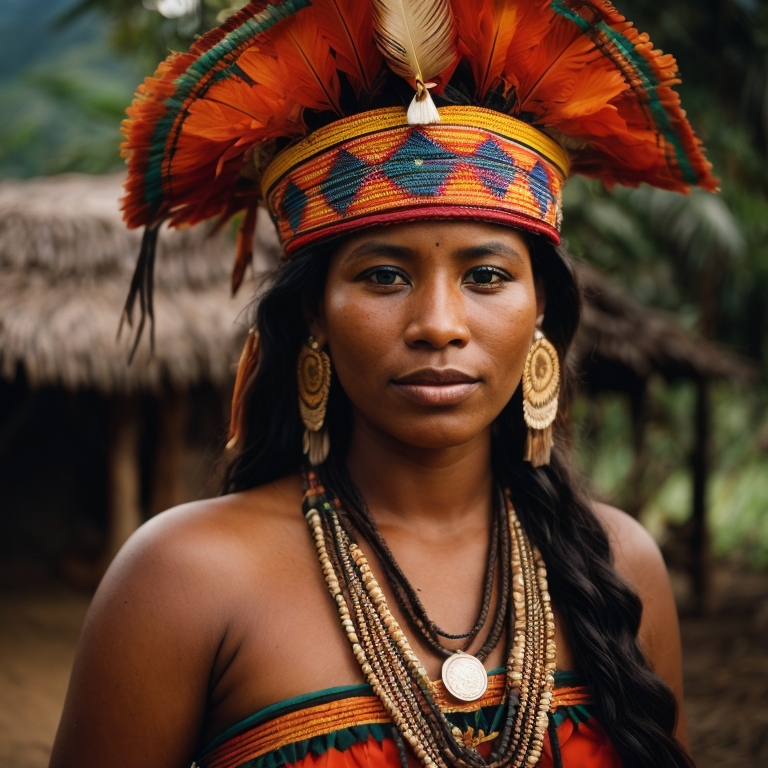
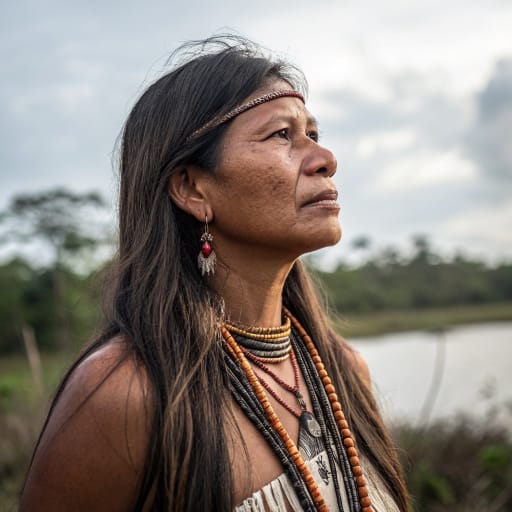
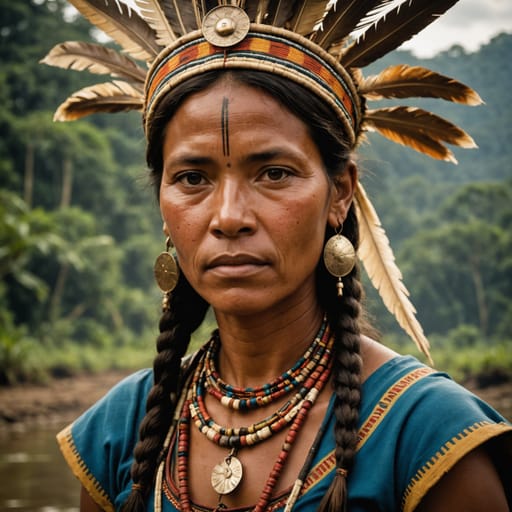
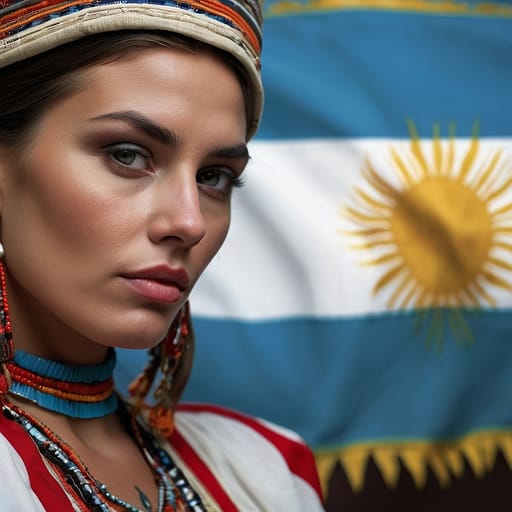
Typical Vilela Phenotypes
Reference for AI generation: hair, eyes, skin, facial structure, build
Vilela Body & Anatomy Reference
Per-feature anatomical profile for AI nude generation: South American Indigenous / European-Mestizo / Afro-Latino mix phenotype
Vilela Boobs & Breasts
Bust reference for Vilela women: medium-to-large cup, full, high projection, which is typical of South American Indigenous / European-Mestizo / Afro-Latino mix ancestry. Areolas measure about 32-46mm across, with medium-brown to dark-brown pigmentation. Body type (endomorph-to-mesomorph with high gluteal-femoral deposition) shapes the bust as well, so Vilela tits are usually the classic Brazilian / Latina curvy bust profile in lowland populations; smaller and shorter-set in Andean Indigenous populations. In AI imagery, keep the forward-set shape rather than drifting toward the smaller bust profile of Andean Indigenous sub-populations.
Vilela Ass & Hips
The Vilela ass is typically full, high projection, the famous Brazilian / Latina bunda profile, which sets it apart from the slim narrow-hip East Asian profile. Underneath, the pelvis shows wide iliac crests, very full gluteal-femoral fat deposition (the hallmark Brazilian / Latina hip-to-waist ratio), part of the South American Indigenous / European-Mestizo / Afro-Latino mix skeletal pattern. For Vilela butt pics and AI renders, match that silhouette and the overall build (endomorph-to-mesomorph with high gluteal-femoral deposition).
Vilela Vagina & Pussy
Vilela pussy and vulvar anatomy presents medium-brown to dark-brown labial pigmentation, fuller labia minora, consistent with the South American Indigenous / European-Mestizo / Afro-Latino mix phenotype's pigmentation pattern. Vilela pubic hair is typically wavy-to-curly coarse dark texture, dense distribution, in the inverted-triangle pattern. For anatomically accurate Vilela pussy renders the labial coloration should match the surrounding tan to deep-brown skin tone with a continuous gradient, and the hair should keep its wavy-to-curly coarse dark texture.
Vilela Dicks & Penis
Vilela dicks follow the South American Indigenous / European-Mestizo / Afro-Latino mix reference data: regional mean ~13cm erect; moderate-to-above-average girth; medium-brown shaft pigmentation. Shaft color should track the tan to deep-brown skin tone with a smooth change toward the glans, and Vilela pubic hair keeps its wavy-to-curly coarse dark texture.
Vilela Body, Curves & Build
Vilela body type and overall build presents as endomorph-to-mesomorph with high gluteal-femoral deposition, with mean adult female BMI 25-28: the characteristic South American Indigenous / European-Mestizo / Afro-Latino mix habitus. Vilela curves and proportions should keep the regional skeletal frame (height, shoulder-to-hip ratio, limb proportions) rather than a generic mesomorph default.
Vilela Skin Tone & Hair Texture
Vilela skin sits in the tan to deep-brown (Fitzpatrick III-VI) band. Hair is typically straight-to-curly 1A-3C, varies widely by ancestral composition, in keeping with the South American Indigenous / European-Mestizo / Afro-Latino mix phenotype. In nude renders the skin should stay one even tone from face to body, and body, pubic and head hair should match.
Explore phenotype categories
Structured taxonomy with peer-reviewed scales · 22 anatomical categories
Erotic Poses & Sex Positions
From the pose catalog: 219 named positions with reference skeletons
Frequently asked questions about Vilela people
Where is the Vilela homeland?
The Vilela homeland is Gran Chaco of northern Argentina, historically along the Bermejo River; today mainly Chaco and Santiago del Estero provinces in South America.
What language do Vilela people speak?
Vilela people primarily speak Vilela (Lule-Vilela family, sometimes classed as an isolate), nearly extinct; Spanish is the everyday language.
What religion do Vilela people practice?
The predominant religion among Vilela people is Christianity, mainly Roman Catholic and evangelical.






Make your own Vilela images
Five a day, free, no credits to buy. The studio starts from this group's phenotype data, so you can set body type, pose and style and keep the traits accurate.
Start with Vilela