Help us get this right
Does this portrait look right for Aweti?
Nobody has judged this one yet. You would be the first.
Aweti Erotic
Upper Xingu headwaters, Xingu Indigenous Park, Mato Grosso, Brazil
Aweti (Tupian, its own branch within the Maweti-Guarani grouping); many also speak Kamayurá and Portuguese
Indigenous Xinguano cosmology and shamanic practice; little Christian conversion
One of the Upper Xingu (Xinguano) peoples; the only people speaking the Aweti branch of Tupian
About Aweti People
The Aweti are one of the smaller peoples of the Upper Xingu, the headwater country of southern Mato Grosso where ten or so peoples speaking languages from four unrelated families have lived for centuries as a single society. That regional fact shapes almost everything about them. An Aweti village is a ring of thatched longhouses around a swept plaza, with a men's house at the center holding flutes women are not to see. Marriages cross group lines constantly, the same festivals draw the same guests, and the diet is fish, manioc and pequi fruit. Land animals are not eaten, and the refusal is a matter of principle, not scarcity. What makes someone Aweti in this crowd is descent and language rather than a separate way of living.
The language is the sharper marker. Aweti is Tupian, but it forms its own branch, standing apart from both Sateré-Mawé and the Tupi-Guarani languages; specialists bundle the three together as Maweti-Guarani. Their neighbors the Kamayurá speak a Tupi-Guarani language and the two peoples are close, but the languages are not mutually intelligible, and most Aweti adults handle Kamayurá and Portuguese alongside their own. In the regional economy of specialties, where each group trades what it makes best, the Aweti supply salt, leached from the ash of aquatic plants and passed across the Xingu in the ceremonial exchange the Xinguanos call moitará. Karl von den Steinen recorded them as the Auetö in 1887. The century that followed nearly ended them: introduced disease, above all a measles epidemic in the mid 1950s, cut the population to roughly two dozen people. The creation of the Xingu Indigenous Park in 1961 secured the survivors a territory, and the Aweti have climbed back into the low hundreds since, with children still growing up speaking the language. A long documentation project carried out with German linguists in the 2000s produced a grammar and a recorded archive. Ritual life keeps its own schedule: the ear piercing that marks boys, long adolescent seclusion behind a partition inside the house, the wrestling matches, and the Kuarup, the mortuary festival where painted trunks stand for the dead and guest villages arrive to sing, mourn and compete. Shorts and t-shirts are ordinary now. Body paint and feather work belong to the days the ritual calls for them.
Related ethnic groups
Groups that share Aweti's homeland, region, language, or religious tradition. These are likely candidates for comparative phenotype reference.
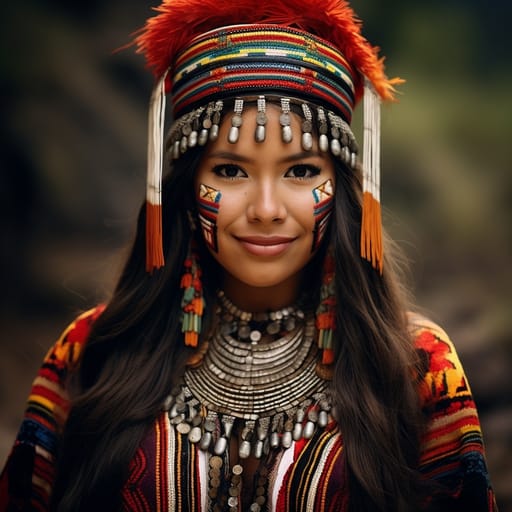
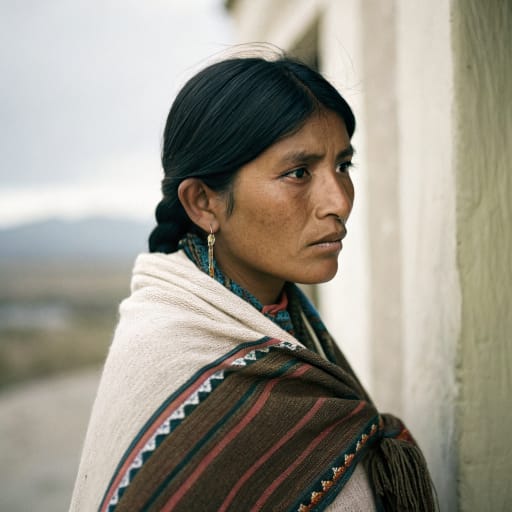
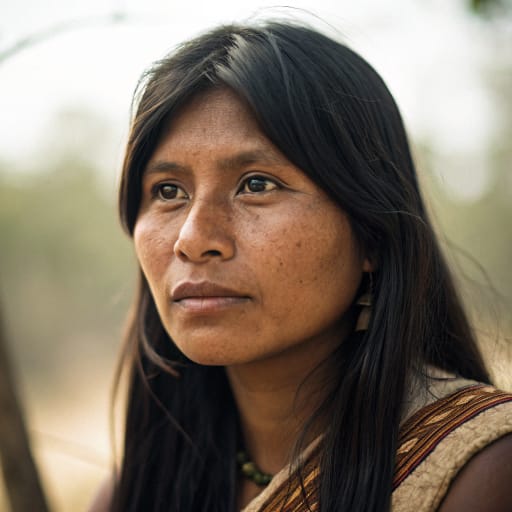
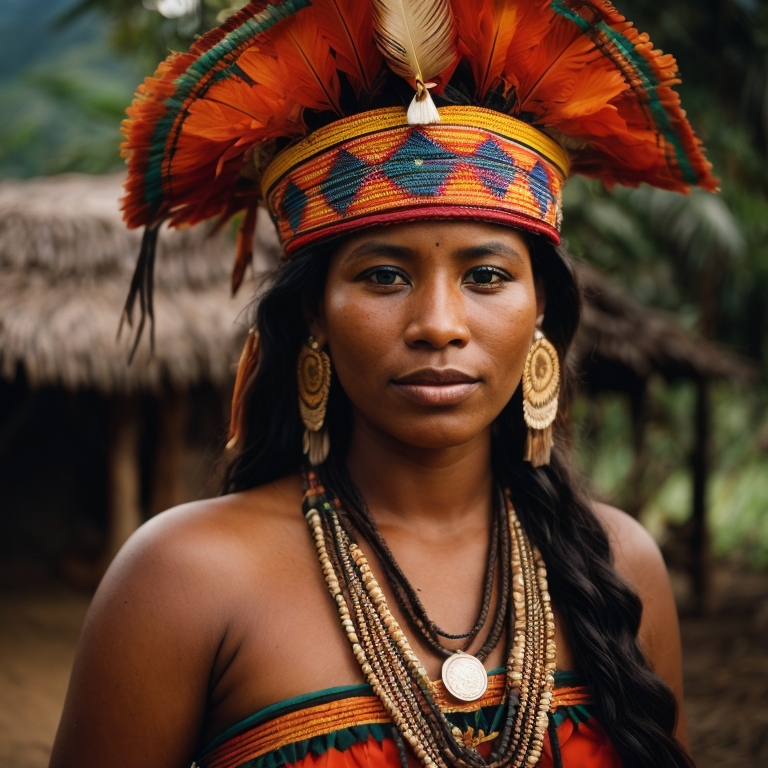
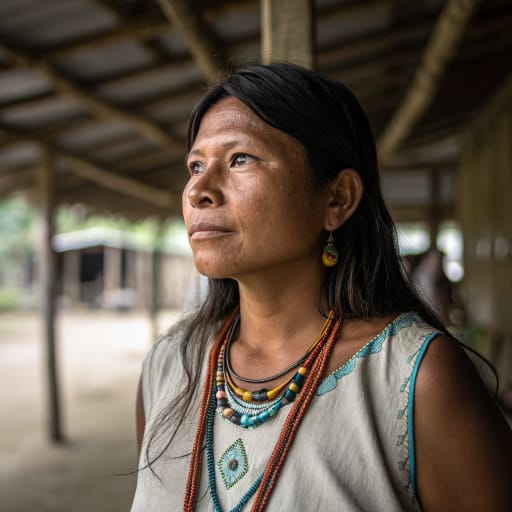
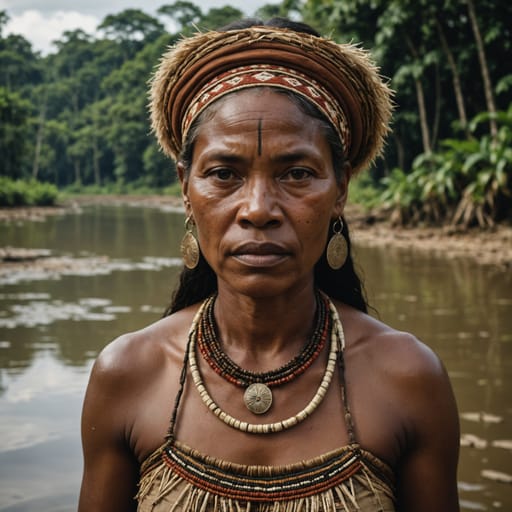
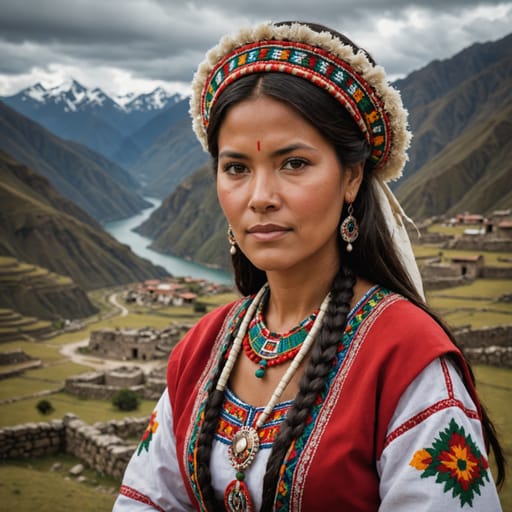
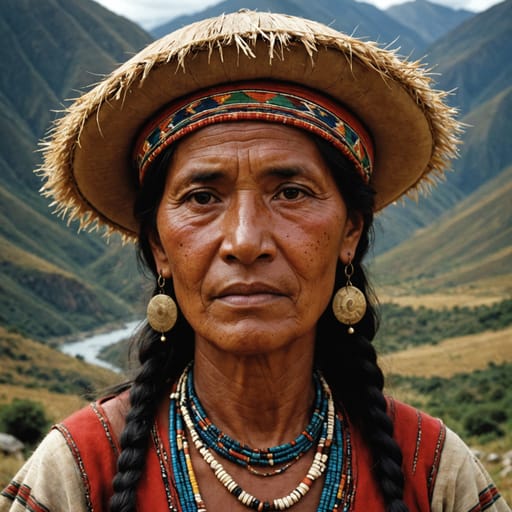
Typical Aweti Phenotypes
Reference for AI generation: hair, eyes, skin, facial structure, build
Aweti Body & Anatomy Reference
Anatomy by feature, South American Indigenous / European-Mestizo / Afro-Latino mix phenotype
Aweti Boobs & Breasts
Aweti tits and boobs run medium-to-large cup, full, high projection, the classic South American Indigenous / European-Mestizo / Afro-Latino mix bust profile. Aweti nipples and areolas show medium-brown to dark-brown areolar pigmentation against the tan-to-deep-brown skin tone, with areolar diameter typically in the 32-46mm range and forward-set positioning rather than the smaller bust profile of Andean Indigenous sub-populations. Aweti breasts trend the classic Brazilian / Latina curvy bust profile in lowland populations; smaller and shorter-set in Andean Indigenous populations, a function of the endomorph-to-mesomorph with high gluteal-femoral deposition body habitus and the mean adult female BMI 25-28. For anatomically accurate AI-generated Aweti nudes the render preserves the medium-to-large cup, full, high projection shape, 32-46mm areolas with medium-brown to dark-brown pigmentation, and the torso proportions of the South American Indigenous / European-Mestizo / Afro-Latino mix phenotype.
Aweti Ass & Hips
Aweti hips and butt usually read as full, high projection, the famous Brazilian / Latina bunda profile. The skeletal base is wide iliac crests, very full gluteal-femoral fat deposition (the hallmark Brazilian / Latina hip-to-waist ratio), the South American Indigenous / European-Mestizo / Afro-Latino mix pattern. Set against the slim narrow-hip East Asian profile, the difference is easy to see, and the hip-to-waist ratio is often what identifies Aweti women in photos.
Aweti Vagina & Pussy
Expect medium-brown to dark-brown labial pigmentation, fuller labia minora on Aweti women, in keeping with South American Indigenous / European-Mestizo / Afro-Latino mix ancestry. The pubic hair is wavy-to-curly coarse dark texture, dense distribution. Coloring should run evenly from the tan to deep-brown skin of the thighs to the labia, and Aweti nude imagery should keep the hair's wavy-to-curly coarse dark texture.
Aweti Dicks & Penis
Aweti dick and penile anatomy in adult AI generation should anchor on the regional reference data: regional mean ~13cm erect, moderate-to-above-average girth, and medium-brown shaft pigmentation. The Aweti cock profile reflects the South American Indigenous / European-Mestizo / Afro-Latino mix population's anthropometric measurements. The shaft pigmentation should track the surrounding tan to deep-brown skin tone, and the pubic hair should keep its wavy-to-curly coarse dark texture in the typical inverted-V escutcheon.
Aweti Body, Curves & Build
Aweti body type: endomorph-to-mesomorph with high gluteal-femoral deposition, with mean adult female BMI 25-28. This is the typical South American Indigenous / European-Mestizo / Afro-Latino mix build. Height range, shoulder-to-hip ratio and fat distribution all follow from it, which is what an accurate Aweti nude body should show.
Aweti Skin Tone & Hair Texture
Aweti skin tone falls in the tan to deep-brown (Fitzpatrick III-VI) band, the surface signal most often miscalibrated by generic AI nude generators. Aweti hair texture is typically straight-to-curly 1A-3C, varies widely by ancestral composition, characteristic of the South American Indigenous / European-Mestizo / Afro-Latino mix phenotype. In Aweti nude renders the skin should hold that band consistently across the body.
Explore phenotype categories
Structured taxonomy with peer-reviewed scales · 22 anatomical categories
Erotic Poses & Sex Positions
From the pose catalog: 219 named positions with reference skeletons
Frequently asked questions about Aweti people
Where is the Aweti homeland?
The Aweti homeland is Upper Xingu headwaters, Xingu Indigenous Park, Mato Grosso, Brazil in South America.
What language do Aweti people speak?
Aweti people primarily speak Aweti (Tupian, its own branch within the Maweti-Guarani grouping); many also speak Kamayurá and Portuguese.
What religion do Aweti people practice?
The predominant religion among Aweti people is Indigenous Xinguano cosmology and shamanic practice; little Christian conversion.






Make your own Aweti images
Five a day, free, no credits to buy. The studio starts from this group's phenotype data, so you can set body type, pose and style and keep the traits accurate.
Start with Aweti