Help us get this right
Does this portrait look right for Leco?
Nobody has judged this one yet. You would be the first.
Leco Erotic
Andean foothills and river valleys of northern La Paz Department, Bolivia: around Apolo (Franz Tamayo province) and Guanay, Mapiri and Tipuani (Larecaja province), along the Kaka, Mapiri and Tipuani rivers.
Leco, also written Leko or Rik'a (language isolate), now nearly extinct; Spanish is the everyday language, with Quechua around Apolo and some Aymara.
Roman Catholic, a legacy of the Franciscan missions, alongside older local beliefs.
Two regional blocs: the Leco of Apolo (organized as CIPLA) and the Leco of Larecaja (organized as PILCOL). No known linguistic relatives; counted among Bolivia's piedmont and lowland indigenous nations.
About Leco People
The Leco are a people of the Bolivian piedmont, the steep, wet country north of La Paz where the Andes fall away into the Amazon basin. For most of the last two centuries outsiders knew them for one thing: they were the raftsmen. On the Mapiri, Kaka and upper Beni rivers, Leco crews lashed balsa logs into freight rafts and ran cinchona bark, rubber and passengers through rapids that few others would attempt. That trade put them at the center of the quinine and rubber booms, and it tied them early to the cash economy, to Spanish, and to the mission towns of Apolo, Atén and Guanay, where Franciscans had been gathering Leco families since colonial times. They had a reputation before that, too. The Inca never brought these valleys under control, and during the independence wars Leco archers under the cacique Santos Pariamo fought alongside the guerrilla republic of Larecaja against royalist troops, a memory local leaders still invoke.
Their language, Leco, is an isolate: it has no known relatives, not the Quechua and Aymara of the highlands above, not the Tacanan languages of the lowlands below. Linguists had written it off as extinct until the Dutch researcher Simon van de Kerke tracked down a handful of elderly speakers in the 1990s. Only a few people can still use it today, and daily life runs in Spanish, with Quechua common around Apolo. Bolivia's 2009 constitution nonetheless lists Leco among the country's official languages, and there are local efforts to teach it again.
That makes the Leco a clear case of what identity rests on when a language is nearly gone. Here the answer is territory and organization. In the late 1990s communities formed two bodies, CIPLA around Apolo and PILCOL in Larecaja province, to press for collective land titles. The number of people identifying as Leco climbed afterward, to roughly 13,000 in the 2012 census, and the Apolo claim, which overlaps Madidi National Park, set off a long and bitter dispute with peasant unions who argued that everyone in the area was simply campesino. Most Leco are Catholic, a legacy of the missions, and patron saint fiestas still set the calendar. Families farm rice, maize, plantain and cassava, grow coffee and coca around Apolo, and in Larecaja many work in the gold cooperatives along the Tipuani and Mapiri, where dredging and mercury now threaten the same rivers their grandfathers ran on rafts.
Related ethnic groups
Groups that share Leco's homeland, region, language, or religious tradition. These are likely candidates for comparative phenotype reference.
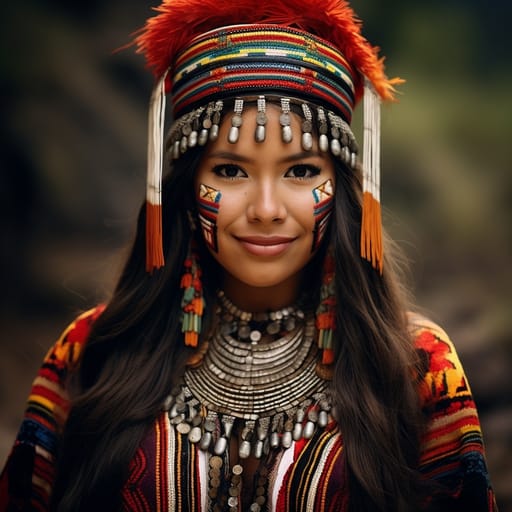
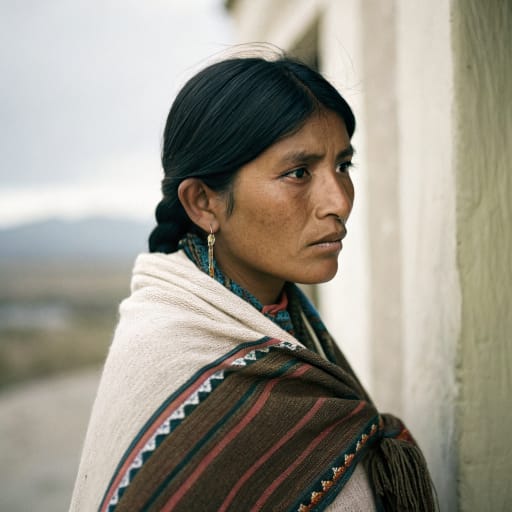
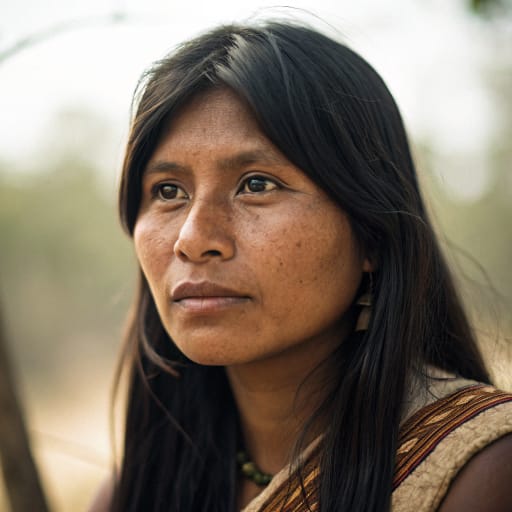
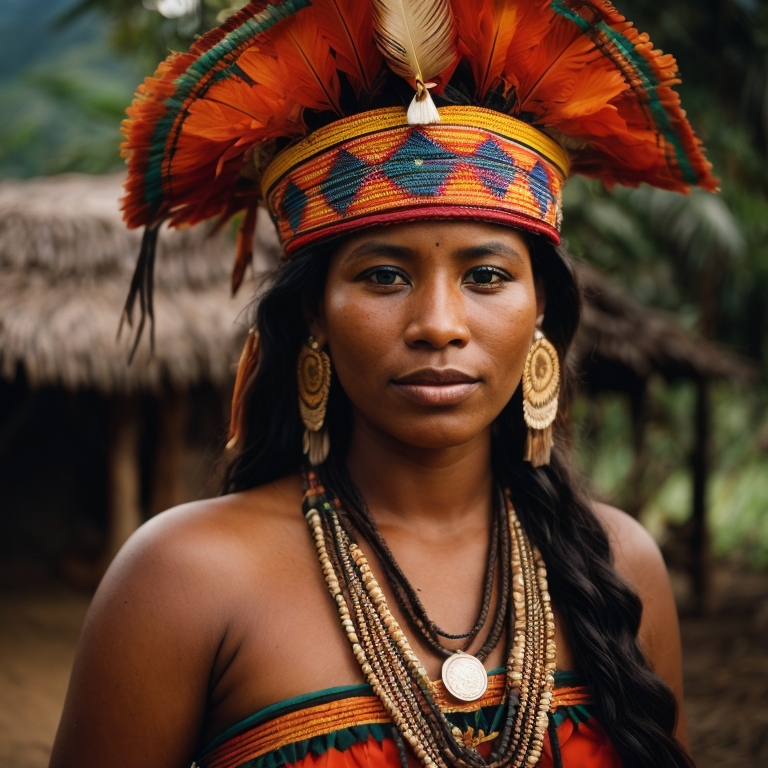
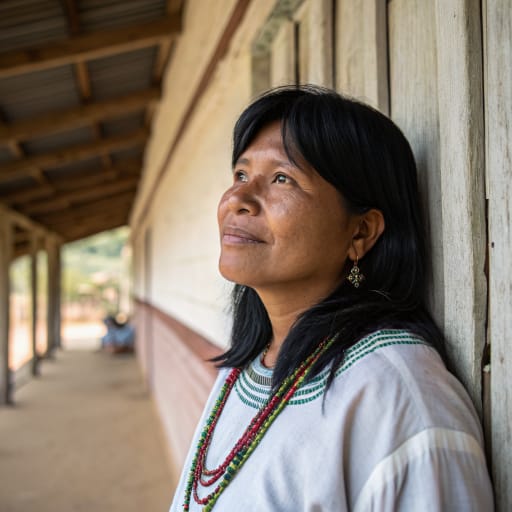
Typical Leco Phenotypes
Reference for AI generation: hair, eyes, skin, facial structure, build
Leco Body & Anatomy Reference
Anatomy by feature, South American Indigenous / European-Mestizo / Afro-Latino mix phenotype
Leco Boobs & Breasts
Bust reference for Leco women: medium-to-large cup, full, high projection, which is typical of South American Indigenous / European-Mestizo / Afro-Latino mix ancestry. Areolas measure about 32-46mm across, with medium-brown to dark-brown pigmentation. Body type (endomorph-to-mesomorph with high gluteal-femoral deposition) shapes the bust as well, so Leco tits are usually the classic Brazilian / Latina curvy bust profile in lowland populations; smaller and shorter-set in Andean Indigenous populations. In AI imagery, keep the forward-set shape rather than drifting toward the smaller bust profile of Andean Indigenous sub-populations.
Leco Ass & Hips
The Leco ass is typically full, high projection, the famous Brazilian / Latina bunda profile, which sets it apart from the slim narrow-hip East Asian profile. Underneath, the pelvis shows wide iliac crests, very full gluteal-femoral fat deposition (the hallmark Brazilian / Latina hip-to-waist ratio), part of the South American Indigenous / European-Mestizo / Afro-Latino mix skeletal pattern. For Leco butt pics and AI renders, match that silhouette and the overall build (endomorph-to-mesomorph with high gluteal-femoral deposition).
Leco Vagina & Pussy
Leco pussy and vulvar anatomy presents medium-brown to dark-brown labial pigmentation, fuller labia minora, consistent with the South American Indigenous / European-Mestizo / Afro-Latino mix phenotype's pigmentation pattern. Leco pubic hair is typically wavy-to-curly coarse dark texture, dense distribution, in the inverted-triangle pattern. For anatomically accurate Leco pussy renders the labial coloration should match the surrounding tan to deep-brown skin tone with a continuous gradient, and the hair should keep its wavy-to-curly coarse dark texture.
Leco Dicks & Penis
Leco dicks follow the South American Indigenous / European-Mestizo / Afro-Latino mix reference data: regional mean ~13cm erect; moderate-to-above-average girth; medium-brown shaft pigmentation. Shaft color should track the tan to deep-brown skin tone with a smooth change toward the glans, and Leco pubic hair keeps its wavy-to-curly coarse dark texture.
Leco Body, Curves & Build
Leco body type and overall build presents as endomorph-to-mesomorph with high gluteal-femoral deposition, with mean adult female BMI 25-28: the characteristic South American Indigenous / European-Mestizo / Afro-Latino mix habitus. Leco curves and proportions should keep the regional skeletal frame (height, shoulder-to-hip ratio, limb proportions) rather than a generic mesomorph default.
Leco Skin Tone & Hair Texture
Leco skin sits in the tan to deep-brown (Fitzpatrick III-VI) band. Hair is typically straight-to-curly 1A-3C, varies widely by ancestral composition, in keeping with the South American Indigenous / European-Mestizo / Afro-Latino mix phenotype. In nude renders the skin should stay one even tone from face to body, and body, pubic and head hair should match.
Explore phenotype categories
Structured taxonomy with peer-reviewed scales · 22 anatomical categories
Erotic Poses & Sex Positions
From the pose catalog: 219 named positions with reference skeletons
Frequently asked questions about Leco people
Where is the Leco homeland?
The Leco homeland is Andean foothills and river valleys of northern La Paz Department, Bolivia: around Apolo (Franz Tamayo province) and Guanay, Mapiri and Tipuani (Larecaja province), along the Kaka, Mapiri and Tipuani rivers. in South America.
What language do Leco people speak?
Leco people primarily speak Leco, also written Leko or Rik'a (language isolate), now nearly extinct; Spanish is the everyday language, with Quechua around Apolo and some Aymara..
What religion do Leco people practice?
The predominant religion among Leco people is Roman Catholic, a legacy of the Franciscan missions, alongside older local beliefs..






Make your own Leco images
Five a day, free, no credits to buy. The studio starts from this group's phenotype data, so you can set body type, pose and style and keep the traits accurate.
Start with Leco