No portrait yet
Sanapaná Erotic
The Paraguayan Chaco, mainly Presidente Hayes department and adjacent Alto Paraguay, west of the Paraguay River
Sanapaná (Enlhet-Enenlhet, also called Maskoyan or Lengua-Maskoy), with Guaraní and Spanish widely used
Mostly Christian, shaped by Anglican and Mennonite missions with many Pentecostal congregations; shamanic healing song persists in places
Enlhet-Enenlhet (Maskoyan) family, alongside Enlhet, Enxet, Angaité, Guaná and Enenlhet (Toba-Maskoy)
About Sanapaná People
The Sanapaná are a people of the Paraguayan Chaco, the flat, hot, thorn scrub half of the country west of the Paraguay River, where the land drains badly and the year swings between flood and hard drought. Most live in Presidente Hayes department, in communities set between cattle ranches, mission stations and the old river ports. Their language, also called Sanapaná, belongs to the Enlhet-Enenlhet family, a small cluster labeled in older books as Maskoyan or Lengua-Maskoy, whose other members are Enlhet, Enxet, Angaité, Guaná and Enenlhet. Those languages are close enough that neighbors can often follow each other, and distinct enough that people are precise about which one they speak. The precision matters: in the Chaco a language name is also a claim about who your relatives are and where your people were before the fences went up.
The twentieth century reached them as an economy. Tannin works at Puerto Casado and Puerto Pinasco bought quebracho and hired Chaco men by the season. The Chaco War of 1932 to 1935 dragged roads, soldiers and settlers into a region that had mostly been left alone. Then came the cattle estancias and the Mennonite colonies of the central Chaco, which turned foraging country into fenced pasture and foragers into wage labor. Anglican and Mennonite missions traveled the same roads, and most Sanapaná today are Christian, Pentecostal congregations included; the older healing practice, which worked through song rather than through objects, went quiet and selective rather than vanishing. What was lost was ground. The clearest case is Xákmok Kásek, a Sanapaná and Enxet community that sued Paraguay for its ancestral land and won at the Inter-American Court of Human Rights in 2010, a judgment the state has been slow to carry out.
Daily life now runs on ranch work, day labor, small gardens and whatever the bush still gives: fish, wild honey, algarrobo pods, palm heart, and caraguatá fiber that women strip, twist into cord and knot into carrying bags. The social style deserves notice. Like their Enlhet-Enenlhet neighbors, Sanapaná communities lean hard against giving orders. Requests come sideways, decisions take as long as they take, and someone who talks over other people loses standing instead of gaining it. Sanapaná is still spoken at home in a number of communities, but Guaraní and Spanish press in from every side, and a population of a few thousand can lose a language in two generations if nobody is paying attention.
Related ethnic groups
Groups that share Sanapaná's homeland, region, language, or religious tradition. These are likely candidates for comparative phenotype reference.
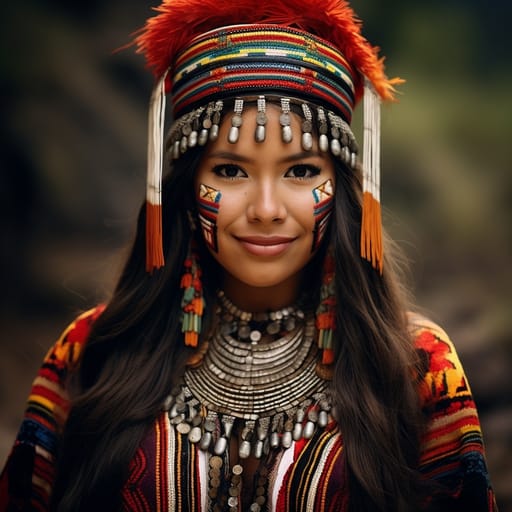
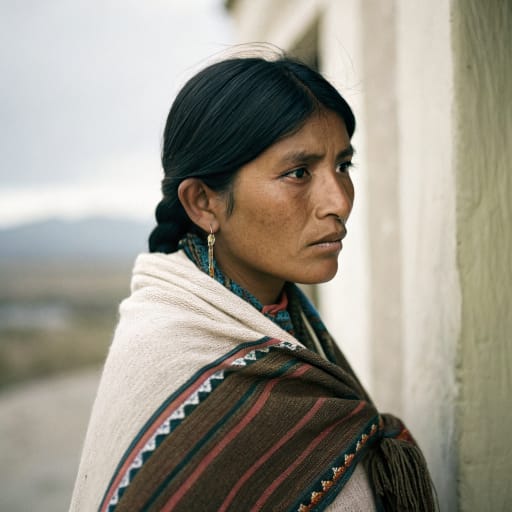
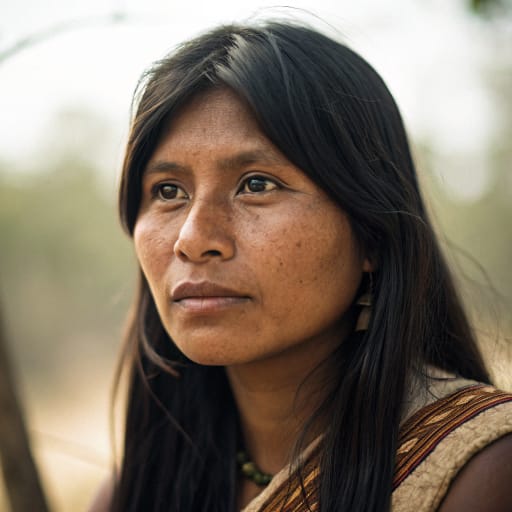
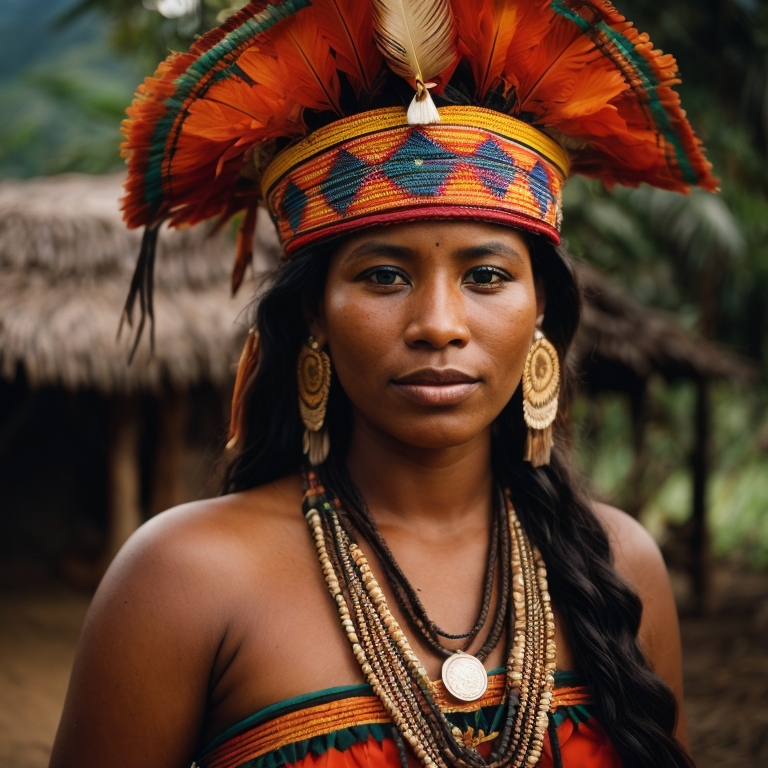
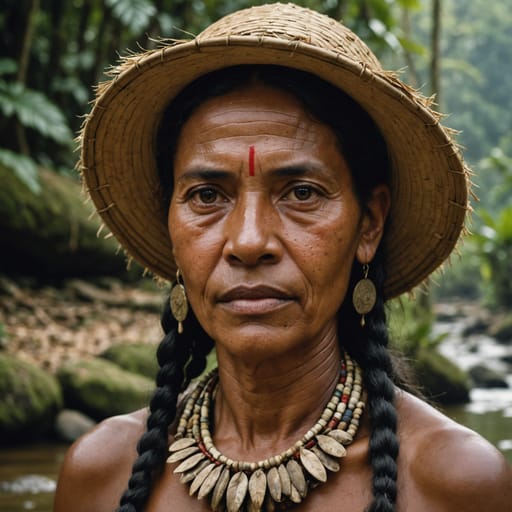
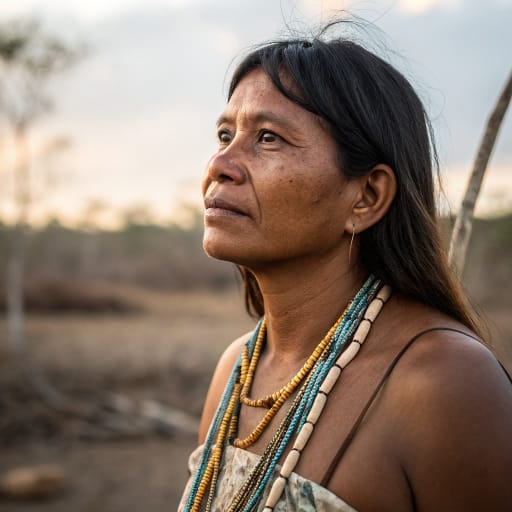
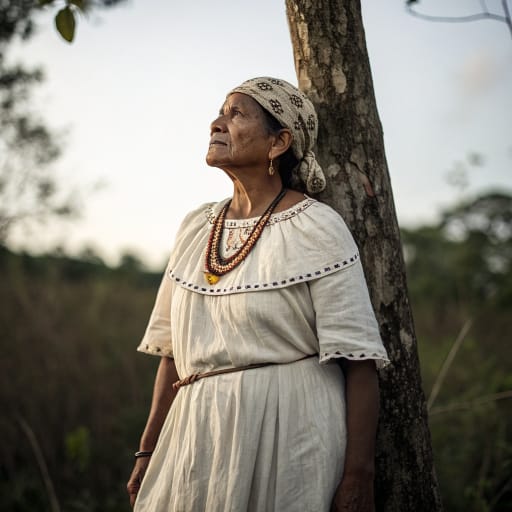
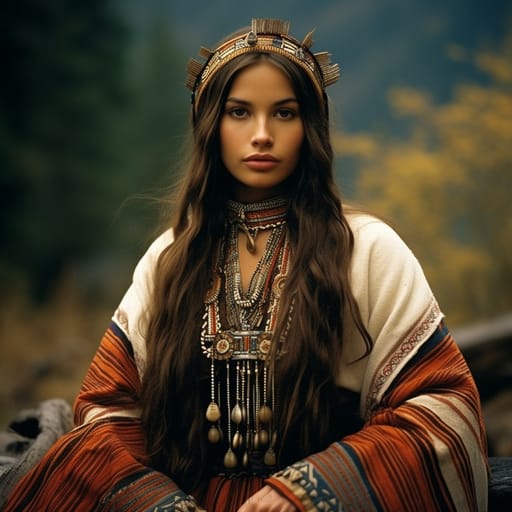
Typical Sanapaná Phenotypes
Reference for AI generation: hair, eyes, skin, facial structure, build
Sanapaná Body & Anatomy Reference
Per-feature anatomical profile for AI nude generation: South American Indigenous / European-Mestizo / Afro-Latino mix phenotype
Sanapaná Boobs & Breasts
The typical Sanapaná bust is medium-to-large cup, full, high projection, in line with the wider South American Indigenous / European-Mestizo / Afro-Latino mix pattern. Areolas usually fall in the 32-46mm range, with medium-brown to dark-brown areolar pigmentation against the tan-to-deep-brown skin tone. Compared with the smaller bust profile of Andean Indigenous sub-populations, Sanapaná breasts sit forward and are generally the classic Brazilian / Latina curvy bust profile in lowland populations; smaller and shorter-set in Andean Indigenous populations. A faithful AI render of Sanapaná tits keeps that shape and areola size.
Sanapaná Ass & Hips
Butt shape among Sanapaná women: full, high projection, the famous Brazilian / Latina bunda profile, over wide iliac crests, very full gluteal-femoral fat deposition (the hallmark Brazilian / Latina hip-to-waist ratio). This follows South American Indigenous / European-Mestizo / Afro-Latino mix ancestry and looks quite unlike the slim narrow-hip East Asian profile. An accurate Sanapaná ass in adult AI imagery keeps both the silhouette and the overall build (endomorph-to-mesomorph with high gluteal-femoral deposition) instead of a generic average.
Sanapaná Vagina & Pussy
Vulvar anatomy among Sanapaná women: medium-brown to dark-brown labial pigmentation, fuller labia minora. Pubic hair tends to be wavy-to-curly coarse dark texture, dense distribution, in the usual inverted-triangle pattern. Both follow South American Indigenous / European-Mestizo / Afro-Latino mix pigmentation, which is why Sanapaná pussy renders should not fall back on a pale, sparse Western template.
Sanapaná Dicks & Penis
The Sanapaná cock profile, from South American Indigenous / European-Mestizo / Afro-Latino mix anthropometric data: regional mean ~13cm erect; moderate-to-above-average girth; medium-brown shaft pigmentation. Pubic hair has a wavy-to-curly coarse dark texture and forms the usual inverted-V pattern. Whether Sanapaná men are circumcised follows religious and cultural practice rather than phenotype.
Sanapaná Body, Curves & Build
Build and curves among Sanapaná women follow the South American Indigenous / European-Mestizo / Afro-Latino mix pattern: endomorph-to-mesomorph with high gluteal-femoral deposition, mean adult female BMI 25-28. Proportions matter as much as skin tone, so Sanapaná figures should keep their regional height and limb ratios.
Sanapaná Skin Tone & Hair Texture
The Sanapaná skin range is tan to deep-brown (Fitzpatrick III-VI), and hair tends to be straight-to-curly 1A-3C, varies widely by ancestral composition. That combination marks the South American Indigenous / European-Mestizo / Afro-Latino mix phenotype, and skin tone is the trait AI generators most often get wrong for Sanapaná women.
Explore phenotype categories
Structured taxonomy with peer-reviewed scales · 22 anatomical categories
Erotic Poses & Sex Positions
From the pose catalog: 219 named positions with reference skeletons
Frequently asked questions about Sanapaná people
Where is the Sanapaná homeland?
The Sanapaná homeland is The Paraguayan Chaco, mainly Presidente Hayes department and adjacent Alto Paraguay, west of the Paraguay River in South America.
What language do Sanapaná people speak?
Sanapaná people primarily speak Sanapaná (Enlhet-Enenlhet, also called Maskoyan or Lengua-Maskoy), with Guaraní and Spanish widely used.
What religion do Sanapaná people practice?
The predominant religion among Sanapaná people is Mostly Christian, shaped by Anglican and Mennonite missions with many Pentecostal congregations; shamanic healing song persists in places.






Make your own Sanapaná images
Five a day, free, no credits to buy. The studio starts from this group's phenotype data, so you can set body type, pose and style and keep the traits accurate.
Start with Sanapaná