Help us get this right
Does this portrait look right for Puruborá?
One tap. It takes a second and it is recorded.
1 says it looks right, 0 say it looks off.
Puruborá Erotic
Manoel Correia River area, a tributary of the São Miguel in the Guaporé basin, near Seringueiras, Rondônia, Brazil.
Puruborá (Tupian, its own branch), nearly extinct; Portuguese is the everyday language.
Largely Christian today; older beliefs are thinly documented.
A Tupian-speaking people forming their own linguistic branch; includes descendant families scattered across rural Rondônia.
About Puruborá People
For much of the twentieth century, the Puruborá showed up in print as a people who no longer existed. Their language was listed as dead or dying, their villages were gone, and their descendants were scattered across the rubber estates of Rondônia's Guaporé valley, counted simply as rubber tappers. What sets the Puruborá apart today is that they refused that obituary. Families who had kept the name, some words and a memory of where their grandparents lived began organizing openly again around the turn of the millennium. They now press their claim as a distinct Indigenous people on the Manoel Correia River, a tributary of the São Miguel, near the town of Seringueiras. The town's name means rubber trees, which sums up their modern history in one word.
The damage came in stages. Contact with outsiders early in the twentieth century was followed by the rubber trade, which drew Puruborá men and women into tapping, debt and dispersal. Marriage with tappers and settlers blurred the line between Indigenous life and ordinary rural life, and for official purposes the Puruborá stopped being counted. What survived did so inside households: kinship, place names, knowledge of the river and forest, and pieces of the language passed on by a shrinking circle of elders.
Those pieces of language matter more than the handful of speakers suggests. Puruborá is a Tupian language, but it is not part of the Tupi-Guarani branch known from Paraguay and the old Brazilian coast. It forms a branch of its own. Rondônia holds more separate Tupian branches than anywhere else, among them Tupari, Mondé, Arikém and Ramarama, and many linguists take that crowding as a sign that the whole family began here. A nearly silent language on a small Amazonian river is therefore one of the pieces that scholars of South America's largest language family most want saved. Work with linguists has recorded much of what the last speakers remembered, and the language now serves as a banner of identity as much as a way to talk.
Daily life looks much like that of other rural families in the region, with Portuguese as the everyday language. The difference is in how hard they insist on who they are. Community gatherings, the push for a recognized territory and the careful naming of ancestors are how the Puruborá rebuild a people from shared memory rather than from a village that never broke up. Brazil has other peoples who were declared extinct and came back, but few cases are as clear as this one: a group written off in print that is still here.
Related ethnic groups
Groups that share Puruborá's homeland, region, language, or religious tradition. These are likely candidates for comparative phenotype reference.
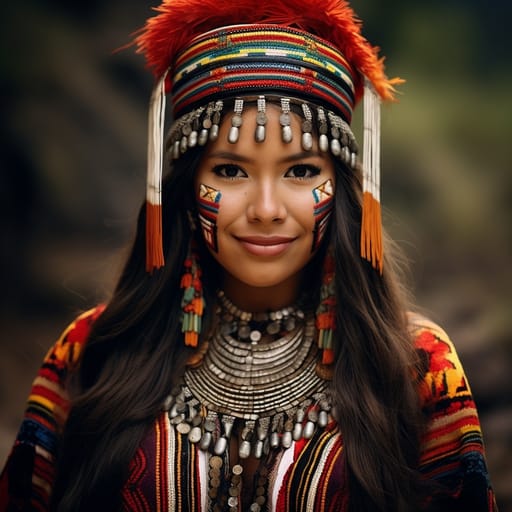
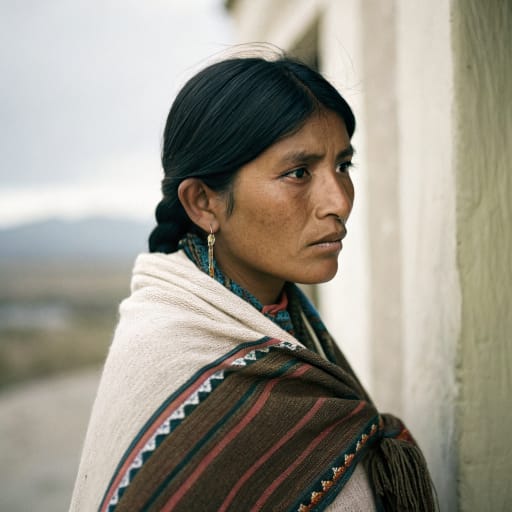
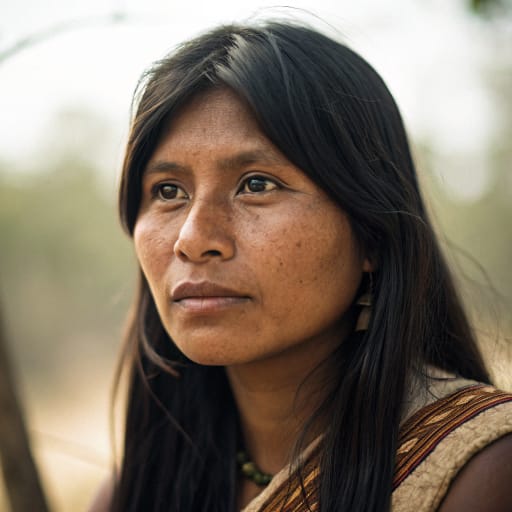
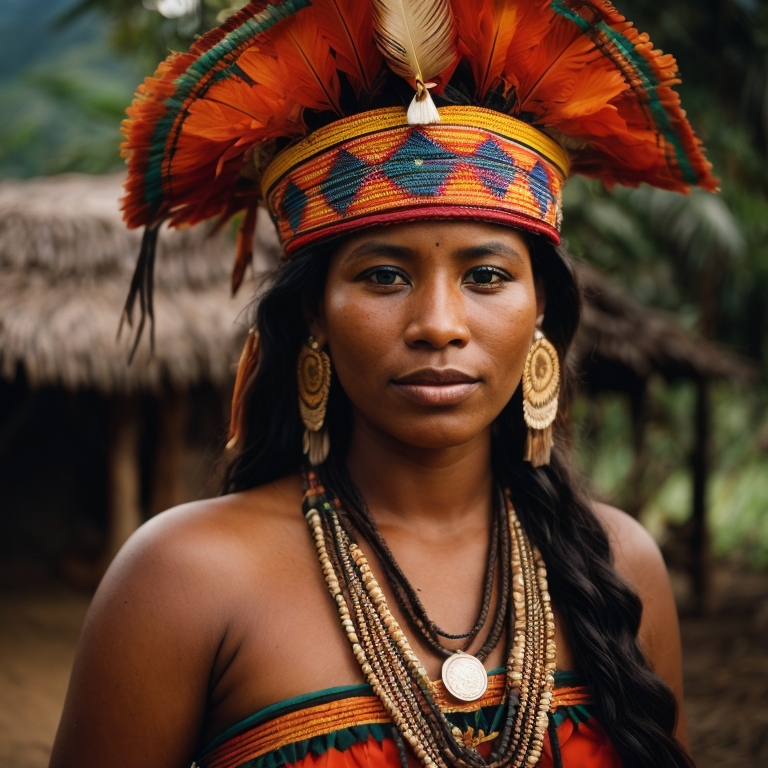
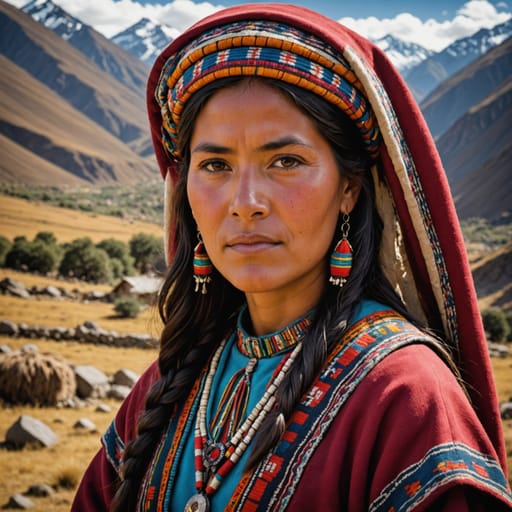
Typical Puruborá Phenotypes
Reference for AI generation: hair, eyes, skin, facial structure, build
Puruborá Body & Anatomy Reference
South American Indigenous / European-Mestizo / Afro-Latino mix phenotype: anatomy reference for AI nude generation
Puruborá Boobs & Breasts
Puruborá boobs follow the South American Indigenous / European-Mestizo / Afro-Latino mix profile: medium-to-large cup, full, high projection. Areolar diameter is usually 32-46mm, and the coloring is medium-brown to dark-brown areolar pigmentation against the tan-to-deep-brown skin tone. Breast shape tracks body composition (endomorph-to-mesomorph with high gluteal-femoral deposition, mean adult female BMI 25-28), so Puruborá breasts tend to be the classic Brazilian / Latina curvy bust profile in lowland populations; smaller and shorter-set in Andean Indigenous populations. Expect a forward-set shape, not the smaller bust profile of Andean Indigenous sub-populations.
Puruborá Ass & Hips
Puruborá ass and hip morphology presents as full, high projection, the famous Brazilian / Latina bunda profile, distinctly different from the slim narrow-hip East Asian profile. The Puruborá pelvic profile shows wide iliac crests, very full gluteal-femoral fat deposition (the hallmark Brazilian / Latina hip-to-waist ratio), anchored in the South American Indigenous / European-Mestizo / Afro-Latino mix skeletal pattern. Puruborá butt shots in adult AI imagery should render the full, high projection, the famous Brazilian / Latina bunda profile silhouette with the overall build (endomorph-to-mesomorph with high gluteal-femoral deposition) and the fat distribution typical of the South American Indigenous / European-Mestizo / Afro-Latino mix phenotype.
Puruborá Vagina & Pussy
Puruborá pussy anatomy typically shows medium-brown to dark-brown labial pigmentation, fuller labia minora. Pubic hair is usually wavy-to-curly coarse dark texture, dense distribution. In AI-generated Puruborá nudes, labial color should blend into the tan to deep-brown skin with a gradual transition, and the hair should keep its wavy-to-curly coarse dark texture.
Puruborá Dicks & Penis
Penis reference for Puruborá men: regional mean ~13cm erect, moderate-to-above-average girth. Coloring: medium-brown shaft pigmentation. An accurate Puruborá cock in AI imagery matches the surrounding tan to deep-brown skin rather than a generic porn default. Circumcision depends on religion and custom, not ancestry.
Puruborá Body, Curves & Build
The Puruborá figure is generally endomorph-to-mesomorph with high gluteal-femoral deposition, with mean adult female BMI 25-28, characteristic of South American Indigenous / European-Mestizo / Afro-Latino mix ancestry. AI image tools tend to flatten regional body types into a few stock shapes; here the Puruborá build is kept as its own reference.
Puruborá Skin Tone & Hair Texture
Skin: tan to deep-brown (Fitzpatrick III-VI). Hair: straight-to-curly 1A-3C, varies widely by ancestral composition. Both are typical of South American Indigenous / European-Mestizo / Afro-Latino mix ancestry. The most common mistake in AI nudes of Puruborá women is a body rendered lighter than the face.
Explore phenotype categories
Structured taxonomy with peer-reviewed scales · 22 anatomical categories
Erotic Poses & Sex Positions
From the pose catalog: 219 named positions with reference skeletons
Frequently asked questions about Puruborá people
Where is the Puruborá homeland?
The Puruborá homeland is Manoel Correia River area, a tributary of the São Miguel in the Guaporé basin, near Seringueiras, Rondônia, Brazil. in South America.
What language do Puruborá people speak?
Puruborá people primarily speak Puruborá (Tupian, its own branch), nearly extinct; Portuguese is the everyday language..
What religion do Puruborá people practice?
The predominant religion among Puruborá people is Largely Christian today; older beliefs are thinly documented..






Make your own Puruborá images
Five a day, free, no credits to buy. The studio starts from this group's phenotype data, so you can set body type, pose and style and keep the traits accurate.
Start with Puruborá