No portrait yet
Tehuelche Erotic
Eastern Patagonia from the Río Negro to the Strait of Magellan, in Argentina (Chubut, Santa Cruz, Río Negro) and southern Chile (Magallanes)
Tehuelche, also called Aonek'o 'a'jen (Chonan family), dormant since its last fluent speaker died in 2019, with Spanish in daily use
Roman Catholic, often blended with traditional beliefs in the creator Kooch and the culture hero Elal
Southern Tehuelche (Aónikenk) and Northern Tehuelche (Gününa Küne, also called Puelche), with the Teushen between them, within the Chonan-speaking peoples alongside the Selk'nam and Haush
About Tehuelche People
The Tehuelche are the people Europe met before it met Patagonia, and the region is named for them. When Magellan's crew wintered on the Atlantic coast in 1520, they described hunters so tall that a Spaniard reached only to their waist, and the name Magellan gave them, Patagón, became the name of the land. The height was exaggerated but not invented: Darwin, three centuries later, still called them the tallest people he had seen anywhere. What really set them apart was a life built on the guanaco. They followed the herds across the steppe between the Andes and the Atlantic, hunted with bolas, slept in guanaco-hide tents, and wore the quillango, a guanaco-fur cloak painted on its outer side with geometric patterns. Their own name, Aónikenk, means roughly people of the south. Tehuelche is what the Mapuche called them, and it stuck. Their range ran from the Río Negro south to the Strait of Magellan, across what is now Chubut and Santa Cruz in Argentina and the Magallanes region of Chile. The language, Aonek'o 'a'jen, belongs to the small Chonan family it shares with the Selk'nam and Haush of Tierra del Fuego, and has no relation to Mapudungun in the west or Quechua far to the north. Its last fluent speaker, Dora Manchado, died in 2019 after years of recording it with linguists, and a revival program continues in Santa Cruz.
The conventional division is a northern branch, the Gününa Küne or Puelche, and the southern Aónikenk, with the smaller Teushen bands between them. Traditional belief centered on Kooch, a remote creator, and Elal, the hero who made the first Tehuelche and gave them fire and the bow. Catholic missions layered Christianity over this from the nineteenth century, and many families now hold both. Two turning points remade them. The horse, reaching Patagonia from the Spanish colonies in the eighteenth century, turned foot hunters into riders and pulled them into trade and marriage with the Mapuche, whose language, silverwork and dress spread east across the pampas. Then the Argentine army's Conquest of the Desert, from 1878, and the sheep ranches that fenced the guanaco range afterward, broke the migratory economy within a generation. The cacique Inacayal died a prisoner at the La Plata Museum in 1888, and his remains went home to Chubut only in 1994. Around 27,000 people identified as Tehuelche in Argentina's 2010 census, many also Mapuche by descent, living in rural communities such as Camusu Aike and in the towns of the Patagonian coast, where the quillango now comes out for ceremonies rather than for the road.
Related ethnic groups
Groups that share Tehuelche's homeland, region, language, or religious tradition. These are likely candidates for comparative phenotype reference.
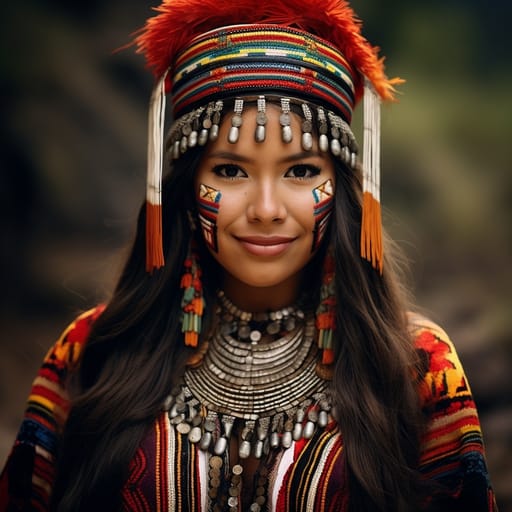
Quechua
same region (South America)
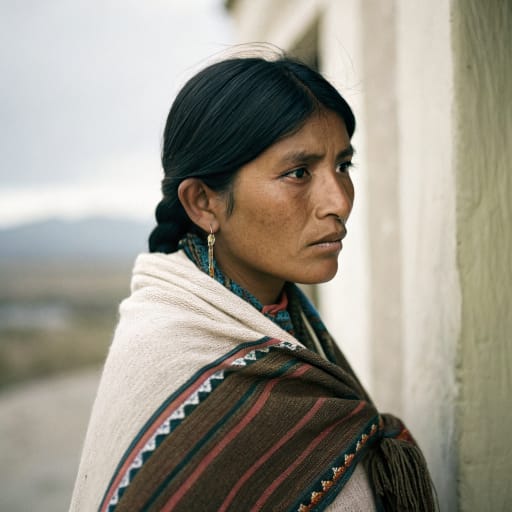
Aymara
same region (South America)
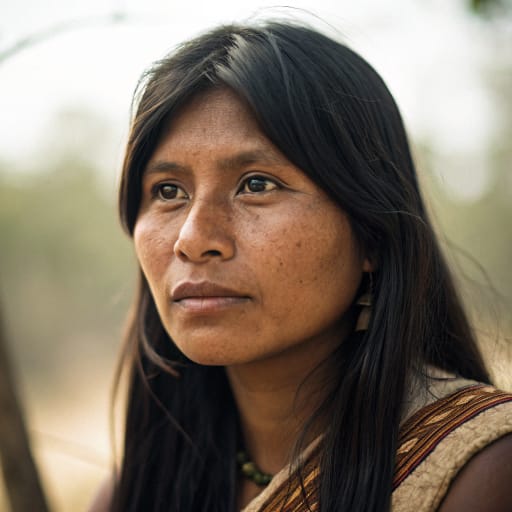
Guaraní
same region (South America)
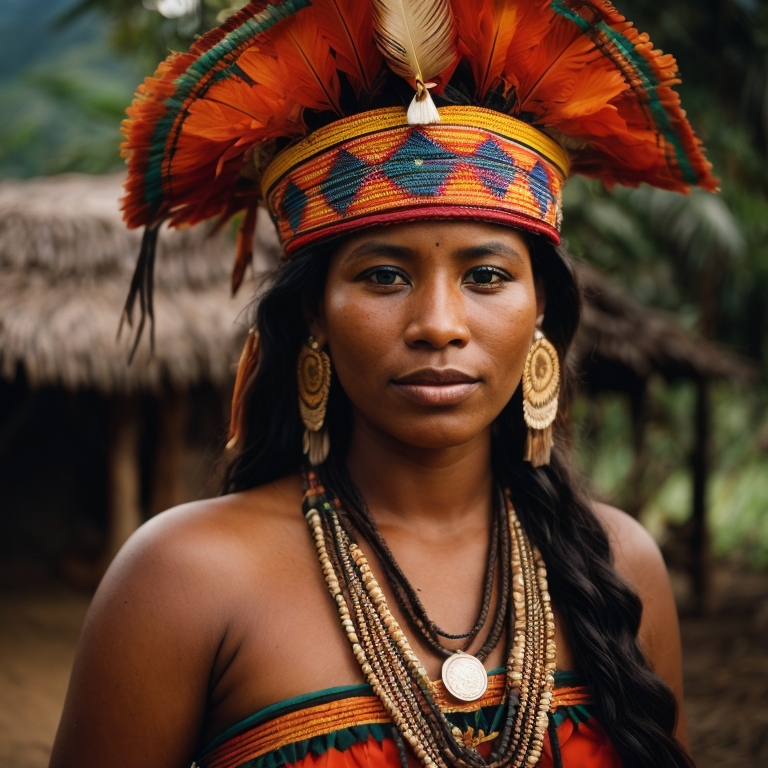
Emberá
same region (South America)
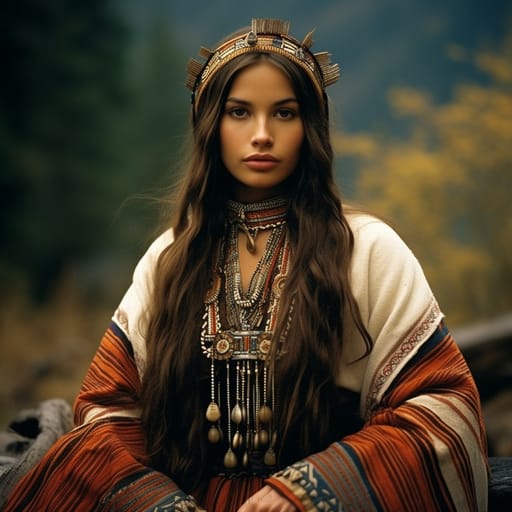
Mapuche
same region (South America)
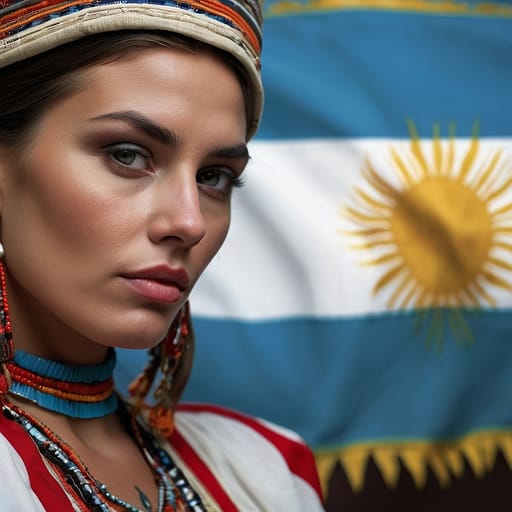
White Argentine
same region (South America)
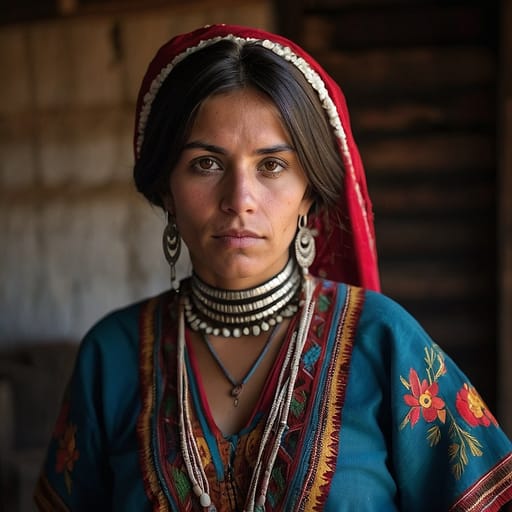
Mestizo Argentine
same region (South America)
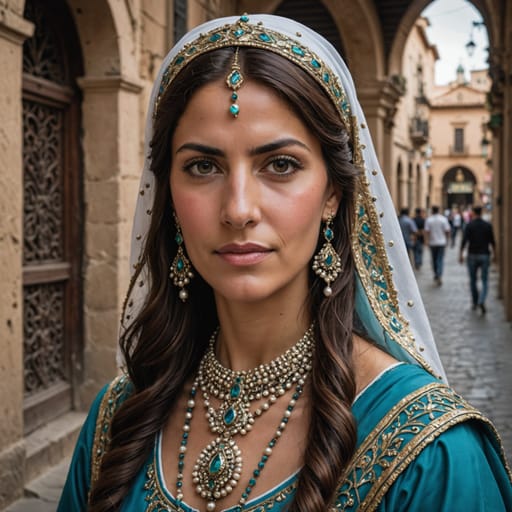
Middle Eastern Argentine
same region (South America)
Typical Tehuelche Phenotypes
Reference for AI generation: hair, eyes, skin, facial structure, build
Tehuelche Body & Anatomy Reference
South American Indigenous / European-Mestizo / Afro-Latino mix phenotype: anatomy reference for AI nude generation
Tehuelche Boobs & Breasts
The typical Tehuelche bust is medium-to-large cup, full, high projection, in line with the wider South American Indigenous / European-Mestizo / Afro-Latino mix pattern. Areolas usually fall in the 32-46mm range, with medium-brown to dark-brown areolar pigmentation against the tan-to-deep-brown skin tone. Compared with the smaller bust profile of Andean Indigenous sub-populations, Tehuelche breasts sit forward and are generally the classic Brazilian / Latina curvy bust profile in lowland populations; smaller and shorter-set in Andean Indigenous populations. A faithful AI render of Tehuelche tits keeps that shape and areola size.
Tehuelche Ass & Hips
Butt shape among Tehuelche women: full, high projection, the famous Brazilian / Latina bunda profile, over wide iliac crests, very full gluteal-femoral fat deposition (the hallmark Brazilian / Latina hip-to-waist ratio). This follows South American Indigenous / European-Mestizo / Afro-Latino mix ancestry and looks quite unlike the slim narrow-hip East Asian profile. An accurate Tehuelche ass in adult AI imagery keeps both the silhouette and the overall build (endomorph-to-mesomorph with high gluteal-femoral deposition) instead of a generic average.
Tehuelche Vagina & Pussy
Vulvar anatomy among Tehuelche women: medium-brown to dark-brown labial pigmentation, fuller labia minora. Pubic hair tends to be wavy-to-curly coarse dark texture, dense distribution, in the usual inverted-triangle pattern. Both follow South American Indigenous / European-Mestizo / Afro-Latino mix pigmentation, which is why Tehuelche pussy renders should not fall back on a pale, sparse Western template.
Tehuelche Dicks & Penis
The Tehuelche cock profile, from South American Indigenous / European-Mestizo / Afro-Latino mix anthropometric data: regional mean ~13cm erect; moderate-to-above-average girth; medium-brown shaft pigmentation. Pubic hair has a wavy-to-curly coarse dark texture and forms the usual inverted-V pattern. Whether Tehuelche men are circumcised follows religious and cultural practice rather than phenotype.
Tehuelche Body, Curves & Build
Build and curves among Tehuelche women follow the South American Indigenous / European-Mestizo / Afro-Latino mix pattern: endomorph-to-mesomorph with high gluteal-femoral deposition, mean adult female BMI 25-28. Proportions matter as much as skin tone, so Tehuelche figures should keep their regional height and limb ratios.
Tehuelche Skin Tone & Hair Texture
The Tehuelche skin range is tan to deep-brown (Fitzpatrick III-VI), and hair tends to be straight-to-curly 1A-3C, varies widely by ancestral composition. That combination marks the South American Indigenous / European-Mestizo / Afro-Latino mix phenotype, and skin tone is the trait AI generators most often get wrong for Tehuelche women.
Explore phenotype categories
Structured taxonomy with peer-reviewed scales · 22 anatomical categories
Erotic Poses & Sex Positions
From the pose catalog: 219 named positions with reference skeletons
Frequently asked questions about Tehuelche people
Where is the Tehuelche homeland?
The Tehuelche homeland is Eastern Patagonia from the Río Negro to the Strait of Magellan, in Argentina (Chubut, Santa Cruz, Río Negro) and southern Chile (Magallanes) in South America.
What language do Tehuelche people speak?
Tehuelche people primarily speak Tehuelche, also called Aonek'o 'a'jen (Chonan family), dormant since its last fluent speaker died in 2019, with Spanish in daily use.
What religion do Tehuelche people practice?
The predominant religion among Tehuelche people is Roman Catholic, often blended with traditional beliefs in the creator Kooch and the culture hero Elal.






Make your own Tehuelche images
Five a day, free, no credits to buy. The studio starts from this group's phenotype data, so you can set body type, pose and style and keep the traits accurate.
Start with Tehuelche