No portrait yet
Muzo Erotic
Western slopes of the Eastern Cordillera along the Río Minero, in present western Boyacá with parts of Cundinamarca and Santander, Colombia.
Muzo, extinct and barely recorded (generally classed as Cariban)
Indigenous religion centered on the creator Are and the sacred peaks Fura and Tena; survivors were converted to Catholicism after the Spanish conquest.
Carib-speaking peoples of the Magdalena slopes of Colombia; closely linked to the neighboring Colima and often grouped with them as Muzo-Colima.
About Muzo People
The Muzo were a Carib-speaking people of the hot, forested western slopes of Colombia's Eastern Cordillera, in what is now western Boyacá and neighboring corners of Cundinamarca and Santander. They held that country until the Spanish broke them around 1560, and they no longer exist as a distinct people: survivors were folded into the encomienda system and, over generations, into the mestizo population of the emerald district that still carries their name. What made them the Muzo, to their neighbors and to the Spanish alike, was twofold: they sat on the finest emerald deposits in the Americas, and they were extremely hard to defeat.
Their territory ran along the Río Minero, between the cool Muisca highlands to the east and the Magdalena valley to the west. The Muzo language is gone and barely recorded, but what survives points to the Cariban family, which set them apart from the Chibcha-speaking Muisca and linked them to the Colima and other lowland groups thought to have pushed up from the Magdalena. Relations with the Muisca were hostile along the frontier, yet emeralds still moved uphill in trade, which is how Muzo stones reached Muisca hands. Spanish chroniclers noted, with some bafflement, that the Muzo had no chiefs in the Muisca sense. Authority rested with elders and proven warriors, and there was no single ruler to capture or bargain with. They also described infants' heads being shaped between boards, and war fought with poisoned arrows.
Those arrows mattered. Luis Lanchero's first expedition in 1539 was driven out, and later attempts fared little better; a Spanish town planted in Muzo country in the early 1550s was destroyed. Lanchero returned in 1559 and, after a hard campaign, founded Trinidad de los Muzos, two decades after his first try. Within a few years the Spanish had located the mines, and forced labor, disease and displacement did what the campaigns had not.
The legacy is large for a people so thoroughly erased. The mines at Muzo have been worked, on and off, since the 1560s, and Muzo remains a trade name for top-grade Colombian emeralds. The twin peaks of Fura and Tena, rising over the Minero, were sacred to them: in the story that survives, the creator Are made the first woman and man, Fura and Tena, and Fura's tears after her betrayal of Tena became emeralds and butterflies. The peaks are still there, and people in western Boyacá still tell it.
Related ethnic groups
Groups that share Muzo's homeland, region, language, or religious tradition. These are likely candidates for comparative phenotype reference.
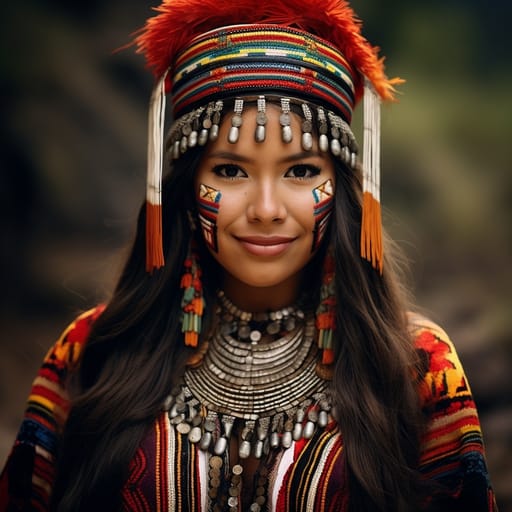
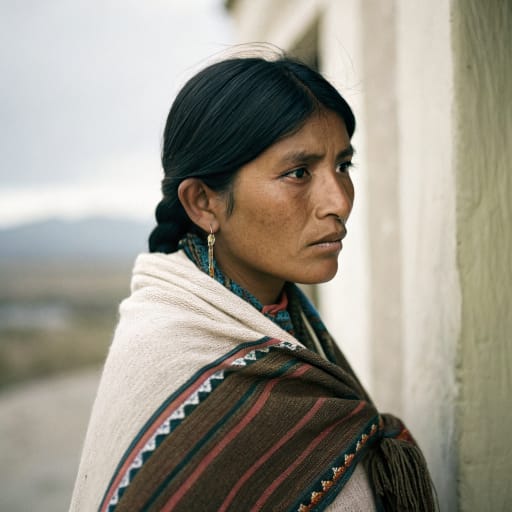
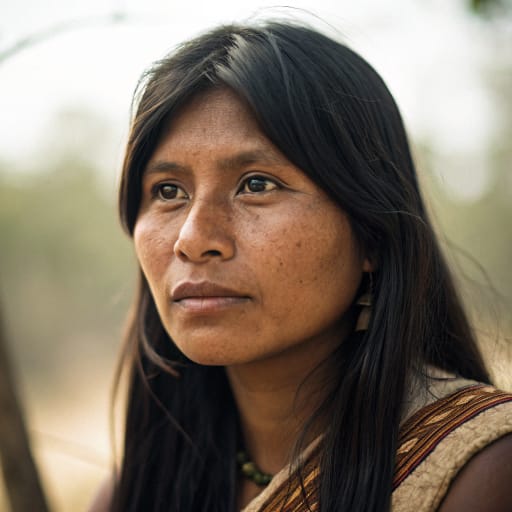
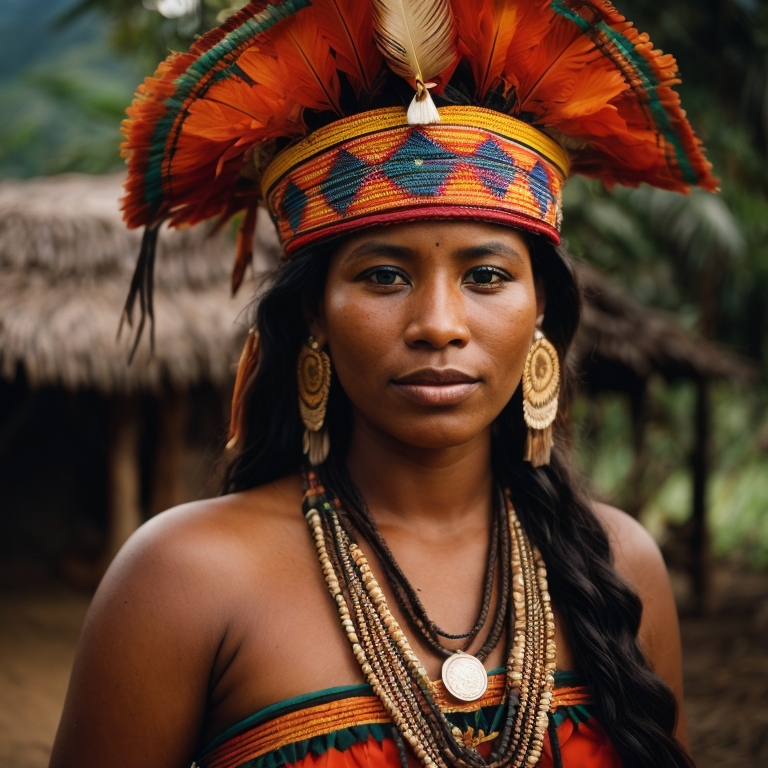
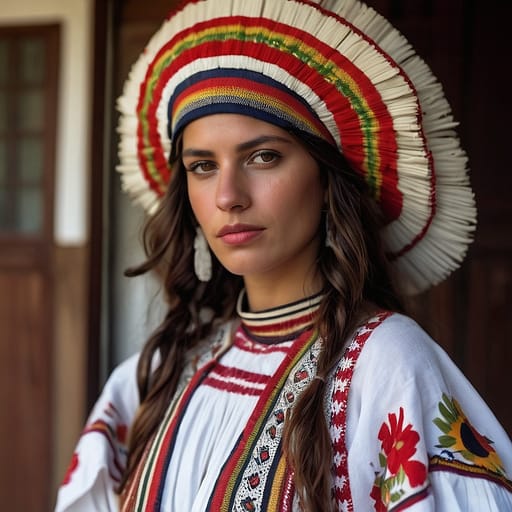
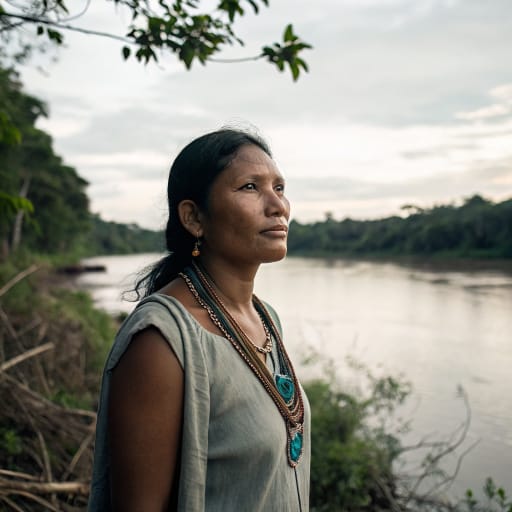
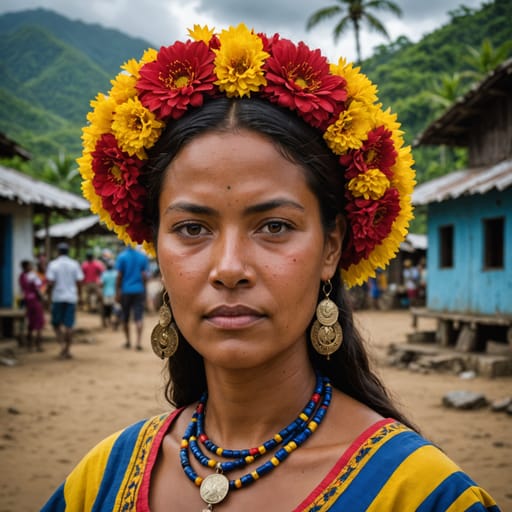
Typical Muzo Phenotypes
Reference for AI generation: hair, eyes, skin, facial structure, build
Muzo Body & Anatomy Reference
Per-feature anatomical profile for AI nude generation: South American Indigenous / European-Mestizo / Afro-Latino mix phenotype
Muzo Boobs & Breasts
Bust reference for Muzo women: medium-to-large cup, full, high projection, which is typical of South American Indigenous / European-Mestizo / Afro-Latino mix ancestry. Areolas measure about 32-46mm across, with medium-brown to dark-brown pigmentation. Body type (endomorph-to-mesomorph with high gluteal-femoral deposition) shapes the bust as well, so Muzo tits are usually the classic Brazilian / Latina curvy bust profile in lowland populations; smaller and shorter-set in Andean Indigenous populations. In AI imagery, keep the forward-set shape rather than drifting toward the smaller bust profile of Andean Indigenous sub-populations.
Muzo Ass & Hips
The Muzo ass is typically full, high projection, the famous Brazilian / Latina bunda profile, which sets it apart from the slim narrow-hip East Asian profile. Underneath, the pelvis shows wide iliac crests, very full gluteal-femoral fat deposition (the hallmark Brazilian / Latina hip-to-waist ratio), part of the South American Indigenous / European-Mestizo / Afro-Latino mix skeletal pattern. For Muzo butt pics and AI renders, match that silhouette and the overall build (endomorph-to-mesomorph with high gluteal-femoral deposition).
Muzo Vagina & Pussy
Muzo pussy and vulvar anatomy presents medium-brown to dark-brown labial pigmentation, fuller labia minora, consistent with the South American Indigenous / European-Mestizo / Afro-Latino mix phenotype's pigmentation pattern. Muzo pubic hair is typically wavy-to-curly coarse dark texture, dense distribution, in the inverted-triangle pattern. For anatomically accurate Muzo pussy renders the labial coloration should match the surrounding tan to deep-brown skin tone with a continuous gradient, and the hair should keep its wavy-to-curly coarse dark texture.
Muzo Dicks & Penis
Muzo dicks follow the South American Indigenous / European-Mestizo / Afro-Latino mix reference data: regional mean ~13cm erect; moderate-to-above-average girth; medium-brown shaft pigmentation. Shaft color should track the tan to deep-brown skin tone with a smooth change toward the glans, and Muzo pubic hair keeps its wavy-to-curly coarse dark texture.
Muzo Body, Curves & Build
Muzo body type and overall build presents as endomorph-to-mesomorph with high gluteal-femoral deposition, with mean adult female BMI 25-28: the characteristic South American Indigenous / European-Mestizo / Afro-Latino mix habitus. Muzo curves and proportions should keep the regional skeletal frame (height, shoulder-to-hip ratio, limb proportions) rather than a generic mesomorph default.
Muzo Skin Tone & Hair Texture
Muzo skin sits in the tan to deep-brown (Fitzpatrick III-VI) band. Hair is typically straight-to-curly 1A-3C, varies widely by ancestral composition, in keeping with the South American Indigenous / European-Mestizo / Afro-Latino mix phenotype. In nude renders the skin should stay one even tone from face to body, and body, pubic and head hair should match.
Explore phenotype categories
Structured taxonomy with peer-reviewed scales · 22 anatomical categories
Erotic Poses & Sex Positions
From the pose catalog: 219 named positions with reference skeletons
Frequently asked questions about Muzo people
Where is the Muzo homeland?
The Muzo homeland is Western slopes of the Eastern Cordillera along the Río Minero, in present western Boyacá with parts of Cundinamarca and Santander, Colombia. in South America.
What language do Muzo people speak?
Muzo people primarily speak Muzo, extinct and barely recorded (generally classed as Cariban).
What religion do Muzo people practice?
The predominant religion among Muzo people is Indigenous religion centered on the creator Are and the sacred peaks Fura and Tena; survivors were converted to Catholicism after the Spanish conquest..






Make your own Muzo images
Five a day, free, no credits to buy. The studio starts from this group's phenotype data, so you can set body type, pose and style and keep the traits accurate.
Start with Muzo