Help us get this right
Does this portrait look right for Kiriri?
Nobody has judged this one yet. You would be the first.
Kiriri Erotic
Kiriri Indigenous Territory around Mirandela, in the semi-arid sertão of northeastern Bahia, Brazil, spanning the municipalities of Banzaê and Quijingue
Portuguese; ancestral Kipeá, of the Kariri family (often placed within Macro-Jê), extinct and the subject of revival efforts
Catholicism combined with the Toré ritual, jurema drinking and belief in the encantados
One of the Kariri peoples of northeastern Brazil, related to the Kariri-Xocó of Alagoas; villages are divided between two political blocs, each with its own cacique
About Kiriri People
The Kiriri carry a name given to them by outsiders. Coastal Tupi speakers called the inland peoples they could not understand kiri'ri, the quiet ones, and the label stuck to a cluster of communities who held the semi-arid backlands of what is now northeastern Bahia. Today the Kiriri are a few thousand people living in a dozen or so villages on the Kiriri Indigenous Territory, a block of caatinga scrub between the towns of Banzaê and Quijingue with the old mission village of Mirandela at its center. They farm beans, corn and cassava on land that sees drought more years than not, raise goats, and take wage work in the surrounding region when the rains fail.
Their ancestral language, Kipeá, belonged to the small Kariri family, which linguists usually place within the Macro-Jê stock alongside Dzubukuá, once spoken on the islands of the São Francisco river. It is one of the best documented extinct languages of colonial Brazil, thanks to a grammar and catechism the Jesuit Luís Vincêncio Mamiani published in 1698 and 1699 after years among Kiriri mission villages. Everyday speech is now Portuguese, but the Mamiani texts are used in village schools and ceremonies as a source for reclaiming words and names. The missions matter for a second reason. In 1700 the Portuguese crown ordered that each mission village receive a league-square of land, and the grant to the Kiriri at Saco dos Morcegos became the legal spine of a twentieth-century fight. Settlers had swallowed the village, renamed Mirandela in the 1750s, over two centuries. From the 1970s the Kiriri organized, occupied farms and pushed for demarcation. The territory was formally recognized in 1990 and the last non-indigenous settlers left in the mid-1990s.
That campaign reshaped religious life as well. The Kiriri are Catholic, with saints' festivals and baptism woven into the calendar, but the marker of being Kiriri is the Toré, a circle dance with maracás and chants that the community learned in the 1970s from the neighboring Tuxá of Rodelas and made its own. The most important Toré sessions are closed to outsiders and bring dancers into contact with the encantados, enchanted beings reached through a drink made from the root of the jurema tree. A pajé, or spiritual leader, holds this knowledge, which people call science. Since the 1990s the villages have been divided between two political blocs, each with its own cacique and pajé, a split that runs through village life, down to who dances with whom. Related Kariri groups survive elsewhere in the Northeast, notably the Kariri-Xocó of Alagoas, and the Cariri region of southern Ceará still carries the family name.
Related ethnic groups
Groups that share Kiriri's homeland, region, language, or religious tradition. These are likely candidates for comparative phenotype reference.
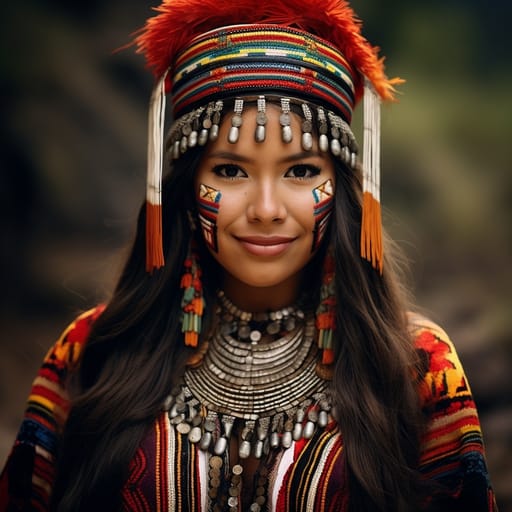
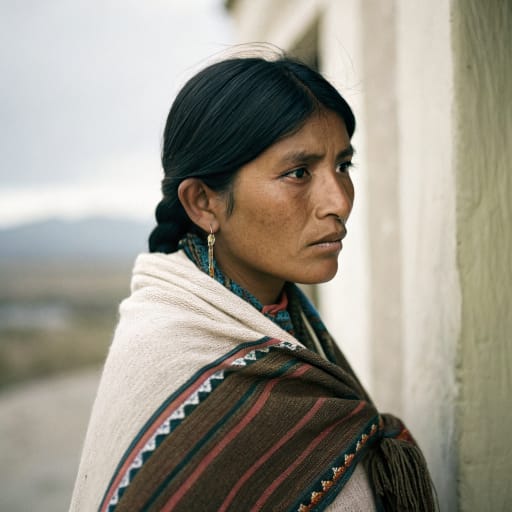
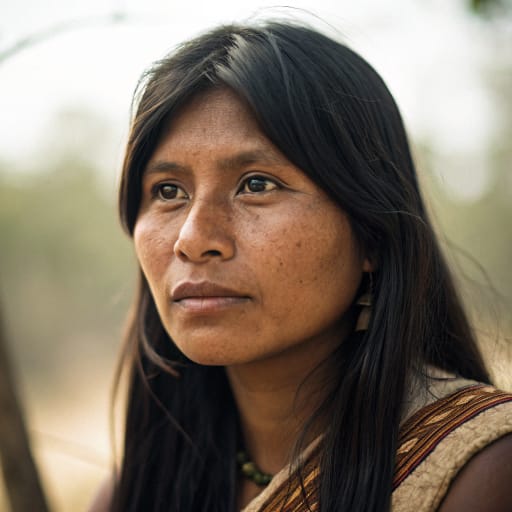
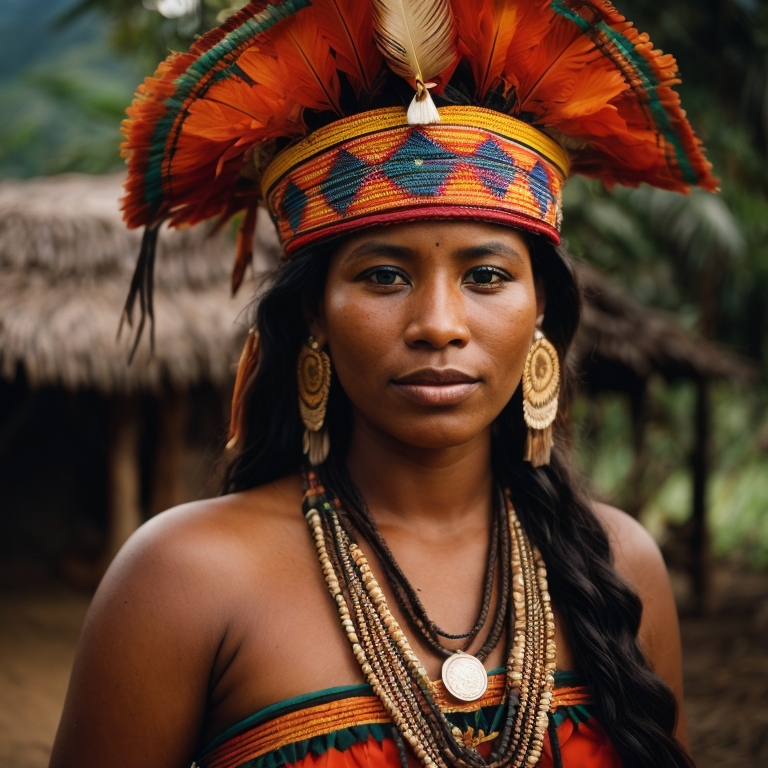
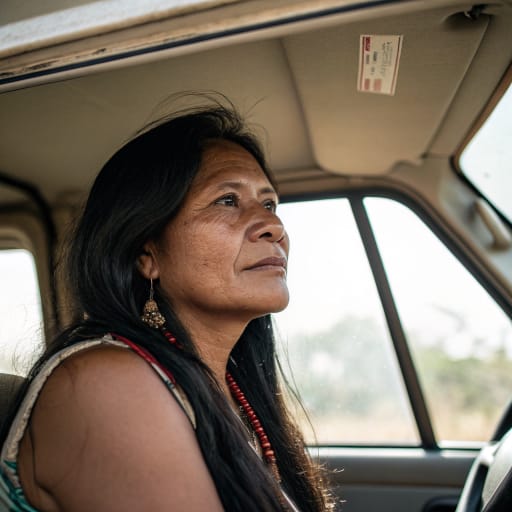
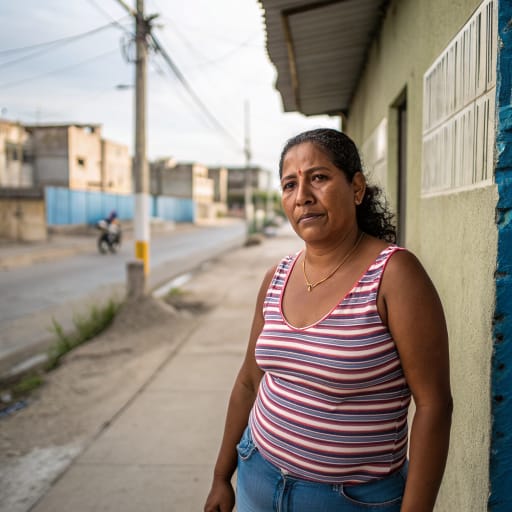
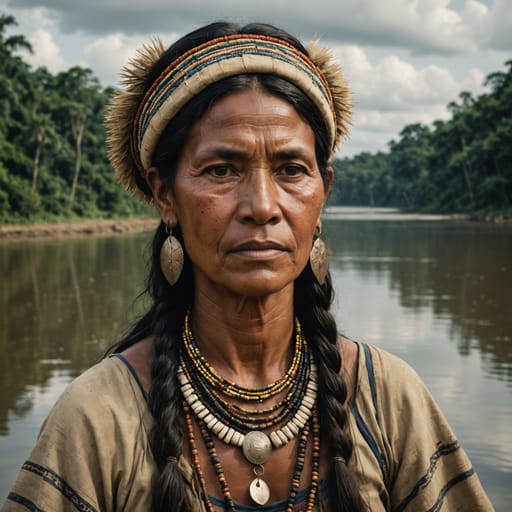
Typical Kiriri Phenotypes
Reference for AI generation: hair, eyes, skin, facial structure, build
Kiriri Body & Anatomy Reference
Per-feature anatomical profile for AI nude generation: South American Indigenous / European-Mestizo / Afro-Latino mix phenotype
Kiriri Boobs & Breasts
Kiriri boobs follow the South American Indigenous / European-Mestizo / Afro-Latino mix profile: medium-to-large cup, full, high projection. Areolar diameter is usually 32-46mm, and the coloring is medium-brown to dark-brown areolar pigmentation against the tan-to-deep-brown skin tone. Breast shape tracks body composition (endomorph-to-mesomorph with high gluteal-femoral deposition, mean adult female BMI 25-28), so Kiriri breasts tend to be the classic Brazilian / Latina curvy bust profile in lowland populations; smaller and shorter-set in Andean Indigenous populations. Expect a forward-set shape, not the smaller bust profile of Andean Indigenous sub-populations.
Kiriri Ass & Hips
Kiriri ass and hip morphology presents as full, high projection, the famous Brazilian / Latina bunda profile, distinctly different from the slim narrow-hip East Asian profile. The Kiriri pelvic profile shows wide iliac crests, very full gluteal-femoral fat deposition (the hallmark Brazilian / Latina hip-to-waist ratio), anchored in the South American Indigenous / European-Mestizo / Afro-Latino mix skeletal pattern. Kiriri butt shots in adult AI imagery should render the full, high projection, the famous Brazilian / Latina bunda profile silhouette with the overall build (endomorph-to-mesomorph with high gluteal-femoral deposition) and the fat distribution typical of the South American Indigenous / European-Mestizo / Afro-Latino mix phenotype.
Kiriri Vagina & Pussy
Kiriri pussy anatomy typically shows medium-brown to dark-brown labial pigmentation, fuller labia minora. Pubic hair is usually wavy-to-curly coarse dark texture, dense distribution. In AI-generated Kiriri nudes, labial color should blend into the tan to deep-brown skin with a gradual transition, and the hair should keep its wavy-to-curly coarse dark texture.
Kiriri Dicks & Penis
Penis reference for Kiriri men: regional mean ~13cm erect, moderate-to-above-average girth. Coloring: medium-brown shaft pigmentation. An accurate Kiriri cock in AI imagery matches the surrounding tan to deep-brown skin rather than a generic porn default. Circumcision depends on religion and custom, not ancestry.
Kiriri Body, Curves & Build
The Kiriri figure is generally endomorph-to-mesomorph with high gluteal-femoral deposition, with mean adult female BMI 25-28, characteristic of South American Indigenous / European-Mestizo / Afro-Latino mix ancestry. AI image tools tend to flatten regional body types into a few stock shapes; here the Kiriri build is kept as its own reference.
Kiriri Skin Tone & Hair Texture
Skin: tan to deep-brown (Fitzpatrick III-VI). Hair: straight-to-curly 1A-3C, varies widely by ancestral composition. Both are typical of South American Indigenous / European-Mestizo / Afro-Latino mix ancestry. The most common mistake in AI nudes of Kiriri women is a body rendered lighter than the face.
Explore phenotype categories
Structured taxonomy with peer-reviewed scales · 22 anatomical categories
Erotic Poses & Sex Positions
From the pose catalog: 219 named positions with reference skeletons
Frequently asked questions about Kiriri people
Where is the Kiriri homeland?
The Kiriri homeland is Kiriri Indigenous Territory around Mirandela, in the semi-arid sertão of northeastern Bahia, Brazil, spanning the municipalities of Banzaê and Quijingue in South America.
What language do Kiriri people speak?
Kiriri people primarily speak Portuguese; ancestral Kipeá, of the Kariri family (often placed within Macro-Jê), extinct and the subject of revival efforts.
What religion do Kiriri people practice?
The predominant religion among Kiriri people is Catholicism combined with the Toré ritual, jurema drinking and belief in the encantados.






Make your own Kiriri images
Five a day, free, no credits to buy. The studio starts from this group's phenotype data, so you can set body type, pose and style and keep the traits accurate.
Start with Kiriri