Help us get this right
Does this portrait look right for Cumanagoto?
Nobody has judged this one yet. You would be the first.
Cumanagoto Erotic
Northeastern coast of Venezuela, around Barcelona and Cumaná in Anzoátegui and Sucre states.
Cumanagoto (Cariban), no longer spoken as a first language; descendants speak Spanish (Indo-European).
Roman Catholic, the legacy of Franciscan missions from the 1600s.
Cariban peoples of northeastern Venezuela; closely related to the Chaima, and brought into the Píritu missions alongside neighboring Carib groups.
About Cumanagoto People
The Cumanagoto are a Carib-speaking people of Venezuela's northeastern coast. Their home is the dry hills, river mouths and lagoons around what are now Barcelona and Cumaná, in the states of Anzoátegui and Sucre. Today their language is gone from daily life. What holds them together as a people is family memory: they trace their lines back to the villages the Spanish found on this shore five centuries ago, and in recent decades they have made the case that they never disappeared.
Their coast was one of the first parts of the South American mainland that Europeans came to know well, and they paid for it. In the early 1500s, the pearl beds of nearby Cubagua drove slave raids along the shore, and the Cumanagoto fought back for decades. Diego Fernández de Serpa, the governor sent to organize the province of Nueva Andalucía, died fighting them in 1570. The Spanish took the region slowly and unevenly, and in the end mostly through missions. From the mid-1600s, Franciscan friars based at Píritu moved Cumanagoto and neighboring Carib communities into mission towns. There, Catholicism, the Spanish language and village life were all reorganized together.
The friars also left the best record of the language. In 1683, Manuel de Yangües and Matías Ruiz Blanco published a grammar of Cumanagoto, and it is still the main source on the language. Cumanagoto was closely related to Chaima, spoken just to the east, and belonged to the wider Carib world that included the Kariña of the eastern plains. No one speaks it at home anymore, but it left its mark on place names across Anzoátegui. By one widely repeated account, it also gave Venezuela the word arepa, the maize cake at the center of the national table.
Most descendants are Catholic, after three centuries of mission parishes, and their local saints' days and festivals blend into those of their neighbors. Most Cumanagoto today live in rural areas and small towns, farming, fishing and working alongside neighbors of mixed ancestry. The big change has been official recognition. Venezuela now lists them among its Indigenous peoples, and a number of communities in Anzoátegui openly call themselves Cumanagoto. For a people long assumed to have blended into the general population, that is a quiet reversal.
Related ethnic groups
Groups that share Cumanagoto's homeland, region, language, or religious tradition. These are likely candidates for comparative phenotype reference.
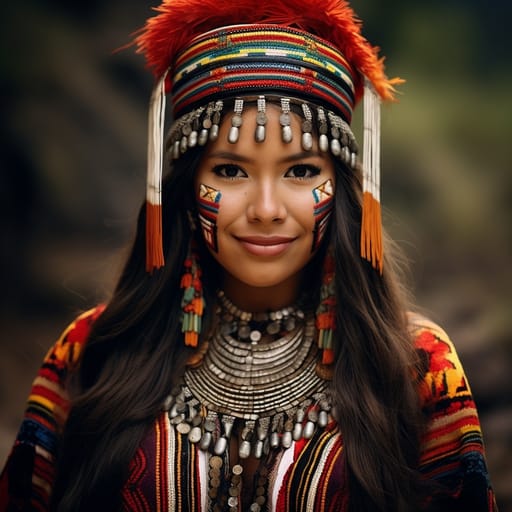
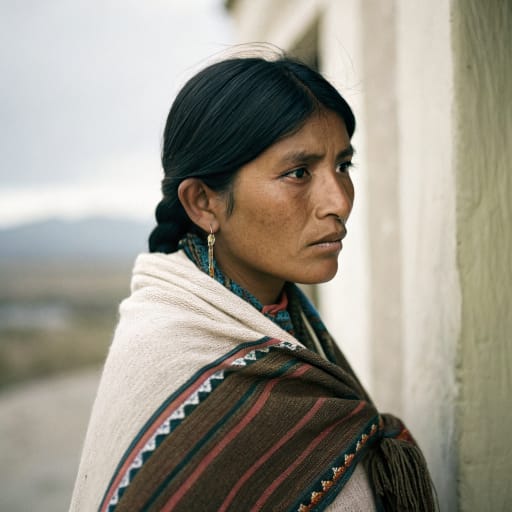
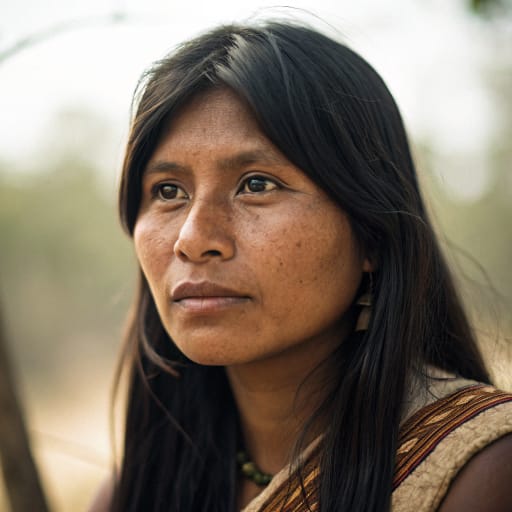
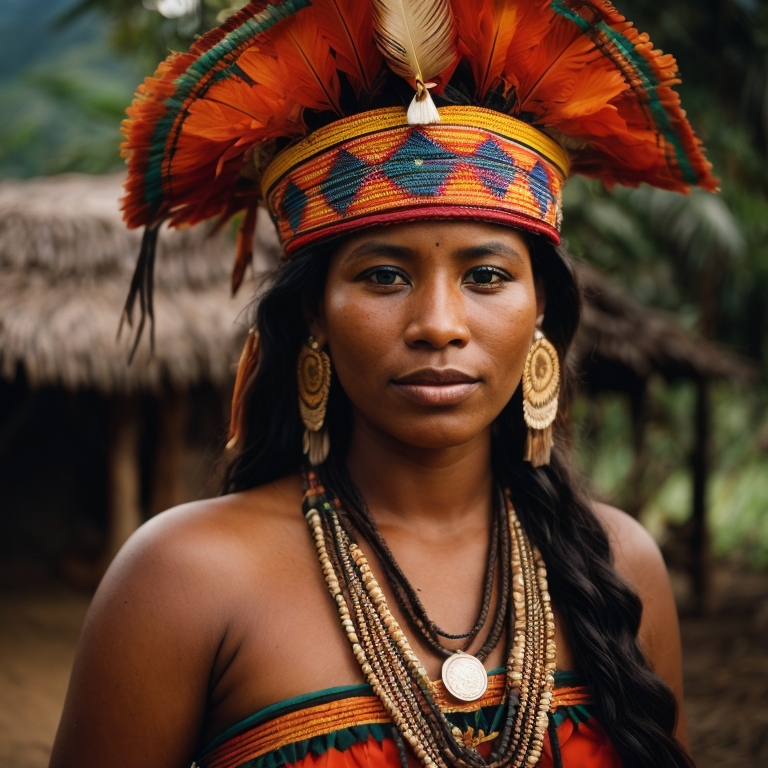
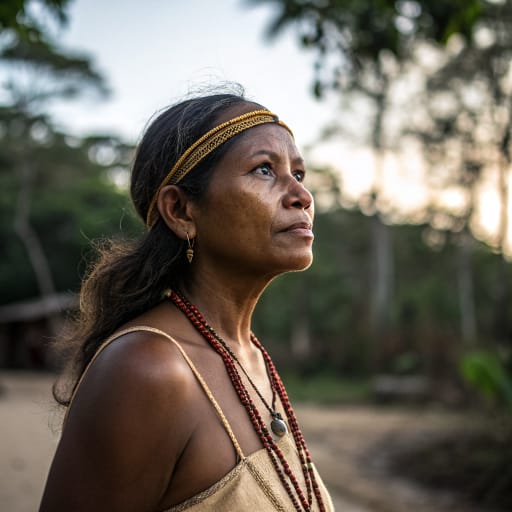
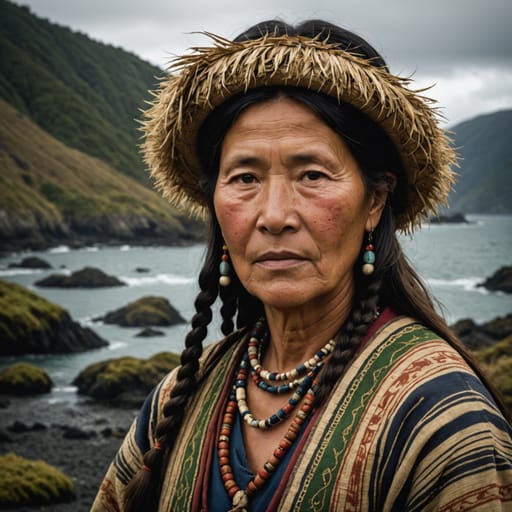
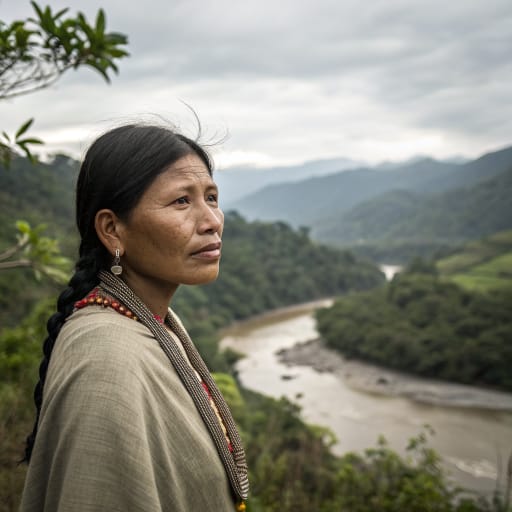
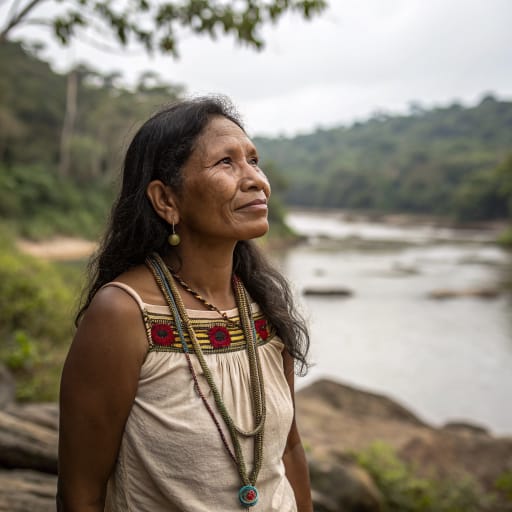
Typical Cumanagoto Phenotypes
Reference for AI generation: hair, eyes, skin, facial structure, build
Cumanagoto Body & Anatomy Reference
South American Indigenous / European-Mestizo / Afro-Latino mix phenotype: anatomy reference for AI nude generation
Cumanagoto Boobs & Breasts
Cumanagoto boobs follow the South American Indigenous / European-Mestizo / Afro-Latino mix profile: medium-to-large cup, full, high projection. Areolar diameter is usually 32-46mm, and the coloring is medium-brown to dark-brown areolar pigmentation against the tan-to-deep-brown skin tone. Breast shape tracks body composition (endomorph-to-mesomorph with high gluteal-femoral deposition, mean adult female BMI 25-28), so Cumanagoto breasts tend to be the classic Brazilian / Latina curvy bust profile in lowland populations; smaller and shorter-set in Andean Indigenous populations. Expect a forward-set shape, not the smaller bust profile of Andean Indigenous sub-populations.
Cumanagoto Ass & Hips
Cumanagoto ass and hip morphology presents as full, high projection, the famous Brazilian / Latina bunda profile, distinctly different from the slim narrow-hip East Asian profile. The Cumanagoto pelvic profile shows wide iliac crests, very full gluteal-femoral fat deposition (the hallmark Brazilian / Latina hip-to-waist ratio), anchored in the South American Indigenous / European-Mestizo / Afro-Latino mix skeletal pattern. Cumanagoto butt shots in adult AI imagery should render the full, high projection, the famous Brazilian / Latina bunda profile silhouette with the overall build (endomorph-to-mesomorph with high gluteal-femoral deposition) and the fat distribution typical of the South American Indigenous / European-Mestizo / Afro-Latino mix phenotype.
Cumanagoto Vagina & Pussy
Cumanagoto pussy anatomy typically shows medium-brown to dark-brown labial pigmentation, fuller labia minora. Pubic hair is usually wavy-to-curly coarse dark texture, dense distribution. In AI-generated Cumanagoto nudes, labial color should blend into the tan to deep-brown skin with a gradual transition, and the hair should keep its wavy-to-curly coarse dark texture.
Cumanagoto Dicks & Penis
Penis reference for Cumanagoto men: regional mean ~13cm erect, moderate-to-above-average girth. Coloring: medium-brown shaft pigmentation. An accurate Cumanagoto cock in AI imagery matches the surrounding tan to deep-brown skin rather than a generic porn default. Circumcision depends on religion and custom, not ancestry.
Cumanagoto Body, Curves & Build
The Cumanagoto figure is generally endomorph-to-mesomorph with high gluteal-femoral deposition, with mean adult female BMI 25-28, characteristic of South American Indigenous / European-Mestizo / Afro-Latino mix ancestry. AI image tools tend to flatten regional body types into a few stock shapes; here the Cumanagoto build is kept as its own reference.
Cumanagoto Skin Tone & Hair Texture
Skin: tan to deep-brown (Fitzpatrick III-VI). Hair: straight-to-curly 1A-3C, varies widely by ancestral composition. Both are typical of South American Indigenous / European-Mestizo / Afro-Latino mix ancestry. The most common mistake in AI nudes of Cumanagoto women is a body rendered lighter than the face.
Explore phenotype categories
Structured taxonomy with peer-reviewed scales · 22 anatomical categories
Erotic Poses & Sex Positions
From the pose catalog: 219 named positions with reference skeletons
Frequently asked questions about Cumanagoto people
Where is the Cumanagoto homeland?
The Cumanagoto homeland is Northeastern coast of Venezuela, around Barcelona and Cumaná in Anzoátegui and Sucre states. in South America.
What language do Cumanagoto people speak?
Cumanagoto people primarily speak Cumanagoto (Cariban), no longer spoken as a first language; descendants speak Spanish (Indo-European)..
What religion do Cumanagoto people practice?
The predominant religion among Cumanagoto people is Roman Catholic, the legacy of Franciscan missions from the 1600s..






Make your own Cumanagoto images
Five a day, free, no credits to buy. The studio starts from this group's phenotype data, so you can set body type, pose and style and keep the traits accurate.
Start with Cumanagoto