Help us get this right
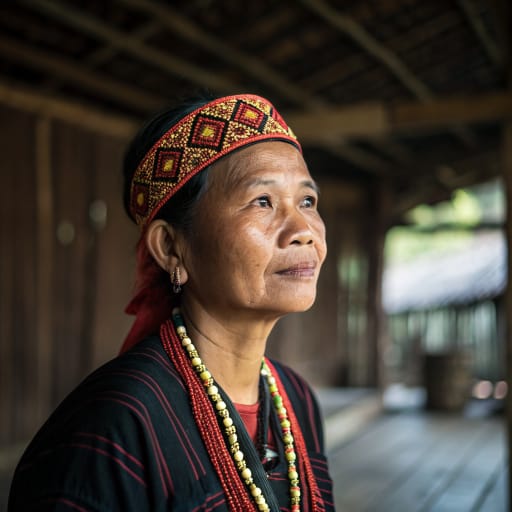
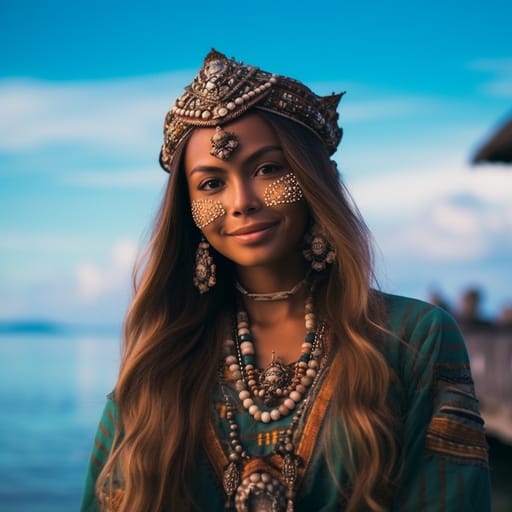
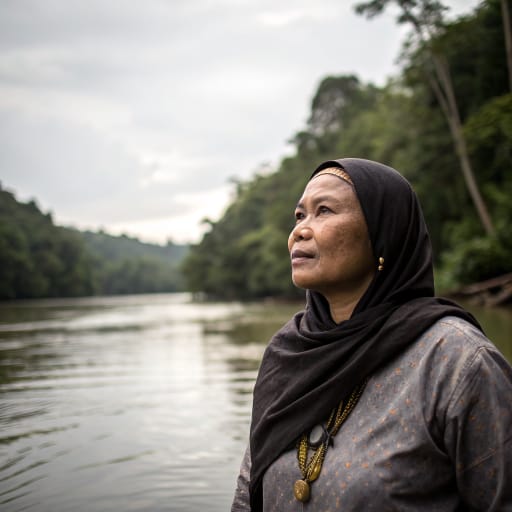
Does this portrait look right for Phù Lá?
Nobody has judged this one yet. You would be the first.
Phù Lá Erotic
Upland northern Vietnam, mainly Lào Cai province, with smaller communities in neighboring northern provinces; related Phula communities live across the border in Yunnan, China
Phù Lá, a set of related local varieties (Loloish branch, Sino-Tibetan); most speakers also use Vietnamese
Ancestor worship and belief in household and nature spirits, with rites led by ritual specialists
Local groups include Xá Phó, Bồ Khô Pạ and Mu Di Pạ; one of Vietnam's six Tibeto-Burman-speaking groups, related to Phula communities classed as Yi in China
About Phù Lá People
The Phù Lá are one of the smaller of Vietnam's 54 officially recognized ethnic groups. They number roughly twelve thousand people in the mountains of the far north, and most of them live in Lào Cai province on the Chinese border. They share those slopes with Hmong, Dao, Tày, Nùng, Giáy and Kinh neighbors, and in a crowded highland market they are easy to miss. What sets them apart is language and descent. Phù Lá belongs to the Loloish branch of the Sino-Tibetan family. That puts them in Vietnam's small Tibeto-Burman group alongside the Hà Nhì, Lô Lô, La Hủ, Cống and Si La, and links them more closely to Yi-speaking communities in Yunnan than to most of the people living around them.
The name covers several local communities, recorded under names such as Xá Phó, Bồ Khô Pạ and Mu Di Pạ, and speech and dress shift from one to the next. Across the border in China, speakers of related Phula languages are counted as part of the Yi nationality. The Phù Lá are, in other words, a cross-border people whose ancestors came south out of Yunnan, and whose relatives on the far side of the line ended up under a different official name. Most Phù Lá today also speak Vietnamese, the language of school, paperwork and trade.
Daily life is organized around upland farming: rice where terraces and water allow, maize and other crops on the steeper ground, pigs and poultry kept close to the house. Religious life runs through the household rather than any institution. The ancestors are honored at the family altar, and spirits are understood to live in the house and the land around it. When illness or misfortune suggests that something in that unseen world needs attention, a ritual specialist is called to make offerings.
Much of what outsiders notice is the handiwork. Women's clothing is dark cloth set off with bands of colored appliqué and embroidery at the collar, chest and sleeves, and its details differ from one local group to another. Weaving, embroidery and bamboo basketry are still skills kept up at home. Like other small minorities in the north, the Phù Lá have spent recent decades taking in new roads, schools, cash crops and state programs. Younger people often save traditional dress for festivals and family ceremonies and wear everyday modern clothes the rest of the time.
Related ethnic groups
Groups that share Phù Lá's homeland, region, language, or religious tradition. These are likely candidates for comparative phenotype reference.
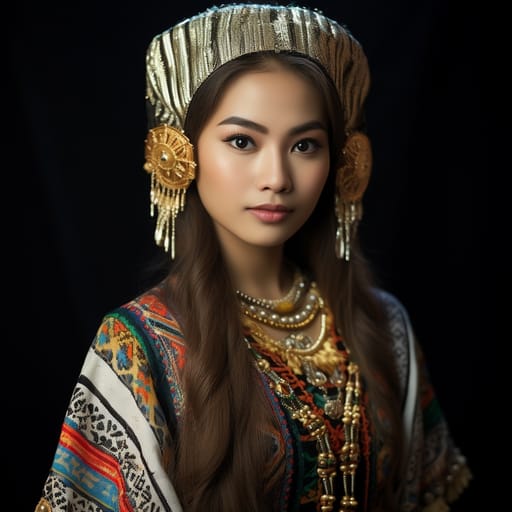
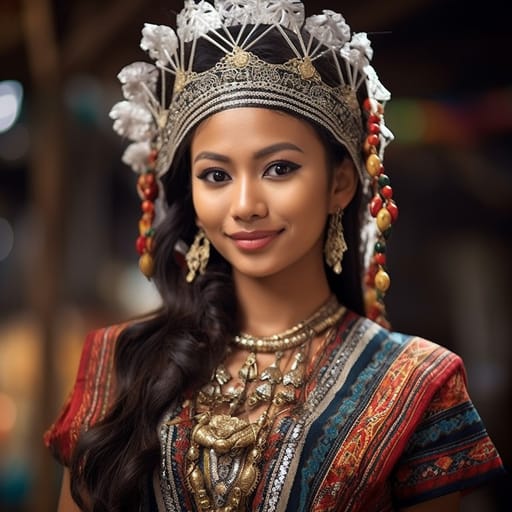
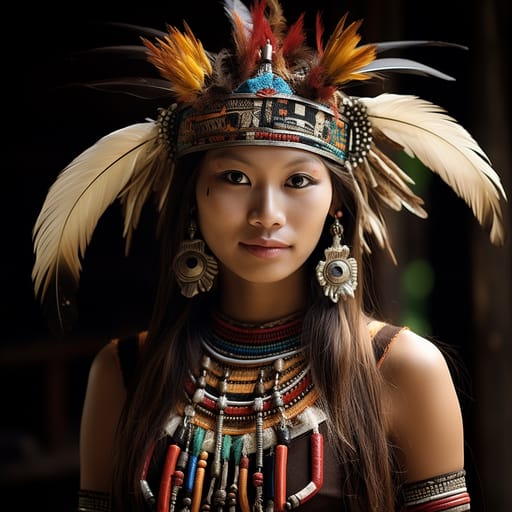
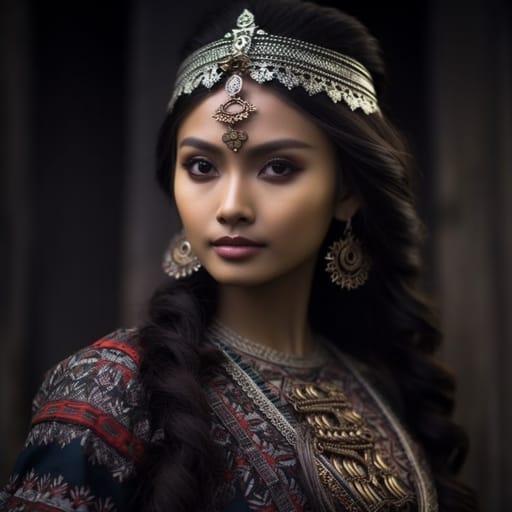
Typical Phù Lá Phenotypes
Reference for AI generation: hair, eyes, skin, facial structure, build
Phù Lá Body & Anatomy Reference
Anatomy by feature, Southeast Asian Austronesian / Austroasiatic phenotype
Phù Lá Boobs & Breasts
Phù Lá tits and boobs run small-to-medium cup, modest projection, the classic Southeast Asian Austronesian / Austroasiatic bust profile. Phù Lá nipples and areolas show medium-brown to dark-brown areolar pigmentation against the tan-to-medium-brown skin tone, with areolar diameter typically in the 26-38mm range and forward-set positioning rather than the fuller South Asian or Polynesian bust. Phù Lá breasts trend firm, modest projection, a function of the ectomorph, petite frame body habitus and the mean adult female BMI 20-23. For anatomically accurate AI-generated Phù Lá nudes the render preserves the small-to-medium cup, modest projection shape, 26-38mm areolas with medium-brown to dark-brown pigmentation, and the torso proportions of the Southeast Asian Austronesian / Austroasiatic phenotype.
Phù Lá Ass & Hips
Phù Lá hips and butt usually read as small-to-medium, modest projection, narrower hip profile. The skeletal base is narrow-to-medium iliac crests, the Southeast Asian Austronesian / Austroasiatic pattern. Set against the fuller glutes of the Pacific Islander phenotype, the difference is easy to see, and the hip-to-waist ratio is often what identifies Phù Lá women in photos.
Phù Lá Vagina & Pussy
Expect medium-brown to dark-brown labial pigmentation on Phù Lá women, in keeping with Southeast Asian Austronesian / Austroasiatic ancestry. The pubic hair is straight-to-wavy fine-to-medium texture. Coloring should run evenly from the tan to medium-brown skin of the thighs to the labia, and Phù Lá nude imagery should keep the hair's straight-to-wavy fine-to-medium texture.
Phù Lá Dicks & Penis
Phù Lá dick and penile anatomy in adult AI generation should anchor on the regional reference data: regional mean ~11cm erect, moderate girth, and medium-brown shaft pigmentation. The Phù Lá cock profile reflects the Southeast Asian Austronesian / Austroasiatic population's anthropometric measurements. The shaft pigmentation should track the surrounding tan to medium-brown skin tone, and the pubic hair should keep its straight-to-wavy fine-to-medium texture in the typical inverted-V escutcheon.
Phù Lá Body, Curves & Build
Phù Lá body type: ectomorph, petite frame, with mean adult female BMI 20-23. This is the typical Southeast Asian Austronesian / Austroasiatic build. Height range, shoulder-to-hip ratio and fat distribution all follow from it, which is what an accurate Phù Lá nude body should show.
Phù Lá Skin Tone & Hair Texture
Phù Lá skin tone falls in the tan to medium-brown (Fitzpatrick III-V) band, the surface signal most often miscalibrated by generic AI nude generators. Phù Lá hair texture is typically straight-to-wavy 1A-2A, dark-brown to black, characteristic of the Southeast Asian Austronesian / Austroasiatic phenotype. In Phù Lá nude renders the skin should hold that band consistently across the body.
Explore phenotype categories
Structured taxonomy with peer-reviewed scales · 22 anatomical categories
Erotic Poses & Sex Positions
From the pose catalog: 219 named positions with reference skeletons
Frequently asked questions about Phù Lá people
Where is the Phù Lá homeland?
The Phù Lá homeland is Upland northern Vietnam, mainly Lào Cai province, with smaller communities in neighboring northern provinces; related Phula communities live across the border in Yunnan, China in Southeast Asia.
What language do Phù Lá people speak?
Phù Lá people primarily speak Phù Lá, a set of related local varieties (Loloish branch, Sino-Tibetan); most speakers also use Vietnamese.
What religion do Phù Lá people practice?
The predominant religion among Phù Lá people is Ancestor worship and belief in household and nature spirits, with rites led by ritual specialists.






Make your own Phù Lá images
Five a day, free, no credits to buy. The studio starts from this group's phenotype data, so you can set body type, pose and style and keep the traits accurate.
Start with Phù Lá