No portrait yet
Phai Erotic
Upland districts of Nan province in northern Thailand and neighboring Sainyabuli (Xayaboury) province in Laos
Phai or Prai, closely related to Mal (Austroasiatic, Khmuic branch); Northern Thai or Lao widely spoken as a second language
Household, ancestor and village spirit beliefs blended with Theravada Buddhism; a Christian minority
Khmuic peoples, Mal and Phai cluster; grouped with Mal speakers under the Thai official name Htin (Thin)
About Phai People
The Phai, who more often call themselves Prai, farm the steep border country between Nan province in northern Thailand and Sainyabuli province in Laos. Language is what sets them apart from the Tai villages in the valleys. Phai is an Austroasiatic language in the Khmuic branch, the same branch as Khmu, and its closest relative is Mal, which is spoken in nearby hill villages. Thai officials put Phai and Mal speakers into one category, Htin or Thin, which is one of the hill peoples the state formally recognizes. Locally they may also be called Lua. That name is easy to confuse with the Lawa of Chiang Mai and Mae Hong Son, who are a different Austroasiatic people. Like other Austroasiatic peoples in the region, the Prai are generally seen as older inhabitants of these mountains than the Tai lords who came to rule the valleys. Those lords long lumped the upland peoples together under the insulting label kha. Other people drew the border too: the 1904 treaty between Siam and France gave the Sainyabuli side to French Laos, which left Prai villages split between two countries. Later, the Nan highlands became a stronghold of the Communist Party of Thailand. The roads, schools and resettlement that reached Thai hill villages after that came as much from fighting the insurgency as from any development plan.
Village life has long depended on upland rice grown in rotating swidden fields, along with forest foods and, more and more, cash crops. In Thailand the Htin are best known for bamboo and rattan work, which they make into baskets and mats with real precision. Belief centers on spirits of the household, the ancestors, the village and the fields. People owe them offerings and blame them when things go wrong. Theravada Buddhism, picked up from Northern Thai and Lao neighbors, sits on top of that older layer without erasing it, and missionary work has made some communities Christian. The language has no script of its own; when people write it, they borrow Thai or Lao letters. Most adults also speak Northern Thai or Lao, and schools teach in the national languages. Phai faces the same slow pressure as every small language along this border.
Related ethnic groups
Groups that share Phai's homeland, region, language, or religious tradition. These are likely candidates for comparative phenotype reference.
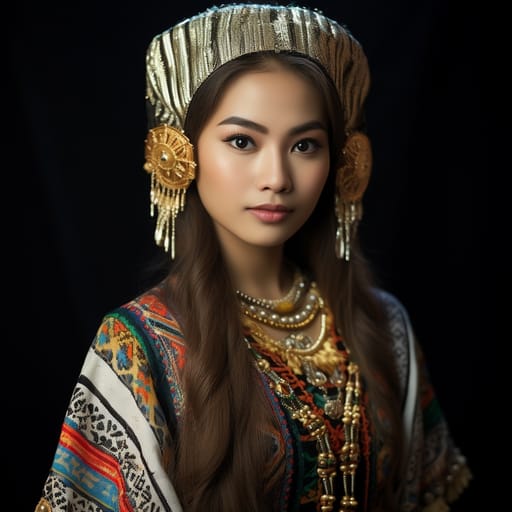
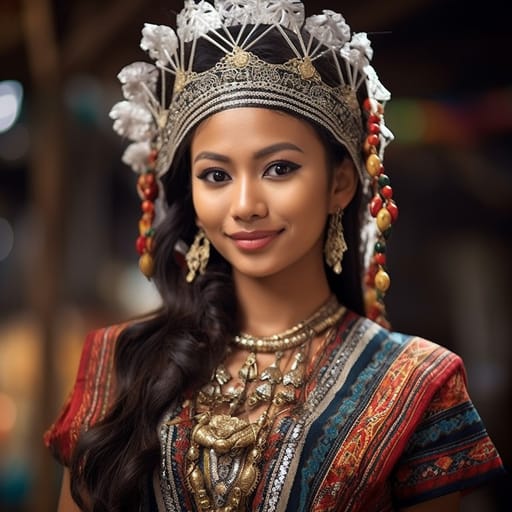
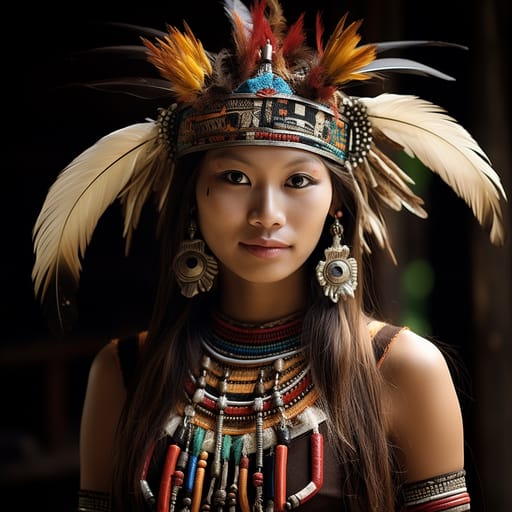
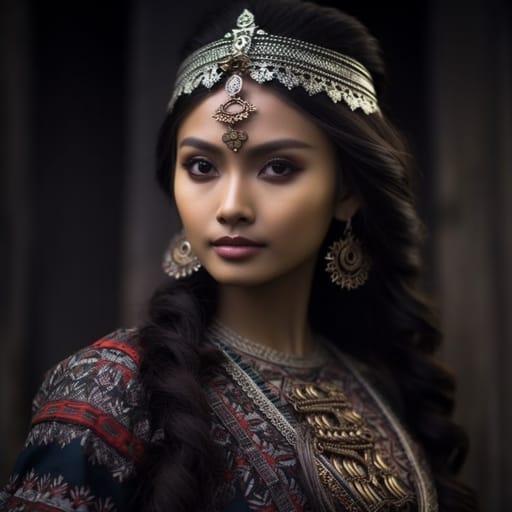
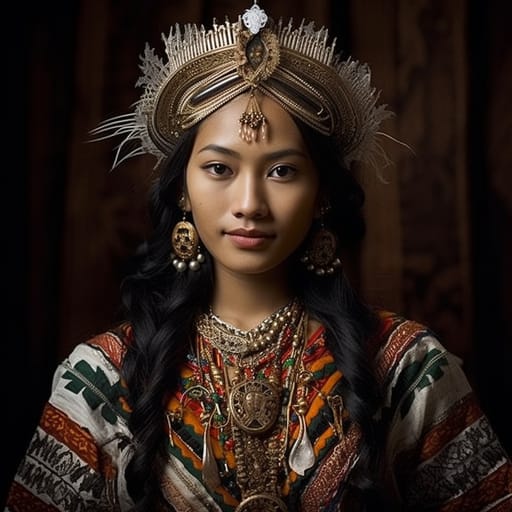
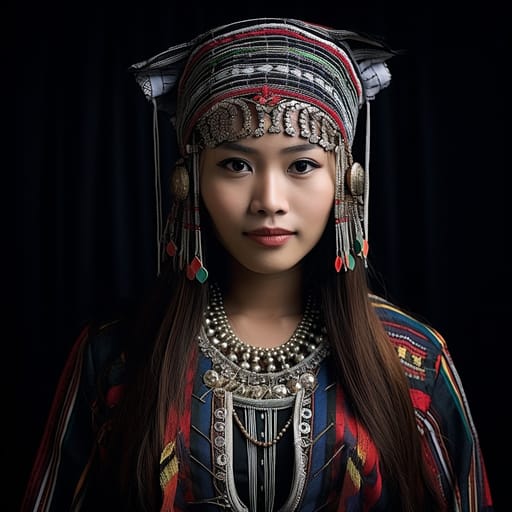
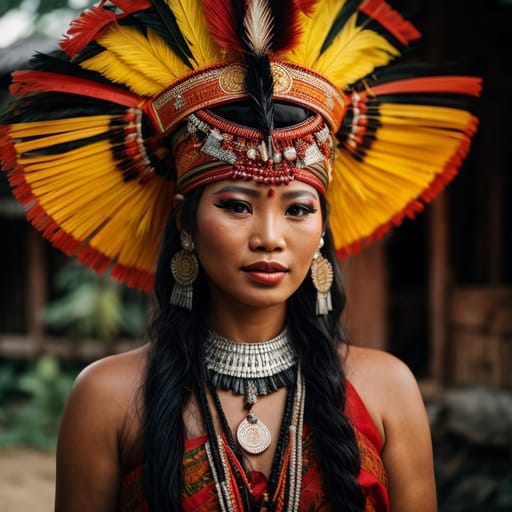
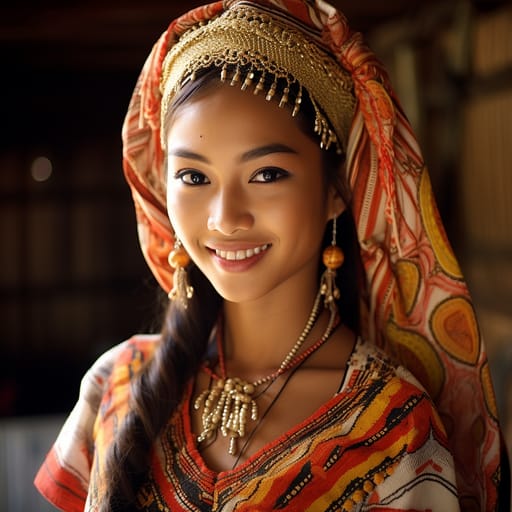
Typical Phai Phenotypes
Reference for AI generation: hair, eyes, skin, facial structure, build
Phai Body & Anatomy Reference
Anatomy by feature, Southeast Asian Austronesian / Austroasiatic phenotype
Phai Boobs & Breasts
Phai tits and boobs run small-to-medium cup, modest projection, the classic Southeast Asian Austronesian / Austroasiatic bust profile. Phai nipples and areolas show medium-brown to dark-brown areolar pigmentation against the tan-to-medium-brown skin tone, with areolar diameter typically in the 26-38mm range and forward-set positioning rather than the fuller South Asian or Polynesian bust. Phai breasts trend firm, modest projection, a function of the ectomorph, petite frame body habitus and the mean adult female BMI 20-23. For anatomically accurate AI-generated Phai nudes the render preserves the small-to-medium cup, modest projection shape, 26-38mm areolas with medium-brown to dark-brown pigmentation, and the torso proportions of the Southeast Asian Austronesian / Austroasiatic phenotype.
Phai Ass & Hips
Phai hips and butt usually read as small-to-medium, modest projection, narrower hip profile. The skeletal base is narrow-to-medium iliac crests, the Southeast Asian Austronesian / Austroasiatic pattern. Set against the fuller glutes of the Pacific Islander phenotype, the difference is easy to see, and the hip-to-waist ratio is often what identifies Phai women in photos.
Phai Vagina & Pussy
Expect medium-brown to dark-brown labial pigmentation on Phai women, in keeping with Southeast Asian Austronesian / Austroasiatic ancestry. The pubic hair is straight-to-wavy fine-to-medium texture. Coloring should run evenly from the tan to medium-brown skin of the thighs to the labia, and Phai nude imagery should keep the hair's straight-to-wavy fine-to-medium texture.
Phai Dicks & Penis
Phai dick and penile anatomy in adult AI generation should anchor on the regional reference data: regional mean ~11cm erect, moderate girth, and medium-brown shaft pigmentation. The Phai cock profile reflects the Southeast Asian Austronesian / Austroasiatic population's anthropometric measurements. The shaft pigmentation should track the surrounding tan to medium-brown skin tone, and the pubic hair should keep its straight-to-wavy fine-to-medium texture in the typical inverted-V escutcheon.
Phai Body, Curves & Build
Phai body type: ectomorph, petite frame, with mean adult female BMI 20-23. This is the typical Southeast Asian Austronesian / Austroasiatic build. Height range, shoulder-to-hip ratio and fat distribution all follow from it, which is what an accurate Phai nude body should show.
Phai Skin Tone & Hair Texture
Phai skin tone falls in the tan to medium-brown (Fitzpatrick III-V) band, the surface signal most often miscalibrated by generic AI nude generators. Phai hair texture is typically straight-to-wavy 1A-2A, dark-brown to black, characteristic of the Southeast Asian Austronesian / Austroasiatic phenotype. In Phai nude renders the skin should hold that band consistently across the body.
Explore phenotype categories
Structured taxonomy with peer-reviewed scales · 22 anatomical categories
Erotic Poses & Sex Positions
From the pose catalog: 219 named positions with reference skeletons
Frequently asked questions about Phai people
Where is the Phai homeland?
The Phai homeland is Upland districts of Nan province in northern Thailand and neighboring Sainyabuli (Xayaboury) province in Laos in Southeast Asia.
What language do Phai people speak?
Phai people primarily speak Phai or Prai, closely related to Mal (Austroasiatic, Khmuic branch); Northern Thai or Lao widely spoken as a second language.
What religion do Phai people practice?
The predominant religion among Phai people is Household, ancestor and village spirit beliefs blended with Theravada Buddhism; a Christian minority.






Make your own Phai images
Five a day, free, no credits to buy. The studio starts from this group's phenotype data, so you can set body type, pose and style and keep the traits accurate.
Start with Phai