Help us get this right
Does this portrait look right for Kankanaey?
One tap. It takes a second and it is recorded.
0 say it looks right, 1 says it looks off.
Kankanaey Erotic
Cordillera Central of northern Luzon, Philippines: western Mountain Province (Sagada, Besao, Bauko, Tadian, Sabangan), northern Benguet (Mankayan, Buguias, Bakun, Kibungan), and uplands of Ilocos Sur and La Union
Kankanaey, with distinct Northern and Southern varieties (Austronesian, Cordilleran branch of Philippine languages); Ilocano, Filipino and English widely used
Mostly Christian, with a strong Episcopal (Anglican) presence around Sagada plus Catholic and Protestant churches, often practiced alongside indigenous ancestral rites and animal offerings
One of the Igorot peoples of the Cordillera; divided into Northern Kankanaey (Applai) of Mountain Province and Southern Kankanaey of Benguet; closely related to the Bontoc
About Kankanaey People
Ask a Kankanaey where they are from and the answer tends to be a town on a mountainside: Sagada, Besao, Mankayan, Buguias. They are one of the Igorot peoples of the Cordillera Central in northern Luzon. They are highlanders who stayed largely outside the colonial order Spain built on the lowland coast, and they still set themselves apart from their Ilocano neighbors below by language, ritual obligation and a long habit of holding their ground. Their country spans western Mountain Province and northern Benguet and reaches into the uplands of Ilocos Sur and La Union. It splits into two broad divisions. The northern Kankanaey, often called Applai, work stone-walled rice terraces among the pine ridges around Sagada and Besao. The southern Kankanaey of Benguet have turned much of their steep ground over to vegetables, and the cabbages, carrots and potatoes trucked out of Buguias stock markets across Luzon. Mankayan sits on gold and copper that local miners were working before the Spanish came looking for it, and communities have fought the large commercial mining that followed for decades. The Kankanaey language belongs to the Cordilleran branch of the Philippine languages and is a close relative of Bontoc. Its northern and southern forms differ enough that linguists often count them separately. Most speakers also use Ilocano, the trade language of the north, along with Filipino and English.
Kankanaey religion is layered rather than replaced. American Episcopal missionaries reached Sagada in 1904, and the Anglican church is still a fixture of town life there, with Catholic and Protestant congregations across the rest of the homeland. Even so, animals are still offered during begnas and the other community rites that follow the farming calendar. In many northern villages the dap-ay, a stone-paved gathering place where elder men deliberate and hold ceremonies, still matters in village life. Death customs are usually what outsiders notice first. Around Sagada the dead were traditionally seated upright on a wooden chair through a long wake, then laid to rest in coffins stacked inside limestone caves or fastened to cliff faces. The practice has thinned but not vanished, and the hanging coffins of Echo Valley now draw a steady stream of tourists that the town manages through local guides. Quieter traditions are easy to find once you look: etag, salt-cured smoked pork saved for feasts, flat gangsa gongs played at celebrations, and cloth woven in red, black and white that comes out for special occasions.
Related ethnic groups
Groups that share Kankanaey's homeland, region, language, or religious tradition. These are likely candidates for comparative phenotype reference.
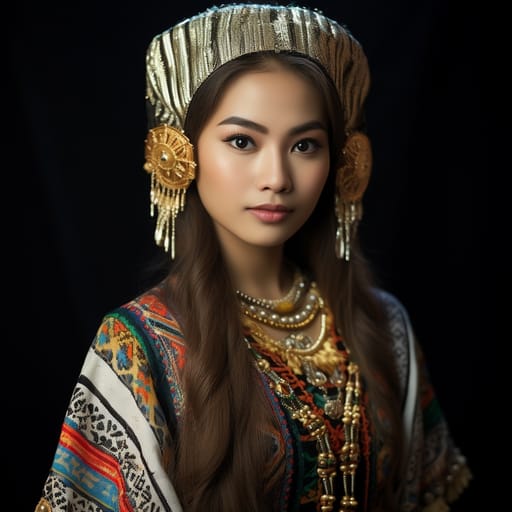
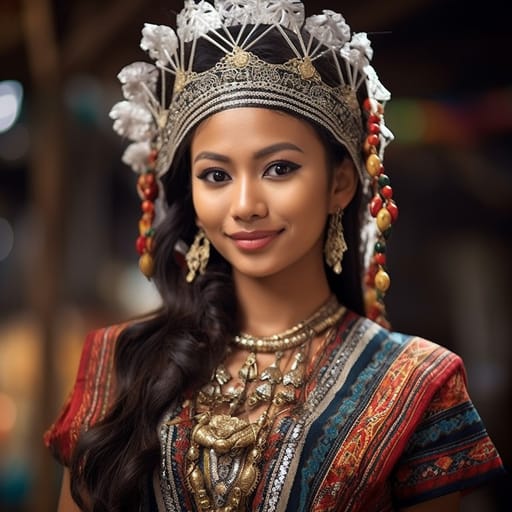
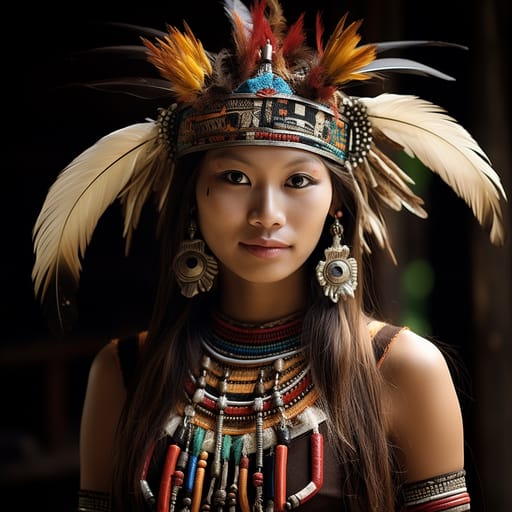
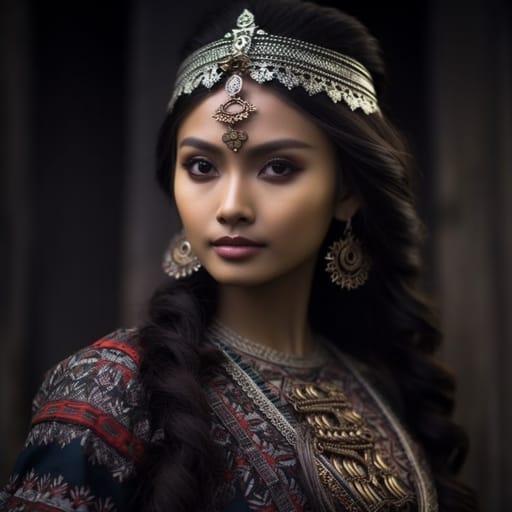
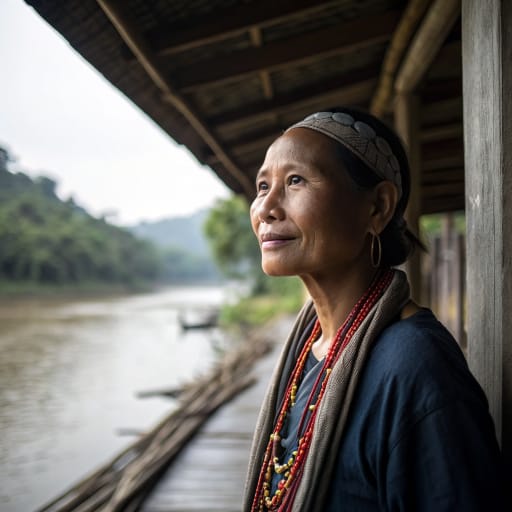
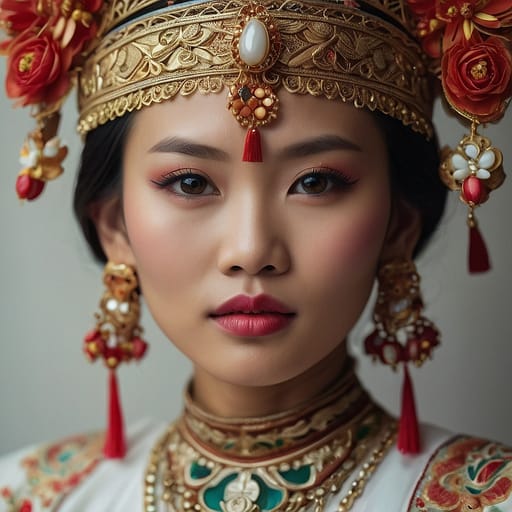
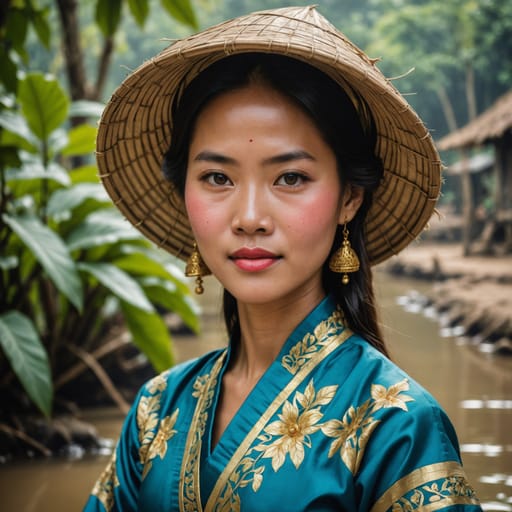
Typical Kankanaey Phenotypes
Reference for AI generation: hair, eyes, skin, facial structure, build
Kankanaey Body & Anatomy Reference
Anatomy by feature, Southeast Asian Austronesian / Austroasiatic phenotype
Kankanaey Boobs & Breasts
The typical Kankanaey bust is small-to-medium cup, modest projection, in line with the wider Southeast Asian Austronesian / Austroasiatic pattern. Areolas usually fall in the 26-38mm range, with medium-brown to dark-brown areolar pigmentation against the tan-to-medium-brown skin tone. Compared with the fuller South Asian or Polynesian bust, Kankanaey breasts sit forward and are generally firm, modest projection. A faithful AI render of Kankanaey tits keeps that shape and areola size.
Kankanaey Ass & Hips
Butt shape among Kankanaey women: small-to-medium, modest projection, narrower hip profile, over narrow-to-medium iliac crests. This follows Southeast Asian Austronesian / Austroasiatic ancestry and looks quite unlike the fuller glutes of the Pacific Islander phenotype. An accurate Kankanaey ass in adult AI imagery keeps both the silhouette and the overall build (ectomorph, petite frame) instead of a generic average.
Kankanaey Vagina & Pussy
Vulvar anatomy among Kankanaey women: medium-brown to dark-brown labial pigmentation. Pubic hair tends to be straight-to-wavy fine-to-medium texture, in the usual inverted-triangle pattern. Both follow Southeast Asian Austronesian / Austroasiatic pigmentation, which is why Kankanaey pussy renders should not fall back on a pale, sparse Western template.
Kankanaey Dicks & Penis
The Kankanaey cock profile, from Southeast Asian Austronesian / Austroasiatic anthropometric data: regional mean ~11cm erect; moderate girth; medium-brown shaft pigmentation. Pubic hair has a straight-to-wavy fine-to-medium texture and forms the usual inverted-V pattern. Whether Kankanaey men are circumcised follows religious and cultural practice rather than phenotype.
Kankanaey Body, Curves & Build
Build and curves among Kankanaey women follow the Southeast Asian Austronesian / Austroasiatic pattern: ectomorph, petite frame, mean adult female BMI 20-23. Proportions matter as much as skin tone, so Kankanaey figures should keep their regional height and limb ratios.
Kankanaey Skin Tone & Hair Texture
The Kankanaey skin range is tan to medium-brown (Fitzpatrick III-V), and hair tends to be straight-to-wavy 1A-2A, dark-brown to black. That combination marks the Southeast Asian Austronesian / Austroasiatic phenotype, and skin tone is the trait AI generators most often get wrong for Kankanaey women.
Explore phenotype categories
Structured taxonomy with peer-reviewed scales · 22 anatomical categories
Erotic Poses & Sex Positions
From the pose catalog: 219 named positions with reference skeletons
Frequently asked questions about Kankanaey people
Where is the Kankanaey homeland?
The Kankanaey homeland is Cordillera Central of northern Luzon, Philippines: western Mountain Province (Sagada, Besao, Bauko, Tadian, Sabangan), northern Benguet (Mankayan, Buguias, Bakun, Kibungan), and uplands of Ilocos Sur and La Union in Southeast Asia.
What language do Kankanaey people speak?
Kankanaey people primarily speak Kankanaey, with distinct Northern and Southern varieties (Austronesian, Cordilleran branch of Philippine languages); Ilocano, Filipino and English widely used.
What religion do Kankanaey people practice?
The predominant religion among Kankanaey people is Mostly Christian, with a strong Episcopal (Anglican) presence around Sagada plus Catholic and Protestant churches, often practiced alongside indigenous ancestral rites and animal offerings.






Make your own Kankanaey images
Five a day, free, no credits to buy. The studio starts from this group's phenotype data, so you can set body type, pose and style and keep the traits accurate.
Start with Kankanaey