No portrait yet
Pà Thẻn Erotic
Northern Vietnam: Tuyên Quang province, including the former Hà Giang province (Bắc Quang and Quang Bình areas) and the Lâm Bình and Chiêm Hóa areas
Pà Thẻn (Hmong-Mien, Hmongic branch, Pa-Hng group); Tày and Vietnamese widely used as second languages
Ancestor and spirit worship led by shamans; the post-harvest fire dance is a central rite
Also recorded as Pà Hưng and Tống; closest kin are the Pa-Hng speakers of southern China, officially classified there as Yao
About Pà Thẻn People
The Pà Thẻn are one of the smallest peoples officially recognized in Vietnam. They number fewer than ten thousand and farm the hill country of the far north. Across the country they are known above all for a night ritual in which dancers stamp and kick their way through a bed of burning coals. The fire dance gets the attention, but it belongs to a whole way of life that has held together in valleys where Tày, Dao and Hmong neighbors far outnumber them.
Their villages sit in the uplands of what used to be Hà Giang province and in the Lâm Bình and Chiêm Hóa areas of Tuyên Quang. The two provinces have since been merged into one. The Pà Thẻn came south from China, and their language still shows the route. It belongs to the Hmong-Mien family but is not a dialect of Hmong. Its closest relative is Pa-Hng, spoken over the border in southern China by people the Chinese state classifies as Yao. Even in its home valleys Pà Thẻn is a minority language, and many speakers also use Tày and Vietnamese.
Religious life centers on ancestors and spirits, and shamans act as go-betweens. Offerings at the household altar, rites for illness and the ceremonies of the farming year are part of ordinary life, not special occasions set apart from it. The fire dance comes out of the same system. After the harvest a shaman leads the opening rites and calls the spirits. Drumming and chanting build until the dancers, believed to be carried by those spirits, step barefoot into the fire and dance until the coals go dark. The ritual thanks the spirits, asks for good crops and health in the coming year, and drives off misfortune. Visitors who come expecting a stunt tend to miss that its purpose is protection, not spectacle.
The other thing people notice is red. Pà Thẻn women weave and wear clothing that is almost entirely red, set off with smaller patterns in white and yellow and topped with a long head wrap. At a highland market that color marks a Pà Thẻn woman from a distance, which matters in a region where several peoples share the same roads and the same trading days. Growing rice on hill fields and in paddies still sets the rhythm of the year, even as roads, schooling and work in the lowlands draw younger people away from the villages.
Related ethnic groups
Groups that share Pà Thẻn's homeland, region, language, or religious tradition. These are likely candidates for comparative phenotype reference.
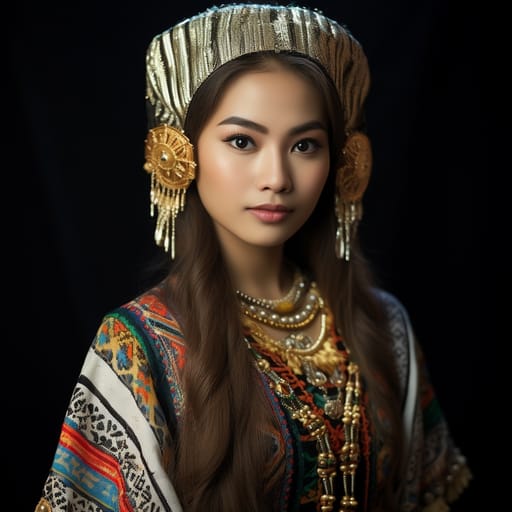
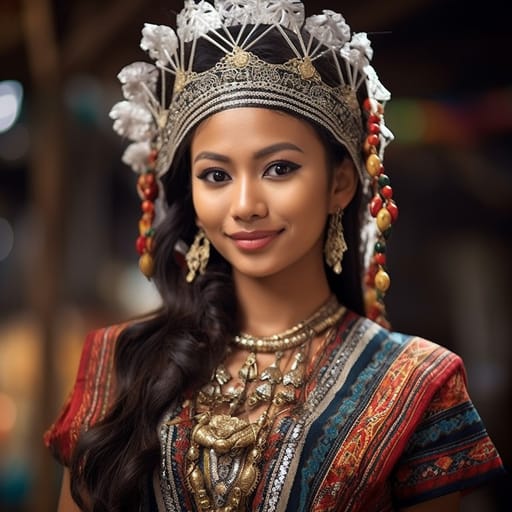
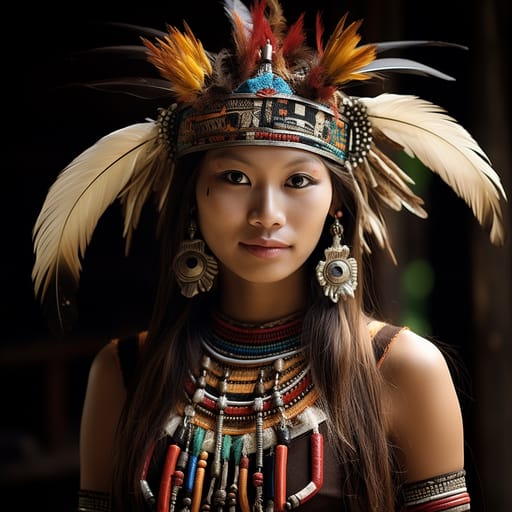
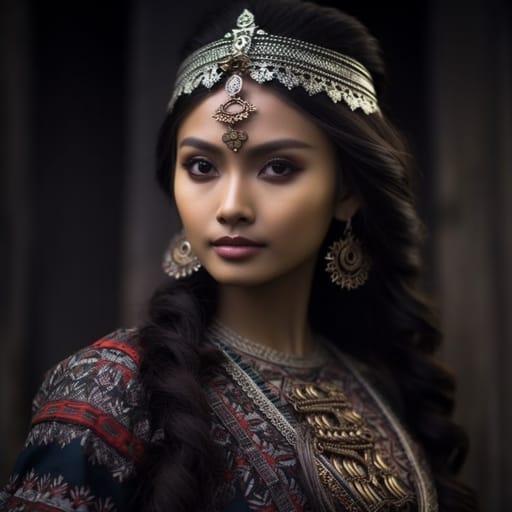
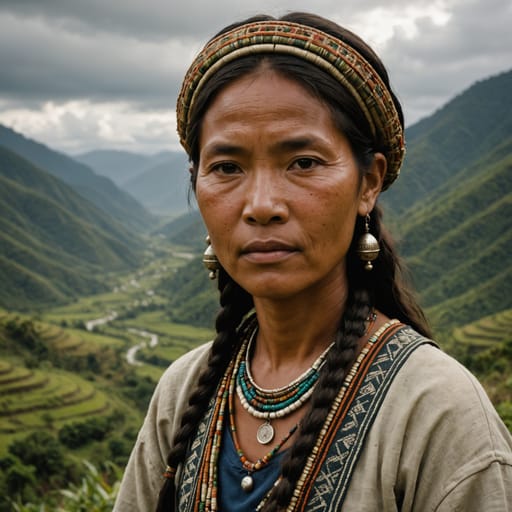
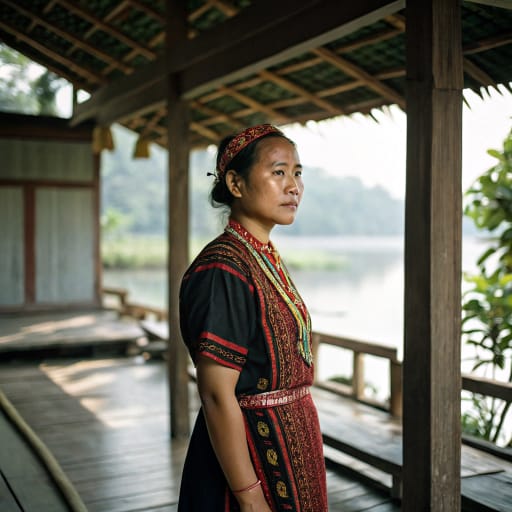
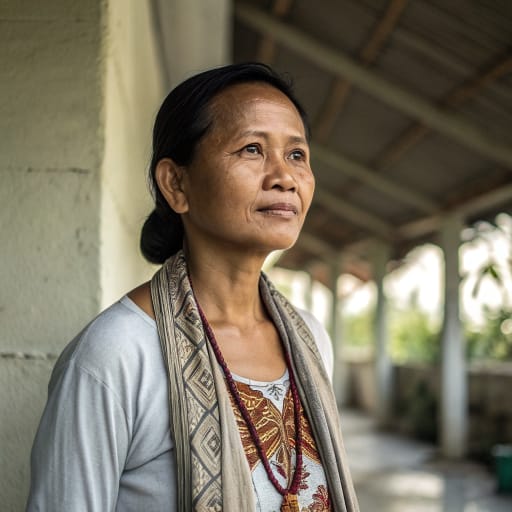
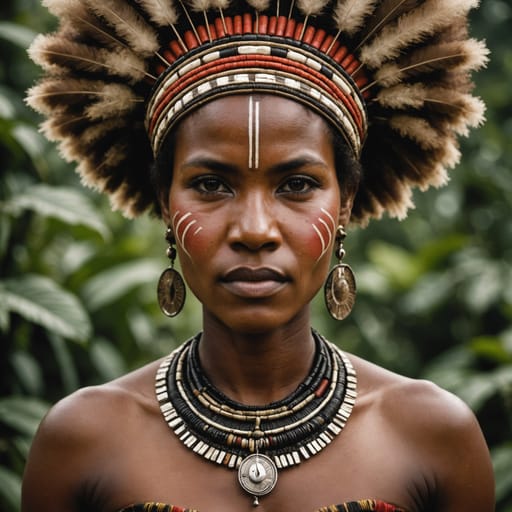
Typical Pà Thẻn Phenotypes
Reference for AI generation: hair, eyes, skin, facial structure, build
Pà Thẻn Body & Anatomy Reference
Southeast Asian Austronesian / Austroasiatic phenotype: anatomy reference for AI nude generation
Pà Thẻn Boobs & Breasts
The typical Pà Thẻn bust is small-to-medium cup, modest projection, in line with the wider Southeast Asian Austronesian / Austroasiatic pattern. Areolas usually fall in the 26-38mm range, with medium-brown to dark-brown areolar pigmentation against the tan-to-medium-brown skin tone. Compared with the fuller South Asian or Polynesian bust, Pà Thẻn breasts sit forward and are generally firm, modest projection. A faithful AI render of Pà Thẻn tits keeps that shape and areola size.
Pà Thẻn Ass & Hips
Butt shape among Pà Thẻn women: small-to-medium, modest projection, narrower hip profile, over narrow-to-medium iliac crests. This follows Southeast Asian Austronesian / Austroasiatic ancestry and looks quite unlike the fuller glutes of the Pacific Islander phenotype. An accurate Pà Thẻn ass in adult AI imagery keeps both the silhouette and the overall build (ectomorph, petite frame) instead of a generic average.
Pà Thẻn Vagina & Pussy
Vulvar anatomy among Pà Thẻn women: medium-brown to dark-brown labial pigmentation. Pubic hair tends to be straight-to-wavy fine-to-medium texture, in the usual inverted-triangle pattern. Both follow Southeast Asian Austronesian / Austroasiatic pigmentation, which is why Pà Thẻn pussy renders should not fall back on a pale, sparse Western template.
Pà Thẻn Dicks & Penis
The Pà Thẻn cock profile, from Southeast Asian Austronesian / Austroasiatic anthropometric data: regional mean ~11cm erect; moderate girth; medium-brown shaft pigmentation. Pubic hair has a straight-to-wavy fine-to-medium texture and forms the usual inverted-V pattern. Whether Pà Thẻn men are circumcised follows religious and cultural practice rather than phenotype.
Pà Thẻn Body, Curves & Build
Build and curves among Pà Thẻn women follow the Southeast Asian Austronesian / Austroasiatic pattern: ectomorph, petite frame, mean adult female BMI 20-23. Proportions matter as much as skin tone, so Pà Thẻn figures should keep their regional height and limb ratios.
Pà Thẻn Skin Tone & Hair Texture
The Pà Thẻn skin range is tan to medium-brown (Fitzpatrick III-V), and hair tends to be straight-to-wavy 1A-2A, dark-brown to black. That combination marks the Southeast Asian Austronesian / Austroasiatic phenotype, and skin tone is the trait AI generators most often get wrong for Pà Thẻn women.
Explore phenotype categories
Structured taxonomy with peer-reviewed scales · 22 anatomical categories
Erotic Poses & Sex Positions
From the pose catalog: 219 named positions with reference skeletons
Frequently asked questions about Pà Thẻn people
Where is the Pà Thẻn homeland?
The Pà Thẻn homeland is Northern Vietnam: Tuyên Quang province, including the former Hà Giang province (Bắc Quang and Quang Bình areas) and the Lâm Bình and Chiêm Hóa areas in Southeast Asia.
What language do Pà Thẻn people speak?
Pà Thẻn people primarily speak Pà Thẻn (Hmong-Mien, Hmongic branch, Pa-Hng group); Tày and Vietnamese widely used as second languages.
What religion do Pà Thẻn people practice?
The predominant religion among Pà Thẻn people is Ancestor and spirit worship led by shamans; the post-harvest fire dance is a central rite.






Make your own Pà Thẻn images
Five a day, free, no credits to buy. The studio starts from this group's phenotype data, so you can set body type, pose and style and keep the traits accurate.
Start with Pà Thẻn