No portrait yet
Palawan Erotic
Southern Palawan island, Philippines, including Brooke's Point, Quezon, Rizal, Sofronio Española, Bataraza and the Mount Mantalingahan range
Palawano, with Brooke's Point, Central and Southwest varieties (Austronesian, Palawanic branch)
Traditional animism centered on Ampu and shamans (balyan); some Muslims along the southern coast and some Christian converts
Palawanic peoples of Palawan island, closely related to the Tagbanwa; includes the Tau't Bato of the Singnapan basin
About Palawan People
The Pala'wan are the people of southern Palawan, the long, narrow island that stretches from Mindoro toward Borneo. The island's older indigenous peoples split it roughly by region: the Batak in the north central forests, the Tagbanwa through the middle, and the Pala'wan in the south. Pala'wan country covers coastal flats, river valleys and the slopes of the Mantalingahan range, whose peak is the highest on the island and which they treat as ancestral ground. They never built a kingdom or served a single chief. What holds them together is a shared language, a body of customary law called adat, and a habit of living in small hamlets of related households scattered across the hills.
Palawano belongs to the Palawanic branch of the Austronesian family and is closest to Tagbanwa, with distinct varieties spoken around Brooke's Point, Quezon and the southwest coast. Upland families still clear swidden fields for rice, maize and cassava, then let tired plots go back to forest, and people still hunt birds and small game with the blowpipe. The old faith is animist. Ampu, the Master, made the world, lesser spirits stand between him and people, and shamans called balyan heal the sick and keep the peace with the unseen. On the southern coast, long contact with the Sulu sultanate drew some Pala'wan into Islam, and Christian missions later converted others. Even so, rites around the rice harvest carry on in many hamlets.
Outsiders who know anything about the Pala'wan usually know their songs. Their epics, called tultul, are sung by one singer and can run from dusk to dawn, sometimes over several nights. The French ethnologist Nicole Revel spent decades recording them, including Kudaman as sung by the master singer Usuy. The same gatherings bring out the kusyapi, a boat lute with two strings, along with bamboo jaw harps and gongs.
One Pala'wan community, the Tau't Bato, the people of the rock of the Singnapan basin, drew national attention for spending part of the year in raised shelters built inside large caves. Today the bigger story is land. Settlers from other islands, the Rio Tuba nickel mine and spreading oil palm plantations have all pushed into Pala'wan territory. Communities now file ancestral domain claims under the Indigenous Peoples' Rights Act of 1997 to protect what they have left.
Related ethnic groups
Groups that share Palawan's homeland, region, language, or religious tradition. These are likely candidates for comparative phenotype reference.
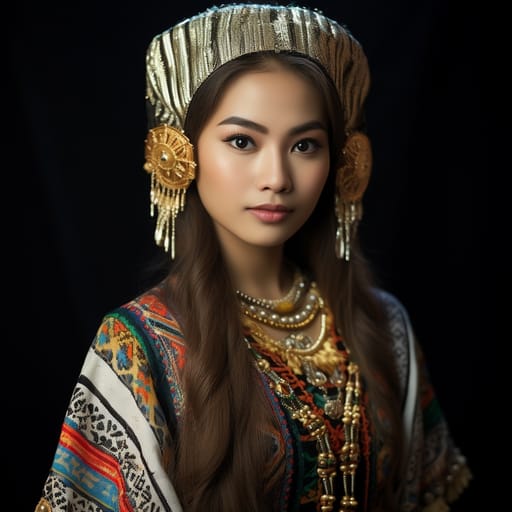
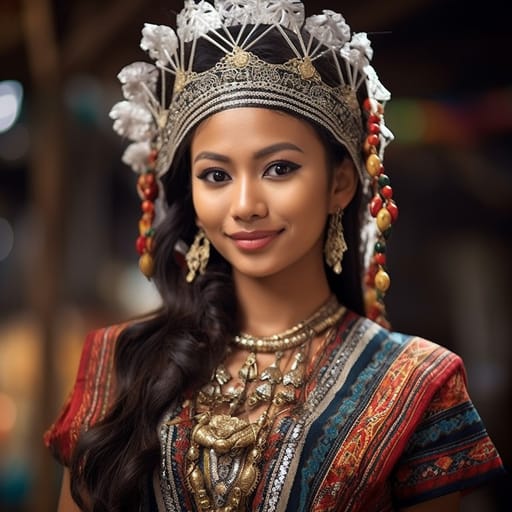
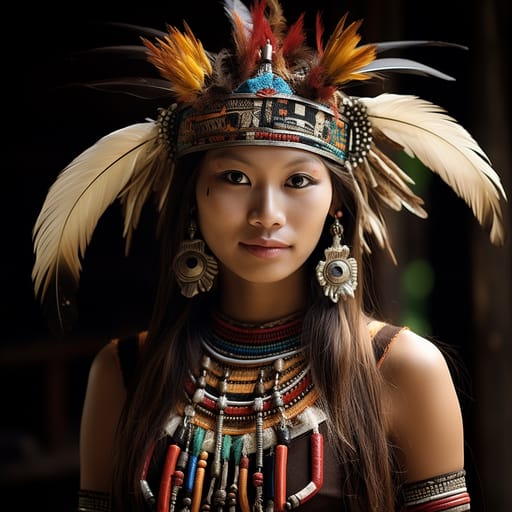
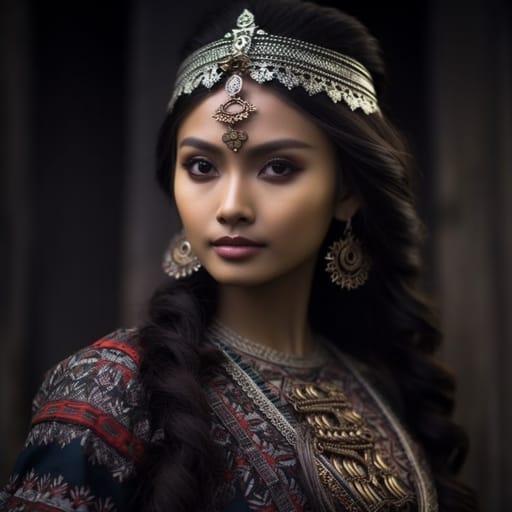
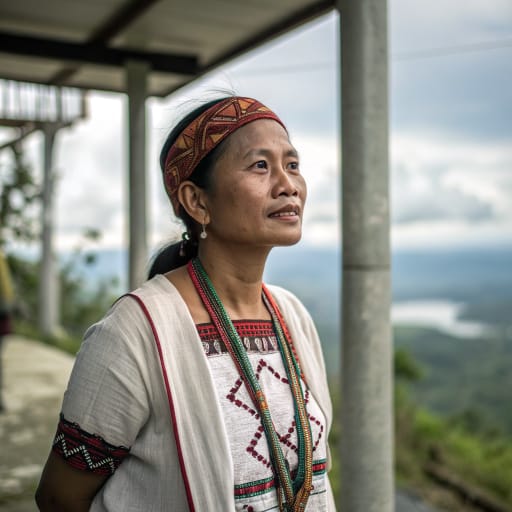
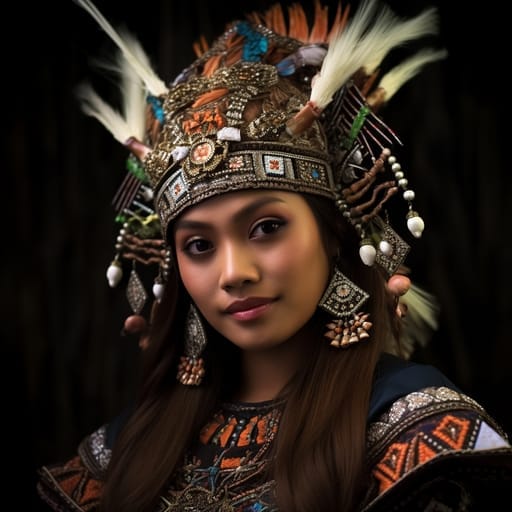
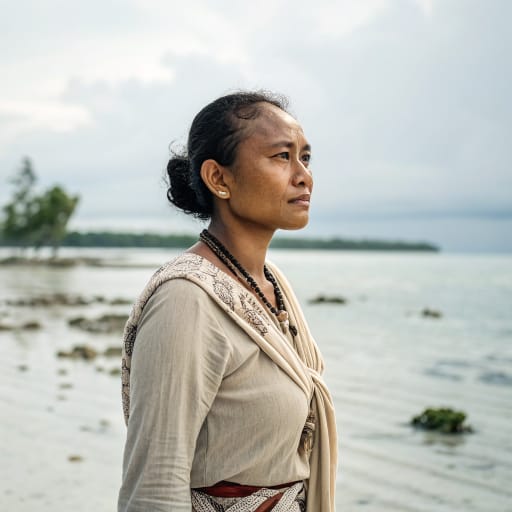
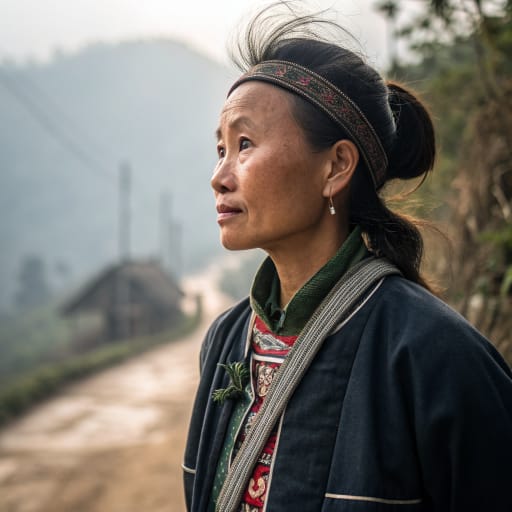
Typical Palawan Phenotypes
Reference for AI generation: hair, eyes, skin, facial structure, build
Palawan Body & Anatomy Reference
Southeast Asian Austronesian / Austroasiatic phenotype: anatomy reference for AI nude generation
Palawan Boobs & Breasts
Palawan boobs follow the Southeast Asian Austronesian / Austroasiatic profile: small-to-medium cup, modest projection. Areolar diameter is usually 26-38mm, and the coloring is medium-brown to dark-brown areolar pigmentation against the tan-to-medium-brown skin tone. Breast shape tracks body composition (ectomorph, petite frame, mean adult female BMI 20-23), so Palawan breasts tend to be firm, modest projection. Expect a forward-set shape, not the fuller South Asian or Polynesian bust.
Palawan Ass & Hips
Palawan ass and hip morphology presents as small-to-medium, modest projection, narrower hip profile, distinctly different from the fuller glutes of the Pacific Islander phenotype. The Palawan pelvic profile shows narrow-to-medium iliac crests, anchored in the Southeast Asian Austronesian / Austroasiatic skeletal pattern. Palawan butt shots in adult AI imagery should render the small-to-medium, modest projection, narrower hip profile silhouette with the overall build (ectomorph, petite frame) and the fat distribution typical of the Southeast Asian Austronesian / Austroasiatic phenotype.
Palawan Vagina & Pussy
Palawan pussy anatomy typically shows medium-brown to dark-brown labial pigmentation. Pubic hair is usually straight-to-wavy fine-to-medium texture. In AI-generated Palawan nudes, labial color should blend into the tan to medium-brown skin with a gradual transition, and the hair should keep its straight-to-wavy fine-to-medium texture.
Palawan Dicks & Penis
Penis reference for Palawan men: regional mean ~11cm erect, moderate girth. Coloring: medium-brown shaft pigmentation. An accurate Palawan cock in AI imagery matches the surrounding tan to medium-brown skin rather than a generic porn default. Circumcision depends on religion and custom, not ancestry.
Palawan Body, Curves & Build
The Palawan figure is generally ectomorph, petite frame, with mean adult female BMI 20-23, characteristic of Southeast Asian Austronesian / Austroasiatic ancestry. AI image tools tend to flatten regional body types into a few stock shapes; here the Palawan build is kept as its own reference.
Palawan Skin Tone & Hair Texture
Skin: tan to medium-brown (Fitzpatrick III-V). Hair: straight-to-wavy 1A-2A, dark-brown to black. Both are typical of Southeast Asian Austronesian / Austroasiatic ancestry. The most common mistake in AI nudes of Palawan women is a body rendered lighter than the face.
Explore phenotype categories
Structured taxonomy with peer-reviewed scales · 22 anatomical categories
Erotic Poses & Sex Positions
From the pose catalog: 219 named positions with reference skeletons
Frequently asked questions about Palawan people
Where is the Palawan homeland?
The Palawan homeland is Southern Palawan island, Philippines, including Brooke's Point, Quezon, Rizal, Sofronio Española, Bataraza and the Mount Mantalingahan range in Southeast Asia.
What language do Palawan people speak?
Palawan people primarily speak Palawano, with Brooke's Point, Central and Southwest varieties (Austronesian, Palawanic branch).
What religion do Palawan people practice?
The predominant religion among Palawan people is Traditional animism centered on Ampu and shamans (balyan); some Muslims along the southern coast and some Christian converts.






Make your own Palawan images
Five a day, free, no credits to buy. The studio starts from this group's phenotype data, so you can set body type, pose and style and keep the traits accurate.
Start with Palawan