Help us get this right
Does this portrait look right for Paiwan?
Nobody has judged this one yet. You would be the first.
Paiwan Erotic
Southern Taiwan: the lower Central Mountain Range and the coasts on both sides, mainly Pingtung County and southern Taitung County.
Predominantly Christian, Presbyterian and Roman Catholic, alongside surviving ancestral spirit ritual led by pulingau priestesses.
Two main divisions, Ravar and Vuculj (also written Butsul), the latter split into regional clusters such as Paumaumaq and Paqaluqalu; one of Taiwan's recognized Austronesian indigenous peoples and closely tied to the neighboring Rukai.
About Paiwan People
Rank is the first thing to understand about the Paiwan. Where most of Taiwan's indigenous peoples organize themselves around age grades or rough kin equality, the Paiwan inherit status: a chiefly line, the mamazangiljan, holds a village's land and hunting grounds and takes a share of what is taken from them, while commoner houses farm, hunt and pay in millet and game. Title descends to the firstborn child regardless of sex, so women lead villages as a matter of course rather than as an exception. What actually inherits is less the individual than the house: a named building of stacked slate, dark and cool, whose name outlives every generation that sleeps in it. Their country is the southern end of Taiwan's Central Mountain Range and the coast on either side of it, roughly today's Pingtung County and the southern reach of Taitung, steep river valleys dropping toward the Pacific and the Taiwan Strait. The language, also called Paiwan, is Formosan, one of the deep primary branches of Austronesian, which is to say it sits nearer the root of that family than Tagalog, Malay, Malagasy or Hawaiian do. Linguists reconstructing Proto-Austronesian lean on it heavily.
Almost all Paiwan today are Christian, mostly Presbyterian or Catholic, after mass conversions from the 1950s, but the older ritual world was never fully displaced. Priestesses, pulingau, still officiate in some villages, and a few communities keep the Maleveq, the five year ceremony, in which ancestral spirits are called down from the mountains, honored, and then sent away again; men spear a rattan ball flung high into the air, each ball carrying a fortune or a misfortune. Three things count as treasure: ancient clay jars, bronze knives, and glass beads, each bead with its own name and history, still central to bridewealth. Carve a lintel or embroider a shoulder and the same two figures appear, the hundred pacer snake and the human head, both restricted by rank, as tattoos once were on the hands of noblewomen and the chests of men. The wider world first learned the name in 1871, when Paiwan at Mudan killed shipwrecked Ryukyuan sailors and Japan used the deaths as grounds for its 1874 expedition to Taiwan, a campaign that reordered regional politics well beyond the island. Later the Japanese administration moved mountain villages down to the foothills; Typhoon Morakot moved several more in 2009, and the old slate settlements stand empty above the new ones. Meanwhile the language is on the pop charts: Abao sings in Paiwan and wins national awards for it, and the double nose flute, once a nobleman's instrument for courtship and mourning, is being taught again.
Related ethnic groups
Groups that share Paiwan's homeland, region, language, or religious tradition. These are likely candidates for comparative phenotype reference.
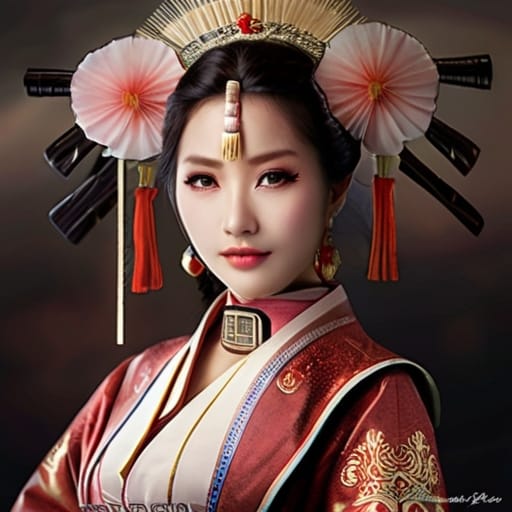
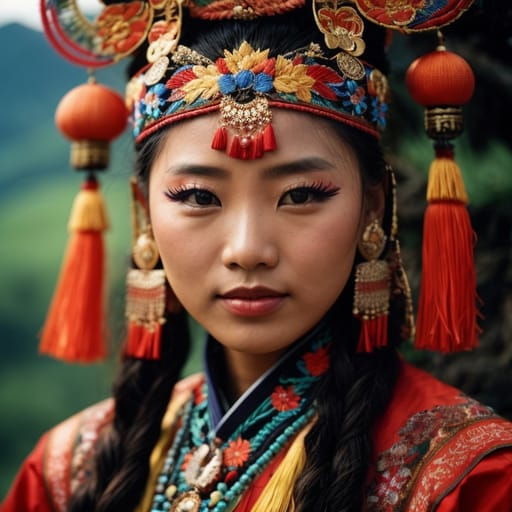
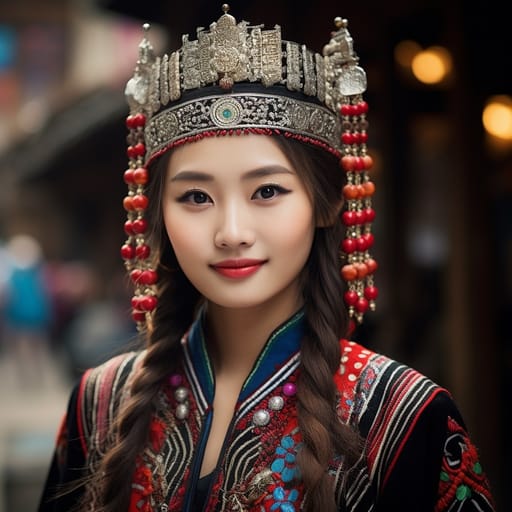
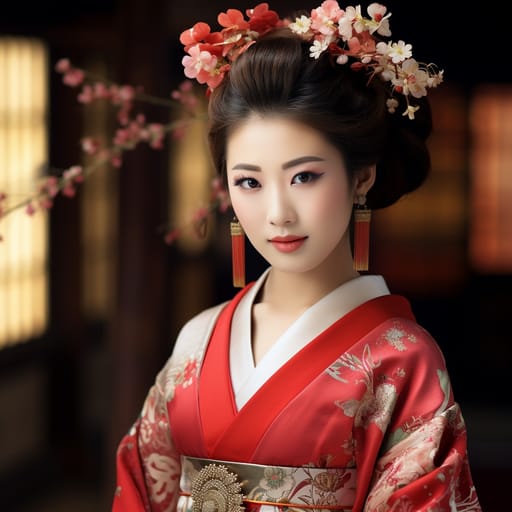
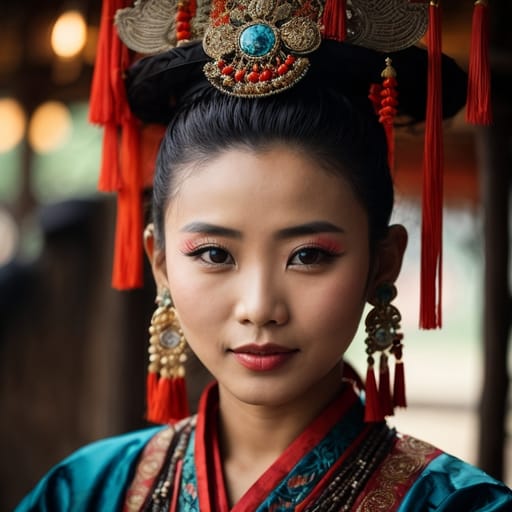
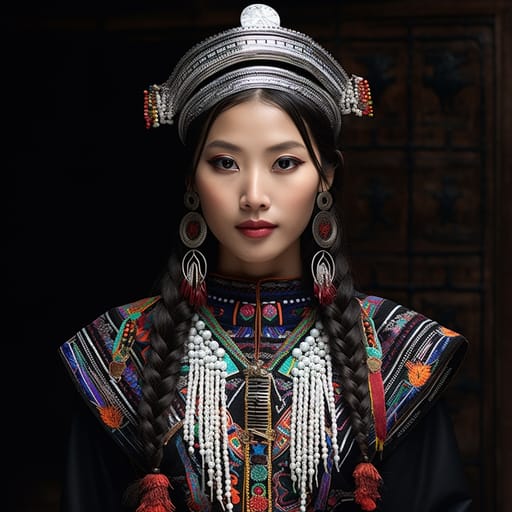
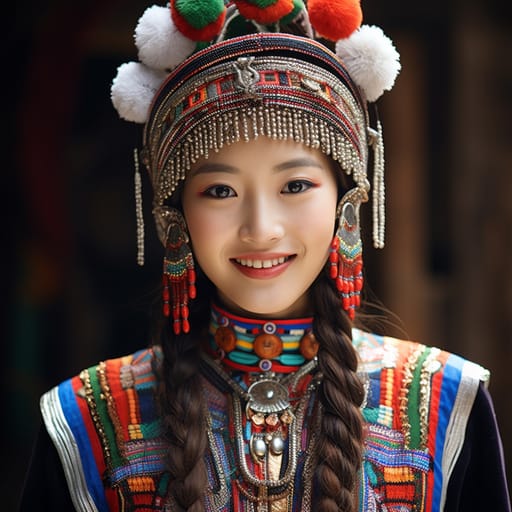
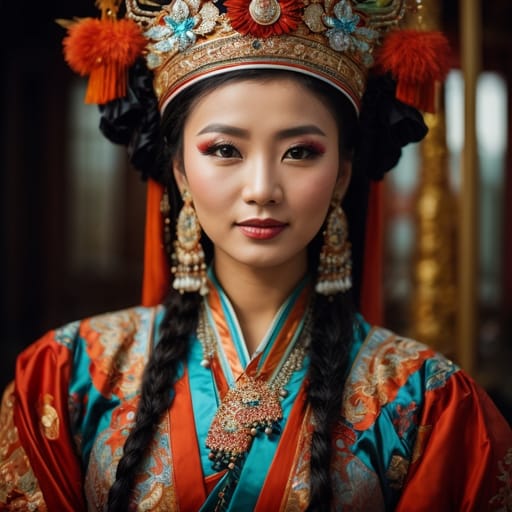
Typical Paiwan Phenotypes
Reference for AI generation: hair, eyes, skin, facial structure, build
Paiwan Body & Anatomy Reference
Per-feature anatomical profile for AI nude generation: East Asian Sinitic / Mongoloid phenotype
Paiwan Boobs & Breasts
Paiwan boobs follow the East Asian Sinitic / Mongoloid profile: small-to-medium cup, modest projection. Areolar diameter is usually 26-36mm, and the coloring is light-pink to medium-brown areolar pigmentation against the light-to-medium skin tone. Breast shape tracks body composition (ectomorph-to-mesomorph, lean frame, mean adult female BMI 20-23), so Paiwan breasts tend to be firm and modestly projecting; smaller cup size than the South Asian or Western Asian average. Expect a forward-set shape, not the fuller South Asian or Levantine bust profile.
Paiwan Ass & Hips
Paiwan ass and hip morphology presents as small-to-medium, modest projection, narrower hip profile, distinctly different from the fuller projected glutes of the West African or Polynesian phenotype. The Paiwan pelvic profile shows narrower iliac crests, less gluteal-femoral fat deposition, anchored in the East Asian Sinitic / Mongoloid skeletal pattern. Paiwan butt shots in adult AI imagery should render the small-to-medium, modest projection, narrower hip profile silhouette with the overall build (ectomorph-to-mesomorph, lean frame) and the fat distribution typical of the East Asian Sinitic / Mongoloid phenotype.
Paiwan Vagina & Pussy
Paiwan pussy anatomy typically shows light-pink to medium-brown labial pigmentation, smaller labia minora. Pubic hair is usually straight fine texture, sparser distribution than the South Asian norm. In AI-generated Paiwan nudes, labial color should blend into the light to medium skin with a gradual transition, and the hair should keep its straight fine texture.
Paiwan Dicks & Penis
Penis reference for Paiwan men: regional mean ~11-12cm erect, moderate girth. Coloring: light-brown shaft pigmentation. An accurate Paiwan cock in AI imagery matches the surrounding light to medium skin rather than a generic porn default. Circumcision depends on religion and custom, not ancestry.
Paiwan Body, Curves & Build
The Paiwan figure is generally ectomorph-to-mesomorph, lean frame, with mean adult female BMI 20-23, characteristic of East Asian Sinitic / Mongoloid ancestry. AI image tools tend to flatten regional body types into a few stock shapes; here the Paiwan build is kept as its own reference.
Paiwan Skin Tone & Hair Texture
Skin: light to medium (Fitzpatrick II-IV). Hair: straight 1A, fine-to-medium, predominantly black. Both are typical of East Asian Sinitic / Mongoloid ancestry. The most common mistake in AI nudes of Paiwan women is a body rendered lighter than the face.
Explore phenotype categories
Structured taxonomy with peer-reviewed scales · 22 anatomical categories
Erotic Poses & Sex Positions
From the pose catalog: 219 named positions with reference skeletons
Frequently asked questions about Paiwan people
Where is the Paiwan homeland?
The Paiwan homeland is Southern Taiwan: the lower Central Mountain Range and the coasts on both sides, mainly Pingtung County and southern Taitung County. in East Asia.
What language do Paiwan people speak?
Paiwan people primarily speak Paiwan (Austronesian, Formosan branch).
What religion do Paiwan people practice?
The predominant religion among Paiwan people is Predominantly Christian, Presbyterian and Roman Catholic, alongside surviving ancestral spirit ritual led by pulingau priestesses..






Make your own Paiwan images
Five a day, free, no credits to buy. The studio starts from this group's phenotype data, so you can set body type, pose and style and keep the traits accurate.
Start with Paiwan