No portrait yet
Pacoh Erotic
Annamite uplands on the border of central Vietnam and Laos: the A Lưới highlands west of Huế and the Quảng Trị hills in Vietnam, and Samuoi and neighboring districts of Salavan province in Laos.
Pacoh (Austroasiatic, Katuic branch), closely related to Tà Ôi, Bru and Katu; Vietnamese or Lao as second language
Traditional animism and ancestor veneration (yang spirits, buffalo sacrifice, reburial rites); a Protestant Christian minority
Katuic peoples; officially counted within the Tà Ôi in Vietnam and listed separately in Laos; the Pa Hy (Pahi) are sometimes treated as a Pacoh branch
About Pacoh People
The Pacoh are a Katuic hill people of the Annamite range, living where the A Lưới highlands west of Huế and the Quảng Trị uplands drop over the border into Salavan province in Laos. The name is usually glossed as mountain people, and that is how lowlanders on both sides have always placed them: the swidden farmers on the ridges above the coast, in stilt houses, answering to village elders rather than to any court. Vietnam does not list them as a separate ethnic group. The state files them under the Tà Ôi, a close linguistic cousin, and most Pacoh accept the paperwork while keeping the distinction firm at home. Laos counts them on their own.
Pacoh belongs to the Katuic branch of Austroasiatic, with Tà Ôi, Bru and Katu as its nearest relatives, and linguists know it for a vowel system large even by Mon-Khmer standards and a stock of expressive words that mimic sound, shape and motion. It had no script until missionary linguists devised a Latin one in the 1960s, and literacy today runs through Vietnamese or Lao. Religion is spirit-centered. Streams, fields and old trees each have a yang that must be fed, and the dead stay in the life of the village. The great Pacoh ceremony, Ariêu Ping, comes around once a decade or two: families exhume their dead from scattered graves, wash and rewrap the bones, and rebury them together in a carved tomb house, with buffalo sacrifice, gongs and days of feeding guests. Aza Koonh, the new-rice festival that closes the farming year, was listed as national intangible heritage in Vietnam in 2019. Protestant missions have made converts, but ancestor rites carry on alongside the church.
The twentieth century ran straight through Pacoh country. The Ho Chi Minh Trail crossed their valleys, Hamburger Hill was fought in the A Shau valley, and the old A So airstrip in A Lưới remains one of Vietnam's worst dioxin hotspots. Pacoh served on both sides. Those who joined the northern cause took the surname Hồ en masse, which is why so many Pacoh today carry it, and the guerrilla Kan Lịch became a national hero. Since the 1990s swidden rice has given way to paddies, cassava, coffee and acacia, and the pass road to Laos has turned the trail into a trade route. The tooth filing and ear stretching that once marked adulthood are gone. Women still weave the dark, bead-worked cloth of the region, now worn for weddings and the reburial feasts rather than every day.
Related ethnic groups
Groups that share Pacoh's homeland, region, language, or religious tradition. These are likely candidates for comparative phenotype reference.
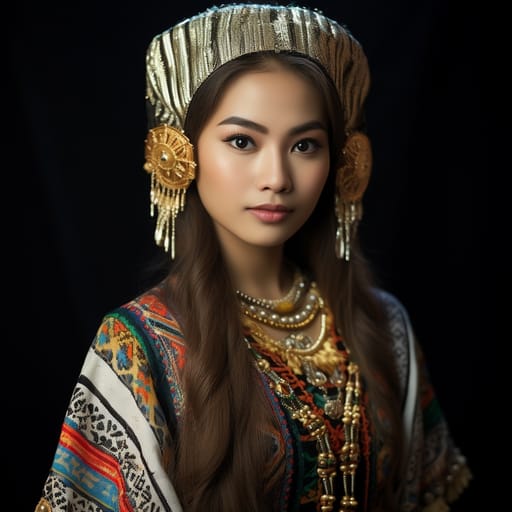
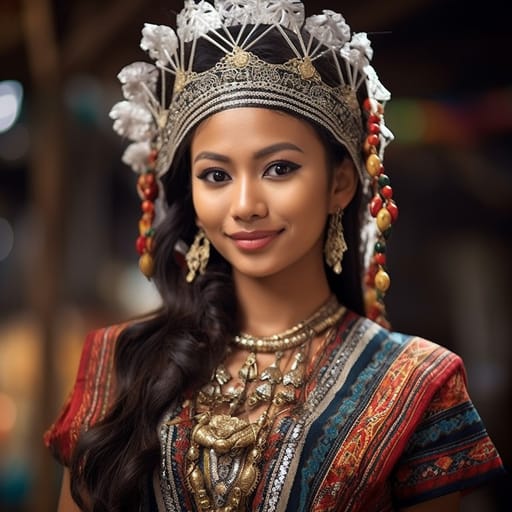
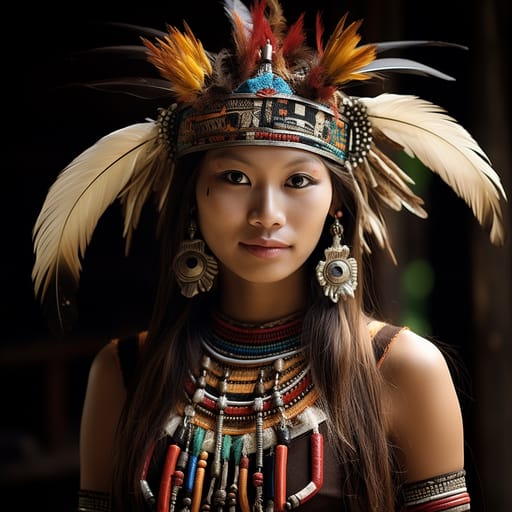
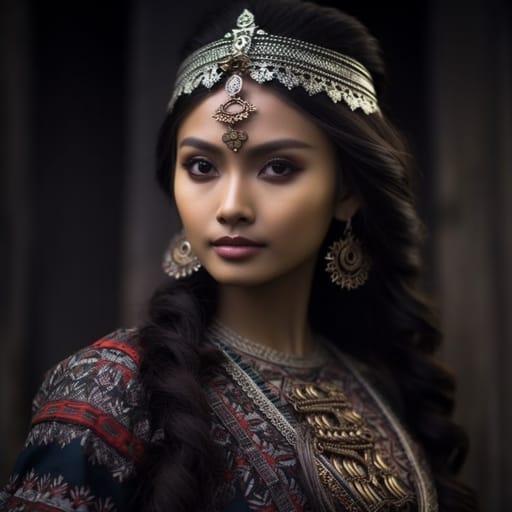
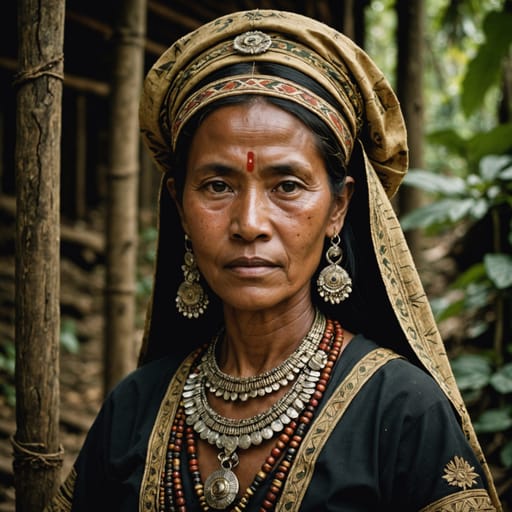
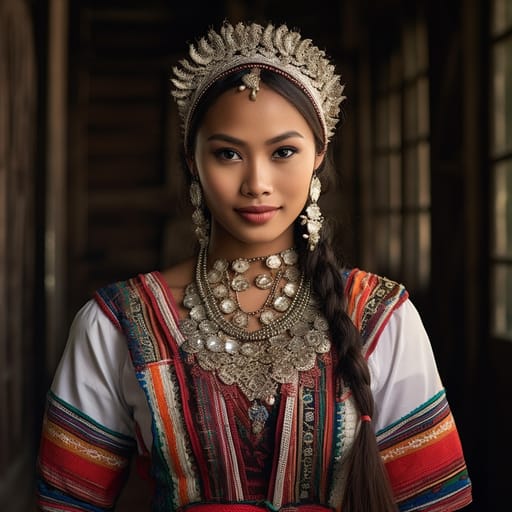
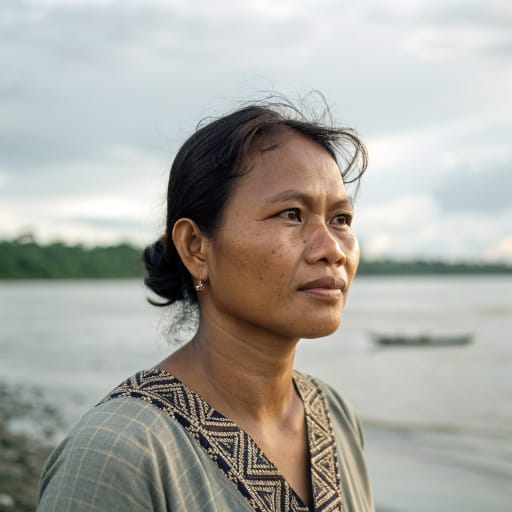
Typical Pacoh Phenotypes
Reference for AI generation: hair, eyes, skin, facial structure, build
Pacoh Body & Anatomy Reference
Anatomy by feature, Southeast Asian Austronesian / Austroasiatic phenotype
Pacoh Boobs & Breasts
Bust reference for Pacoh women: small-to-medium cup, modest projection, which is typical of Southeast Asian Austronesian / Austroasiatic ancestry. Areolas measure about 26-38mm across, with medium-brown to dark-brown pigmentation. Body type (ectomorph, petite frame) shapes the bust as well, so Pacoh tits are usually firm, modest projection. In AI imagery, keep the forward-set shape rather than drifting toward the fuller South Asian or Polynesian bust.
Pacoh Ass & Hips
The Pacoh ass is typically small-to-medium, modest projection, narrower hip profile, which sets it apart from the fuller glutes of the Pacific Islander phenotype. Underneath, the pelvis shows narrow-to-medium iliac crests, part of the Southeast Asian Austronesian / Austroasiatic skeletal pattern. For Pacoh butt pics and AI renders, match that silhouette and the overall build (ectomorph, petite frame).
Pacoh Vagina & Pussy
Pacoh pussy and vulvar anatomy presents medium-brown to dark-brown labial pigmentation, consistent with the Southeast Asian Austronesian / Austroasiatic phenotype's pigmentation pattern. Pacoh pubic hair is typically straight-to-wavy fine-to-medium texture, in the inverted-triangle pattern. For anatomically accurate Pacoh pussy renders the labial coloration should match the surrounding tan to medium-brown skin tone with a continuous gradient, and the hair should keep its straight-to-wavy fine-to-medium texture.
Pacoh Dicks & Penis
Pacoh dicks follow the Southeast Asian Austronesian / Austroasiatic reference data: regional mean ~11cm erect; moderate girth; medium-brown shaft pigmentation. Shaft color should track the tan to medium-brown skin tone with a smooth change toward the glans, and Pacoh pubic hair keeps its straight-to-wavy fine-to-medium texture.
Pacoh Body, Curves & Build
Pacoh body type and overall build presents as ectomorph, petite frame, with mean adult female BMI 20-23: the characteristic Southeast Asian Austronesian / Austroasiatic habitus. Pacoh curves and proportions should keep the regional skeletal frame (height, shoulder-to-hip ratio, limb proportions) rather than a generic mesomorph default.
Pacoh Skin Tone & Hair Texture
Pacoh skin sits in the tan to medium-brown (Fitzpatrick III-V) band. Hair is typically straight-to-wavy 1A-2A, dark-brown to black, in keeping with the Southeast Asian Austronesian / Austroasiatic phenotype. In nude renders the skin should stay one even tone from face to body, and body, pubic and head hair should match.
Explore phenotype categories
Structured taxonomy with peer-reviewed scales · 22 anatomical categories
Erotic Poses & Sex Positions
From the pose catalog: 219 named positions with reference skeletons
Frequently asked questions about Pacoh people
Where is the Pacoh homeland?
The Pacoh homeland is Annamite uplands on the border of central Vietnam and Laos: the A Lưới highlands west of Huế and the Quảng Trị hills in Vietnam, and Samuoi and neighboring districts of Salavan province in Laos. in Southeast Asia.
What language do Pacoh people speak?
Pacoh people primarily speak Pacoh (Austroasiatic, Katuic branch), closely related to Tà Ôi, Bru and Katu; Vietnamese or Lao as second language.
What religion do Pacoh people practice?
The predominant religion among Pacoh people is Traditional animism and ancestor veneration (yang spirits, buffalo sacrifice, reburial rites); a Protestant Christian minority.






Make your own Pacoh images
Five a day, free, no credits to buy. The studio starts from this group's phenotype data, so you can set body type, pose and style and keep the traits accurate.
Start with Pacoh