Help us get this right
Does this portrait look right for Musi?
Nobody has judged this one yet. You would be the first.
Musi Erotic
Middle and upper Musi River basin in South Sumatra, Indonesia, chiefly Musi Banyuasin and Musi Rawas regencies
Musi (Austronesian, Malayic), closely related to Palembang Malay; Indonesian widely used
Sunni Islam, alongside customary adat
Local communities identified by river and district, such as Sekayu and Rawas; part of the wider Malay peoples of South Sumatra
About Musi People
The Musi are named for their river, and the river still explains most of what sets them apart. They are the people of the middle and upper Musi basin in South Sumatra, Indonesia, concentrated in Musi Banyuasin and Musi Rawas regencies. Sekayu, the capital of Musi Banyuasin, is their best-known town. Villages string along the main channel and along the tributaries that South Sumatrans call the Batanghari Sembilan, the nine rivers. For generations the water served as road, food supply and address at once. Traditional houses stand on stilts, river fish is everyday food, and where you lived was described first as upstream or downstream.
That split between upstream and downstream carries real history. Palembang, on the lower river, was the hub of Srivijaya's maritime trade and later the seat of the Palembang Sultanate. Its court treated the interior as the uluan, the hinterland that sent pepper, forest products and tribute downriver. Upcountry communities were organized into marga, territorial units under a chief called a pasirah, and governed by customary codes such as the Simbur Cahaya. The Dutch kept that framework after dismantling the sultanate in the 1820s. It outlasted Indonesian independence until South Sumatra replaced the marga with standard village administration in the early 1980s.
Musi is a Malayic language, close enough to Palembang Malay that the two are often classed as varieties of one language, with Palembang as the urban form shaped by the old court. Speech shifts noticeably from district to district, and the language sits among sharper contrasts. Komering, to the east, belongs to the Lampungic branch, and Rejang, spoken in the highlands toward Bengkulu, stands apart from Malay altogether.
The Musi are Sunni Muslims, and Islam sets the rhythm of the week and of a life. Weddings, circumcisions and funerals bring Quran recitation and shared meals that draw in much of the village. The region's folk music, which also goes by the name Batanghari Sembilan, pairs a lone acoustic guitar with plaintive sung verse. Most households now make their living from rubber gardens and oil palm, while the oil and gas fields of Musi Banyuasin have brought wage work and newcomers to districts that once looked only to the river.
Related ethnic groups
Groups that share Musi's homeland, region, language, or religious tradition. These are likely candidates for comparative phenotype reference.
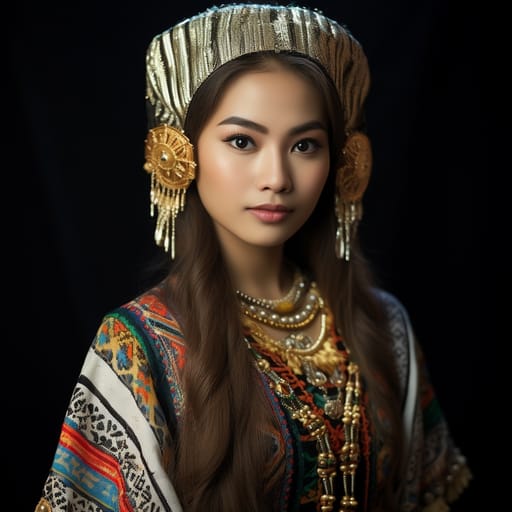
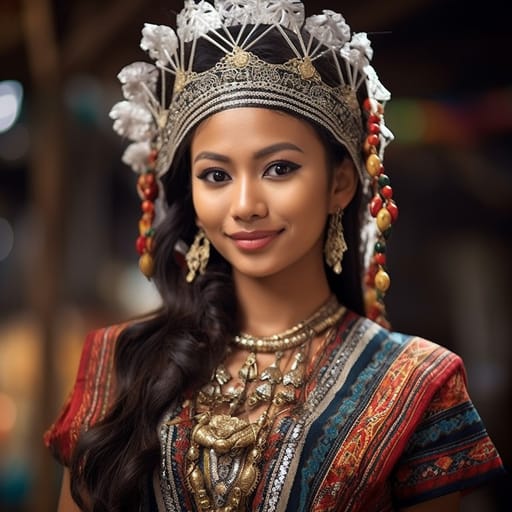
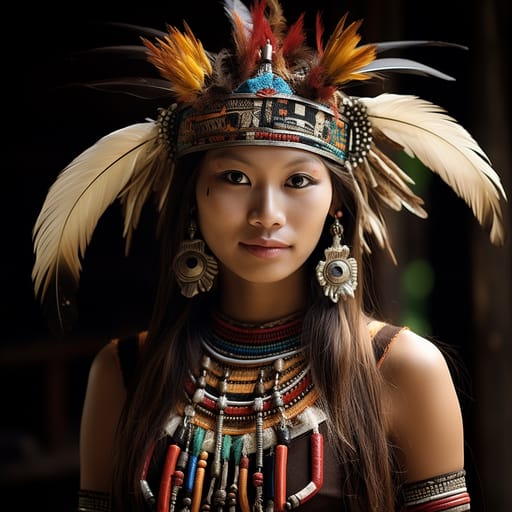
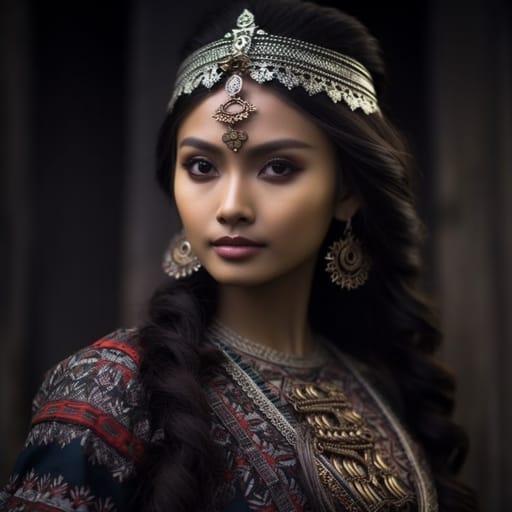
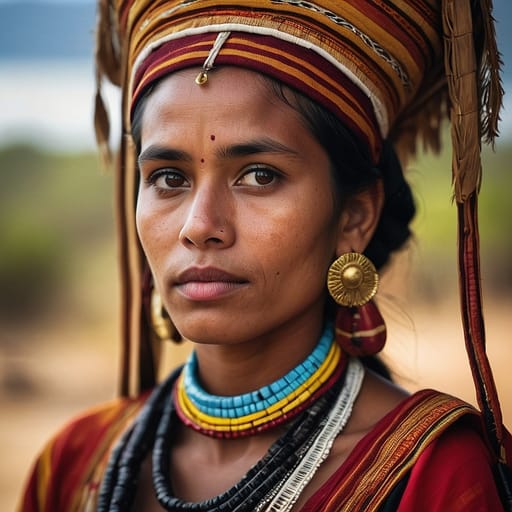
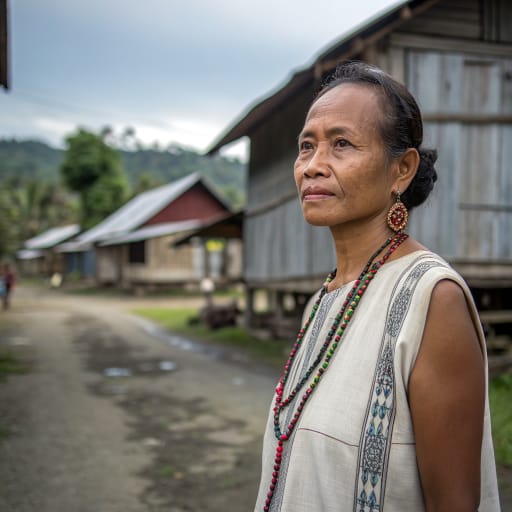
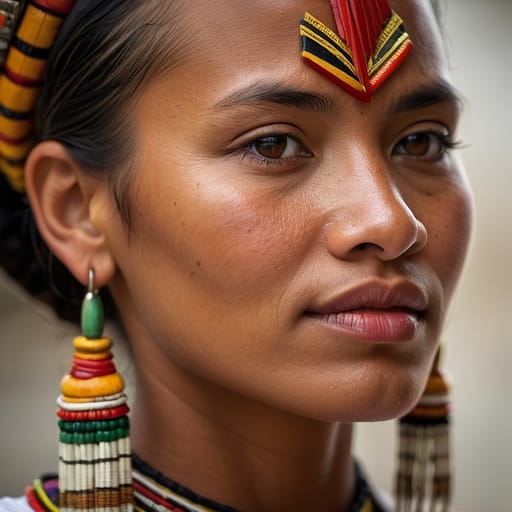
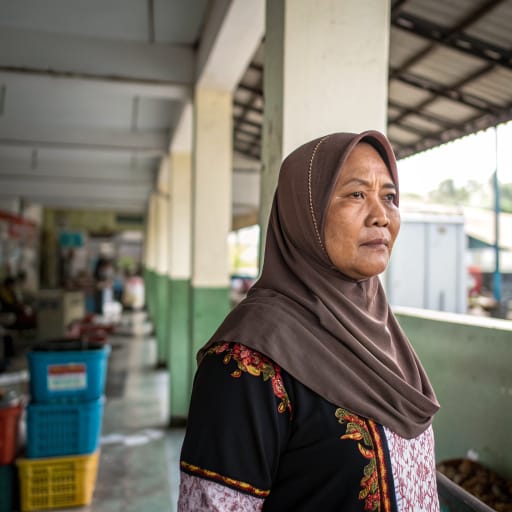
Typical Musi Phenotypes
Reference for AI generation: hair, eyes, skin, facial structure, build
Musi Body & Anatomy Reference
Anatomy by feature, Southeast Asian Austronesian / Austroasiatic phenotype
Musi Boobs & Breasts
Musi tits and boobs run small-to-medium cup, modest projection, the classic Southeast Asian Austronesian / Austroasiatic bust profile. Musi nipples and areolas show medium-brown to dark-brown areolar pigmentation against the tan-to-medium-brown skin tone, with areolar diameter typically in the 26-38mm range and forward-set positioning rather than the fuller South Asian or Polynesian bust. Musi breasts trend firm, modest projection, a function of the ectomorph, petite frame body habitus and the mean adult female BMI 20-23. For anatomically accurate AI-generated Musi nudes the render preserves the small-to-medium cup, modest projection shape, 26-38mm areolas with medium-brown to dark-brown pigmentation, and the torso proportions of the Southeast Asian Austronesian / Austroasiatic phenotype.
Musi Ass & Hips
Musi hips and butt usually read as small-to-medium, modest projection, narrower hip profile. The skeletal base is narrow-to-medium iliac crests, the Southeast Asian Austronesian / Austroasiatic pattern. Set against the fuller glutes of the Pacific Islander phenotype, the difference is easy to see, and the hip-to-waist ratio is often what identifies Musi women in photos.
Musi Vagina & Pussy
Expect medium-brown to dark-brown labial pigmentation on Musi women, in keeping with Southeast Asian Austronesian / Austroasiatic ancestry. The pubic hair is straight-to-wavy fine-to-medium texture. Coloring should run evenly from the tan to medium-brown skin of the thighs to the labia, and Musi nude imagery should keep the hair's straight-to-wavy fine-to-medium texture.
Musi Dicks & Penis
Musi dick and penile anatomy in adult AI generation should anchor on the regional reference data: regional mean ~11cm erect, moderate girth, and medium-brown shaft pigmentation. The Musi cock profile reflects the Southeast Asian Austronesian / Austroasiatic population's anthropometric measurements. The shaft pigmentation should track the surrounding tan to medium-brown skin tone, and the pubic hair should keep its straight-to-wavy fine-to-medium texture in the typical inverted-V escutcheon.
Musi Body, Curves & Build
Musi body type: ectomorph, petite frame, with mean adult female BMI 20-23. This is the typical Southeast Asian Austronesian / Austroasiatic build. Height range, shoulder-to-hip ratio and fat distribution all follow from it, which is what an accurate Musi nude body should show.
Musi Skin Tone & Hair Texture
Musi skin tone falls in the tan to medium-brown (Fitzpatrick III-V) band, the surface signal most often miscalibrated by generic AI nude generators. Musi hair texture is typically straight-to-wavy 1A-2A, dark-brown to black, characteristic of the Southeast Asian Austronesian / Austroasiatic phenotype. In Musi nude renders the skin should hold that band consistently across the body.
Explore phenotype categories
Structured taxonomy with peer-reviewed scales · 22 anatomical categories
Erotic Poses & Sex Positions
From the pose catalog: 219 named positions with reference skeletons
Frequently asked questions about Musi people
Where is the Musi homeland?
The Musi homeland is Middle and upper Musi River basin in South Sumatra, Indonesia, chiefly Musi Banyuasin and Musi Rawas regencies in Southeast Asia.
What language do Musi people speak?
Musi people primarily speak Musi (Austronesian, Malayic), closely related to Palembang Malay; Indonesian widely used.
What religion do Musi people practice?
The predominant religion among Musi people is Sunni Islam, alongside customary adat.






Make your own Musi images
Five a day, free, no credits to buy. The studio starts from this group's phenotype data, so you can set body type, pose and style and keep the traits accurate.
Start with Musi