No portrait yet
Oswegatchie Erotic
Mouth of the Oswegatchie River on the St. Lawrence, at present-day Ogdensburg, New York, United States; later Indian Point near Lisbon, New York.
Onondaga, with Oneida and Cayuga (Northern Iroquoian, Iroquoian family); French used at the mission.
Roman Catholic through the Sulpician mission of La Présentation, practiced alongside Haudenosaunee clan and ceremonial traditions.
A Haudenosaunee (Iroquois) mission community drawn mainly from the Onondaga, with Oneida and Cayuga families; one of the Seven Nations of Canada. Descendants were absorbed into Akwesasne and Onondaga.
About Oswegatchie People
The Oswegatchie were an Iroquois community, mostly Onondaga with Oneida and Cayuga families among them, who lived from 1749 to about 1806 at the mouth of the Oswegatchie River on the St. Lawrence, where Ogdensburg, New York now stands. They did not die out. American settlement pushed them off their land and they folded into other Haudenosaunee communities, chiefly Akwesasne and Onondaga, where their descendants live today.
What made them a people was a decision, not ancient descent. In 1749 the Sulpician priest François Picquet founded the mission of La Présentation as a deliberate French project: draw Iroquois families out of the British orbit, baptize them, and plant a friendly town on a strategic stretch of river. It began with a handful of families and was burned by Mohawk raiders within months. It recovered fast. Within a few years Picquet was counting hundreds of families, a figure he had every reason to inflate, but the town was plainly large. The people who came were not dupes. The St. Lawrence offered French trade goods, some distance from colonial land hunger in New York, and leverage as brokers between two empires. They spoke Onondaga and its sister Iroquoian languages, kept their clans and kinship rules, and practiced a Catholicism that sat on top of Haudenosaunee custom without replacing it.
The Oswegatchie took their seat among the Seven Nations of Canada, the alliance of mission villages tied to New France, and their warriors fought on the French side in the Seven Years' War, including raids into the Mohawk Valley. When a British army came down the river in 1760 they read the situation correctly and negotiated neutrality with Sir William Johnson. The British garrisoned the site as Fort Oswegatchie, the community stayed on, and it sided with the Crown during the American Revolution.
The end came with a border, not a battle. Britain held the post until 1796, when the Jay Treaty handed it to the United States. Speculators and settlers arrived at once, the Oswegatchie were moved downriver to Indian Point near Lisbon, and around 1806 that village was broken up too. Families scattered to Akwesasne, to Onondaga, and to kin elsewhere. The name, usually glossed as black water, survives on the river and on a town in St. Lawrence County. The people survive under other names, the common fate of the mission communities of the St. Lawrence, and one that is easy to mistake for disappearance.
Related ethnic groups
Groups that share Oswegatchie's homeland, region, language, or religious tradition. These are likely candidates for comparative phenotype reference.
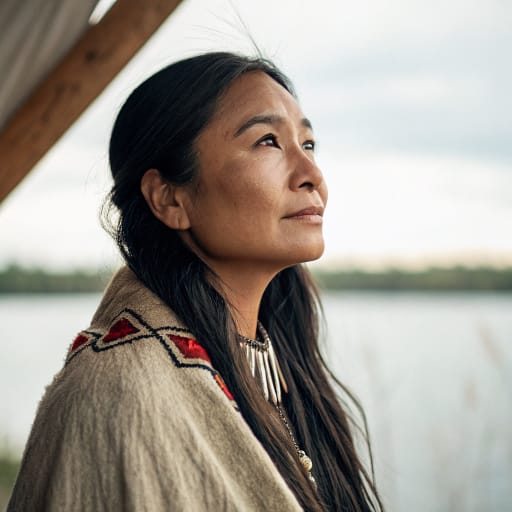
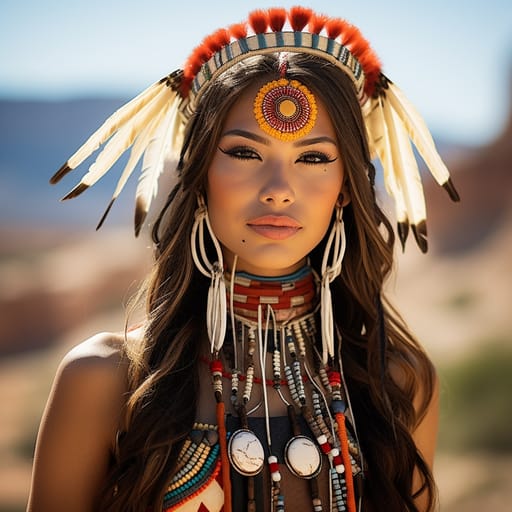
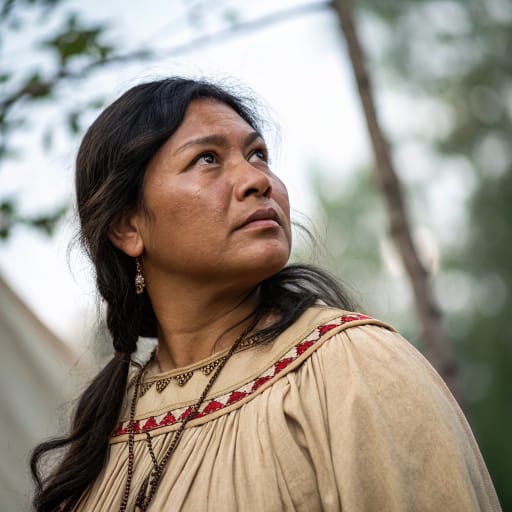
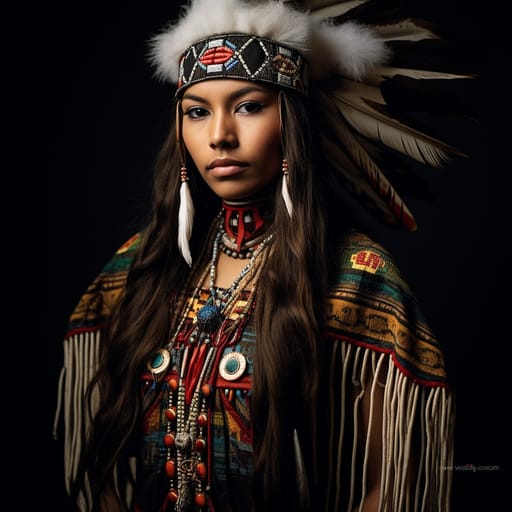
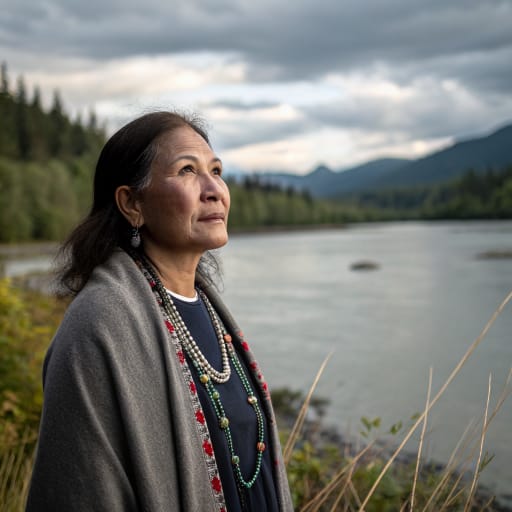
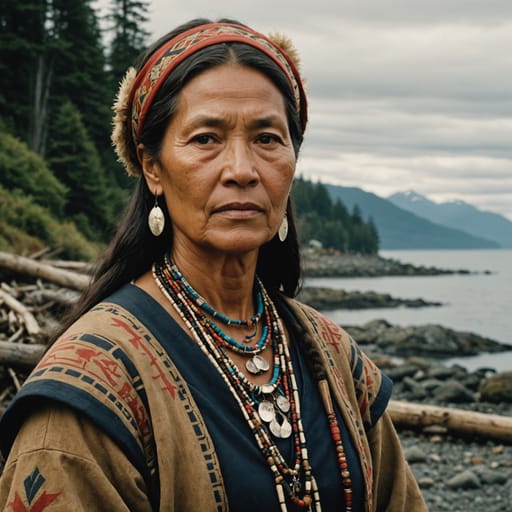
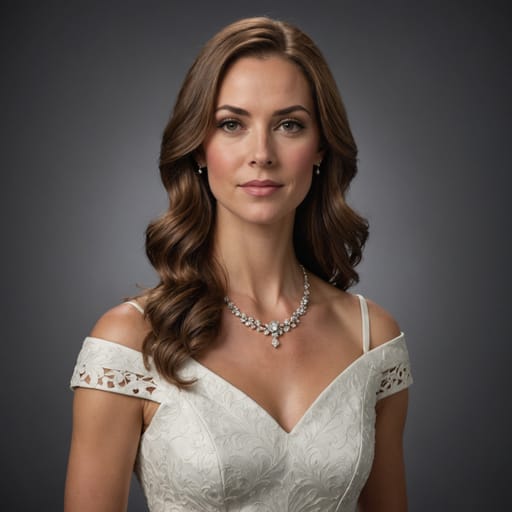
Typical Oswegatchie Phenotypes
Reference for AI generation: hair, eyes, skin, facial structure, build
Oswegatchie Body & Anatomy Reference
Per-feature anatomical profile for AI nude generation: Indigenous Northern American / Algonquian-Iroquoian phenotype
Oswegatchie Boobs & Breasts
Bust reference for Oswegatchie women: medium cup, moderate projection, which is typical of Indigenous Northern American / Algonquian-Iroquoian ancestry. Areolas measure about 30-44mm across, with medium-brown pigmentation. Body type (mesomorph, broader frame in northern Indigenous populations) shapes the bust as well, so Oswegatchie tits are usually full and moderate projection. In AI imagery, keep the forward-set shape rather than drifting toward the smaller East Asian bust.
Oswegatchie Ass & Hips
The Oswegatchie ass is typically medium, moderate-to-full projection, which sets it apart from the slim East Asian narrow-hip profile. Underneath, the pelvis shows medium iliac crests, part of the Indigenous Northern American / Algonquian-Iroquoian skeletal pattern. For Oswegatchie butt pics and AI renders, match that silhouette and the overall build (mesomorph, broader frame in northern Indigenous populations).
Oswegatchie Vagina & Pussy
Oswegatchie pussy and vulvar anatomy presents medium-brown labial pigmentation, consistent with the Indigenous Northern American / Algonquian-Iroquoian phenotype's pigmentation pattern. Oswegatchie pubic hair is typically straight medium-coarse texture, in the inverted-triangle pattern. For anatomically accurate Oswegatchie pussy renders the labial coloration should match the surrounding copper to medium-brown skin tone with a continuous gradient, and the hair should keep its straight medium-coarse texture.
Oswegatchie Dicks & Penis
Oswegatchie dicks follow the Indigenous Northern American / Algonquian-Iroquoian reference data: regional mean ~13cm erect; moderate girth; medium-brown shaft pigmentation. Shaft color should track the copper to medium-brown skin tone with a smooth change toward the glans, and Oswegatchie pubic hair keeps its straight medium-coarse texture.
Oswegatchie Body, Curves & Build
Oswegatchie body type and overall build presents as mesomorph, broader frame in northern Indigenous populations, with mean adult female BMI 25-28: the characteristic Indigenous Northern American / Algonquian-Iroquoian habitus. Oswegatchie curves and proportions should keep the regional skeletal frame (height, shoulder-to-hip ratio, limb proportions) rather than a generic mesomorph default.
Oswegatchie Skin Tone & Hair Texture
Oswegatchie skin sits in the copper to medium-brown (Fitzpatrick III-V) band. Hair is typically straight 1A, dark-brown to black, often thick and dense, in keeping with the Indigenous Northern American / Algonquian-Iroquoian phenotype. In nude renders the skin should stay one even tone from face to body, and body, pubic and head hair should match.
Explore phenotype categories
Structured taxonomy with peer-reviewed scales · 22 anatomical categories
Erotic Poses & Sex Positions
From the pose catalog: 219 named positions with reference skeletons
Frequently asked questions about Oswegatchie people
Where is the Oswegatchie homeland?
The Oswegatchie homeland is Mouth of the Oswegatchie River on the St. Lawrence, at present-day Ogdensburg, New York, United States; later Indian Point near Lisbon, New York. in North America.
What language do Oswegatchie people speak?
Oswegatchie people primarily speak Onondaga, with Oneida and Cayuga (Northern Iroquoian, Iroquoian family); French used at the mission..
What religion do Oswegatchie people practice?
The predominant religion among Oswegatchie people is Roman Catholic through the Sulpician mission of La Présentation, practiced alongside Haudenosaunee clan and ceremonial traditions..






Make your own Oswegatchie images
Five a day, free, no credits to buy. The studio starts from this group's phenotype data, so you can set body type, pose and style and keep the traits accurate.
Start with Oswegatchie